



South Korea Strengthens Vehicle Restrictions, Public Agencies Implement Odd-Even License Plate Limitation
April 1 (News): Amid the ongoing Middle East conflict and worsening energy supply tensions, the South Korean government announced on April 1 further reinforcement of energy-saving measures. On that day, the Ministry of Climate, Energy, and Environment stated that, effective from April 8 local time, the vehicle restriction policy for public-sector vehicles would be upgraded from the previous weekday “last-digit-based restriction” to a stricter “odd-even license plate restriction.” Although private vehicles remain subject to voluntary restrictions, a mandatory last-digit-based restriction will be enforced at approximately 30,000 public parking lots nationwide. Additionally, the government recommended that public institutions adopt flexible working hours, reduce non-essential business travel, and expand the use of video conferencing to further lower energy consumption. For public vehicles violating the restriction, disciplinary action will be imposed after four violations. The government emphasized that it has not yet introduced mandatory restrictions on private vehicles nationwide, instead adopting “transitional measures”—such as restricting access to public parking lots—to encourage the public to drive less and rely more on public transportation. Whether to further expand the scope of mandatory restrictions will be determined cautiously, based on energy supply-demand conditions and societal impact.
Related Breaking News
-
2026-04-01 20:55:24
Strait Blockage Leads to 50% Drop in Saudi March Oil Exports
April 1: According to foreign media reports, Saudi Arabia’s crude oil exports dropped by half in March due to disruptions in the Strait of Hormuz, forcing the country to reroute shipments to its west coast. Tanker-tracking data shows that average exports for the month stood at 3.33 million barrels per day (bpd), compared with 6.66 million bpd in February. Without the ability to transfer crude oil to Red Sea export terminals, this decline would have been even steeper. Following the outbreak of the Middle East conflict, Saudi Arabia swiftly shifted crude oil exports from Gulf terminals to its east-west pipeline. This pipeline transports crude oil from eastern Saudi oilfields to refineries and ports along the Red Sea coast, with a transport capacity of approximately 7 million bpd. When operating at full capacity, the pipeline supplies around 5 million bpd of crude oil available for export from Yanbu, while the remainder is allocated to refineries near Riyadh and along the west coast, or used for power generation and seawater desalination facilities along the Red Sea coast. -
2026-04-01 18:52:52
South Korea Strengthens Vehicle Restrictions, Public Agencies Implement Odd-Even License Plate Limitation
April 1 (News): Amid the ongoing Middle East conflict and worsening energy supply tensions, the South Korean government announced on April 1 further reinforcement of energy-saving measures. On that day, the Ministry of Climate, Energy, and Environment stated that, effective from April 8 local time, the vehicle restriction policy for public-sector vehicles would be upgraded from the previous weekday “last-digit-based restriction” to a stricter “odd-even license plate restriction.” Although private vehicles remain subject to voluntary restrictions, a mandatory last-digit-based restriction will be enforced at approximately 30,000 public parking lots nationwide. Additionally, the government recommended that public institutions adopt flexible working hours, reduce non-essential business travel, and expand the use of video conferencing to further lower energy consumption. For public vehicles violating the restriction, disciplinary action will be imposed after four violations. The government emphasized that it has not yet introduced mandatory restrictions on private vehicles nationwide, instead adopting “transitional measures”—such as restricting access to public parking lots—to encourage the public to drive less and rely more on public transportation. Whether to further expand the scope of mandatory restrictions will be determined cautiously, based on energy supply-demand conditions and societal impact. -
2026-04-01 14:00:53
Sadara Large-Scale Petrochemical Complex Halts Production Due To Supply Chain Disruption
Sadara, the joint venture between Saudi Aramco and U.S.-based Dow Chemical, confirmed on March 31 that its large petrochemical integrated complex in Jubail, Saudi Arabia, has suspended production due to ongoing global supply chain disruptions. The announcement was issued by Sadara Basic Services Company, a subsidiary responsible for issuing Islamic bonds on behalf of the parent companies. According to a statement cited by Reuters, the company cannot currently determine when operations will resume, emphasizing that the timeline will depend on a range of internal and external factors. Sadara operates a major industrial facility in Jubail with an annual capacity for chemicals and plastics exceeding 3 million tons. This production halt is expected to negatively impact the company’s financial performance for the current fiscal year. -
2026-04-01 13:42:13
Iran's Tabriz Petrochemical Plant Hit by Airstrike, Polyolefin Production Unit Damaged
According to the Islamic Republic News Agency, a petrochemical production complex (Tabriz Petrochemical Complex) in the northwestern Iranian city of Tabriz was attacked by US-Israeli air strikes early on the 30th. The Islamic Republic News Agency cited a statement from the East Azerbaijan Province Crisis Management Organization, which said that the attack hit the production unit of the Tabriz Petrochemical Company, but no hazardous or toxic substances were leaked. The company is located in the southern suburbs of Tabriz, adjacent to the Tabriz Refinery, and mainly produces various polymers and petrochemical products, including high-density polyethylene (HDPE/LLDPE), polystyrene, and ABS plastic. -
2026-04-01 09:46:14
Inverness PA66 Declares Force Majeure
On March 31, INVISTA announced a force majeure for PA66.
Most Popular
-
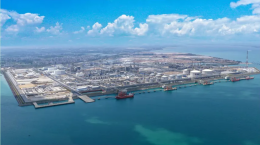
BASF's $8.7 Billion Zhanjiang Site Fully Operational, Covestro, SABIC, Arkema and Other Plastics Giants Double Down on China
-
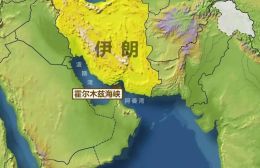
Deadly Impact: Hormuz Strait Blockade Sparks Shortage of Plastic Raw Materials, Threatening Shutdowns at Japanese and Korean Chemical Plants
-
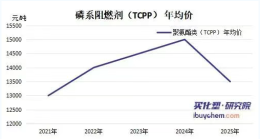
Massive Loss of $960 Million! Wansheng Co., Ltd. Sees Rising Revenue But Declining Profits—Why Did the Phosphorus-Based Flame Retardant Leader Falter?
-
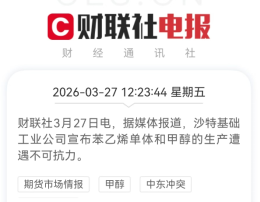
SABIC Declares Force Majeure on Styrene Monomer and Methanol Production; Middle East Chemical Operations Halted
-

BASF Delivers First Batch of Innovative Cathode Materials for Semi-Solid-State Batteries to Weilan New Energy


