



Massive Loss of $960 Million! Wansheng Co., Ltd. Sees Rising Revenue But Declining Profits—Why Did the Phosphorus-Based Flame Retardant Leader Falter?
Once upon a time, phosphorus-based flame retardants, with their environmental advantages and high-profit margins, were the envy of the chemical industry, a coveted "blue ocean" market. However, the influx of capital, leading to a surge in production capacity, coupled with a global demand slump, has plunged the industry into a brutal "clearing moment." The dismal financial results of 2025 for the global leader, Wansheng Co., Ltd., serve as the most authentic footnote to this industry crisis: despite a nearly 14% increase in revenue to 3.378 billion yuan, the company swung from profit to loss, incurring a massive 960 million yuan deficit, a staggering 1,028% year-on-year drop, marking the deepest trough in its performance since going public.
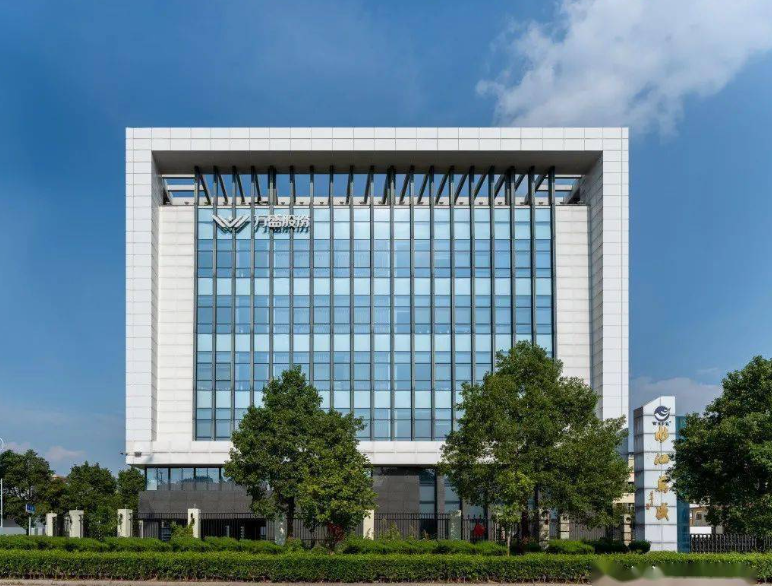
1. Revenue Growth Amid Massive Losses: Gross Margin Declines for Four Consecutive Periods, Profits Halved and Then Halved Again
This financial report presents an extreme “ice-and-fire dichotomy”: business scale is expanding steadily, yet profitability has plummeted sharply for four consecutive years, plunging the company into a predicament where “the more it sells, the more it loses.”
Revenue growth: Total revenue was 3.378 billion yuan in 2025, an increase of 13.98% year-over-year.
Net Profit Plunges: Net Profit Attributable to Shareholders was -RMB 960 million (RMB 103 million in 2024), a decline of 1,028.55%.
Gross margin collapse: declining from a peak of 32.70% in 2021 to 18.30% in 2025, hitting a new post-listing low.
As the company’s core lifeline, polymer functional additives (phosphorus-based flame retardants)—accounting for 66% of total revenue—are the primary source of losses. Product prices have continued to decline, while raw material costs remain stubbornly high, sharply compressing gross profit per ton; “thin profits” have deteriorated into “no profit” or even “losses.”
II. Industry Dilemma: Complete Imbalance of Supply and Demand, "Scissors Gap" in Price Wars Proves Fatal
Wansheng Co.'s massive losses are not an isolated case, but rather a concentrated outbreak reflecting the entire phosphorus-based flame retardant industry's worsening supply-demand imbalance and intensifying internal competition. In its annual report, the company attributed its core losses to a deteriorating market supply-demand situation, specifically characterized by a "surge in supply, weak demand, and high costs"—a triple squeeze.
Supply side: Capacity "surges", supply far exceeds demand
In recent years, the lure of high industry profit margins triggered a nationwide wave of capacity expansion. In 2025, newly added domestic phosphorus-based flame retardant capacity was released all at once, with numerous plants coming online simultaneously, abruptly shifting the market from undersupply to severe oversupply. A flood of highly homogeneous products poured into the market, forcing companies into fierce price wars to secure orders, causing product prices to plummet repeatedly.
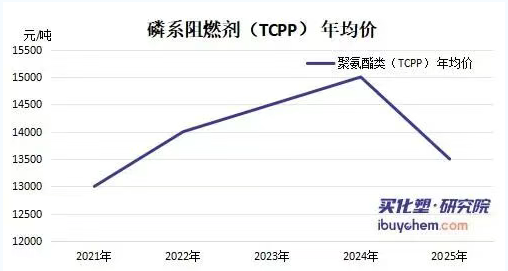
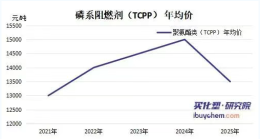
Taking the price trends of the mainstream product, flame retardant (TCPP) in polyurethane as an example, compiled by Maihuasu.
2021: Approximately RMB 13,000 per ton
2022–2023: Stable with a slight increase to RMB 14,000–14,500 per ton
2024: Supply contraction + raw material price increase, surged to 15,000 yuan/ton
2025: Overcapacity + weak demand, crash back to around 13,500 yuan/ton.
2. Demand Side: Weak downstream demand, with real estate being the biggest drag
The global economic downturn has led to a comprehensive slowdown in the demand for flame retardants from traditional manufacturing industries. Key application areas such as construction, wire and cable, electronics and electrical appliances, and automotive transportation have shown weak growth. Especially, the continuous deep downturn in the real estate industry has directly hit the demand for flame retardants in the building materials and furniture sectors, becoming the biggest variable dragging down the industry's sales.
3. Cost side: Raw material price increases erode profits due to the “scissors effect.”
While product prices are declining, costs on the supply side are rising against the trend. Key raw materials such as yellow phosphorus and phosphoryl chloride have seen sustained price increases due to environmental protection–driven production curbs and capacity reductions, pushing up the product’s full cost. This lethal “scissors gap”—falling selling prices coupled with rising costs—has completely eroded the company’s remaining profit margin, dragging the entire industry to the brink of comprehensive losses.
A Double Blow: Pain from Overseas Expansion, Hundreds of Billions in Impairment "Crush" Profits
In addition to the severe blow from industry cycles, WanSheng Chemical’s own adjustment of its globalization strategy became the final straw that broke its profitability.
To circumvent international trade barriers and expand into overseas markets, the company initiated a major production capacity reallocation: relocating production capacity from its Weifang base in Shandong Province to Thailand. This strategic move triggered substantial short-term pain: in 2025, the company recorded a massive asset impairment of RMB 1.097 billion related to assets at the Weifang base, including RMB 964 million attributable to fixed assets and construction-in-progress. This astronomical impairment charge directly caused the company to swing from profit to loss, dragging its full-year performance into profound distress.
IV. Summary
The global phosphorus-based flame retardants market has traditionally been dominated by first-tier international giants such as Wansheng Co., Ltd., Israel Chemicals Ltd. (ICL), Lanxess, and Albemarle.
However, in recent years, with the rise of China’s chemical industry, domestic enterprises such as Jiangsu Yak Technology and Wansheng Co., Ltd. have experienced rapid expansion in production capacity and technological advancement, transforming the industry’s competitive landscape from “oligopolistic monopoly” into an intensely competitive arena featuring fierce rivalry among both domestic and international players.
From the high-margin “blue ocean” to the overcapacity “red sea,” the phosphorus-based flame retardant industry underwent this transition in just a few years. Wansheng Chemical’s “revenue growth coupled with massive losses” tragedy marks the end of the industry’s era of unbridled expansion.
Currently, the entire industry is at the most brutal bottom of its cyclical downturn: price wars, high costs, and weak demand. Only by enduring this winter will outdated production capacity be completely eliminated, allowing supply and demand to return to balance and paving the way for industry-wide profit recovery. For leading enterprises, what is now at stake is not only technology and market share, but also a life-or-death test of cash flow management and cost control.
【Copyright and Disclaimer】This article is the property of PlastMatch. For business cooperation, media interviews, article reprints, or suggestions, please call the PlastMatch customer service hotline at +86-18030158354 or via email at service@zhuansushijie.com. The information and data provided by PlastMatch are for reference only and do not constitute direct advice for client decision-making. Any decisions made by clients based on such information and data, and all resulting direct or indirect losses and legal consequences, shall be borne by the clients themselves and are unrelated to PlastMatch. Unauthorized reprinting is strictly prohibited.
Most Popular
-

Deadly Impact: Hormuz Strait Blockade Sparks Shortage of Plastic Raw Materials, Threatening Shutdowns at Japanese and Korean Chemical Plants
-
BASF's $8.7 Billion Zhanjiang Site Fully Operational, Covestro, SABIC, Arkema and Other Plastics Giants Double Down on China
-
LG Chem Shuts Down Yeosu Unit 2, Sparking Chain Shutdowns Across South Korea’s Petrochemical Industry
-
Massive Loss of $960 Million! Wansheng Co., Ltd. Sees Rising Revenue But Declining Profits—Why Did the Phosphorus-Based Flame Retardant Leader Falter?
-

BASF Delivers First Batch of Innovative Cathode Materials for Semi-Solid-State Batteries to Weilan New Energy


