



The world's largest plastic factory field test: 1000 pieces sorted per second!
Is plastic recycling truly environmentally friendly? A recent Swedish study has flipped the script: unsorted "downgraded recycling" is nearly as bad as incineration! Yet, a revolutionary technology has boosted climate benefits by 27%. What's the real truth? How is the world's largest sorting facility rewriting the rules? What upgrades are environmental policies facing? Get the full scoop on the future of plastic recycling in one read!
In 2023, IVL Swedish Environmental Research Institute released a groundbreaking report in collaboration with the Swedish Plastic Recycling company, revealing for the first time through life cycle assessment (LCA) that the environmental benefits of plastic recycling entirely depend on the processing method. The study compared three mainstream disposal solutions:
Direct incineration of unsorted plastics generates baseline climate impact.
Downcycling
Mixed plastics are not sorted and are made into low-value products such as railway sleepers.
Only 4% more emissions reduction than incineration, almost equivalent to incineration.
Advanced sorting + high-quality recycling
Accurate classification followed by regeneration into high-purity raw materials
Emission reduction benefits skyrocketed by 27%, with effects improving almost 7-fold!
'Data proves that indiscriminate collection is just a stopgap measure; precise sorting is the key to破解困局. ' said Research Expert Rickard Jansson outright. Note: It seems there is a phrase "破解困局" which is not fully translated. The complete and accurate translation should be: 'Data proves that indiscriminate collection is just a stopgap measure; precise sorting is the key to破解困局.' said Research Expert Rickard Jansson outright. Or, if we assume "破解困局" means "破解 the dilemma/predicament," it could be: 'Data proves that indiscriminate collection is just a stopgap measure; precise sorting is the key to破解 the dilemma.' said Research Expert Rickard Jansson outright. However, without more context, the exact translation of "破解困局" might vary. The most accurate translation provided here directly follows the original text.
Supporting this conclusion is the practical data from Sweden's 'Site Zero' factory—this 60,000 square meter facility has an astonishing processing capacity of 42 tons of plastic per hour, with an annual processing capability of up to 200,000 tons. With its cutting-edge sorting technology, Site Zero can finely separate PP, HDPE, LDPE, PET pallets, PET bottles, PP films, EPS, PS, PVC, PO, metal, and non-plastic waste into as many as 12 different types of plastics and other waste.
Sort 1000 pieces of packaging waste per second.
Full-category processing: from food packaging to industrial plastics
AI + spectral technology achieves 98% sorting accuracy
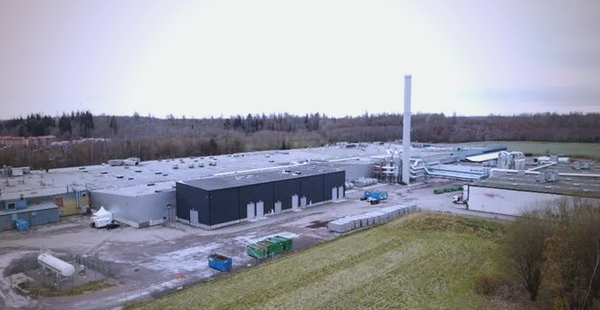
"Downcycling in the past was due to technical limitations, but now Site Zero has proven: we are fully capable of achieving closed-loop recycling," said Mattias Philipsson, CEO of Swedish Plastic Recycling.
The research team issued a stern warning: there are fatal flaws in the current policy!
Recycling ≠ Environmental Protection: Regulations only encourage recycling volume but ignore resource utilization rates.
Incineration Temptation: Low Efficiency in Unsorted Plastic Recycling Indirectly Promotes Incineration
Linear Economy Trap: Inefficient Recycling Perpetuates 'Produce-Discard' Model
"We must establish more precise policy tools!" Philipsson urgently呼吁: "If inefficient recycling continues to be subsidized, it locks society into a 'high-emission pseudo-cycle.'"
The report points the way for global plastic governance:
Technological revolution: Promoting cutting-edge technologies such as optical sorting and chemical recycling.
Policy Upgrade: Establish Subsidy Standards Based on Carbon Emission Reduction Benefits
Industrial Restructuring: Establishing a 'Quality First' Recycled Materials Trading Market
As demonstrated by Site Zero: when sorting accuracy surpasses the critical point, the carbon footprint per ton of plastic recycling will plummet by over 30%. This is not just a technological breakthrough but also a cognitive revolution in the circular economy.
Conclusion
The truth about plastic recycling is alarming: recycling without technical content is merely a smokescreen that delays pollution. As the world's attention focuses on Sweden, this battle over millimeter precision in sorting is actually a key struggle in determining whether humanity can escape the vicious cycle of "more recycling, more pollution." The next time you see a "recyclable" label, remember: true environmental protection begins with the precise sorting that happens in that millisecond inside the trash bin.
【Copyright and Disclaimer】The above information is collected and organized by PlastMatch. The copyright belongs to the original author. This article is reprinted for the purpose of providing more information, and it does not imply that PlastMatch endorses the views expressed in the article or guarantees its accuracy. If there are any errors in the source attribution or if your legitimate rights have been infringed, please contact us, and we will promptly correct or remove the content. If other media, websites, or individuals use the aforementioned content, they must clearly indicate the original source and origin of the work and assume legal responsibility on their own.
Most Popular
-

Mexico Imposes Tariff Up to 36% on Cross-Border E-Commerce Products, Effective January 1, 2026; Plastic Shows Partial Fluctuation Today
-

[Overseas News] Sumitomo Chemical Acquires Solvay's LCP Business! SK Chemicals Builds Circular Economy Model For Waste Banners!
-

Trump Delays Tariff Increase on Furniture, Cabinets, and Vanities
-
4.5 Million Tons! Wanhua Chemical Dominates Globally in MDI, Heavy Investment in Battery Materials Spurs New Storm
-
Wanhua Chemical Invests $27.3 Billion, 2026 Investment Map Revealed, $1.1 Billion Bet on Battery Materials


