



Stagnant US PET Recycling Faces Severe Threat From Surge In Imports
Plastic recycling in the United States is grappling with a troubling paradox. Even as major consumer brands demand more recycled content to meet sustainability commitments and state-level mandates, the actual collection of waste bottles nationwide is declining. Newly released industry data from the National Association for PET Container Resources (NAPCOR), which represents the polyethylene terephthalate packaging industry in the United States, Canada, and Mexico, highlights a sharp disconnect between corporate demand and domestic recovery capacity.
(Note: Although brief news summaries occasionally misidentify the organization’s acronym as APCOR, the official industry body tracking bottle recycling in North America is NAPCOR.)
According to the association’s latest annual assessment, the U.S. PET bottle recycling rate declined from 30.2% in 2024 to 29% in 2025. This contraction occurred despite a 0.6% increase in the total volume of PET bottles placed on the U.S. market available for recycling, which reached approximately 6.29 billion pounds. Meanwhile, the total amount of post-consumer PET bottles recycled in the United States fell for the second consecutive year, dropping by 3.6% compared to 2024 levels. U.S. PET recycling
How Record Imports Reshape the Market
The primary disruptive factor behind the stagnation of the U.S. PET recycling industry is the unprecedented influx of foreign recycled resin. Although overall sales in the end markets for recycled PET (rPET) in the United States and Canada grew by 5.6% year-over-year, domestic recyclers failed to capitalize on this growth. Instead, imported rPET accounted for nearly the entire market expansion, reaching a record 39.1% of total rPET consumption in the U.S. and Canadian markets, a significant increase from 35.5% the previous year.
Lauren Laibach, Director of Data Services at NAPCOR, pointed out that lower-priced overseas materials are creating significant economic headwinds for North American facilities. Sales from domestic recyclers in the United States and Canada to all end markets peaked in 2021, with total pounds sold in 2025 being 12% below that high-water mark.
Recent industry reports have highlighted how vulnerable domestic operations have become under this pressure. High operating costs, coupled with cheaper virgin resin and a surge of low-cost imported rPET, have forced multiple North American recycling facilities to scale back or shut down completely. Without predictable purchase commitments from domestic buyers, local recyclers struggle to justify capital investments or keep processing lines running at full capacity. U.S. PET recycling
The Hidden Impacts of Bottle Lightweighting and Quality Disparities
Beyond global trade pressures, packaging engineering itself is subtly altering the mathematics of recycling. A structural factor affecting headline recycling rates is the ongoing lightweighting of bottles. Throughout 2025, major beverage manufacturers have introduced thinner, lighter soda and water bottles to reduce raw material costs and transportation emissions. Because national recycling rates are calculated by weight rather than unit count, collecting the same number of lighter bottles reduces the total pounds of recycled plastic. U.S. PET recycling
Meanwhile, supply bottlenecks for food-grade materials persist. Industry analysis released this week highlights a continued shortage of mechanically recycled post-consumer plastics in the United States that meet stringent food-contact safety standards. As curbside collection streams are affected by high contamination rates, the cost for domestic facilities to sort and purify these feedstocks into clear, bottle-grade rPET has risen significantly. Consequently, beverage and food brands are facing increasing pressure to look abroad or explore alternative recycling methods to achieve their sustainability goals.
Consumer skepticism and policy delays
Public perceptions are exacerbating friction at the household level. As Laibach points out, the widespread cultural debate questioning the true effectiveness of U.S. recycling programs is dampening consumer participation in curbside collection. When residents doubt whether sorted plastics are actually remanufactured, capture rates decline, leaving local sorting centers starved for clean raw materials.
In terms of regulation, structural reforms are still in their early stages. Although several U.S. states have passed Extended Producer Responsibility (EPR) laws and recycled content mandates, most packaging EPR frameworks will not begin initial implementation until 2025. Their tangible impact on collection infrastructure has yet to be reflected in national recovery figures. Uncertainties surrounding cross-border trade in 2025 and shifting tariff discussions have also disrupted traditional bundled exports to neighboring markets such as Mexico and Canada, further dampening the overall North American recovery total. U.S. PET recycling
Key Data Snapshot: U.S. and North American PET Trends
-
U.S. PET Bottle Recycling Rate:It is projected to decrease to 29.0% in 2025, down from 30.2% in 2024.
-
Post-consumer bottle collection volume in the United States:A 3.6% year-on-year decline to 1.821 billion pounds, marking the second consecutive year of decrease.
-
Market Supply:The total number of recyclable PET bottles in the United States increased by 0.6%, reaching 6.286 billion pounds.
-
Imported rPET market share:Accounting for 39.1% of the total rPET consumption in the United States and Canada, up from 35.5% in 2024.
-
Domestic recycling and sales:Compared to the industry peak in 2021, there was a 12% decline in 2025.
-
Bottle-to-bottle recyclingDespite headwinds in collection, the share of recycled PET converted into new bottles reached a record high of 69% in the United States and Canada.
【Copyright and Disclaimer】The above information is collected and organized by PlastMatch. The copyright belongs to the original author. This article is reprinted for the purpose of providing more information, and it does not imply that PlastMatch endorses the views expressed in the article or guarantees its accuracy. If there are any errors in the source attribution or if your legitimate rights have been infringed, please contact us, and we will promptly correct or remove the content. If other media, websites, or individuals use the aforementioned content, they must clearly indicate the original source and origin of the work and assume legal responsibility on their own.
Most Popular
-
The Three Brothers of the Plastics World: What’s the Difference Between HDPE, LDPE, and LLDPE?
-

Differences Between Pc, As, Pp, And Tritan Four Common Water Bottle Materials
-
Blown Film Always Has Problems? Root Causes and Solutions for 9 Major Pain Points Are All Here
-
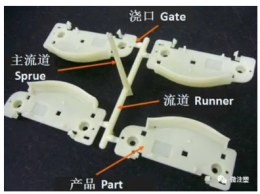
Do You Know the Tips for Choosing the Correct Product Gate Location?
-
Finally, someone has clearly explained the "plasticizer" of polymers!