



Next-generation motors of new energy vehicles: Single-Round Thousand Horsepower, Replacing Brakes, How Powerful Are They?
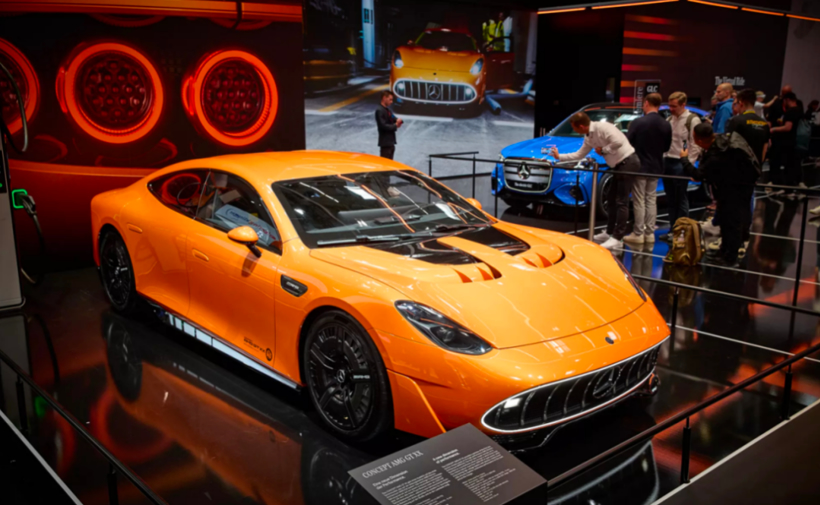
Do you remember the Mercedes AMG GT XX concept car that recently went viral?
At the Nardo track in Italy, this car traveled a total of 5,479 kilometers in 24 hours, setting a new record for the longest distance traveled by an electric vehicle in 24 hours.
We have previously provided a detailed report on "How did Mercedes achieve the pure electric endurance race results that made Lei Jun exclaim 'a bit abnormal'?"
The reason the Mercedes-AMG GT XX concept car is so powerful lies in its three axial flux motors.
What is an axial flux motor?
Axial flux motor is the next generation of electric drive technology.
In terms of new energy vehicles, both permanent magnet synchronous and induction asynchronous motors are radial flux motors, where the flux direction is along the radius of the motor, perpendicular to the motor's rotation axis.
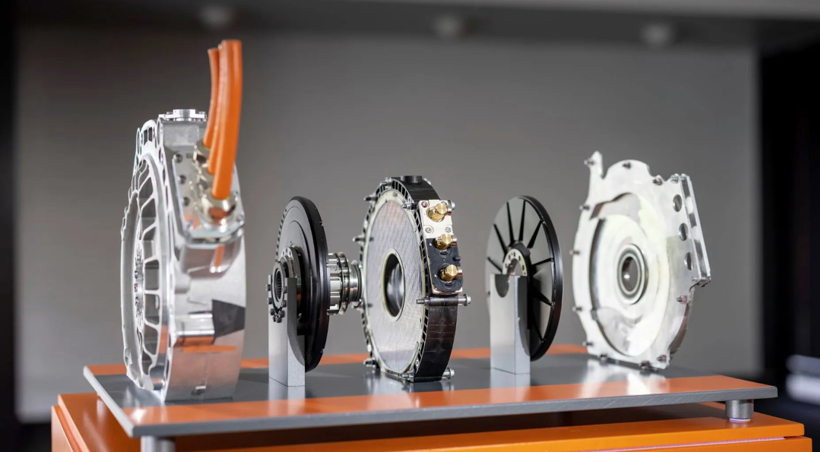
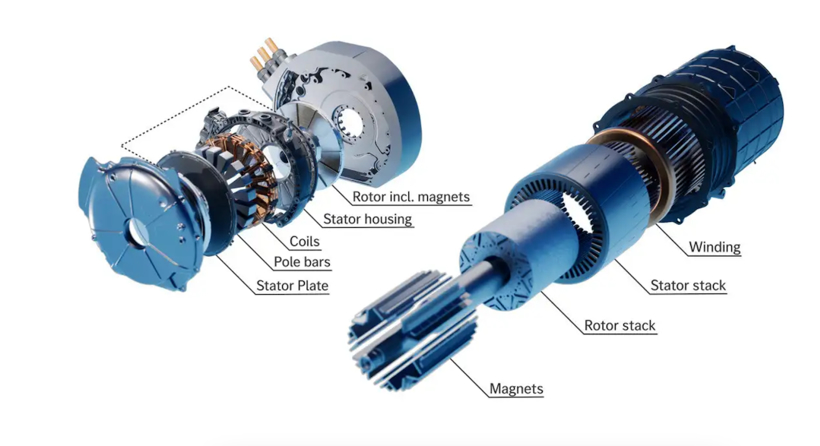
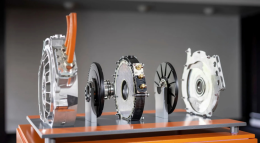
△ Axial flux motor structure
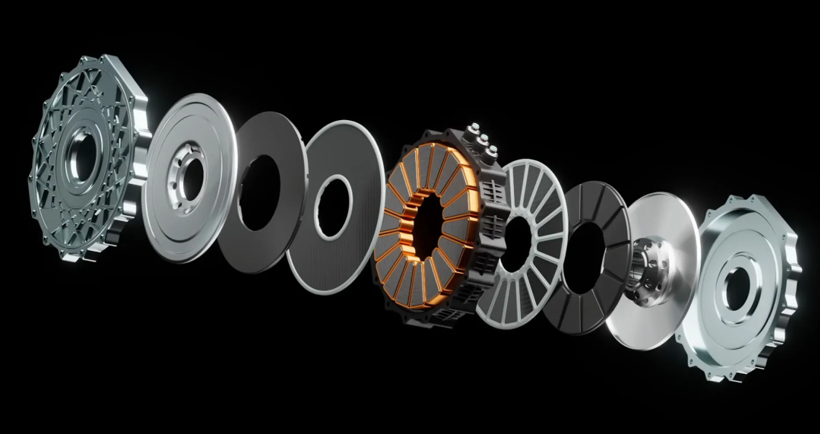
An axial flux motor, as the name suggests, is a motor where the magnetic flux direction is parallel to the rotation axis of the motor. In this type of motor, the stator and rotor are arranged in a flat, disc-like parallel configuration, resulting in a very flat design.
So previously, there have been some references to it as a disc motor.
It has many advantages, such as compact structure, lightweight, high power density, and high torque density.
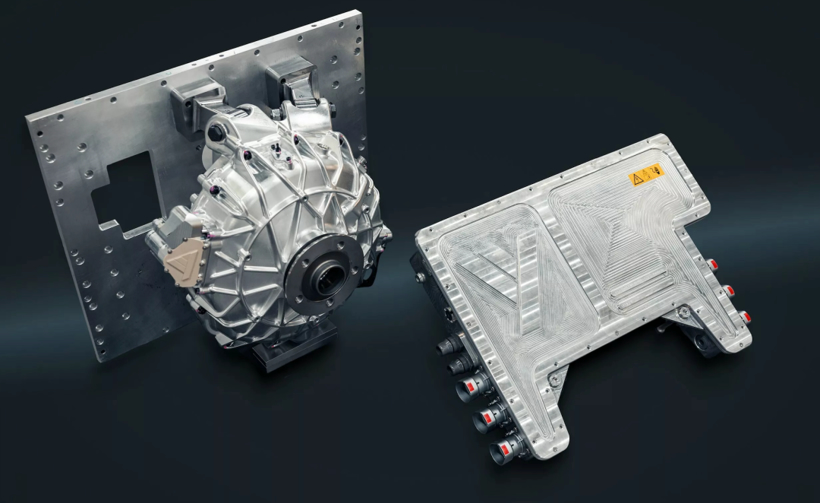
△ The axial flux motor system equipped in the Mercedes-AMG GT XX concept car
Here are some parameters of the axial flux motor on the Mercedes-AMG GT XX concept car, which will give you an idea of its level:
The weight of a single motor is less than 28 kg, and the thickness of a single unit is only about 8 cm. Three motors in total provide over 1000 kW (1360 horsepower) of power output for the AMG GT XX concept car.
High performance?
The axial flux motor applied to the Mercedes-AMG GT XX concept car is not yet the strongest form of technology.
The axial flux motor on the Mercedes concept car comes from Mercedes' subsidiary company—YASA.
YASA released its latest axial flux motor this year, featuring a peak output power of 750 kW.
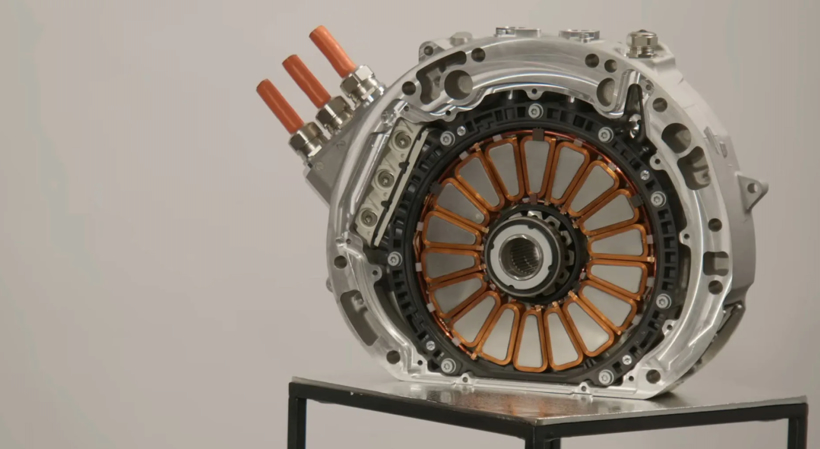
The concept of a maximum power output of 750kW is equivalent to 1019 horsepower.
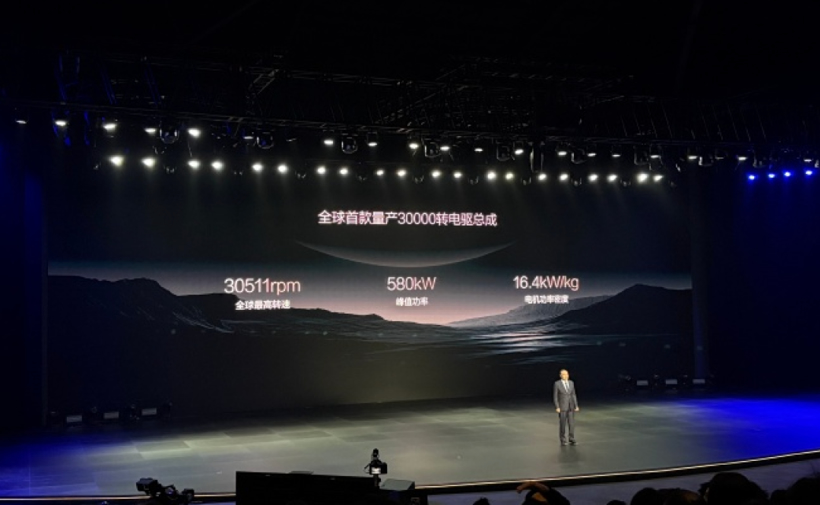
In contrast, BYD, the current leader in the motor field, previously released the world's first mass-produced 30,000 RPM motor, with a peak output power of only 580 kW.
Not only is the peak power astonishing, but this axial flux motor from YASA also boasts an extremely high power density.
Do another comparison: Translate the above content into English and output the translation result directly without any explanation.
Xiaomi's independently developed super motor V8s reaches a speed of 27,200 RPM, with a power density of 10.14 kW/kg.
NIO's global first 925V continuous wave winding motor, with a power density of 14kW/kg.
BYD mass-produces the world's highest 30,000 RPM motor with a power density of 16.4 kW/kg.
The latest axial flux motor power density from YASA: 59kW/kg.
How does an axial flux motor achieve such high power density?
Compared to the current mainstream radial flux motors, the structure of axial flux motors is different.
As mentioned earlier, a radial flux motor is similar to a nested structure, with the stator and rotor nested together in size.
In axial flux motors, the stator and rotor are arranged in a parallel disc shape, resembling stacked layers. The rotor is positioned on the side of the stator rather than in the middle, which naturally results in the rotor having a larger diameter in structure.
Torque = force × radius. When the same force causes the rotor to rotate, the torque increases as the diameter increases.
Power is closely related to torque; at the same angular velocity (rotation speed), higher torque results in greater power.
Additionally, the magnetic flux in an axial flux motor can directly pass through the air gap from one pole of the rotor to another, unlike in a radial flux motor where it needs to pass through the rotor core and the air gap. This means the magnetic flux path in an axial flux motor is shorter.
A shorter magnetic flux path means reduced iron loss in the motor. Combined with designs such as flat windings to reduce copper loss, this ultimately enables axial flux motors to achieve higher driving efficiency, resulting in increased power and torque.
Due to the sandwich-like compact structure of axial flux motors, they inherently have advantages in terms of volume and weight.
Compared to radial flux motors, axial flux motors have a significant advantage in terms of power density and torque density.
According to YASA's data, compared to radial flux motors with the same output performance, axial flux motors can achieve a volume length of 1/6 with similar motor diameters, and the torque density is increased by 4 times.
For many performance cars, these metrics mean achieving a good balance between horsepower and weight.
You can achieve high horsepower without sacrificing weight.
Mount the hub, replace the brake?
Many people are eager for hub motors, which can also use axial flux motor structures. This eliminates concerns about increasing unsprung mass while achieving very high performance.
YASA recently stated that they are experimenting with high power density axial flux motors for application in the hub motor field.
Considering the peak output power of a single YASA axial flux motor at 750 kW, if four wheels are equipped with four such hub motors, the total peak power will reach 3000 kW, and the total horsepower will exceed 4000 hp.
Imagine a performance beast with over 4000 horsepower...
However, high performance is not the biggest highlight of axial flux motors in the hub motor field. These compact new motors have the potential to completely replace traditional braking systems.
Tim, the CTO of YASA, clearly stated: "The design of the axial flux motor meets all the requirements for rear-wheel braking."
The main technical logic is to add an inverter system to the hub motor, combining it with the energy recovery system to maximize the replacement of the brake function.
According to YASA's estimates, if hub motors were fully adopted to replace traditional braking systems, a significant reduction in mechanical and hydraulic components could lead to an overall weight reduction of 200-500 kg for electric vehicles, achieving both improved performance and lightweight design at once.
Of course, axial flux motors, despite their advantages, are not without drawbacks.
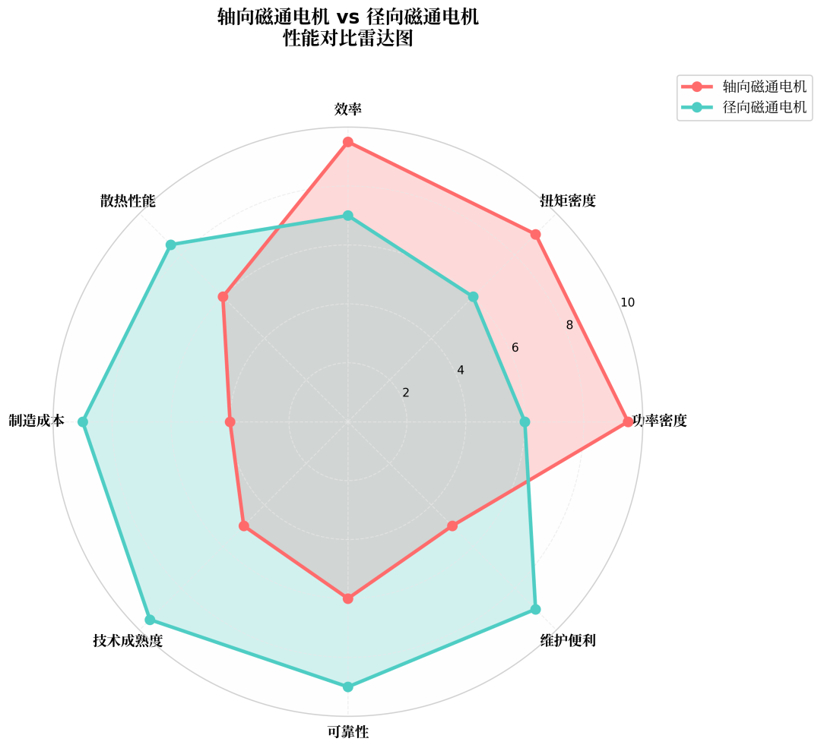
The first issue is the motor cooling problem caused by the compact structure.
The Mercedes-AMG GT XX concept car is equipped with three axial flux motors, each utilizing a dual-circuit efficient cooling design with both stator oil cooling and rotor oil cooling. This structural design is not easy for mass production.
Secondly, axial flux motors have larger rotor diameters, resulting in greater rotational inertia. Consequently, the centrifugal force at high rotations is higher compared to radial flux motors, which imposes certain limitations on the maximum speed of the motor.
Finally, due to the overall compact structure and higher manufacturing precision requirements, such as higher parallelism requirements for the stator and rotor, the overall manufacturing cost of axial flux motors is 30% to 50% higher compared to radial motors.
For the market, this type of motor generally only appears in high-performance, luxury pure electric products.
Written at the end
Additionally, although the axial flux motor installed in the Mercedes AMG GT XX concept car has not yet been mass-produced, there are currently some applications of this type of motor in the automotive market.
The hybrid power system of the Ferrari SF90 Stradale consists of an internal combustion engine combined with three electric motors, with the rear axle motor being an axial flux motor.
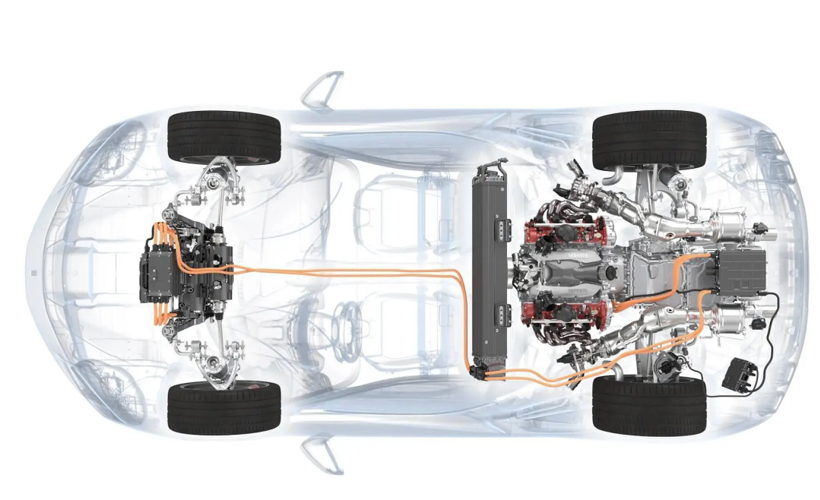
The hybrid system of the Lamborghini Temerario also consists of a combustion engine combined with three axial flux motors, with each of the two axial flux motors on the front axle weighing only about 17 kg.
Aston Martin Valhalla and McLaren Artura also have axial flux motor applications, all of which are supercar brands and high-performance products.
In fact, there are currently many car manufacturers and suppliers in the country that are already on the path of developing axial flux motors.
Previously, Voyah announced the development of China's first passenger car axial flux motor, featuring a peak torque of 680 N·m and a single motor weight of only 28 kg. Similarly, Huawei and CATL have also revealed their self-developed axial flux motors.
Overall, axial flux motors as the next generation of electric drive technology are quite tempting for car manufacturers. I believe it won't be long before we see this technology in regular vehicle models.
【Copyright and Disclaimer】The above information is collected and organized by PlastMatch. The copyright belongs to the original author. This article is reprinted for the purpose of providing more information, and it does not imply that PlastMatch endorses the views expressed in the article or guarantees its accuracy. If there are any errors in the source attribution or if your legitimate rights have been infringed, please contact us, and we will promptly correct or remove the content. If other media, websites, or individuals use the aforementioned content, they must clearly indicate the original source and origin of the work and assume legal responsibility on their own.
Most Popular
-

A Look at the Material Suppliers Behind SpaceX
-

Government's Triple Action, Enterprises' Three Arrows in Five Days, Semiconductor Reshuffle! What Signal Does Japan's Chemical Industry Release?
-
Next-generation motors of new energy vehicles: Single-Round Thousand Horsepower, Replacing Brakes, How Powerful Are They?
-
Fire breaks out at jiangsu meiside!
-
Ethylene: Production Capacity Accelerates Expansion, Global Industry Landscape Is Being Reshaped


