



Domestic PBE Breakthrough, Polyolefin Modification Industry to Break the Impasse
High-performance polyolefin materials, propylene-based elastomers (PBE) are characterized by "precise molecular design," combining the processability of plastics with the soft elasticity of rubber, and are widely used in automotive, packaging, and medical fields. By the end of 2024, the first pilot-scale PBE facility in China was put into operation, breaking the long-term foreign monopoly and injecting new momentum into the high-end development of synthetic materials in China.
I. Product Definition
PBE, or propylene-based elastomer, is a copolymer primarily composed of propylene (content > 80%) with a small amount of ethylene and other α-olefins. Its core feature is a semi-crystalline “hard-segment–soft-segment” dual-phase structure. The hard segments, formed by isotactic polypropylene chain segments, provide strength, heat resistance, and physical crosslinking points; the soft segments, generated by comonomers disrupting the regularity of the propylene chain, impart elasticity and flexibility. This unique structure endows PBE with rubber-like elasticity without requiring vulcanization, while also offering the processing advantages of thermoplastic plastics—thereby overcoming the excessive rigidity of conventional polypropylene (PP).
II. Production Technology
PBE technology was first introduced by ExxonMobil of the United States, which has dominated the global market through its proprietary metallocene catalyst and solution-process technology. For a long time, the core technology has been restricted by a few foreign companies, leaving China dependent on imports.
The outstanding performance of PBE originates from the combination of solution polymerization and metallocene catalysts, which is also the key to foreign monopolization. Metallocene catalysts, with a single active site, can "molecularly tailor" the polymer structure: precisely controlling the comonomer insertion rate and stereo-regularity, achieving customized performance; the product has a narrow molecular weight distribution (Mw/Mn≈2), uniform performance, and excellent processability; it can also efficiently introduce ethylene, reduce crystallinity, and generate ideal elastic products.
In December 2024, Sinopec's Beijing Research Institute of Chemical Industry commissioned its first PBE pilot plant at the Tianjin pilot base, utilizing independently developed technology and catalysts, marking China's mastery of core technologies and laying the foundation for industrial-scale production.
III. Current Industry Status
Currently, only three companies worldwide have achieved industrial-scale production of PBE, with clear production capacities:
① ExxonMobil (global leader): Annual production capacity of 350,000 tons, with its Singapore facility serving as the core production hub in Asia. It offers a comprehensive range of grades covering the full spectrum of low, medium, and high ethylene content, suitable for diverse applications including packaging, automotive, and hygiene products. Rumors suggest an expansion plan for 2026, focusing on optimizing current capacity utilization and potentially increasing overall capacity.
② Dow Chemical: Annual production capacity of 55,000 tons, with production bases located in Louisiana, USA, and Maha Sarakham, Thailand. The products focus on industrial applications. The company plans to increase capacity to 80,000 tons by 2027 to meet global market demand.
③ Mitsui Chemicals, Japan: Annual production capacity of 30,000 tons; products focus on high-end medical and precision packaging applications; production capacity remains stable, with no expansion plans currently.
By 2025, China will not have any large-scale industrial PBE facilities, with all demand being met through imports. After the commissioning of Sinopec's pilot plant, efforts are being made to advance the preparations for industrial-scale production. In 2025, the global demand for PBE is expected to be around 375,000 tons, with China's annual imports exceeding 130,000 to 150,000 tons. PBE is a high-value-added chemical product, with a domestic selling price consistently at or above 15,000 RMB per ton. The raw material costs are relatively low, and the industry's average profit margin is 20% to 30%, making it a key focus in the development plans of new material enterprises both domestically and abroad.
IV. Wide Application
PBE, as a high-performance modifier, core value is to compensate for the performance shortcomings of PE and PP, expand application boundaries, and achieve performance upgrades in multiple fields.
In the automotive field, PBE is the optimal modification partner for PP: it can enhance the low-temperature impact resistance of bumpers and dashboards (maintaining toughness at -30°C), optimize the touch feel and scratch resistance of interior parts, and can also be used for seals, aligning with the trend of automotive lightweighting.
2. Packaging field: enhances the toughness and puncture resistance of PP cast films, lowers the heat-sealing temperature, and maintains high transparency; widely used in food packaging.
PBE can be used as a halogen-free flame retardant cable jacket material, replacing PVC and being more environmentally friendly.
4. Used in the medical and consumer goods sectors to manufacture impact-resistant containers, IV bags, etc.; also serves as a compatibilizer for PE/PP blends to enhance the performance of recycled HDPE, supporting the circular economy.
V. Development Trends
PBE has three major development directions in the future, combining industrial trends and technological breakthroughs.
Domestic substitution accelerates: After Sinopec's pilot production, several domestic companies that have laid out plans for POE also have the technological and industrial foundation to extend to PBE. It is rumored that companies such as Wanhua Chemical (planned capacity to be determined) and Jinbo Petrochemical (in low-load preparation) are accelerating R&D and layout, expected to achieve industrial-scale production in 3-5 years, gradually breaking the reliance on imports and promoting more reasonable pricing.
Green integration deepening: Under the "dual carbon" goals, PBE will replace non-environmentally friendly materials and help in the regeneration of waste plastics, with further expansion in environmental applications. Third, customization is highlighted: Driven by high-end demands downstream, the precise control capabilities of metallocene catalysts can enable PBE to be customized on demand, broadening the application boundaries.
From foreign monopoly to domestic breakthrough, PBE is entering a golden period of development. With the maturation of domestic technology, it will become a new profit growth driver for China's synthetic materials industry.
【Copyright and Disclaimer】The above information is collected and organized by PlastMatch. The copyright belongs to the original author. This article is reprinted for the purpose of providing more information, and it does not imply that PlastMatch endorses the views expressed in the article or guarantees its accuracy. If there are any errors in the source attribution or if your legitimate rights have been infringed, please contact us, and we will promptly correct or remove the content. If other media, websites, or individuals use the aforementioned content, they must clearly indicate the original source and origin of the work and assume legal responsibility on their own.
Most Popular
-
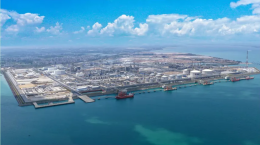
BASF's $8.7 Billion Zhanjiang Site Fully Operational, Covestro, SABIC, Arkema and Other Plastics Giants Double Down on China
-
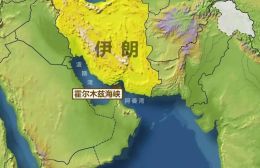
Deadly Impact: Hormuz Strait Blockade Sparks Shortage of Plastic Raw Materials, Threatening Shutdowns at Japanese and Korean Chemical Plants
-
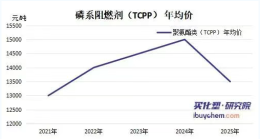
Massive Loss of $960 Million! Wansheng Co., Ltd. Sees Rising Revenue But Declining Profits—Why Did the Phosphorus-Based Flame Retardant Leader Falter?
-
SABIC Declares Force Majeure on Styrene Monomer and Methanol Production; Middle East Chemical Operations Halted
-
Domestic PBE Breakthrough, Polyolefin Modification Industry to Break the Impasse


