China's Luxury Car Market Cools: Mercedes-Benz, Bmw, and Audi All See Sales Fall
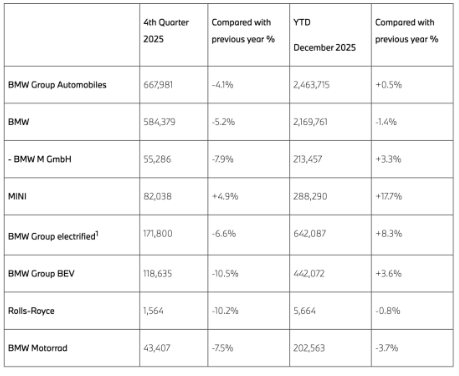
The three major traditional German luxury automakers—BMW, Mercedes-Benz, and Audi—have all released their annual sales figures. In 2025, the BMW Group's global sales reached 2.4637 million units, a year-on-year increase of 0.5%. The Mercedes-Benz Group recorded annual sales of 2.160 million units, representing a year-on-year decline of 10.0%. Audi Group's sales remained below those of BMW and Mercedes-Benz, with annual sales of 1.6236 million units, down 2.9% year-on-year. In terms of sales volume, BMW remains the leader, with figures significantly higher than those of Mercedes-Benz and Audi, and it was the only automaker to achieve growth. Meanwhile, although Mercedes-Benz Group's sales ranked between BMW and Audi, it suffered a substantial year-on-year decline of 10.0%.
Let’s first look at the BMW Group. In 2025, the BMW Group’s annual sales reached 2,463,700 units, a year-on-year increase of 0.5%. Among them, the BMW brand sold 2,169,800 units, a year-on-year decrease of 1.4%; the MINI brand sold 288,300 units, a year-on-year increase of 17.7%; and the Rolls-Royce brand sold 5,664 units, a year-on-year decrease of 0.8%. In addition, annual sales of BMW Motorrad fell by 3.7% year-on-year to 202,563 units.
Mercedes-Benz Group delivered 2.16 million new vehicles in 2025, a year-on-year decrease of 10.0%. Among these, Mercedes-Benz Cars sold 1.8008 million vehicles, a year-on-year decline of 9%, with pure electric vehicles accounting for 168,800 units, also down 9% year-on-year. Mercedes-Benz did not disclose specific sales figures for the smart brand. As for Audi Group, which comprises Audi, Bentley, and Lamborghini, it delivered 1.6236 million new vehicles in the full year, a year-on-year decrease of 2.9%, and also did not disclose specific brand sales.
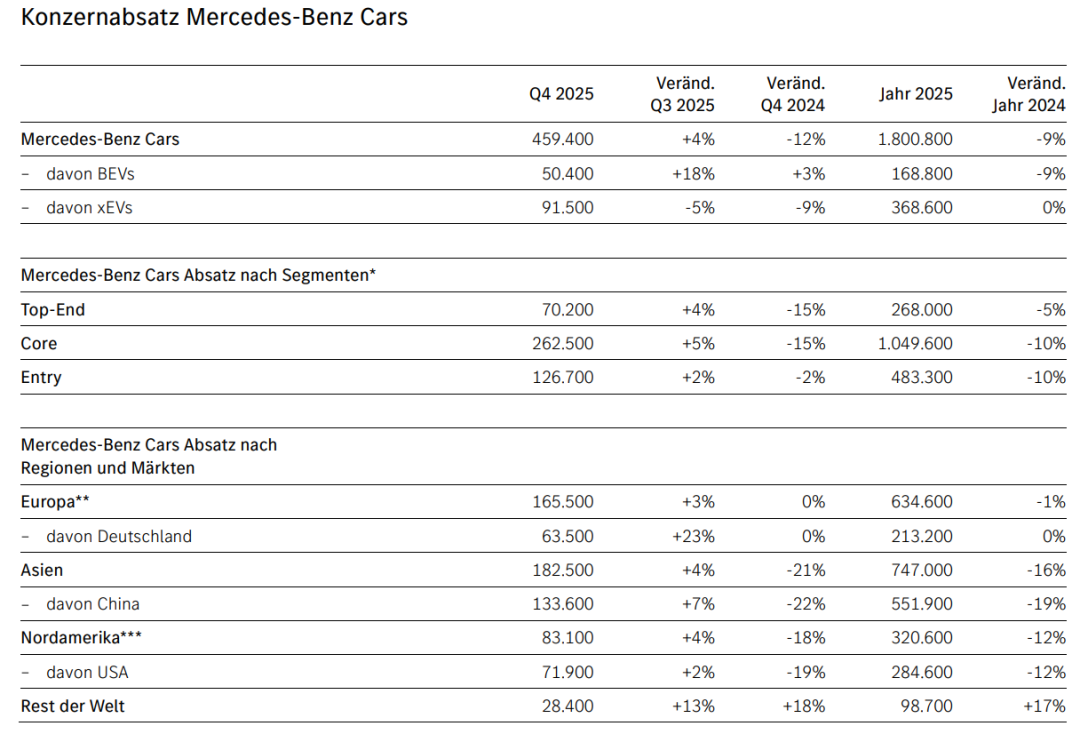
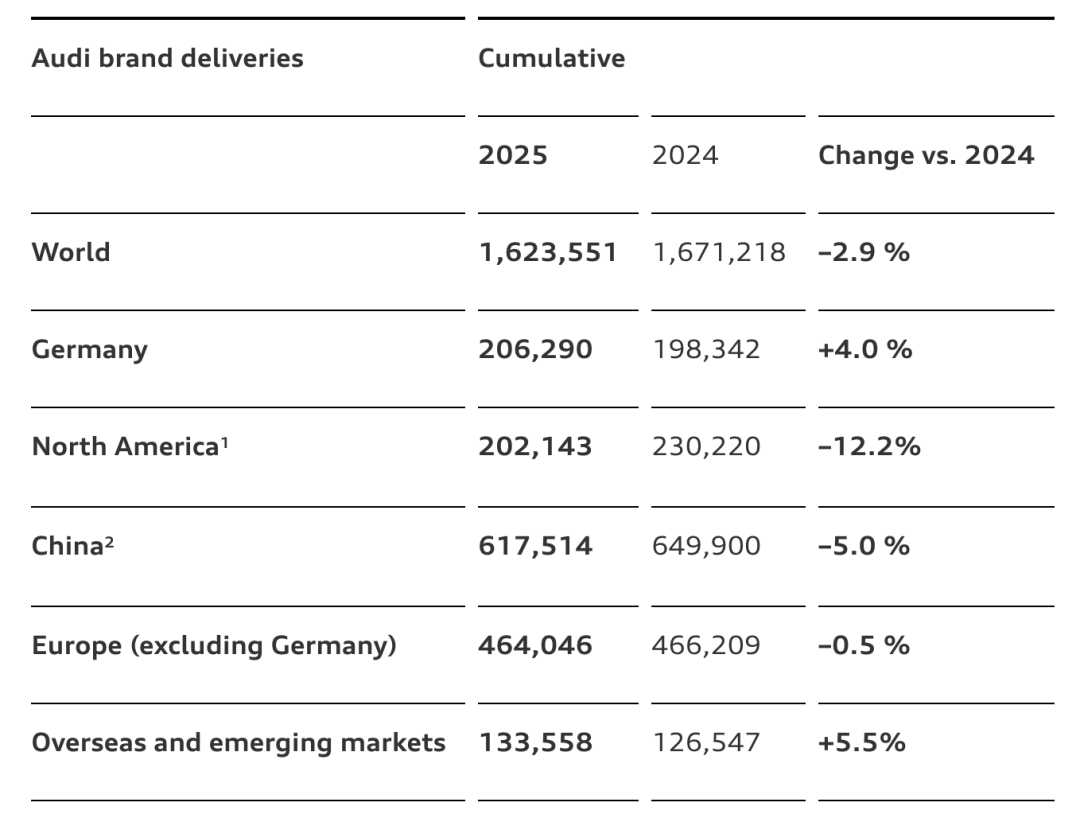
As the world's largest single market, the top three automotive giants all experienced a decline in the Chinese market in 2025.
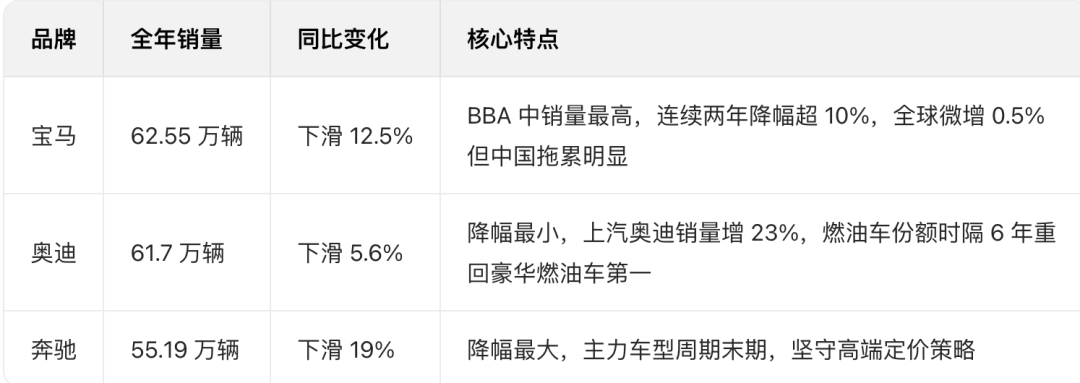
China remains the largest single market globally for BBA (BMW, Mercedes-Benz, Audi), with Mercedes-Benz and Audi each accounting for over 30% of their global sales. However, in terms of sales volume, BMW is still the leading luxury brand in China, followed by Audi with over 600,000 units sold, while Mercedes-Benz experienced the steepest decline. In 2025, BMW barely maintained its top position in the BBA ranking with 625,500 units sold, but saw a year-on-year decrease of 12.5%, marking the second consecutive year with a decline exceeding 10%. Audi closely followed with 617,000 units, with the smallest decrease of 5.6% among the three brands, thanks to a 23% sales increase from SAIC Audi, which helped it regain the top spot in the luxury gasoline vehicle market after 6 years. Mercedes-Benz suffered a significant blow, with sales plummeting by 19% year-on-year to 551,900 units, making it the brand with the largest decline. The core reason is that many of its main models are entering the end of their life cycle, but it insists on a high-end pricing strategy and is unwilling to compromise. Statistics show that the total sales of the three BBA brands decreased by approximately 260,000 units in 2025, a year-on-year decline of 12.3%, and the overall luxury car market above 300,000 yuan shrank by about 10%.
In recent years, the price war in the Chinese automotive market has been raging, and even BBA (BMW, Mercedes-Benz, Audi) cannot stay out of it. The decline of BBA is backed by a structural transformation in China's luxury car market – domestic high-end brands, using "technological luxury" as a breakthrough, have completely broken the long-standing monopoly of foreign brands. Today's consumers, especially the younger generation, no longer limit their demands for cars to traditional luxury and performance; intelligence, connectivity, and personalization have become important considerations when purchasing a car, which is precisely what traditional luxury brands lack. Currently, BBA still holds certain advantages in brand influence and technological accumulation, but in terms of the speed of electrification and intelligent transformation, they lag slightly behind some domestic new energy brands. BBA still needs to accelerate technological innovation and product iteration to enhance product competitiveness and maintain its footing in the fierce market competition.
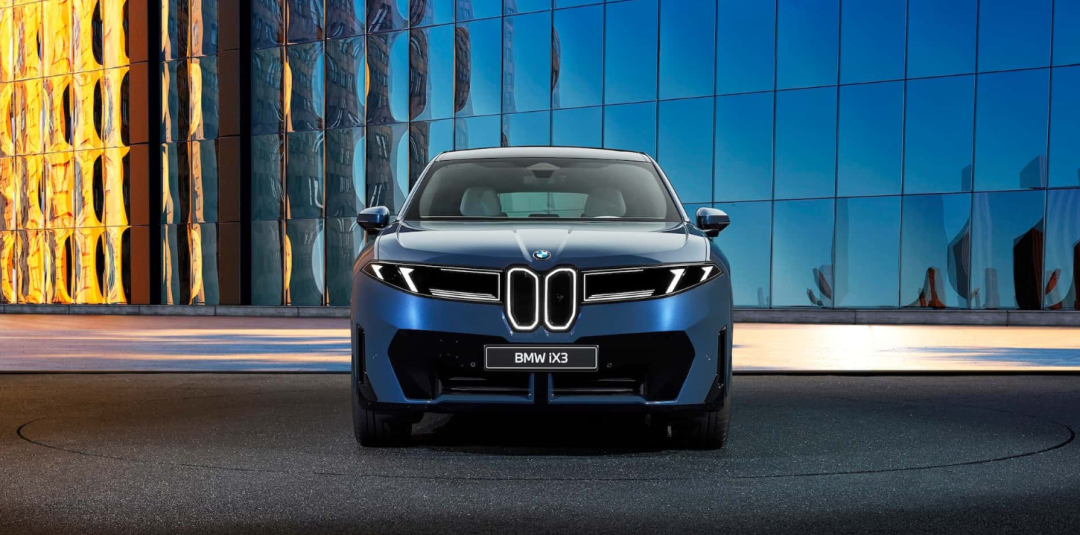
Facing a crisis of survival, the BBA (BMW, Benz, Audi) has finally lowered its stance and accelerated its dual-wheel drive strategy of electrification and localization. On the product front, all three companies plan to launch a wave of new pure electric vehicles in 2026. According to BMW China, 20 BMW, MINI, and BMW Motorcycle models will be launched in the Chinese market in 2026. In addition to the new generation BMW iX3, classic models will also be iterated and upgraded, with the eighth-generation long-wheelbase BMW 3 Series scheduled to begin production in June 2026.
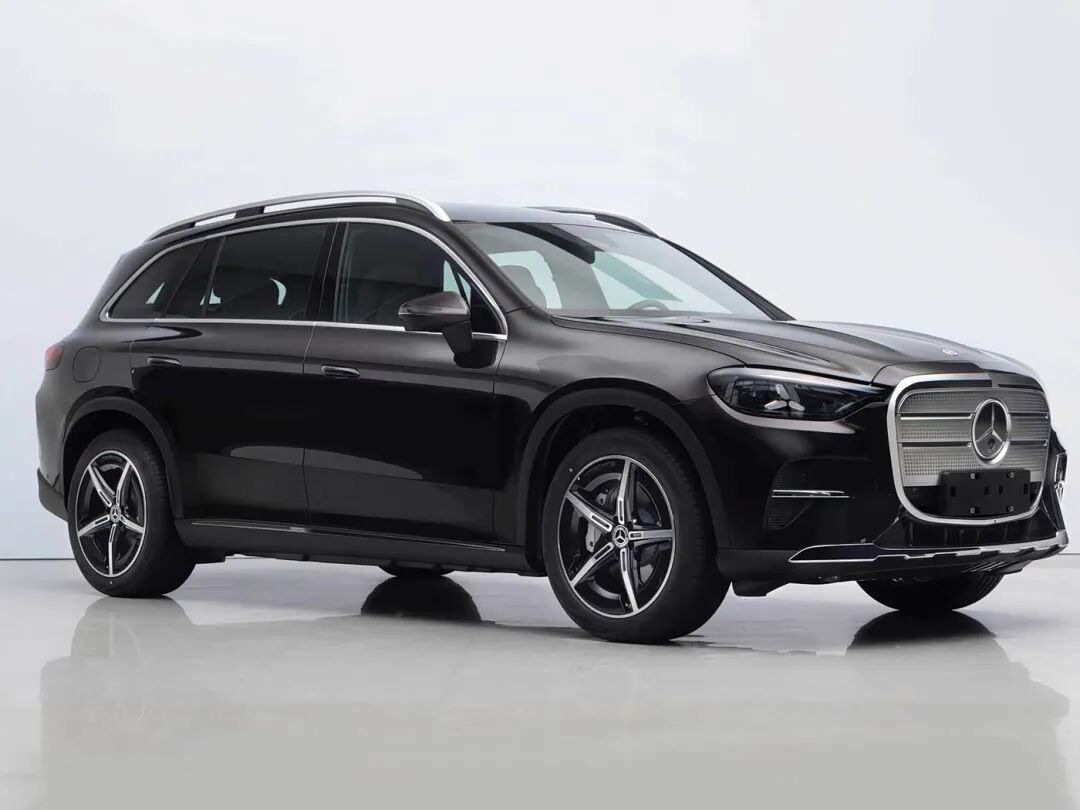
According to Mercedes-Benz's plan, the company will introduce over 15 new and facelifted products to the Chinese market this year, covering the entry-level luxury, core luxury, and high-end luxury segments across various powertrain options. New models based on its three major all-electric architecture platforms—MB.EA, AMG.EA, and VAN.EA—will be unveiled successively. Among them, the next-generation S-Class, the locally produced long-wheelbase GLE SUV, and the locally produced long-wheelbase GLC EV are also set to be launched in China within the year. Meanwhile, Audi will introduce new generations of several models, including the Q5L and A6L, while placing a strategic bet on the PPE electric platform. Based on this high-end platform, the Audi A6L e-tron, the second model under the AUDI brand—the Audi E7X—and a series of all-new plug-in hybrid models will be released.
2025 was a "year of growing pains" for BBA in the Chinese market, and a "turning point" for China's luxury car market. The era when BBA could win solely on brand prestige and mechanical performance is over. Consumers are now redefining luxury with "range, smart driving, and cost-effectiveness." For BBA, 2026 will be a crucial year that determines their fate. The product strength of their new pure electric platform models and the speed of localization of intelligent technologies will directly determine whether they can maintain their market position. However, it is certain that the "changing of the guard" in China's luxury car market has entered deep water, and the rise of domestic brands is unstoppable.
【Copyright and Disclaimer】The above information is collected and organized by PlastMatch. The copyright belongs to the original author. This article is reprinted for the purpose of providing more information, and it does not imply that PlastMatch endorses the views expressed in the article or guarantees its accuracy. If there are any errors in the source attribution or if your legitimate rights have been infringed, please contact us, and we will promptly correct or remove the content. If other media, websites, or individuals use the aforementioned content, they must clearly indicate the original source and origin of the work and assume legal responsibility on their own.
Most Popular
-
Breakthrough! 13.6-million-ton new giant emerges as world’s fourth-largest polyolefin producer, reshaping industry landscape
-
Massive Loss of $960 Million! Wansheng Co., Ltd. Sees Rising Revenue But Declining Profits—Why Did the Phosphorus-Based Flame Retardant Leader Falter?
-
BASF's $8.7 Billion Zhanjiang Site Fully Operational, Covestro, SABIC, Arkema and Other Plastics Giants Double Down on China
-

Deadly Impact: Hormuz Strait Blockade Sparks Shortage of Plastic Raw Materials, Threatening Shutdowns at Japanese and Korean Chemical Plants
-
Domestic PBE Breakthrough, Polyolefin Modification Industry to Break the Impasse