



Canada has defined PFAS as toxic substances under CEPA in its latest report.
The Canadian government has released the "Perfluoroalkyl and Polyfluoroalkyl Substances (PFAS) Status Report." This report was published following public consultations on the "Draft PFAS Status Report" released in May 2023 and the "Updated Draft PFAS Status Report" to be released in July 2024, during which over 400 stakeholders provided feedback.
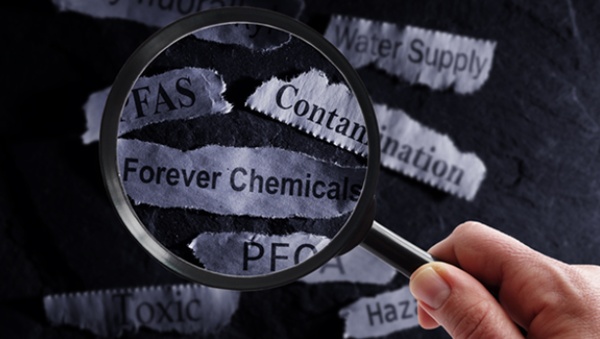
According to the latest scientific research, the Canadian government has studied PFAS as a class of substances. The PFAS category includes substances that meet the broad chemical definition set by the Organization for Economic Co-operation and Development (OECD).
Scientific evidence indicates that concerns about well-studied PFAS for human health and the environment are more broadly applicable to other PFAS. The category approach helps prevent unregulated PFAS that may have similar hazardous characteristics from replacing a regulated PFAS.
Based on the latest science and evidence, this report concludes that PFAS substances (excluding fluoropolymers as defined in the report) are toxic under the Canadian Environmental Protection Act (CEPA) of 1999.
CEPA Section 64 Investigation Results on PFAS (Excluding Fluorinated Polymers)
This report concludes that PFAS (excluding fluorinated polymers) meets two criteria under Section 64 of CEPA.
They are currently or may enter the environment, and their quantity, concentration, or conditions may have direct or long-term harmful effects on the environment or its biodiversity.
In Canada, they are entering the environment in quantities or concentrations or conditions that pose or may pose a danger to human life or health.
The conclusion of the report provides a science-based foundation for future actions and consultations with the industry and other stakeholders.
The PFAS status report defines fluorinated polymers as a group of PFAS. However, they are currently excluded from the report because current evidence suggests that they may have different exposure and hazard characteristics compared to other PFAS. The government will conduct further research on these substances to ensure informed decision-making.
In light of the conclusions of the PFAS status report, the Canadian government proposes to add the PFAS category (excluding fluorinated polymers) to Part 2 of Schedule 1 of CEPA. This action will achieve a targeted and phased risk management approach while protecting public health and the environment.
Proposed Actions on PFAS - Risk Management Approaches
The Canadian government recognizes that PFAS have various uses and are widely used in economic sectors. For safety, health, or economic reasons, certain uses may be critical, and industries will have the opportunity to participate and identify practical alternatives. This approach not only protects health and the environment but also supports the competitiveness of Canadian industries as they seek safer substitutes.
In order to determine the actions regarding the PFAS category (excluding fluorinated polymers), the government has released a proposed risk management approach, which includes the following environmental and health risk management objectives:
Reduce PFAS emissions into the Canadian environment to avoid adverse effects while balancing environmental protection and economic feasibility.
Reduce human exposure to PFAS, including disproportionately affected populations.
In order to achieve these goals and reduce environmental and human exposure to the technically feasible minimum level, the government recommends a phased approach to prioritize actions.
Phase 1: Address PFAS in firefighting foam (currently unregulated), as PFAS poses a high potential for environmental and human exposure.
Phase 2: Address the issue of the use of PFAS in consumer products where alternatives exist, such as certain textiles, ski wax, building materials, and food packaging materials.
Phase 3: Evaluation needs to consider further assessment of industries through stakeholder engagement and further evaluation.
The risk management methods will be open for consultation to all stakeholders from March 8, 2025, to May 7, 2025.
Take action on PFAS
In order to protect the health of Canadians and ecosystems, the government has been taking action on PFAS. Following scientific assessments in 2006 and 2012, three subgroups of PFAS (perfluorooctane sulfonate [PFOS], perfluorooctanoic acid [PFOA], and long-chain perfluoroalkyl carboxylic acids [LC-PFCA], their salts, and their precursors) were addressed through the 2012 Regulations on the Prohibition of Certain Toxic Substances. To further address these three PFAS subgroups, the government plans to release updates to these regulations in 2025.
Starting in 2025, 163 types of PFAS will be added to the National Pollutant Discharge Elimination System (NPDES) in order to enhance the understanding of their use and impact. This will provide information on how PFAS are manufactured, processed, or used in quantities exceeding 1 kg. The collected information will improve the understanding of PFAS and complement the proposed risk management approach focused on finished products.
In order to reduce exposure to PFAS, Health Canada released the final objectives for PFAS in drinking water in August 2024. According to the Great Lakes Water Quality Agreement, parties are also taking action to reduce the discharge of these substances into the Great Lakes.
In June 2024, the Canadian Food Inspection Agency issued a temporary standard to limit the amount of PFAS in biosolids sold or imported as fertilizer. The concentration of perfluorooctane sulfonate (PFOS), a type of PFAS, in all domestic and imported biosolids used as commercial fertilizers must be below 50 parts per billion.
The government will continue to take further action to reduce the risks posed by known federal contaminated sites of PFAS to the environment and human health. This work may include providing alternative drinking water sources and cleaning up specific areas, among other actions.
Canada works with the provinces through the Canadian Council of the Environment to address contaminated sites. It also collaborates with provinces, territories, and neighboring landowners to provide updated information and develop plans when pollution has already been or may have been transferred to the site.
Residents and municipal authorities not related to federal activities regarding PFAS pollution should contact the provincial or regional ministry responsible for environmental and drinking water issues.
Due to the importance of information in understanding the sources of PFAS, the government is currently compiling responses received from the information collection notice published in 2024, which includes 312 types of PFAS. This notice targets anyone who imports, manufactures, or uses products made with these PFAS in order to establish baseline commercial data and provide information for future activities. Similar initiatives have been issued since 2000 to investigate other PFAS substances.
According to the new substance notification regulations of CEPA (Chemicals and Polymers), continue to assess the potential risks of introducing new PFAS to the Canadian market. These PFAS will be subject to possible actions that address PFAS as a category.
The government continues to conduct research and monitoring activities based on existing science. This includes biomonitoring of certain PFAS based on the Canadian Health Measures Survey, as well as comprehensive monitoring and research projects on certain PFAS as part of the Northern Pollutants Program under Envi.
In addition, Canada collaborates with other countries to address PFAS, including through the Stockholm Convention on Persistent Organic Pollutants. In 2021, Canada nominated the addition of long-chain perfluoroalkyl carboxylic acids (LC-PFCA) and their salts and related compounds to the convention, which will contribute to global efforts to eliminate these substances. Internationally, Canada is one of the first countries to propose managing PFAS as a category.
【Copyright and Disclaimer】The above information is collected and organized by PlastMatch. The copyright belongs to the original author. This article is reprinted for the purpose of providing more information, and it does not imply that PlastMatch endorses the views expressed in the article or guarantees its accuracy. If there are any errors in the source attribution or if your legitimate rights have been infringed, please contact us, and we will promptly correct or remove the content. If other media, websites, or individuals use the aforementioned content, they must clearly indicate the original source and origin of the work and assume legal responsibility on their own.
Most Popular
-

Mexico Imposes Tariff Up to 36% on Cross-Border E-Commerce Products, Effective January 1, 2026; Plastic Shows Partial Fluctuation Today
-
4.5 Million Tons! Wanhua Chemical Dominates Globally in MDI, Heavy Investment in Battery Materials Spurs New Storm
-

Trump Delays Tariff Increase on Furniture, Cabinets, and Vanities
-
Wanhua Chemical Invests $27.3 Billion, 2026 Investment Map Revealed, $1.1 Billion Bet on Battery Materials
-
Back-to-back major joker moves! covestro’s 1.32 million ton mdi dual-line expansion and hdi acquisition reshape global polyurethane landscape


