



Applications of Flame Retardant Synergists in Wire and Cable
In modern society, from skyscrapers to smart homes, cables are like "nerves" and "blood vessels," permeating every corner of our lives. However, in the event of a fire, cables often become accomplices in the spread of the blaze. How can we equip cables with a more robust "flame-retardant armor"? Clay-based flame retardant synergists are precisely the "invisible heroes" and "secret weapons" behind this!
Clay-based Additives Background Knowledge
Montmorillonite is a class of layered aluminosilicate minerals containing small amounts of alkali and alkaline earth metals. Its crystal structure is composed of two layers of silicon-oxygen tetrahedrons sandwiching a layer of aluminum-oxygen octahedrons, which are stacked together by electrostatic forces between the layers, forming a clay mineral. Its unique one-dimensional layered nanostructure and cation exchange properties endow montmorillonite with numerous modification pathways and a wide range of application fields.
Montmorillonite has long been recognized as an advantageous char-forming material; however, it is difficult to disperse and blend with polyolefins. BYK offers clay products specifically designed for polyolefins to maximize dispersion and flame retardant effects in cable sheathing compounds.
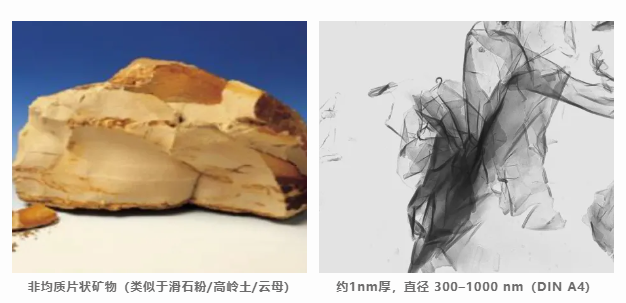
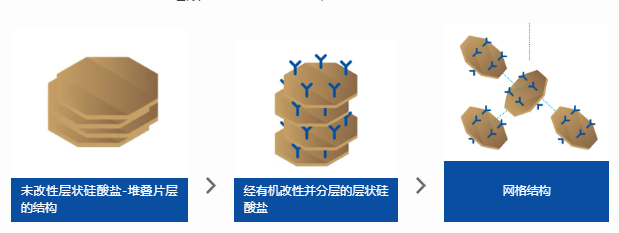
After organic modification, montmorillonite retains its good layered structure while transforming its hydrophilic properties into hydrophobic ones, effectively expanding the interlayer spacing and improving its compatibility with polymer matrices, thereby achieving efficient exfoliation.
Exfoliated and permanently delaminated layered silicates can form a network structure, enabling long-term stability and full effectiveness.
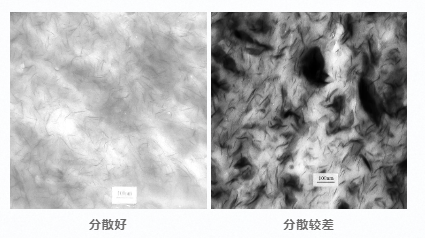
Clay-based flame retardant synergist
In cable applicationsAchieving Efficient Halogen-Free Flame Retardancy
Traditional halogen-containing flame-retardant cables produce toxic fumes and corrosive gases when burning, endangering human safety and the environment. They are gradually being replaced by environmentally friendly, low-toxic, and low-smoke halogen-free flame-retardant cable materials. However, driven by both upgraded demands and technological breakthroughs, conventional flame-retardant cables can hardly meet increasingly strict and more scientifically sound technical standards or fire prevention regulations. Therefore, developing and upgrading iterative products with higher flame retardancy levels is a general trend in the cable industry. Furthermore, due to technical and environmental reasons, the market demands higher performance halogen-free flame retardants. These products are mostly based on metal hydroxides, which are often used in high proportions in formulations, are difficult to incorporate, and can reduce the mechanical properties of the final product.
BYK-Chemie offers flame retardant synergists based on layered silicates (montmorillonite) that enhance the effectiveness of halogen-free flame retardants, thereby reducing the required addition levels.
Prevent dripping when burning.
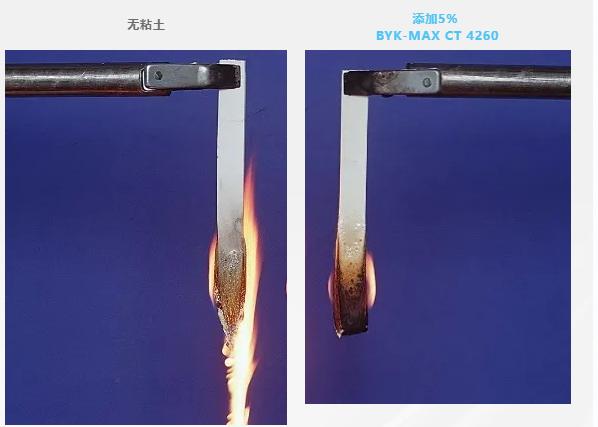
Testing system: ATH-filled halogen-free flame retardant thermoplastic LLDPE/EVA compound.
Bieke Chemical's halogen-free flame retardant synergist can improve the performance of conventional metal hydroxide flame retardants (such as ATH and MDH) and prevent ignition and dripping.
Enhanced crusting properties
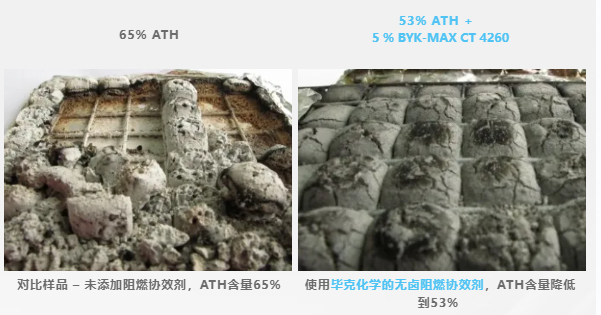
Testing method: Cone calorimeter test
Test SystemATH-filled halogen-free flame retardant thermoplastic LLDPE/EVA compound
BYK's halogen-free flame retardant synergists improve the performance of conventional metal hydroxide flame retardants (such as ATH) and enhance char formation.
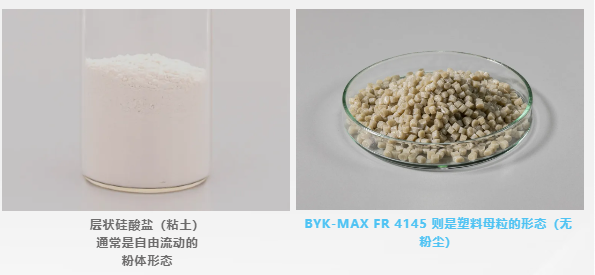
Product sourcing State: Powder or granules (dust-free)
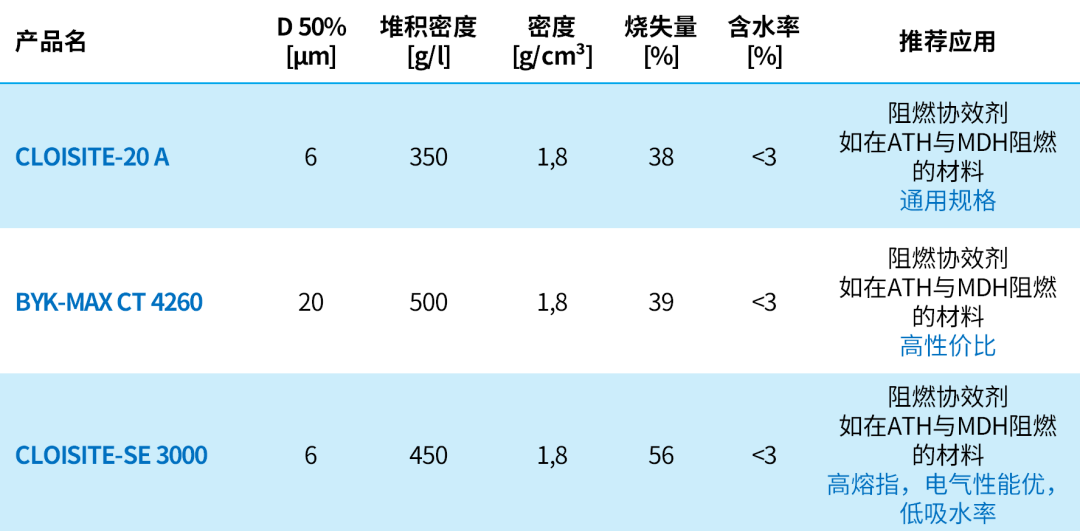
CLOISITE-20 A
BYK-MAX CT 4260
CLOISITE-SE 3000
BYK-MAX FR 4145 features a more user-friendly product form.
Powder product
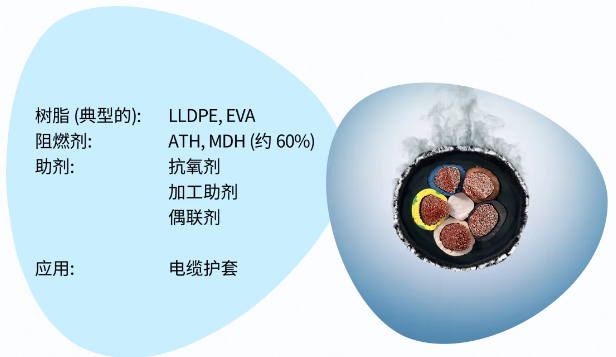
Typical composition of halogen-free flame retardant cable material
Application Cases
Challenge: High Filler Loading ATH/MDH vs. Mechanical Properties
Test 1
Requirement: Translate the above content into English, outputting the translation directly without any explanation.
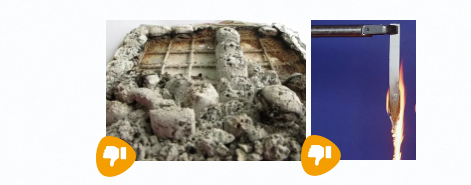
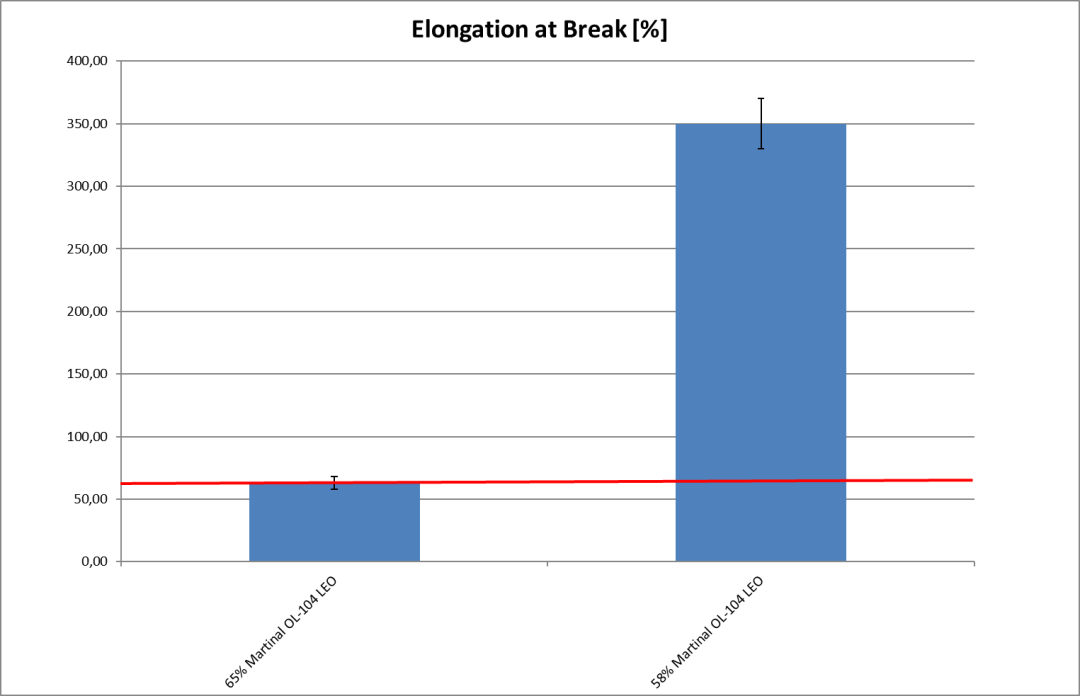
65% ATH passed the flame retardant test.
>250% elongation
Other parameters: Char formation, smoke suppression, anti-dripping …

Test Two
Requirement: Translate the above content into English and output the translation directly, without any explanation.
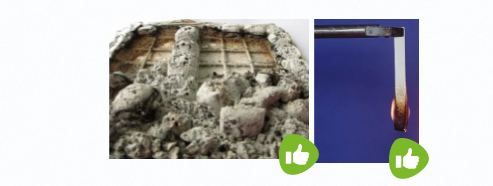
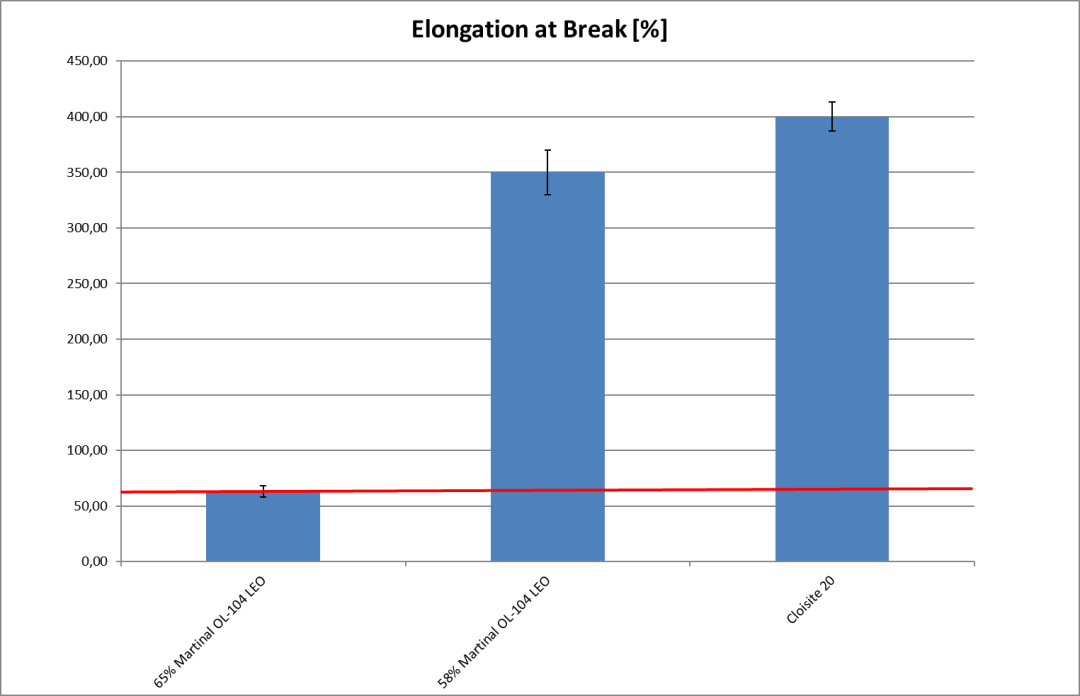
53% ATH + 5% Clay passed the flame retardancy test.
>250% elongation
Other parameters: Char formation, smoke suppression, anti-dripping…

【Copyright and Disclaimer】The above information is collected and organized by PlastMatch. The copyright belongs to the original author. This article is reprinted for the purpose of providing more information, and it does not imply that PlastMatch endorses the views expressed in the article or guarantees its accuracy. If there are any errors in the source attribution or if your legitimate rights have been infringed, please contact us, and we will promptly correct or remove the content. If other media, websites, or individuals use the aforementioned content, they must clearly indicate the original source and origin of the work and assume legal responsibility on their own.
Most Popular
-
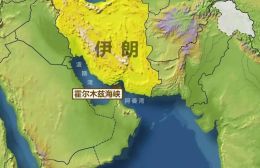
Deadly Impact: Hormuz Strait Blockade Sparks Shortage of Plastic Raw Materials, Threatening Shutdowns at Japanese and Korean Chemical Plants
-
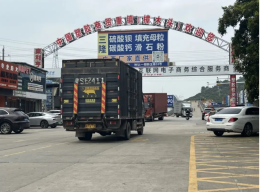
Middle East Conflict Triggers "Plastic Rush": Zhangmutou Clogged With "Plastic Spring Festival Travel", Is This Frenzy Ultimately An Inventory Game?
-
[Special Plastics Index] Geopolitical Conflicts Trigger Cost Surge, Plastics Futures and Spot Prices Rise Significantly Before Correction
-

Tao Lin: Tesla’s Supercharger Stations in China Surpass 2,500
-
Rolling to the material end! byd expands recycled plastic production by 100,000 tons amid market headwinds, redefining auto supply chain


