



[Special Plastics Index] Geopolitical Conflicts Trigger Cost Surge, Plastics Futures and Spot Prices Rise Significantly Before Correction
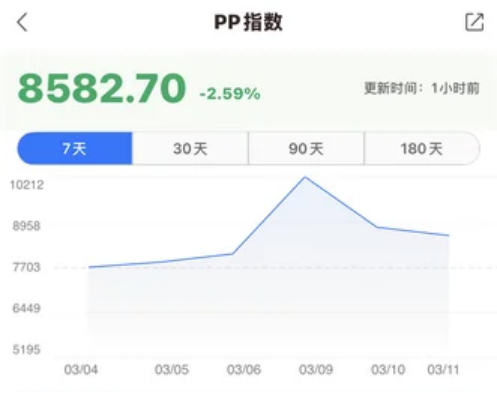
South China PP Price Index: 8,582.7 points, up 907.73 points (11.83%) week-on-week; among which, homopolymer PP for raffia increased by 1,500, fiber-grade PP by 1,700, copolymer PP by 1,500, thin-wall PP by 1,600, and homopolymer PP by 1,450.
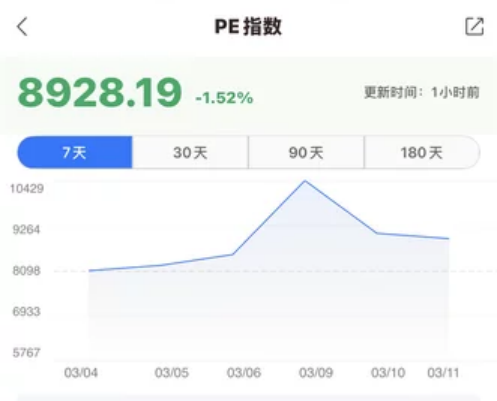
The South China PE Price Index stands at 8,928.19 points, up 931.31 points or 11.65% from last week, with linear PE rising by 1,200, LDPE by 1,300, and HDPE by 1,500.
This week, polyolefin prices were dominated by Middle East geopolitical conflicts, showing a sharp fluctuation pattern of "a sharp rise followed by a decline." The rigid upward pressure on the cost side and global supply contraction were counteracted by the lagging recovery of downstream demand and inventory pressure, causing the market to deviate from the fundamental supply-demand balance in the short term, with the trend being driven by geopolitical sentiment and cost logic, leading to a significant increase in volatility. From March 9 to 10, the polyolefin market reached a turning point, shifting from a sharp rise to a significant decline. The core reason was the U.S. releasing signals of "moderation in Middle East conflicts," while G7 and IEA discussed the release of oil reserves, easing market concerns about oil supply disruptions. The international crude oil price quickly fell, with the main contract of U.S. crude oil closing on March 9 falling by 34.4 dollars per barrel from its highest price of the day. The significant relaxation of cost support directly caused the polyolefin market to lose its core support.
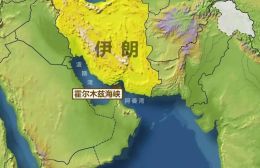
On the cost side, due to the Middle East geopolitical tensions and concerns over the disruption of shipping through the Strait of Hormuz, international oil prices approached $120 per barrel on March 8. However, following U.S. President Trump's statement early on March 10 that military action against Iran would "soon" end, and the G7's discussion on releasing strategic oil reserves, oil prices quickly dropped sharply, with the Brent crude futures falling as low as $81.16 per barrel. This extreme volatility in crude oil prices directly transmitted to the polyolefin market.
From the supply side, both international and domestic markets are experiencing supply contractions. Globally, polyolefin supply is tightening. The Middle East, as a key supply hub, accounts for over 15% of global polyethylene (PE) capacity and approximately 9% of global polypropylene (PP) capacity, with Iran and Saudi Arabia being core producers and exporters. This week, escalating conflicts in the Middle East have restricted regional polyolefin production and paralyzed export channels. All ethylene units in Iran have been shut down, resulting in a complete halt of its 4.8 million tons per year of PE and 1 million tons per year of PP capacity. As China's largest source of LDPE imports, Iran's export suspension has directly created a structural global PE shortage, with LDPE spot supply particularly tight. Additionally, core petrochemical production regions in Saudi Arabia and the UAE have reduced operating rates due to security risks, and key export terminals have suspended operations. Middle Eastern producers collectively account for about 25% of global PE and PP exports, and the paralysis of export routes now threatens nearly 10% of global polyolefin supply.
In terms of demand, the operating rates of various downstream industries have all shown a significant increase. The overall operating rate of PE downstream industries rose by 10.4% to 28.62% compared to last week, with the overall operating rate of agricultural films increasing by 8.8%, and the operating rate of PE packaging films increasing by 15.6%. The operating rates of PE pipe, hollow, and injection molding industries also saw varying degrees of recovery. The average operating rate of PP downstream increased by 8.33% to 45.07%, with the operating rates of downstream industries such as plastic weaving and BOPP film gradually recovering. As the traditional peak season of "Golden March, Silver April" approaches, there is still room for further increases in downstream operating rates. However, overall, the operating rates of downstream industries remain relatively low and have not yet recovered to pre-holiday levels, with demand being released at a slow pace.
Next week's price trend will primarily depend on the evolution of the Middle East conflict. If geopolitical tensions in the Middle East continue to escalate, cost-side support will remain intact, and polyolefin futures prices are likely to maintain a relatively strong and volatile pattern. If geopolitical tensions ease and crude oil prices continue to decline, polyolefin prices will face further downward pressure; however, given the tight supply and low inventory levels, the downside is expected to be limited, resulting in a range-bound, consolidating movement.
【Copyright and Disclaimer】This article is the property of PlastMatch. For business cooperation, media interviews, article reprints, or suggestions, please call the PlastMatch customer service hotline at +86-18030158354 or via email at service@zhuansushijie.com. The information and data provided by PlastMatch are for reference only and do not constitute direct advice for client decision-making. Any decisions made by clients based on such information and data, and all resulting direct or indirect losses and legal consequences, shall be borne by the clients themselves and are unrelated to PlastMatch. Unauthorized reprinting is strictly prohibited.
Most Popular
-
Supply Extremely Tight! LG Chem Declares Force Majeure on Export Contracts for Di-Octyl Terephthalate (DOTP)
-
Huntsman Introduces “War Surcharge” Amid Shipping Disruption and Soaring Energy Costs, Global MDI Prices Continue to Rise
-
Deadly Impact: Hormuz Strait Blockade Sparks Shortage of Plastic Raw Materials, Threatening Shutdowns at Japanese and Korean Chemical Plants
-

LG Chem Declares Force Majeure on DOTP Exports! SABIC Joins Five Giants to Redefine EV Safety
-
Tao Lin: Tesla’s Supercharger Stations in China Surpass 2,500


