



Solid Wood Replaced with Fiberglass Plastic! Diamond Pool Tables Complete Dual Upgrades in Manufacturing and Installation
Professional cue sports demand uncompromising precision — precision is everything. Championship outcomes are often decided by differences of mere millimeters, and even the slightest deviation in equipment performance can alter the result of a match.
When Diamond Billiard Products began upgrading the core structural components of its professional, tournament-grade billiard tables, the intention was not simply to improve the exterior design, but to achieve a fundamental transformation through engineering redesign—enhancing production efficiency, installation speed, and product durability in three key dimensions, thereby strengthening the brand’s sustained growth advantage in the competitive equipment market.
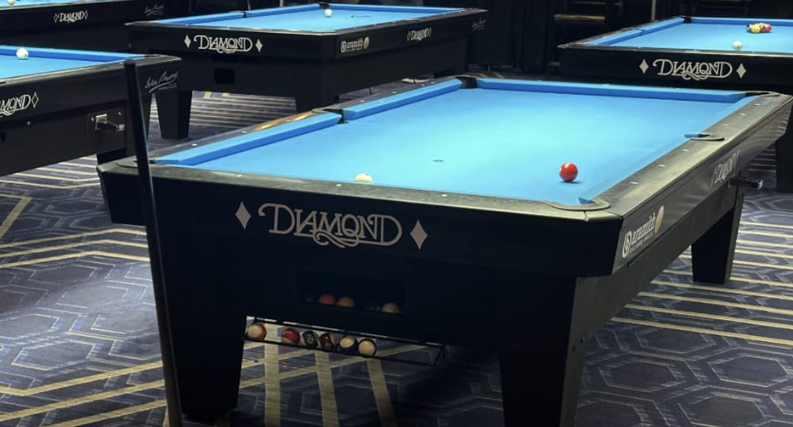
The core of the redesign effort lies in the pool table legs, a component whose structure has remained თითქმის unchanged for decades. The original Diamond table legs are made of solid wood. While classic and durable, they require an extremely complicated manufacturing process. Each leg must go through multiple workshops for cutting, shaping, sanding, surface finishing, and pre-assembly, involving a total of eight workers. In addition, each leg is assembled from 10 to 12 separate parts. From raw material processing to finished product rollout, the production cycle can take up to three months.
Apart from the complex problems in the production stage, on-site installation also has many pain points. At large-scale events, installers must adjust leveling nuts close to the ground, often having to lie flat; and because the floor flatness varies across venues, the entire leveling operation is time-consuming, labor-intensive, and physically demanding. If an event requires the setup of hundreds of tables at once, the inefficiency of this process will be further magnified.
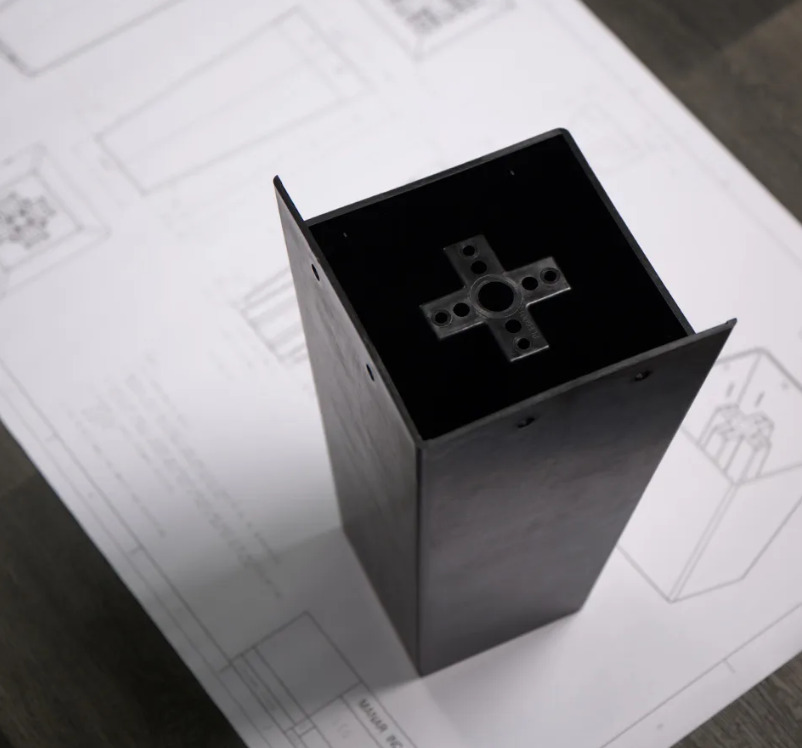
Jointly develop customized structural parts and achieve mass production through strategic cooperation.
Diamond spent years completing the design concept and 3D printing prototype testing before advancing to the mass production stage. To transform the design drawings into a mature product suitable for scalable mass production, the company partnered with Manar, a custom injection molding manufacturer with over forty years of industry experience. The teams from both sides collaborated to optimize the injection molding structure while ensuring that the finished product can withstand the high-intensity usage demands of professional sports events.
Ultimately, 40% long-glass-fiber polypropylene was selected as the raw material, as it can provide sufficient structural load-bearing capacity. Finite element analysis (FEA) verified that the new table legs can support a pool table weighing 1,200 to 1,300 pounds with minimal deformation. Diamond also conducted multiple real-world fatigue tests, repeatedly lifting and dropping the table to verify the product’s durability under extreme operating conditions.
The production efficiency gains brought about by the upgrade are highly significant: solid wood table legs that previously required several months and multiple processing steps are now replaced with an integrated injection-molded structural component, greatly shortening production time. The integrated parts design consolidates the original 10 to 12 separate solid wood components into a three-piece set consisting of the main injection-molded body, foot pad, and support shaft, greatly simplifying the production process.
The all-new table legs completely revolutionize the event assembly process. Installers no longer need to go underneath the table to make adjustments; they can simply sit at the side and use the side-mounted adjustment panel together with a power tool to complete the operation. The legs offer an adjustment range of up to 1.5 inches, accommodating various uneven floor surfaces. Overall installation efficiency is increased three- to fourfold, ergonomics are improved, and leveling precision remains uncompromised. For large events that require setting up hundreds of tables, the entire solution can save a substantial, quantifiable amount of labor hours.
Collaborative Engineering and R&D, Empowering Manufacturing Upgrading
Manar was deeply involved from the early stages of the project’s development, helping Diamond refine the initial concept into a mature, production-ready solution. The team effectively served as an extension of Diamond’s engineering department, providing professional guidance throughout on material selection, component structure, and mold development, and validating performance through simulation analysis and real-world testing. The final product not only met structural load-bearing standards but could also be reliably mass-produced at scale.
The geographic proximity of the two factories creates a collaborative advantage: Diamond’s production base is located close to the Manar facility, enabling frequent coordination, rapid sample delivery, and on-site technical support. Currently, Diamond has fully entrusted Manar with the mass production of table legs, while the two parties continue to collaborate on product iteration and innovation.
Plastic alternatives expanded to billiard table pocket components
After successfully launching mass production of the injection-molded table legs, Diamond partnered with Manar once again to develop pocket components for pool tables. Previously, after the pocket parts were injection-molded locally, they had to be shipped to Taiwan for leather wrapping and then transported back to the factory. The entire process took as long as three months, with frequent ocean freight delays, defect rates reaching as high as 50%, and persistently elevated supply chain risks.
The new integrated bag opening features an integrated component design, eliminating the outsourced wrapping process and removing reliance on overseas precision finishing. Combined with automated injection molding and robotic insert-molding processes, the finished product uses a new matte black textured coating, further improving durability. This structural optimization effectively reduces production waste, mitigates supply chain risks, and significantly enhances supply stability.
Traditional classic products embracing modern manufacturing processes
Billiard tables are a highly representative piece of traditional classic equipment, and technological innovation is relatively rare in the industry. However, Diamond has accurately seized the opportunity for industrial upgrading. By replacing the solid wood used in core load-bearing structural components with composite materials, the company has reduced both labor costs and production cycles, optimized the on-site installation experience, enhanced product durability, strengthened supply chain stability, and maintained professional tournament-level performance standards throughout.
Through its deep collaboration with Manar, Diamond has modernized traditional equipment while maintaining the product quality recognized by professional players. This case fully demonstrates that even in traditional manufacturing, a differentiation advantage can be created through a material substitution strategy and innovation in injection molding technology.
Manar Company Profile
Manar Inc. is a custom injection molding service provider with over four decades of industry experience, long serving leading companies across aerospace, automotive, consumer goods, medical, and industrial equipment sectors. The company specializes in delivering high-performance, high-precision engineered plastic components on time, leveraging deep industry expertise, advanced production equipment, and a one-stop solution mindset to help customers overcome a wide range of mass production challenges and achieve stable, scalable manufacturing.
Headquartered in Edinburgh, Indiana, the company is an employee-owned enterprise. It operates manufacturing facilities across multiple locations in the United States, including GTR Enterprises and Manar Medical in Edinburgh, Indiana; KEY Manufacturing in Madison, Indiana; and Manar Tennplasco in Lafayette, Tennessee. Working in close coordination, these facilities provide localized, large-scale injection molding manufacturing services to customers across the United States.
【Copyright and Disclaimer】This article is the property of PlastMatch. For business cooperation, media interviews, article reprints, or suggestions, please call the PlastMatch customer service hotline at +86-18030158354 or via email at service@zhuansushijie.com. The information and data provided by PlastMatch are for reference only and do not constitute direct advice for client decision-making. Any decisions made by clients based on such information and data, and all resulting direct or indirect losses and legal consequences, shall be borne by the clients themselves and are unrelated to PlastMatch. Unauthorized reprinting is strictly prohibited.
Most Popular
-

A Look at the Material Suppliers Behind SpaceX
-

Government's Triple Action, Enterprises' Three Arrows in Five Days, Semiconductor Reshuffle! What Signal Does Japan's Chemical Industry Release?
-
Next-generation motors of new energy vehicles: Single-Round Thousand Horsepower, Replacing Brakes, How Powerful Are They?
-
Ethylene: Production Capacity Accelerates Expansion, Global Industry Landscape Is Being Reshaped
-
Fire breaks out at jiangsu meiside!


