



Envalior Bets on Recycled PA6 and Bio-Based PPS
The goal of the SECARA partnership is to recover caprolactone from end-of-life vehicles as part of a new approach to EU recycled content regulations.
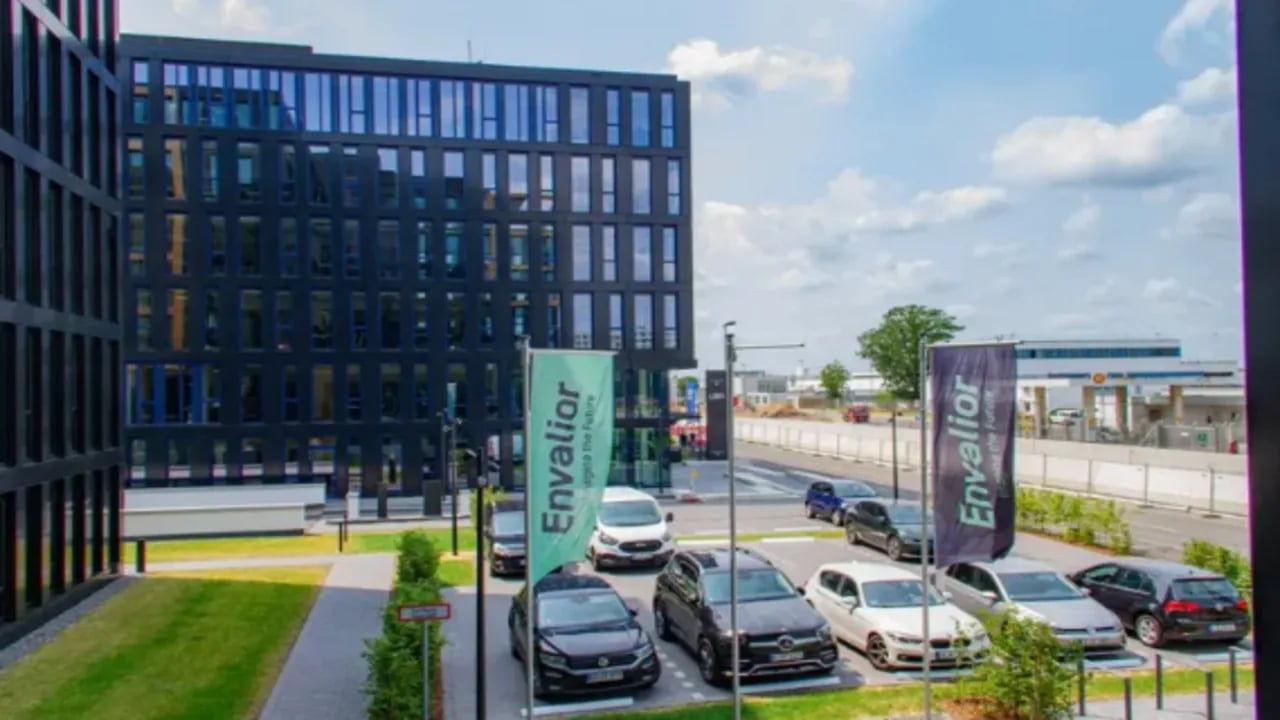
Engineering materials supplier Envalior is competing on multiple fronts—chemical recycling, bio-based feedstocks, and data center-specific compounds—as customers demand sustainability benefits without compromising performance or increasing costs.
EnvaliorRecently exhibited at Fakuma 2026 in Friedrichshafen, Germany, the company leveraged the trade fair to highlight bio-based and recycled high-performance materials, aiming to help customers achieve sustainability goals and reduce their carbon footprint, with a focus on applications in the automotive, electrical and electronics, and consumer goods sectors. Envalior is headquartered in Düsseldorf, Germany.
The most high-profile initiative is Envalior’s collaboration with SECARA to produce circular PA6 via catalytic depolymerization. This process aims to recover caprolactam from end-of-life vehicle plastics, including glass-fiber-reinforced grades and materials containing additives. However, according to Artur Völk, Head of Circular and Low-Carbon Solutions at Envalior, the project is still in its early stages.
SECURA Partnership
Völk tellsPlasticsTodaySECARA's catalytic depolymerization aims to recover caprolactone from end-of-life vehicle plastics, including glass fiber-reinforced grades and materials containing additives.“The recovered monomers are used in our existing PA6 production process, with the aim of matching the performance of virgin materials. The key balance we are striving to achieve is among purity, material performance, and cost competitiveness.”
Völk explicitly stated that the work has not yet passed laboratory validation. “Together with SECARA, we are in the technology verification phase, preparing for industrial-scale upscaling. We are currently working at the laboratory scale, not the pilot scale. Early aggregation results are encouraging, but comprehensive validation is still ongoing, so we have not yet shared performance data.”
Völk stated that scaling up chemical recycling remains the industry’s most significant hurdle, pointing to SECARA’s plan to build a demonstration plant by 2028. As the EU’s End-of-Life Vehicles Regulation phases in recycled-content targets over the coming years, Envalior is betting on timing rather than speed. “Our goal is to have this pathway ready when customers need to meet these requirements, prioritizing thorough qualification over early announcements,” said Völk.
New Area: Data Center
Angela Zheng, Global Business Manager at Xytron, stated that while the automotive industry has long driven innovation in engineering plastics, Envalior is now establishing a dedicated product portfolio for data centers, as the shift toward 800V DC architecture and higher power density has exposed new material vulnerabilities.
Zheng toldPlasticsTodayThe transition to 800V DC architectures and higher power densities is posing new challenges in electrical insulation, thermal resistance, and long-term reliability.Key risks include electrical tracking, hard-to-extinguish DC arcs, thermal deformation, and coolant contamination through ion leaching.
Zheng stated that Envalior’s approach is component-specific rather than based on a single universal material: Pocan PBT for high-voltage connectors, Stanyl PA46 for DC arc quenching applications, Xytron PPS for cooling components, and ForTii PPA for high-temperature connectors and switchgear.
Zheng stated that these requirements differ from those of electric vehicle powertrains.
She noted that while electric powertrains in automobiles face similar electrical and thermal challenges, they must also withstand vibration, mechanical loads, and harsh driving conditions. “Data centers place particular emphasis on continuous operation, cooling efficiency, and avoiding downtime, making long-term reliability a core criterion in material selection.”
Bio-based PPS offers on-demand options.
Martin Burg, the company’s Application Development Expert, stated that in terms of sustainability, Envalior’s Xytron B-MB is an ISCC PLUS-certified bio-attributed PPS grade produced using the mass balance approach with raw materials such as waste cooking oil. It is designed to match the performance of traditional Xytron while reducing its carbon footprint.
Burg stated that Xytron B-MB delivers the same mechanical, thermal, and chemical performance as traditional Xytron PPS, while reducing the product carbon footprint by up to 40%. “Customers can benefit from this off-the-shelf solution without making significant changes to their existing designs or manufacturing processes.”
Burg stated that mass balance and mechanically recycled materials serve different customer needs rather than competing with each other. “Mass balance grades are particularly attractive when customers demand consistent high performance alongside reduced Scope 3 emissions. Mechanically recycled materials are important for meeting recycled content requirements, especially in automotive applications,” he said, citing the company’s PCR Pocan T series, which offers up to 60% recycled content, including 30% mechanically recycled PET.
AI tools accelerate development
Envalior also relies on artificial intelligence to shorten development cycles, although the company refuses to share specific time savings. Christopher Stillings, Vice President of R&D at Envalior, toldPlasticsTodayAI-driven tools are embedded in the company’s 360 Innovation Services, combining digital capabilities with materials expertise, testing, and simulation.
“The goal is to help customers make better material choices earlier, optimize component design, and reduce costly development iterations,” said Stillings, who highlighted data center applications, where engineers evaluate electrical insulation, thermal resistance, and dimensional stability before customers commit to using the tools.
Looking ahead, Stillings notes that the most significant shift he observes among customers is not driven by any single factor such as cost or regulation, but rather by the convergence of all these factors. According to Stillings, the biggest change we are seeing is that customers increasingly expect higher performance and greater sustainability without incurring additional costs or manufacturing complexity. Electrification, higher operating temperatures, and more stringent environmental goals are making these requirements ever more interconnected.
He stated that this convergence is steering R&D along two tracks: sustainable direct alternatives such as Xytron B-MB, and circular technologies exemplified by the SECARA collaboration, alongside work on new, specific applications for emerging markets like AI data centers. Stillings said, “Our focus is on helping customers achieve the right balance between performance, sustainability, cost-effectiveness, and faster time-to-market.”
【Copyright and Disclaimer】The above information is collected and organized by PlastMatch. The copyright belongs to the original author. This article is reprinted for the purpose of providing more information, and it does not imply that PlastMatch endorses the views expressed in the article or guarantees its accuracy. If there are any errors in the source attribution or if your legitimate rights have been infringed, please contact us, and we will promptly correct or remove the content. If other media, websites, or individuals use the aforementioned content, they must clearly indicate the original source and origin of the work and assume legal responsibility on their own.
Most Popular
-
Finally, someone has clearly explained the "plasticizer" of polymers!
-

Differences Between Pc, As, Pp, And Tritan Four Common Water Bottle Materials
-
Injection Molding Machine Screw Noise and Slippage: What to Do?
-
Blown Film Always Has Problems? Root Causes and Solutions for 9 Major Pain Points Are All Here
-

Packaging Basics | An Overview of "Perfume Pump" Manufacturing Process, Technical Principles, and Procurement Key Points