



Covestro Pilots Recycling of Automotive Waste
A new German research project named CARBEX aims to recover BTEX aromatic compounds from automotive shredder residue, providing a low-emission alternative for traditional chemical production.
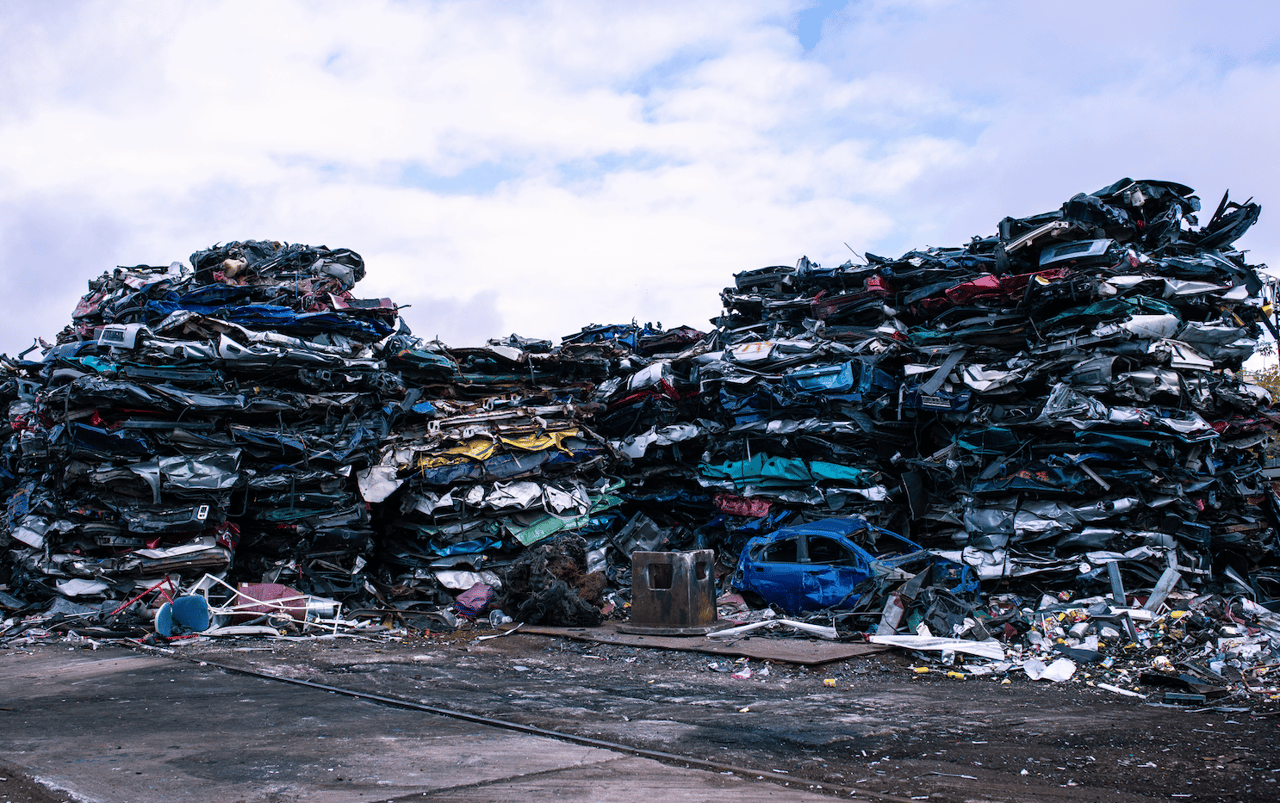
Every year, hundreds of thousands of tons of automotive shredder residue accumulate as a byproduct of recycling old cars, with most of it ultimately being incinerated. A new research project aims to change this situation by transforming this overlooked waste stream into a source of valuable chemical building blocks.
Covestro, the Fraunhofer Institute for Environmental, Safety, and Energy Technology UMSICHT, and Carbon Minds GmbH have launched the CARBEX research project to validate a process for recovering benzene, toluene, ethylbenzene, and xylene (collectively known as BTEX aromatic compounds) from automotive shredder residue (ASR). Covestro is leading the industrial activities of the project.
Why are BTEX aromatics important?
BTEX aromatic compounds are essential components of the chemical industry. Covestro uses benzene as a raw material to produce MDI (methylene diphenyl diisocyanate) and toluene to produce TDI (toluene diisocyanate). For example, MDI is used in the manufacture of insulating foams for buildings and refrigerators, as well as structural and acoustic components for vehicles. TDI is used to produce flexible foams for mattresses, upholstered furniture, and automotive seats.
At the end of a vehicle’s life, components containing large amounts of polyurethane like this ultimately end up in automotive shredder residue. This means that CARBEX can help close the loop in automotive recycling by turning old car parts into raw materials for new vehicles.
“Through CARBEX, we are tapping into carbon sources that are currently mostly incinerated,” said Stefanie Eiden, Project Manager at Covestro. “If we can recover benzene and toluene from automotive shredder residue at the quality required for MDI and TDI production processes, we can close the material loop while replacing emission-intensive steps in basic chemicals production.”
Nowadays, aromatics are mainly produced through the steam cracking of fossil naphtha. In Germany alone, this process generates approximately 8 million tonnes of CO2e in direct process emissions annually, with an additional 11 million tonnes associated with crude oil extraction and naphtha production.
Meanwhile, Germany generates over 466,000 tonnes of automotive shredder residue annually. Approximately 210,000 metric tonnes are used for energy recovery or disposal. On average, polyurethane accounts for 20% of this waste stream, although its share can vary significantly depending on the source.
Pyrolysis coke becomes a catalyst.
CARBEX is based on the patented Pyromat technology from Fraunhofer UMSICHT, which combines pyrolysis with a subsequent self-catalytic reforming process. In this process, the pyrolysis char generated during the reaction serves both as a catalyst and as an adsorbent.
At temperatures around 500°C, coke components such as calcium carbonate, titanium dioxide, and copper promote the formation of aromatic compounds. Meanwhile, they bind halogens like chlorine and bromine, preventing them from entering the pyrolysis oil. This eliminates the need for expensive external catalysts, which would quickly lose their effectiveness due to contaminants present in real-world waste streams.
In preliminary laboratory-scale tests using shredded car residue, Fraunhofer UMSICHT achieved a BTEX content of 62% in the pyrolysis oil, approximately 60% higher than that of conventional pyrolysis oil, while reducing halogen content by 99%. According to the institute’s calculations, the process-related emissions of the Pyromat technology amount to approximately 1.1 metric tons of CO2e per metric ton of BTEX, which is nearly 40% lower than the 1.6 to 1.8 metric tons associated with steam cracking.
“Pyromat technology uses pyrolysis char as both a catalyst and an adsorbent. This makes the process robust and cost-effective, particularly when treating highly contaminated waste streams,” explains Dr. Thomas Fehn, Project Manager at the Fraunhofer UMSICHT branch in Sulzbach-Rosenberg. “As part of the project, we are scaling this method from the laboratory to continuous pilot-scale operation with a throughput of 10 kilograms per hour.”
According to market research, widespread adoption of this process in industry could reduce carbon dioxide equivalent emissions by up to 640,000 tonnes annually in Germany. It will also reduce emissions associated with raw materials by replacing fossil naphtha.
From Waste to Isocyanates
CARBEX covers the entire value chain, from BTEX production to industrial applications. Fraunhofer UMSICHT is retrofitting its existing pyrolysis plant by converting the fixed-bed reactor into a moving-bed reactor and identifying stable operating conditions. The goal is to produce at least 50 kilograms of BTEX-rich pyrolysis oil with a halogen content below 30 parts per million, which is the threshold required for further processing in large-scale industrial plants.
Covestro is developing a model-based separation process to recover individual aromatic benzene and toluene from pyrolysis oil via distillation. The company will then verify their suitability for use in MDI and TDI production and conduct a techno-economic assessment. As an independent partner, Carbon Minds GmbH is responsible for the ISO-compliant cradle-to-gate life cycle assessment of the new value chain.
Close the material loop and achieve recycling targets.
The potential returns are significant. Industry analysis shows that Germany produces over 2.6 million tons of fragrances annually, with a market value of approximately €1.95 billion. At the same time, regulatory requirements for recycling are becoming increasingly stringent. For example, starting in 2032, the EU End-of-Life Vehicles Regulation will introduce mandatory recycled content targets for plastics used in vehicles, with a portion of the recycled materials required to come from end-of-life vehicles. Polyurethane chemically recycled through the CARBEX process can help manufacturers meet these requirements.
The CARBEX project will run from September 2026 to August 2029, funded by the German Federal Ministry of Research, Technology and Space under its “KlimPro-Industrie II” funding program for “Avoiding Climate-Related Process Emissions in Industry.”
If the pilot-scale operations prove successful, CARBEX can offer automotive and chemical manufacturers a viable pathway to achieve lower emissions and tighter material loops, transforming materials long regarded as waste into genuine resources for the circular economy.
About Partners
CovestroIt is one of the world’s leading manufacturers of high-quality polymer materials and their components. The company supplies products to customers worldwide in key industries such as mobility, construction and living, and electrical and electronics. Its circular economy strategy includes targets to achieve climate neutrality for Scope 1 and Scope 2 emissions by 2035, and for Scope 3 emissions by 2050. Covestro reported sales of €12.9 billion in fiscal year 2025, operated 46 production sites globally at year-end, and employed approximately 17,600 people.
Fraunhofer-GesellschaftHeadquartered in Germany, it is one of the world’s leading organizations for applied research, with more than 30,000 employees across 74 institutes. The Fraunhofer Institute for Environmental, Safety, and Energy Technology (UMSICHT) supports industry and society in transitioning toward a climate-neutral circular economy, with research focused on the circular economy, green hydrogen, carbon management, and local energy systems. Its Sulzbach-Rosenberg branch develops process engineering solutions that utilize alternative carbon sources—such as plastic waste, composite materials, and biological residues—to produce sustainable products and intermediates.
Carbon Minds GmbHIt is a data and consulting company specializing in decarbonization within the chemical and plastics industries. Through its cm.chemicals platform, the company operates the world’s largest life cycle assessment database for chemicals and plastics, covering more than 1,500 products across over 190 regions.
【Copyright and Disclaimer】The above information is collected and organized by PlastMatch. The copyright belongs to the original author. This article is reprinted for the purpose of providing more information, and it does not imply that PlastMatch endorses the views expressed in the article or guarantees its accuracy. If there are any errors in the source attribution or if your legitimate rights have been infringed, please contact us, and we will promptly correct or remove the content. If other media, websites, or individuals use the aforementioned content, they must clearly indicate the original source and origin of the work and assume legal responsibility on their own.
Most Popular
-
The Three Brothers of the Plastics World: What’s the Difference Between HDPE, LDPE, and LLDPE?
-

Differences Between Pc, As, Pp, And Tritan Four Common Water Bottle Materials
-
Do You Know the Tips for Choosing the Correct Product Gate Location?
-
Finally, someone has clearly explained the "plasticizer" of polymers!
-
Blown Film Always Has Problems? Root Causes and Solutions for 9 Major Pain Points Are All Here