Chinese EVs To Launch In Canada: “Cabbage-Price” Expectations May Falter, Cost-Effectiveness Becomes Key To Breakthrough
In early 2026, China and Canada reached a new energy vehicle trade agreement, with Canada officially abolishing the 100% additional tariff on Chinese electric vehicles, replacing it with an annual quota system, which opens a major entry point for Chinese automakers such as BYD, Chery, and Geely into the North American market.
After the news broke, Canadian consumers generally became hopeful, with many envisioning purchasing Chinese-made electric vehicles at prices significantly lower than current market levels. However, industry experts widely caution that such expectations of “cabbage-level” low prices are highly unlikely to materialize; China’s electric vehicles are expected to break into the Canadian market by leveraging cost-effectiveness rather than offering low-price advantages.
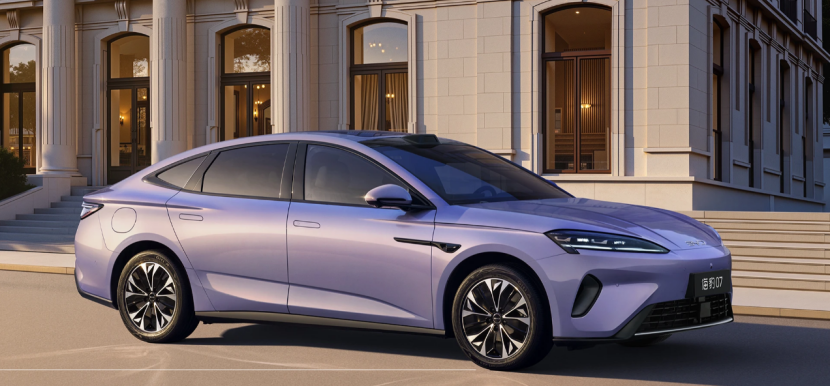
Image Source: BYD
Half-price car purchase is unrealistic.
"When it comes to Chinese cars, Canadians' first reaction is 'buy a car at half price,' but the actual data does not support this expectation." Robert Karwel, the Customer Director of Data and Analytics at J.D. Power Canada, pointed out the gap between market perception and reality. He explained that as new entrants to the Canadian market, Chinese car manufacturers may price their vehicles slightly lower than existing brands, but the discount is likely to be only in the single-digit percentages, far from the "half price" level that consumers expect.
This cautious pricing strategy stems from Chinese automakers' market positioning considerations. Robert Karwel further explains that Chinese automakers have no incentive to introduce their most affordable, low-priced models first into the Canadian market. "Those low-priced models would sell out within two or three months, leaving the companies with no vehicles to sell for the remainder of the annual quota period—an awkward situation that undermines long-term brand development in the market."
The current price level of Canada's electric vehicle (EV) market also makes it difficult for Chinese EVs to achieve significant price reductions. According to J.D. Power data, the average transaction price of EVs in Canada last year was CAD 57,600. Even the Chevrolet Bolt, the lowest-priced EV on the market, had a transaction price of approximately CAD 40,000 after including manufacturer incentives. Furthermore, the Canada-China trade agreement stipulates an import quota of 49,000 Chinese EVs for 2026, with an annual increase of 6.5% thereafter. Given this limited quota and the established market pricing benchmark, the "low-price, high-volume" strategy is no longer viable.

Image source: Chery
Moreover, Chinese electric vehicles face a significant disadvantage in the Canadian market: they are ineligible for Canadian government consumer subsidies. In February this year, the Canadian government relaunched its electric vehicle subsidy program, under which the maximum subsidy of CAD 5,000 applies only to vehicles manufactured domestically or in countries with which Canada has a free trade agreement—Chinese-made electric vehicles are excluded.
Daniel Ross, Senior Manager of Industry Insights and Residual Value Strategy at Canada’s Black Book, stated that this policy means Chinese EVs must be priced at or below the subsidized prices of other vehicles to remain competitive.
Fortunately, this disadvantage will gradually ease. According to Daniel Ross, Canada's electric vehicle subsidy cap will decrease annually, dropping to 4,000 CAD in 2027, 2,000 CAD in 2030, and then completely phased out afterward. "In the long term, the price advantage of Chinese electric vehicles will gradually disappear," he said.
The parity clause included in the China-Canada trade agreement is seen as a potential benefit for future price reductions of Chinese electric vehicles. According to the federal regulations in Canada that regulate the quota of Chinese electric vehicles, 10% of the imported vehicles per year to Canada must have a price not exceeding 35,000 Canadian dollars by 2027, and this proportion will rise to 50% by 2030. However, Ryan Robinson, head of automotive research at Deloitte, believes that even if this parity clause can lower vehicle prices, its short-term effect will be limited, as the Canadian government has not restricted the markup that automakers can apply after the vehicles arrive.
Cost-effectiveness is the core competitiveness.
Regarding the pricing logic of Chinese automakers, Ryan Robinson provided a more specific interpretation: “Chinese automakers expanding into the Canadian market aim primarily to establish themselves as volume leaders, rather than relying solely on low prices to capture short-term market share.” He believes that a price reduction of just 3% to 5% compared with peer vehicles is sufficient to appeal to price-sensitive consumers, while still ensuring corporate profitability and reserving funds for brand building and channel development.
Daniel Ross added that even though Chinese automakers offer multiple low-priced models, Canadian consumers are unlikely to see them in the short term. “The first models to enter the Canadian market will inevitably be those with the highest sales potential, not the lowest-priced ones.”
Daniel Ross expects that the final pricing of Chinese electric vehicles will be on par with or slightly lower than similar models in the Canadian market. The core competitiveness is not in the price, but in the product itself. In fact, even without significant price reductions, the product strength of Chinese electric vehicles is sufficient to form a differentiated advantage. Daniel Ross points out that many Chinese electric vehicles perform outstandingly in core metrics such as range and charging speed, "This means that existing market brands need to spend the same amount of money to compete with a 'better car'." This "better configuration at the same price" cost-performance ratio may become the key for Chinese electric vehicles to break into the Canadian market.
Despite numerous challenges, experts remain cautiously optimistic about the prospects of Chinese electric vehicles in the Canadian market. Ryan Robinson said that by early 2026, Canadian consumers were facing significant economic pressure, and inflation continued to rise. "At present, consumers are particularly focused on their financial capabilities, and Chinese brands can attract a large number of potential buyers by positioning themselves as high-value products."
With Chinese automakers such as BYD, Chery, and Geely entering the market, existing brands in Canada may be forced to accelerate technological upgrades and adjust their pricing strategies, ultimately benefiting Canadian consumers.
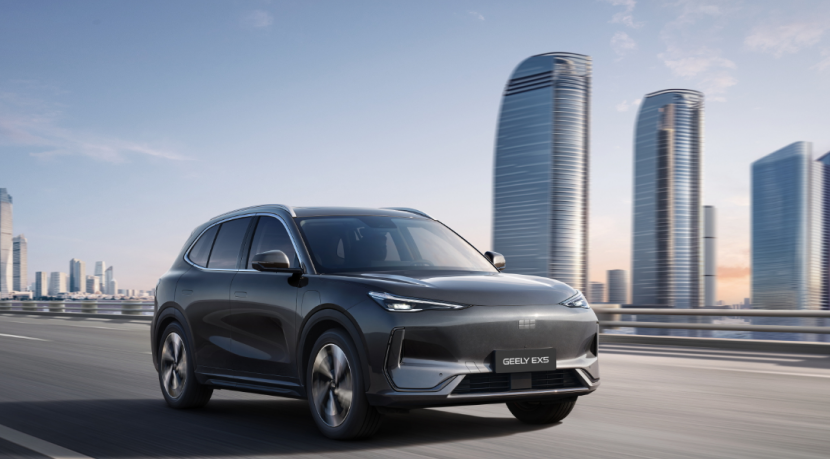
Source: Geely
【Copyright and Disclaimer】The above information is collected and organized by PlastMatch. The copyright belongs to the original author. This article is reprinted for the purpose of providing more information, and it does not imply that PlastMatch endorses the views expressed in the article or guarantees its accuracy. If there are any errors in the source attribution or if your legitimate rights have been infringed, please contact us, and we will promptly correct or remove the content. If other media, websites, or individuals use the aforementioned content, they must clearly indicate the original source and origin of the work and assume legal responsibility on their own.
Most Popular
-

BASF's $8.7 Billion Zhanjiang Site Fully Operational, Covestro, SABIC, Arkema and Other Plastics Giants Double Down on China
-

Deadly Impact: Hormuz Strait Blockade Sparks Shortage of Plastic Raw Materials, Threatening Shutdowns at Japanese and Korean Chemical Plants
-
Massive Loss of $960 Million! Wansheng Co., Ltd. Sees Rising Revenue But Declining Profits—Why Did the Phosphorus-Based Flame Retardant Leader Falter?
-

SABIC Declares Force Majeure on Styrene Monomer and Methanol Production; Middle East Chemical Operations Halted
-

Domestic PBE Breakthrough, Polyolefin Modification Industry to Break the Impasse