Addressing the Concerns of New Energy Vehicles
As a core component of new energy vehicles, the issue of power battery repair is moving from the background to the forefront, becoming a focal point of concern for both the industry and consumers.
Recently, the “Interim Measures for the Management of Recycling and Comprehensive Utilization of Spent Power Batteries from New Energy Vehicles,” jointly issued by the Ministry of Industry and Information Technology and five other departments, officially came into effect.
It is reported that the “Measures” incorporate the repair process—previously an isolated segment—into the closed-loop management of the battery’s entire life cycle, transforming the post-market management of power batteries from “unregulated growth” to “standardized and orderly development.”
Gasgoo learned that as the first batch of vehicles are gradually coming off warranty, the demand for repairs is starting to be released in a concentrated manner. The implementation of policies, however, has put an end to the old model of "replacement only, no repair" at the institutional level; meanwhile, continuous breakthroughs in repair technology have made cell-level repairs possible.
Under the combined influence of these factors, the previous extensive aftermarket model is being gradually broken down, and a more standardized and sustainable power battery repair ecosystem is accelerating its formation.
Lifetime warranty, is it receding?
Recently, the China Passenger Car Association (CPCA) officially released March automotive market data: new energy passenger vehicle retail sales reached 902,000 units, accounting for 52.9% of the market, while fuel-powered vehicles totaled 801,000 units, representing 47.1% of the market.
For the first time in China's automotive market, new energy vehicle sales in a single month have steadily exceeded those of fuel vehicles, marking a historic moment.
However, as the penetration rate of new energy passenger vehicles gradually increases, the anxiety of private consumers about using vehicles has not been completely eliminated.
In the face of anxieties about range, charging, and depreciation, maintenance issues, especially those related to power batteries, remain the most sensitive and unavoidable core concerns for consumers.
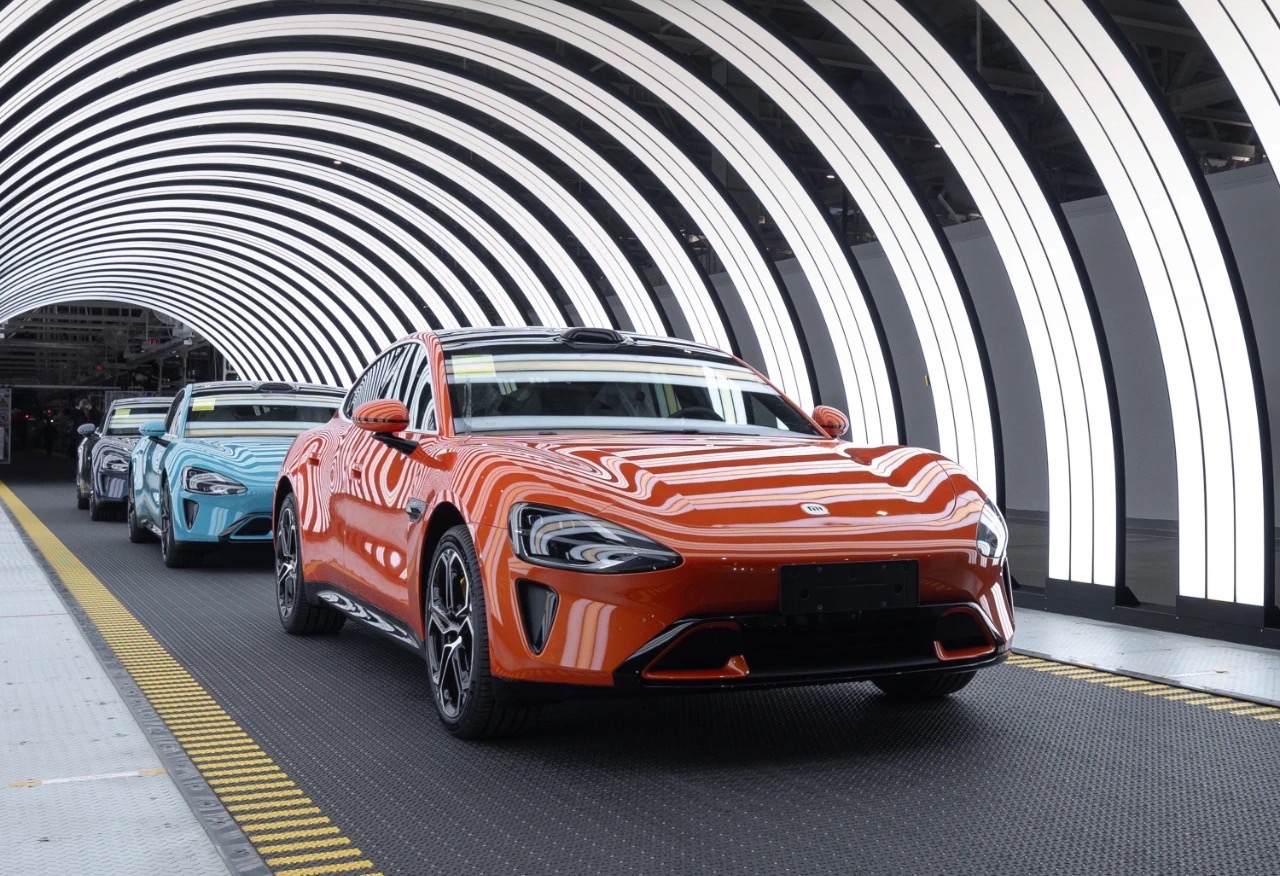
Image source: Xiaomi Auto
To compete for consumers, many brands have launched eye-catching after-sales policies such as “lifetime warranty on the three electric systems,” using them as key selling points to attract customers.
Taking the new long-range extended-range SUV Geely Boyue REV, which officially launched on March 31, as an example, the limited-time warranty offer is: the first non-commercial owner can enjoy a lifetime warranty on the three electric systems, and a 6-year or 150,000-kilometer warranty on the entire vehicle.
At present, this is not an isolated case.
However, there are still some concerns regarding the implementation of the "three-electric components warranty."
On one hand, new energy vehicles are updated and replaced extremely rapidly, with new models launched almost every year, making it impossible for suppliers to keep parts available for any single model over the long term, let alone fulfill a "lifetime warranty" promise.
On the other hand, for new energy vehicle brands that have already faded from the market, lifetime warranties on the three core electric components are essentially meaningless.
Recently, Gasgoo Auto spoke with a WM Motor EX5 owner, who expressed mixed feelings when discussing WM Motor's announcement that it has "come back to life" and that some vehicle infotainment systems have been reactivated.
"There is indeed a bit of a resurgence, but even if it does come back, probably not many people would dare to buy the car. Now, people have a basic understanding of the new energy vehicle brands. Before, the market hadn't yet established itself, and it was hard to distinguish between the good and the bad; now it's different. The name WM Motor has already been labeled."
When talking about his car usage, he said that the quality of the current car is still acceptable, and he would go to the 4S shop to handle any issues. However, the promised three-year powertrain warranty will definitely not be fulfilled.
"Previously, the motor made a strange noise, but I was too lazy to fix it, and it got better on its own." He sighed, "Now, it's the case that minor issues don't need fixing, but when a major problem occurs, it can't be fixed."
HiPhi, Tianji, Aion… a batch of once-prominent new-energy vehicle brands are now either bankrupt or suspended.
Owners of these brands also face a common problem: who will repair and maintain the three electric systems when they fail?
Some car owners humorlessly remarked: "When I bought the car, I was attracted by the lifetime warranty, but now the brand is gone, and the warranty has become 'lifetime self-coverage'."
Gaishi Auto learned that due to the long OEM warranty periods—minimum 6–8 years, with lifetime warranties also common—most new energy vehicles remain within their original factory warranty periods despite the rapid growth in NEV production and sales. Consequently, independent repair shops have limited access to such vehicles, as servicing is predominantly handled by OEM- and battery manufacturer-authorized service outlets.
However, car manufacturers are also tightening their "lifetime warranty" policies. Among the mainstream car manufacturers, some have reduced the scope from the entire vehicle to only the three electric systems, added a red line of annual mileage ≤ 20,000 kilometers, etc.
Behind the industry’s “cooling down” is not merely a simple erosion of rights and interests, but an inevitable turning point from reckless expansion to mature and standardized development. This shift is driven by the deep-seated interplay of four forces: costs, technology, competition, and regulation.
An industry analyst pointed out, "Early automakers exchanged 'lifetime warranty' for market share, but after the first batch of vehicles went out of warranty, maintenance costs began to erode profits. Now tightening the policy essentially means the industry is paying for its previous aggressiveness."
Who is sharing the EV battery repair "pie"?
According to data released by the Traffic Management Bureau of the Ministry of Public Security, by the end of 2025, the total number of new energy vehicles in China reached 43.97 million, accounting for 12.01% of the total number of vehicles. Among them, the number of pure electric vehicles was 30.22 million, accounting for 68.74% of the new energy vehicle stock.
With the rapid growth in the number of new energy vehicles, the aftermarket for these vehicles is also expanding significantly. According to Forward Industry Research Institute, the market is projected to achieve a compound annual growth rate of 20% from 2024 to 2029, reaching a scale of RMB 2.9 trillion by 2029.
Wang Hao, founder of Electric Workshop, stated in an interview with Gasgoo Auto that, based on the current technical characteristics, product design, and business sources of power batteries, the following primary issues exist regarding power battery repair projects.
Most maintenance enterprises lack professional conditions. For instance, they lack specialized functional areas and equipment/tools for testing and repairing new-energy vehicles and power batteries; their technicians lack relevant professional qualifications (generally requiring both the “Special Operations Operator Certificate—Low-Voltage Electrical Work” issued by the Ministry of Emergency Management and the “New-Energy Vehicle Inspection and Repair Professional Competency Evaluation Certificate” issued by the Ministry of Transport); they lack after-sales service authorization from new-energy vehicle and power battery manufacturers; and they lack support regarding operational procedures, technical standards, and warranty coverage.
This also means that the power battery repair market remains an untapped blue ocean. The massive aftermarket for new-energy vehicles has already attracted numerous players competing to enter the market.
Against this backdrop, some power battery manufacturers have begun establishing aftermarket service brands, aiming to capture a leading position in the aftermarket by focusing on specialized power battery services. As early as August 2024, CATL officially launched its aftermarket service brand—"Ning Home Service."
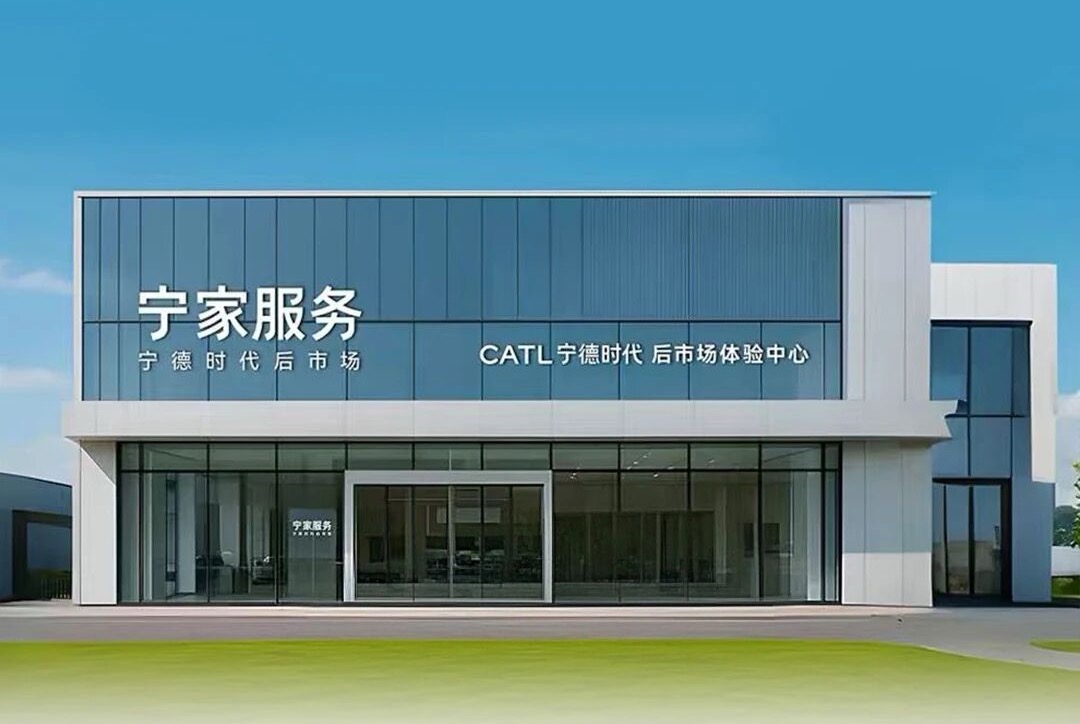
Source: CATL
Ningjia Service, a brand, offers comprehensive lifecycle services for new energy products, covering battery repair, battery maintenance, battery testing, battery extended warranty, second-hand vehicle trading, and battery recycling and reuse. Additionally, it has expanded into multiple aftermarket service offerings, including battery insurance, battery replacement, and new energy education programs.
As of now, CATL has established 668 domestic after-sales service stations and 219 overseas after-sales service stations.
At the beginning of this year, Shenzhen Shanxin Power Technology Co., Ltd. (hereinafter referred to as "Shanxin Power") also launched the "Xinchi An Auto Maintenance" chain brand. It is reported that "Xinchi An Auto Maintenance" plans to achieve the "hundred cities, thousand stores" goal by 2026, building 1,000 stores domestically, and initiating the layout of 11 overseas stores.
In addition, Shanshin Power also launched the "CTP Battery Pack Automatic Repair Production Line," which includes eight core processes such as baking, capacity grading, freezing debonding, milling cleaning, and laser welding, enabling non-destructive disassembly of battery cells and structural adhesives in CTP battery packs.
Gashine Automotive learned that Shanshin Power's business model is more open, with the concept of connecting the entire new energy vehicle after-sales industry ecosystem.
This ecosystem mainly consists of three major sections: the first part is car manufacturers and battery manufacturers, and Shanshin Power obtains their authorization to engage in warranty-related businesses; the second part is mobility service operators such as Didi and Gaode, and Shanshin Power helps them ensure the battery reliability and cost-effectiveness of vehicles during the driving distance of 200,000 to 600,000 kilometers; the third part is insurance companies, and Shanshin Power helps them reduce costs through battery repair and recycling and reuse businesses.
However, Wang Hao also told Gasgoo that according to the current content of the "Interim Measures for the Management of Recycling and Comprehensive Utilization of Waste Power Batteries from New Energy Vehicles," it indeed requires automakers and power battery-related enterprises to adopt easily disassemblable designs and disclose disassembly technical information to repair enterprises. Nevertheless, this should not be simplistically equated with most repair shops having the capability to repair power batteries and replace repairs for replacements, nor should it be interpreted as a "strict prohibition against mandatory battery pack replacements."
It’s easy to enter the game, but hard to break through.
Wang Hao stated in an interview: "Based on the actual operational performance of some brands that have already entered the market, they have not met the manufacturers' initial expectations. The main issues include: slow network development and construction speed, high costs; limited service offerings available at outlets and a long payback period for profitability; a narrowly defined target market, coupled with competition from authorized automotive service channels and aftermarket companies."
In fact, service brands driven by power battery manufacturers may encounter a situation where “the ideal is rich, but reality is harsh” when facing the aftermarket. Although they possess technological expertise and supply chain advantages, they are constrained by their cooperative relationships with automakers and face competition from aftermarket enterprises, making it difficult to achieve the desired outcomes in practice.
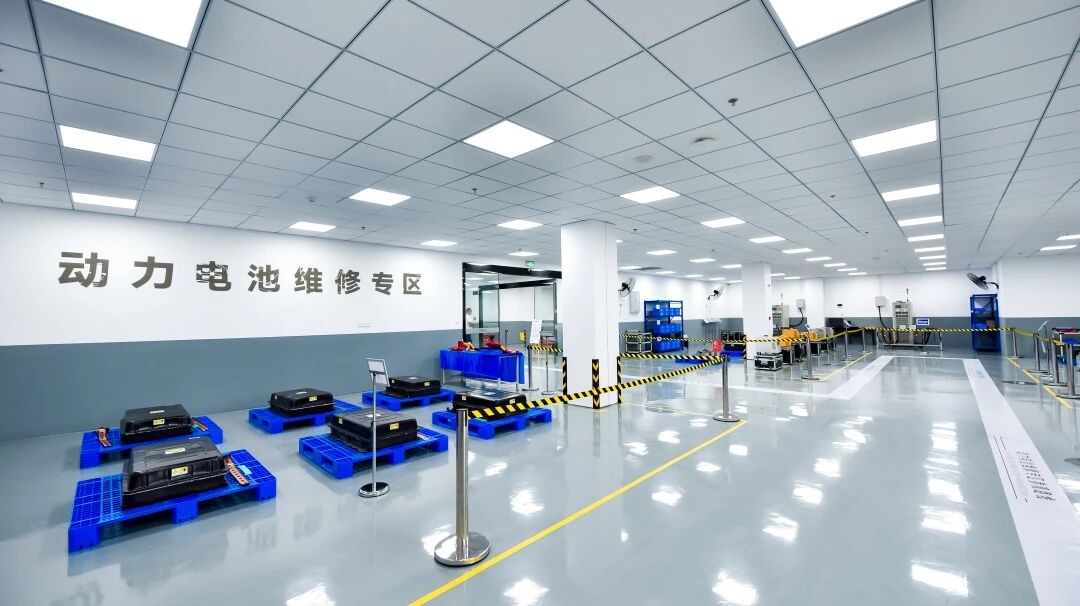
Image source: Contemporary Amperex Technology Co., Limited (CATL)
Wang Hao pointed out that for service brands driven by power battery manufacturers to succeed in after-sales service, they need to meet the following conditions:
First, in terms of branding, a differentiated positioning needs to be established, and promotional efforts should be increased to build a professional and trustworthy image among new energy vehicle users, at least achieving a status on par with authorized service channels of car manufacturers.
Second, technologies and supply chains should be fully disclosed and opened up to franchise outlets. Currently, due to agreements between battery manufacturers and automakers, such disclosure and openness are restricted to an extremely limited scope, making it practically difficult to meet the diverse demands of the aftermarket.
Third, regarding market and customer access, a stable customer base and consistent business sources are required, particularly collaboration with insurance companies and sufficient demand from C-end users. Currently, C-end users tend to prioritize authorized service networks from OEMs or leading traditional automotive aftermarket chains. Insurance companies seek premium contributions, open access to technical information, and supply chain transparency—requirements that battery manufacturers find difficult to fulfill in the short term and thus struggle to achieve ideal cooperation arrangements.
Fourth, regarding service network development, whether driven by the geographically dispersed service needs of C-end users or by cooperation demands from insurance company clients, battery repair brands must establish a professional multi-city coverage network and a robust operational system. Currently, these brands are only beginning to enter the market, and building out their networks and refining their operational systems will take considerable time, making it unlikely they can adequately meet market demands in the short term.
According to the forecast by industry research institutions, 2026-2028 will see a peak in new energy vehicles (NEVs) coming off their original manufacturer warranty periods. Theoretically, it is estimated that each year, 3 to 5 million NEVs will enter non-authorized service networks for servicing. Meanwhile, as the installed base of batteries from various manufacturers continues to grow, the demand for related services during the warranty period is also on the rise.
According to the Measures, it is clearly required that new energy vehicle manufacturers implement the extended producer responsibility, and car companies need to bear the main responsibility for the recycling of used power batteries and establish a complete recycling network. Currently, mainstream car companies have cooperated with legitimate recycling enterprises to achieve a "sales-use-recycling" closed-loop service.
However, many repair companies are not familiar with the relevant requirements and content, and in actual implementation, they fail to follow the relevant requirements. The industry standards and regulations concerning new energy vehicle repair services are being gradually improved.
It is understood that the currently released relevant standards include "New Energy Vehicle After-sales Service Specifications", "GBT16739 Conditions for Operation of Automotive Repair Business: Automotive Repair Enterprises", "GBT 44510-2024 Technical Requirements for Maintenance and Repair of New Energy Vehicles", "JTT1344-2020 Technical Specifications for Maintenance, Inspection and Diagnosis of Pure Electric Vehicles", and "Technical Conditions for Completion and Factory Release of Power Battery Repair".
Wang Hao noted that technical information disclosure and spare parts supply chains closely related to new energy power battery repair are still under monopolistic control by automakers and power battery manufacturers.
The current market situation is also undergoing changes. It is reported that FlashXin Power has already obtained authorization from Dongfeng Motor. Regarding battery manufacturers, the first batch of service providers signed by “XinChi AnYang Che” are granted comprehensive authorization, covering nearly all mainstream battery brands in the market.
Conclusion: In a Trillion-Level Market, Who Will Win?
Policy “hard constraints” are being established; the industry’s “barbaric growth” is receding; the technical approach of “repair instead of replacement” is gaining popularity; and players’ “multi-party game-playing” is unfolding.
Power battery maintenance stands at a historic turning point. In this transformation, no one can easily emerge as a winner. Only those who truly integrate resources in technology, channels, users, insurance, and more, and build a professional, trustworthy, and efficient service network, will be able to run their own track in this billion-yuan market competition.
【Copyright and Disclaimer】The above information is collected and organized by PlastMatch. The copyright belongs to the original author. This article is reprinted for the purpose of providing more information, and it does not imply that PlastMatch endorses the views expressed in the article or guarantees its accuracy. If there are any errors in the source attribution or if your legitimate rights have been infringed, please contact us, and we will promptly correct or remove the content. If other media, websites, or individuals use the aforementioned content, they must clearly indicate the original source and origin of the work and assume legal responsibility on their own.
Most Popular
-
Massive Loss of $960 Million! Wansheng Co., Ltd. Sees Rising Revenue But Declining Profits—Why Did the Phosphorus-Based Flame Retardant Leader Falter?
-
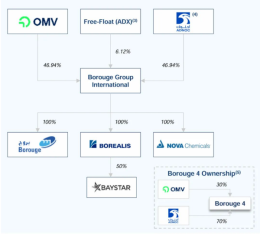
Breakthrough! 13.6-million-ton new giant emerges as world’s fourth-largest polyolefin producer, reshaping industry landscape
-
BASF's $8.7 Billion Zhanjiang Site Fully Operational, Covestro, SABIC, Arkema and Other Plastics Giants Double Down on China
-
Deadly Impact: Hormuz Strait Blockade Sparks Shortage of Plastic Raw Materials, Threatening Shutdowns at Japanese and Korean Chemical Plants
-
Domestic PBE Breakthrough, Polyolefin Modification Industry to Break the Impasse