



Why did the Xiaomi SU7, despite being equipped with heat-insulating and flame-retardant materials, still fall victim to tragedy?
On the night of March 29, it was reported that three drivers and passengers who had traveled by self-driving a Xiaomi SU7 from Hubei to Anhui for an exam were involved in an accident on the DeShang Expressway between Tongyang and Qimen sections.
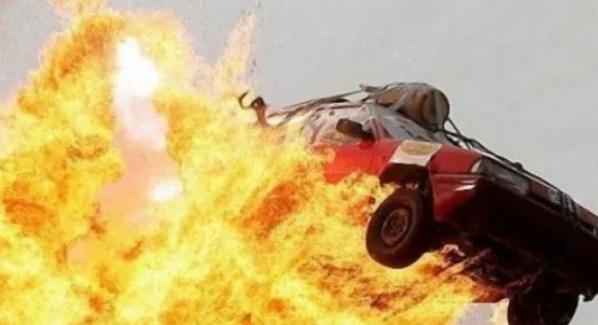
This issue has been gaining traction online, attracting attention from many netizens and Xiaomi car owners. On April 1st, Lei Jun addressed the "Xiaomi SU7 collision and explosion resulting in 3 deaths" incident with a post, and Xiaomi's official website also provided some responses. The matter is still under further investigation, and ZhuanSu World will continue to follow up on this report.
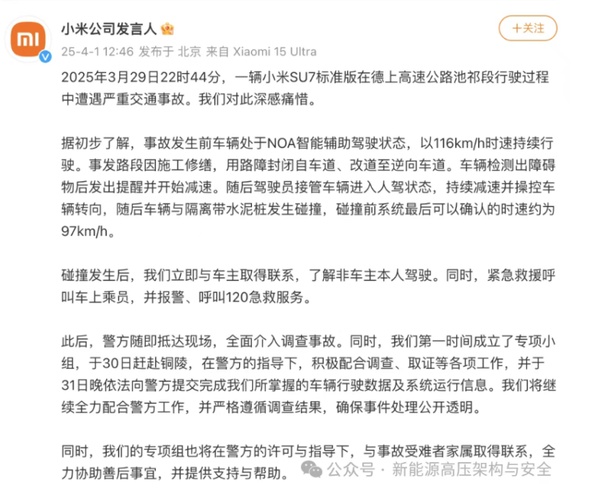
For a time, netizens have been discussing why vehicles catch fire after accidents, and there are also rising doubts about whether there is any cost-cutting in the flame-retardant materials used in cars. So how well does Xiaomi's automotive heat insulation and flame-retardant performance hold up? How can cars be made more fire-resistant? Let's take a look together.
1. The "escort" of thermal insulation and flame retardant materials
Xiaomi cars use aerogel as thermal insulation and fireproof material on both sides of the battery cells. Aerogel has excellent thermal insulation properties and lightweight characteristics, providing effective protection against thermal runaway for the batteries. In addition, Xiaomi cars extensively use various high-performance plastic materials such as modified PPE, PPS, and PC/ABS, which endow different parts of the car with fire resistance, high-temperature resistance, and lightweight properties.
In terms of power batteries, Xiaomi's battery brackets mainly use modified PPE, PPS, and PC/ABS; the battery cover plates mainly use modified PA6 and PA66; the battery casing primarily utilizes modified PPS, modified PP, and PPO; components such as battery cells and the Battery Management System (BMS) mainly rely on polymer materials for encapsulation and insulation. Through the application of these materials, the battery structure achieves flame retardancy, dimensional stability, chemical resistance, and high strength, ensuring the safety and durability of the battery.
In terms of electrical insulation, high molecular materials such as PPS are used in Xiaomi automotive electrical insulation components, such as insulating sealing rings, coil bobbins, high-voltage terminal posts, and three-phase copper busbars. PPS injection molded parts exhibit stable high-temperature resistance, fatigue resistance, and electrical insulation performance, which are related to the attenuation of electrical insulation performance and CTI values of core components in high-temperature environments.
In the Xiaomi SU7 accident,Although high-performance flame-retardant materials were used, the accident resulted in three fatalities, highlighting that relying solely on the flame-retardant properties of materials cannot fully ensure the safety of occupants inside the vehicle.
Relying solely on flame-retardant materials, the safety defense line of automobiles is still far from sufficient.
Judging from the accident situation, the vehicle caught fire quickly after the collision, and the fire spread rapidly. Although materials such as aerogel perform well in terms of heat insulation and fire resistance, the fire initiation speed and combustion intensity of the vehicle still exceeded expectations.
This may be related to other safety designs of the vehicle, such as the protective structure of the battery pack, the stability of the electrical system, and emergency response measures after a collision.
Additionally, the issue of car doors being locked is one of the key factors preventing people from escaping in time.
Although Xiaomi stated that the vehicle is equipped with an emergency pull handle, in actual emergency situations, occupants may not be able to locate and use the handle in time due to impact from collisions, confusion, or interference from fire. This indicates that the vehicle's emergency escape design needs to be more intuitive, easy to operate, and reliable in extreme conditions.
At the same time, the limitations of the intelligent driving system were also exposed in this accident.
Although the system can detect obstacles ahead and issue warnings when the vehicle is in intelligent assisted driving mode, collisions still occur when complex road conditions require the driver to take control or the vehicle to automatically decelerate.
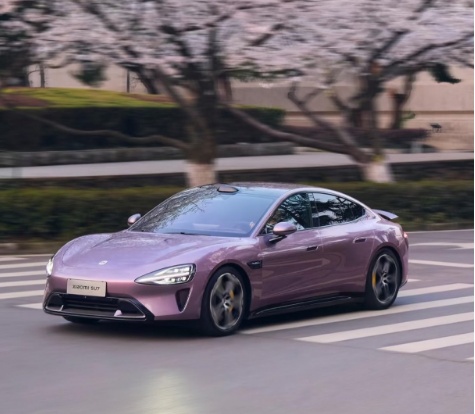
This indicates that intelligent driving systems still require further optimization and improvement to handle unexpected situations, ensuring they can make more accurate and timely judgments during critical moments.
In conclusion,The application of materials is only the foundation for ensuring vehicle safety, while the overall safety design of the vehicle, emergency response mechanisms, and the reliability of intelligent driving systems are equally crucial.
III. Application of Flame-Retardant Polymer Materials in Automotive Components
Currently, the flame-retardant polymeric materials mainly used include PP, PU, ABS, and PC. Depending on the specific requirements of automotive components, composite materials (alloyed), PA, PBT, PMMA, and other materials are also utilized.
Flame retardant PP
Polypropylene (PP) is the most widely used polymer material in automotive plastics, offering excellent chemical resistance, simple processing, and low cost. It is extensively applied in car dashboards, battery pack casings, door panels, pillars, seat back panels, bumpers, and more.
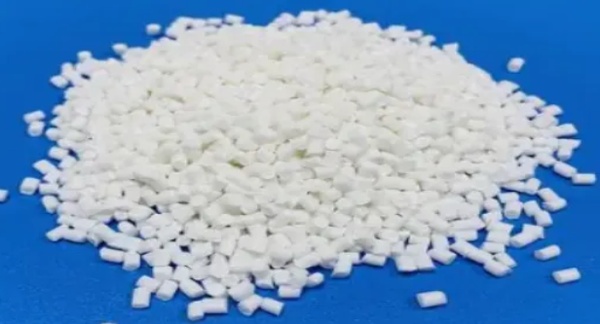
Currently, domestic and international research on flame-retardant PP for automobiles mainly focuses on modifying the polypropylene matrix, while also adding low-toxicity, halogen-free flame retardants to develop polypropylene composites with excellent mechanical properties and flame-retardant effects, in order to meet the flame-retardant requirements of automotive components.
In addition, a long glass fiber reinforced halogen-free flame-retardant polypropylene battery box was prepared using polypropylene as the matrix, long glass fiber as the filling material, and adding phosphorus-nitrogen-based halogen-free expandable flame retardants, melamine urate, and polyphosphoric acid melamine salt.
In the halogen-free modification technology of flame-retardant PP, IFR is considered one of the most promising development directions due to its minimal impact on the processing fluidity and low-density advantages of PP, excellent flame retardant efficiency, low usage, and low smoke and non-toxic properties.
2. Flame-retardant ABS
ABS, due to its strong durability and corrosion resistance of plastic surface coatings, is a typical material suitable for automotive coatings, and it is also used in the production of automotive parts.
Since ABS resin only contains three elements: C, H, and O, it does not possess flame-retardant properties, which makes ABS resin unstable at high temperatures and extremely flammable. During the ignition process, it also produces unpleasant-smelling gases and black smoke particles. Using it directly for automotive parts poses safety hazards.
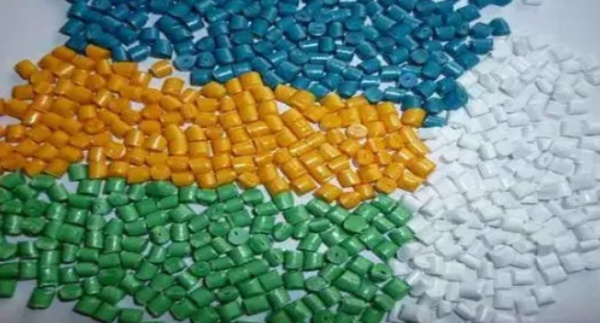
ABS can be melt-blended with polycarbonate (PC) to obtain PC/ABS composite material, which combines the advantages of both ABS and PC. It features a high heat deflection temperature and stability, as well as improved processability. PC/ABS alloys have become the largest and fastest-growing resin alloy in terms of production volume and can be used for automotive dashboards, battery packs, car bodies, and other components.
Flame-retardant PC
Polycarbonate (PC), as one of the five major engineering plastics, is used in the production of automotive components due to its advantages such as high strength, high impact resistance, and heat resistance. For example, it is used in car dashboards, lighting systems, heating plates, defrosters, and bumpers made of polycarbonate alloys.
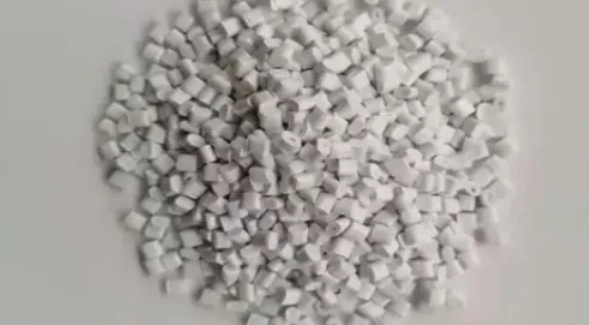
Brominated flame retardants can significantly enhance the flame retardant properties of PC, with commonly used ones including decabromodiphenyl ether (DBDPO) and tetrabromobisphenol A (TBB-PA). However, bromine-containing flame retardant materials are prone to decomposition at high temperatures, producing corrosive gases that can damage automotive components.
Silicon-containing compounds are gradually gaining attention as a new generation of environmentally friendly flame retardants due to their high efficiency, low toxicity, and non-polluting characteristics, as well as their minimal impact on the processing and physical properties of PC, such as polysilanes and polysiloxanes.
When selecting flame retardants for automotive components made of PC, there is a trend towards halogen-free and environmentally friendly options. This is achieved by adding various additives or preparing composite flame retardants to enhance the overall performance of PC.
In the future, research on flame-retardant PP for automotive applications will focus on efficiency and environmental protection. This will involve selecting halogen-free flame retardants, expandable flame retardants, phosphorus-nitrogen-based flame retardants, and compound flame retardants, while also incorporating other additives to develop flame-retardant PP materials with excellent performance.
【Copyright and Disclaimer】This article is the property of PlastMatch. For business cooperation, media interviews, article reprints, or suggestions, please call the PlastMatch customer service hotline at +86-18030158354 or via email at service@zhuansushijie.com. The information and data provided by PlastMatch are for reference only and do not constitute direct advice for client decision-making. Any decisions made by clients based on such information and data, and all resulting direct or indirect losses and legal consequences, shall be borne by the clients themselves and are unrelated to PlastMatch. Unauthorized reprinting is strictly prohibited.
Most Popular
-

Mexico Imposes Tariff Up to 36% on Cross-Border E-Commerce Products, Effective January 1, 2026; Plastic Shows Partial Fluctuation Today
-
4.5 Million Tons! Wanhua Chemical Dominates Globally in MDI, Heavy Investment in Battery Materials Spurs New Storm
-

Trump Delays Tariff Increase on Furniture, Cabinets, and Vanities
-
Wanhua Chemical Invests $27.3 Billion, 2026 Investment Map Revealed, $1.1 Billion Bet on Battery Materials
-
Back-to-back major joker moves! covestro’s 1.32 million ton mdi dual-line expansion and hdi acquisition reshape global polyurethane landscape


