Why did a century-old european dental instrument giant relocate its manufacturing hub to china?
Recently, a century-old dental giant from the "pocket-sized" inland European country of Liechtenstein signed an agreement in Minhang, Shanghai, that would alter its China strategy. The Ivoclar Group and XinZhuang Industrial Zone officially signed a project cooperation agreement, announcing a Phase I investment of $10 million to build an automated dental medical device production line. This means that the company, founded in 1923 and a stalwart in the global dental industry for over a century, is moving its manufacturing processes to China for the first time.

"Creating a Blank Space" Filling Story: Ivoclar's $10 Million Answer
Ivoclar Group has been operating in China for over 25 years, establishing a representative office in Shanghai in 1998, with its products distributed across dental clinics and hospitals nationwide. However, until recently, the company maintained in China only an import-based medical device sales entity, relying entirely on overseas production and subsequent shipment to China. The absence of local manufacturing directly resulted in prolonged product supply cycles and costs vulnerable to fluctuations in tariffs and logistics.

This fully automated production line, with a total investment of $10 million (approximately RMB 68 million), will focus on the localized production of core products such as dental filling materials and adhesives, covering the entire dental field including direct tooth restoration, fixed restoration, removable restoration, oral prevention, and dental aesthetics. At the signing ceremony, Stefan Riegler, Chief Production Officer of Ivoclar Group, stated: "China is a core market in our strategic focus, and we have firm confidence in local growth. We hope that through the practice of 'Made in China for China,' we can not only provide impetus for the group's own development and bring more efficient and suitable solutions to Chinese customers, but also strive to become a long-term partner in enhancing local oral health standards and serving community public health."
02 Not just "Made in China," but a transformation of the industry paradigm
At the same time that Ivoclar Vivadent made this decision, the Chinese dental equipment market is undergoing profound changes. Data shows that the Chinese dental equipment market is expected to reach 19 billion yuan in 2025, with an annual growth rate of 9.8%, accounting for about 5.5% of the global market share. However, the market structure is far from settled—low-end products are dominated by local brands, while more than 80% of high-end products rely on imports, with the overall domestic production rate at around 30%. This means that Ivoclar Vivadent's decision to enter local manufacturing faces not a blank slate, but a complex competitive landscape where existing and new markets coexist.
However, the survival logic of foreign brands in China is being completely rewritten. Over the past two decades, the "standard configuration" for foreign dental companies was to establish a sales entity in China and import finished products from overseas. This path, under the impact of tariff fluctuations, supply chain uncertainties, and changes in policy orientation, is becoming increasingly uneconomical. In 2025, the National Medical Products Administration issued the "Announcement on Further Adjustment and Optimization of the Production of Imported Medical Devices by Domestic Enterprises in China," paving the way for foreign companies to "switch from import to domestic production." The actions taken by Ivoclar Vivadent are precisely a strategic move during this policy window period - it's not just about "manufacturing in China," but also about achieving "designed in China, optimized for China" through local manufacturing.
03 The “Puzzle Moment” of Minhang’s Dental Care Landscape: Why Here?
Vitality chose the Xinjiao Industrial Park as its location, not a randomly selected address. The Minhang District currently has 26 oral medical device manufacturers, gathering industry leaders such as Straumann in dental implantation and 3M in dental care. With Vitality's entry, the park will initially form a comprehensive "implantation + restoration + imaging" technical complementary system composed of three international giants: Straumann, Planmeca, and Vitality.
Physical agglomeration is generating chemical effects. A relevant official from the Xinzhuang Industrial Zone stated that physical agglomeration will reduce supply chain costs and facilitate the efficient flow of talent and technology; meanwhile, the benchmark effect—characterized by “leading enterprises driving development and ecosystem-wide collaboration”—will attract more upstream and downstream supporting enterprises to proactively cluster nearby. Viewed more broadly, this layout reflects the broader trend in China’s dental industry shifting from fragmentation toward industrial clustering. In the field of dental implants, for instance, imported brands such as Straumann and Nobel Biocare dominate the high-end market, while domestic implant manufacturers are gradually rising but still hold relatively small overall market shares. As a leading player in restorative materials, Ivoclar perfectly fills the critical, intermediary role within the industrial chain.
Stefan Riegler gave a straightforward answer about the site selection: "The government provided us with a very efficient site evaluation, and the administrative efficiency is very high. There are many of our sister companies here, all of whom recommended us to invest and build a factory here."
04 More Than Just a Cost-Effectiveness Contest: New Frontiers in Multinational Corporations’ Localization
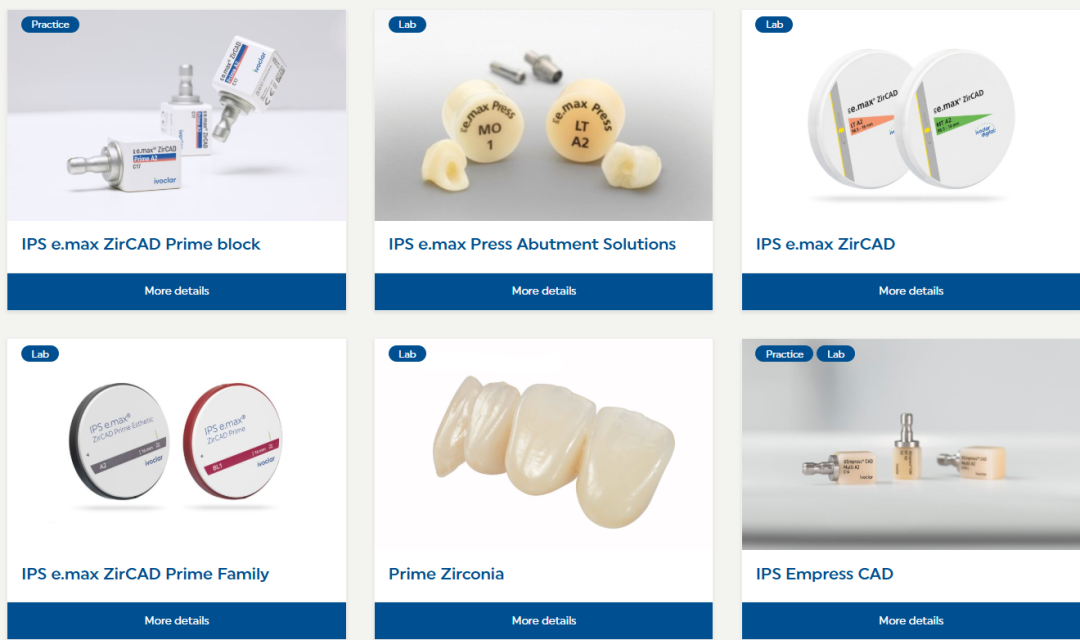
Ivoclar brings not only production capacity but also a set of noteworthy statistics: its flagship product, the IPS e.max® series of dental crown restorative materials, boasts a 97.2% continued usage rate among patients after ten years. This translates into fewer restorative replacements, lower long-term treatment costs, and superior patient experience. In dentistry, patient retention rate is one of the most direct indicators of product quality.
The localization of foreign brands in China is shifting from "price competition" to "value competition." In the past, foreign companies relied on brand premium and technological leadership to occupy the high-end market in China, but the marginal benefits of this model are now declining. Domestic brands have rapidly emerged in the mid-market by leveraging their deep understanding of local distribution channels and doctor networks. For example, Meiya Optoelectronics' oral CBCT has a domestic production rate exceeding 30%, with detector accuracy reaching 0.08mm, breaking the long-term monopoly of Europe and the United States.
In this context, Ivoclar Vivadent has chosen to move the manufacturing process to China, with the core objective not being to reduce production costs, but to shorten response time, adapt to local clinical needs, and integrate into China's digital diagnosis and treatment ecosystem. Stefan Riegler emphasized clinical data, stating, "In the next step, we will bring more excellent products to Chinese patients" — implying that IPS e.max is just the beginning.
05 The "Three-Level Leap" of Park Strategy: From Enterprise Inflow to Ecosystem Building
Signing the agreement is just the beginning. The XinZhuang Industrial Park is now carrying out a series of deeper industrial layout initiatives centered around the implementation of the company. The park's officials stated that in the next step, they will focus on the direction of industrial clustering and conduct precise recruitment of upstream and downstream companies. They will work in coordination with the district's science and technology commission, market supervision bureau, and drug review center to provide a full-process, one-stop service for enterprises. Specific measures include: establishing a list of key enterprises, accelerating the review and approval process, and removing bottlenecks in the import-to-local-production process; implementing "one enterprise, one policy" for potential enterprises, supporting the expansion of digital processing technologies; and guiding enterprises to jointly build dental materials laboratories with universities, accelerating the domestic substitution of key materials such as dental implant alloys.
Meanwhile, the park will leverage the abundant clinical healthcare scenarios within the district to facilitate product inclusion in hospital procurement catalogs, pilot an affordable denture program for the elderly, and establish the “Minhang Oral Device Excellence Catalog.” Additionally, the park plans to build the “Shanghai Minhang Center of Excellence in Oral Care” to cultivate international professionals and, in collaboration with leading enterprises such as Straumann and Ivoclar, host specialized industry exhibitions and forums.
From a single enterprise’s entry to building a full-chain ecosystem, and from product manufacturing to standard-setting—ShenZhuang Industrial Park’s strategy is providing a replicable model for the clustered development of China’s dental industry.
06 The "Chinese Coordinates" of Dental Medical Devices: What to Watch in the Next Decade?
Standing in 2026 and looking back, China's dental device market is at the intersection of two cycles: one is the demand cycle driven by population aging - the rate of tooth loss among people over 60 exceeds 80%, and the demand for dental implants and restorations continues to rise; the other is the transformation cycle driven by technological iteration - digital diagnosis and treatment, AI-assisted diagnosis, and 3D printing are reshaping the entire industry.
The wave of digital transformation is clearly visible. Oral CBCT equipment is moving from "high-end optional" to "clinical necessity," with the total procurement volume in 2024 increasing by 36.01% year-on-year. AI-enabled "chairside diagnosis and treatment" is accelerating, with CBCT equipment, through big data training, capable of identifying over 20 common oral conditions, achieving intelligent panoramic image diagnosis. By 2026, in the Chinese oral CBCT market, domestic brands have captured 63.13% of the market, fully dominating it. The path for domestic substitution is clear - from CBCT to implants, and then to restorative materials, import substitution is being advanced across the entire industry chain.
Ivoclar’s choice sends a clear signal: future competition is no longer a binary opposition between “domestic versus imported” products, but rather a comprehensive contest across three dimensions—digitalization, intelligence, and localization. To maintain a leading position in this new landscape, foreign brands must transform themselves from “importers” into “local manufacturers” and even “local innovators.”
A century-old company from a European microstate has placed its first production line in China in Shanghai's Minhang district. This $10 million investment, on the surface, appears to be an adjustment in capacity layout, but the deeper logic is the re-anchoring of the global dental industry value chain in the Chinese market. As "Made in China" no longer equates to "low-cost manufacturing," and "localization" has shifted from an elective to a mandatory course for multinational corporations, the step taken by Ivoclar Vivadent may well be a microcosm of a broader transformation in the industry.
As Stefan Riegler stated, “China is at the core of our strategic focus.” Behind this statement lies not only confidence in the Chinese market but also a firm belief in the fundamental shifts currently reshaping the global dental industry.
【Copyright and Disclaimer】This article is the property of PlastMatch. For business cooperation, media interviews, article reprints, or suggestions, please call the PlastMatch customer service hotline at +86-18030158354 or via email at service@zhuansushijie.com. The information and data provided by PlastMatch are for reference only and do not constitute direct advice for client decision-making. Any decisions made by clients based on such information and data, and all resulting direct or indirect losses and legal consequences, shall be borne by the clients themselves and are unrelated to PlastMatch. Unauthorized reprinting is strictly prohibited.
Most Popular
-
Profit and Revenue Growth Struggle to Conceal Debt Repayment Pressure; Success of Kingfa Sci & Tech's High-End Strategy Yet to Be Seen
-

Toray Industries and SGL Carbon Establish Carbon Fiber Supply Partnership for Aerospace Sector
-

Why did a century-old european dental instrument giant relocate its manufacturing hub to china?
-
Deadly Impact: Hormuz Strait Blockade Sparks Shortage of Plastic Raw Materials, Threatening Shutdowns at Japanese and Korean Chemical Plants
-
【Overseas Highlights】Multiple Nations Plan to Reopen Strait of Hormuz! INEOS & Honeywell Announce Further Asset Sales; BASF Expands Its Footprint in China