When it can't roll, “recruits” itself: BASF Opens Core Technologies!
On November 18, BASF announced that it will start offering licenses for its advanced PolyTHF® 1800 production technology to clients and partners. As a leader in PolyTHF technology development, BASF has three major production sites worldwide: Caojing, Shanghai, China; Ludwigshafen, Germany; and Geismar, USA, with a total annual production capacity of 250,000 tons.
BASF offers products with different molecular weights, including PolyTHF®250 (technical grade), PolyTHF®1400, PolyTHF®650, PolyTHF®1800, PolyTHF®1000, and PolyTHF®2000. This time, the PolyTHF®1800 technical license is being made available.
Franky Ruslim, Vice President of BASF and Global Technical Head of the Intermediates Division, stated: "In today's highly competitive world, innovation is no longer an option but a necessity. By opening up the licensing of the PolyTHF 1800 patent technology, we are committed to driving new growth in industries such as textiles, reshaping collaboration models, and unlocking value for our customers and BASF."
BASF atNovember 3rdAnnounced the integration of the Asian PolyTHF business into the Shanghai Caojing site in China, while ceasing PolyTHF production at the Ulsan chemical site in South Korea. Completion is expected by 2026, primarily due to structural changes with severe overcapacity in the global chemical fiber market.
It is reported that,PolyTHF®The core raw material for producing spandex elastic fibers is widely used in textiles such as swimwear, sportswear, underwear, shirts, and elastic jeans. Elastic fibers maintain long-lasting wearing comfort while being moisture-resistant and antibacterial. PolyTHF® is a registered trademark of BASF.
PolyTHF® is also an important intermediate in the production of thermoplastic polyurethane elastomers (TPU), used for manufacturing hoses, films, and cable sheathing with high abrasion resistance and flexibility. Other applications include thermoplastic copolyesters, polyetheramides, and cast polyurethane elastomers for manufacturing skateboard wheels and inline skates.
It is worth mentioning that, similarly based on realistic and rational choices, BASF previously planned to spin off and sell its coatings business.BASF Coatings sold after final split for 56.2 billion!Under the triple pressure of competition, cost, and environmental protection, the profitability and sustainability investment demands of this business form a contradiction. BASF chose the decision of "partial divestment while retaining participation rights," skillfully balancing risk avoidance and future returns.
New OEM Paint Factory
November 10th,BASF Coatings has announced the successful commissioning of an advanced automotive OEM coatings production plant at its Münster site in Germany. This new plant is designed to produce high-demand products, which currently dominate most of the market demand for coatings, ensuring stable product quality while improving production efficiency.
The new factory aims to optimize energy consumption, thereby reducing carbon dioxide emissions, marking another significant step for BASF Coatings on the path to sustainability. Since 2022, the Münster factory has been fully powered by renewable wind energy, reducing approximately 4,000 tons of carbon dioxide emissions annually. The Münster factory has joined the ranks of BASF Coatings factories in Europe, Asia-Pacific, and North America that are 100% powered by renewable electricity.
This new plant is one of the most transformative investment projects for BASF Coatings in the past five years. From the initial concept study in 2019, to two and a half years of construction, and now to its official commissioning, the project embodies the profound expertise of the BASF Coatings team.
BASF's simultaneous selling and building of its coatings business reflects its strategic adjustment following the energy crisis in Europe: reducing risks through joint ventures, focusing on core businesses, and maintaining competitiveness in traditional areas of strength through green transformation.
BASF recent developments
Recently, BASF announced the expansion of Ultradur® PBT production capacity in India.A new electronic-grade ammonium hydroxide (NH4OH EG) production facility has been built in Ludwigshafen, Germany.
-
Expand the production capacity of Ultradur® PBT in India.
On November 13th, BASF's specialty plastic grades like flame retardant (FR) and hydrolysis-resistant (HR) Ultradur® officially achieved local supply in India. This significant milestone marks BASF's continued commitment to meeting local market demands by providing high-performance engineering plastics. This move will bring faster response times, more reliable supply assurance, and greater flexibility to customers across India.
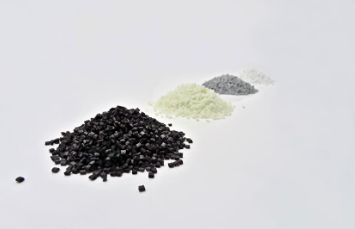
Ultradur® boasts excellent dimensional stability, mechanical strength, rigidity, heat resistance, chemical corrosion resistance, and weather resistance. Its low moisture absorption and ease of processing make it an ideal material for precision components. Special grades such as flame-retardant and hydrolysis-resistant versions further enhance flame resistance and long-term durability, making Ultradur® the preferred material in fields such as electric vehicles, connectors, electronic devices, and industrial applications.
Ultradur® is the trademark name for partially crystalline, thermoplastic saturated polyesters based on polybutylene terephthalate (PBT), produced by BASF.
-
New electronic-grade ammonium hydroxide (NH4OH EG) production facility.
On October 30, BASF announced the addition of an advanced electronic-grade ammonium hydroxide (NH) facility in Ludwigshafen, Germany.4OH EG) production equipment. This equipment will be used to support wafer cleaning, etching, and other precision processes in semiconductor manufacturing.It is expected to be operational in 2027.
A close partner of BASF is currently building a new chip production facility in Europe.The demand for high-quality, high-purity semiconductor-grade chemicals (such as ammonium hydroxide) is increasing day by day.The electronic-grade ammonium hydroxide produced by the new equipment will be widely used in advanced process chip technology, promoting the development of the next generation of semiconductors. This is of great significance to key European industries such as automotive and artificial intelligence.
BASF offers a comprehensive portfolio of semiconductor materials, primarily used in semiconductor production processes, including cleaning, etching, lithography, metal deposition, and chemical mechanical polishing.
The semiconductor materials business product line includes: 1. SELECTIPUR® series (high-purity chemicals, non-metal/metal etching series), 2. FOTOPUR® series (adhesion promoters/surfactants, chelating agents, and preservatives suitable for photolithography process stages), 3. Intelligent solutions for wet deposition processes. It can provide a one-stop solution for integrated circuit manufacturing (IC manufacturing) from cleaning to deposition, photolithography, and complex etching. Its product applications also cover key technologies in semiconductor packaging fields such as bumping processes and 3D TSV (Through Silicon Via).
In addition, this April BASF also announced inLudwigshafen, GermanyInvestment and ConstructionSemiconductor-grade sulfuric acid production equipmentScheduled to start production in 2027, with a total investment of tens of millions of euros, the product is semiconductor-grade sulfuric acid with a purity of 99.9999%, used for cleaning and etching processes in chip manufacturing.
The above two decisions are part of BASF's ongoing strategic evaluation of its global production layout to enhance competitiveness, in line with its "We create chemistry" strategy.
BASF is primarily focused on the three core directions of "high-end, low-carbon, and regionalization," implementing its most competitive products and projects through technology output, regional cooperation, and capacity integration. This is aimed at restructuring BASF's global presence and providing growth momentum in the fields of new energy materials and semiconductor chemicals.
From the perspective of performance,Sales in the third quarter of 2025 were 15.23 billion euros.
EBITDA excluding special itemsYear-on-year increase of 178.9%, EBITDA of agricultural solutions excluding special items grew by 63.3% compared to the previous year, exceeding market expectations.BASF's surface treatment technology now includes three major business areas: battery materials, coatings, environmental catalysts, and metal solutions.Exceeding expectations! BASF's core business surges by 179%!
In terms of regions, sales revenue by company location shows that the Asia-Pacific region achieved 3.716 billion euros, slightly down year-on-year, with sales in China particularly reaching 2.068 billion euros, a year-on-year increase of 5.1%. Additionally, sales in Europe saw a slight year-on-year increase, while other regions experienced a year-on-year decline.
-
Antwerp factoryForce majeure
According to foreign mediaOctober 31stReportedly, due toThe production unit for fuming sulfuric acid at the Antwerp plant was damaged, prompting BASF to declare force majeure on October 30 for the delivery of polyamide 6 (PA6), PA6/6.6 base polymers, caprolactam, and ammonium sulfate. The supply from BASF's Antwerp and Ludwigshafen plants is affected.
【Copyright and Disclaimer】The above information is collected and organized by PlastMatch. The copyright belongs to the original author. This article is reprinted for the purpose of providing more information, and it does not imply that PlastMatch endorses the views expressed in the article or guarantees its accuracy. If there are any errors in the source attribution or if your legitimate rights have been infringed, please contact us, and we will promptly correct or remove the content. If other media, websites, or individuals use the aforementioned content, they must clearly indicate the original source and origin of the work and assume legal responsibility on their own.
Most Popular
-
Why did a century-old european dental instrument giant relocate its manufacturing hub to china?
-
$4 Billion! Medtronic Makes Another Acquisition
-

Toray Industries and SGL Carbon Establish Carbon Fiber Supply Partnership for Aerospace Sector
-
Profit and Revenue Growth Struggle to Conceal Debt Repayment Pressure; Success of Kingfa Sci & Tech's High-End Strategy Yet to Be Seen
-
Deadly Impact: Hormuz Strait Blockade Sparks Shortage of Plastic Raw Materials, Threatening Shutdowns at Japanese and Korean Chemical Plants