



US Airways and American Airlines Consider Merger, Potentially Creating World's Largest Airline
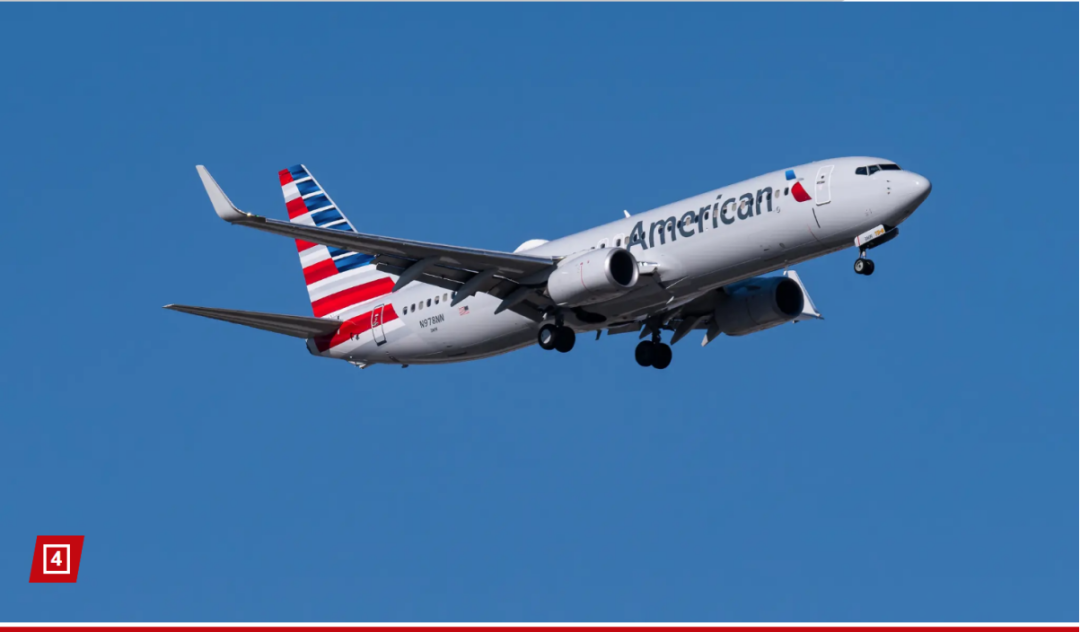
The image is sourced from the internet.
The Merger Concept in the White House Meeting
Recently, according to media reports, United Airlines CEO Scott Kirby proposed during a meeting with President Trump at the White House on February 25 this year the idea of merging with rival American Airlines. Kirby’s central argument was that the combined company would have greater global competitiveness. However, a government source revealed that the White House is skeptical of this proposal internally.
After the news was released, United Airlines spokesperson refused to comment, and American Airlines and the White House also did not respond immediately. The reaction in the capital market was rather subtle: after the report was published, American Airlines' stock rose nearly 8%, but it still had a cumulative decline of over 20% this year; United Airlines' stock rose about 2%, and the annual decline narrowed to about 13%. However, Daniel McKenzie, an aviation industry analyst at Seaport Research Partners, said that this stock price increase was more due to short sellers covering their positions, rather than the market truly endorsing the feasibility of this merger. He bluntly stated that the deal "was declared dead when it was first proposed, it will only be politely considered until public opposition becomes unavoidable." If this plan is implemented, it would create the world's largest airline and become one of the largest consolidations in the history of the U.S. aviation industry.
Merged to dominate the US aviation market, facing significant regulatory hurdles
Currently, United Airlines holds about 16.7% of the U.S. domestic aviation market, while American Airlines holds about 17.4%. If the two were to merge, the new company would control more than one-third of the U.S. domestic market traffic. Data from aviation analytics firm OAG shows that the combined market share could reach as high as about 40%. At present, the top four U.S. airlines—American, United, Delta Air Lines, and Southwest Airlines—already control about 80% of the U.S. domestic capacity, indicating that the industry concentration is already at a high level.
Cornell University law professor George Hay said: "This will be the largest aviation merger in history, and I don't see any court approving it." Samuel Engel, vice president at consulting firm ICF, shared a similar view: "If the Department of Justice doesn't object to this deal, what will they object to?" Engel pointed out that industry consolidation usually allows airlines to better control capacity, which often leads to higher fares, a core issue that antitrust investigations focus on.
William Kovacic, a former chair of the Federal Trade Commission and current professor at George Washington University Law School, bluntly stated that the merger idea between United Airlines and American Airlines is "extremely far-fetched" and would face "overwhelming regulatory obstacles." He pointed out that the two airlines "compete head-to-head in many markets" and are both dominant carriers in several key aviation hubs, "I can't imagine any kind of divestiture that would alleviate the antitrust concerns of the regulators unless they can pull a real rabbit out of a hat." Kovacic also warned that even if the federal regulators were willing to approve, state attorneys general might still join in a lawsuit to block it. If the deal were to go through, consumers would face "higher fares and fewer service options."
Tom Fitzgerald, an airline analyst at TD Cowen, analyzed the deal from another perspective, stating that if the transaction proceeds, the two airlines would likely need to divest assets on numerous routes—currently, 289 routes would be served by only one or two carriers following the merger. Michael Boyd, CEO of industry consultant Boyd Group International, characterized the merger proposal as “likely just a probing move.” He noted that integrating two airlines of such scale would be extraordinarily complex across all aspects—from airport slots and gate allocations to regulatory exemptions—adding that “the entire plan would resemble the wiring diagram of a space shuttle.”
A Cautionary Tale: Recent Airline Mergers Repeatedly Halted by Courts
In fact, in recent years, U.S. regulators have been highly vigilant about consolidation in the aviation industry. The previous administration had filed lawsuits against several major aviation deals and won all of them.
In 2021, the U.S. Department of Justice sued to dissolve the partnership between American Airlines and JetBlue Airways in the northeastern United States, arguing that the collaboration weakened competition in the New York and Boston markets. In 2023, a federal judge ultimately ordered the termination of this partnership. At the beginning of 2024, the Department of Justice also successfully blocked JetBlue Airways' acquisition plan for Spirit Airlines, arguing that the deal would result in the disappearance of a low-cost competitor from the market and drive up ticket prices. The federal judge ultimately ruled the transaction invalid. Currently, Spirit Airlines has filed for bankruptcy protection for the second time.
The Trump administration is becoming more open to industry mergers and acquisitions, with changes in the sector brewing.
Although antitrust resistance remains significant, the Trump administration has shown a more open attitude toward large mergers and acquisitions than its predecessors. U.S. Transportation Secretary Sean Duffy said in an interview with the media on the topic of industry consolidation: "Is there still room for mergers in the aviation industry? I think there is." Duffy also revealed that Trump was "very willing to see large transactions take place," but any merger would need to be "reviewed" by himself.
This merger discussion comes at a time when the airline industry is grappling with soaring fuel costs. Jet fuel is the second-largest expense for airlines after labor, and the current rise in fuel prices is severely eroding industry profits. To control costs, major carriers have already begun cutting capacity, which could further drive up airfares.
Delta Air Lines CEO Ed Bastian recently stated on an earnings call: "I’ve witnessed multiple periods of turbulence in this industry throughout my career. Each time, high oil prices have been the most powerful catalyst for change—they separate the winners and force weaker players to consolidate, restructure, or exit. Delta is entering this situation from a position of strength."
Currently, Delta and United Airlines have captured the majority of the U.S. airline industry’s profits. American Airlines, by contrast, is clearly trailing in the competition for high-spending travelers—a demographic that has driven revenue growth for major carriers in recent years. According to company financial disclosures, American Airlines reported a net profit of only $111 million last year on $54.6 billion in revenue; during the same period, United Airlines posted a net profit of $3.35 billion on $59 billion in revenue. Kirby was dismissed by American Airlines in 2016 and subsequently engaged in fierce head-to-head competition with his former employer in key markets such as Chicago. His recent proactive proposal to the White House for a merger adds a particularly intriguing chapter to this protracted industry rivalry.
It remains unclear within the industry whether Kirby’s merger proposal to the White House represents a serious strategic initiative or merely a probe to gauge the government’s regulatory stance. What is certain, however, is that regardless of whether this deal ultimately proceeds, it has already thrust the topic of airline consolidation in the United States back into the spotlight.
【Copyright and Disclaimer】The above information is collected and organized by PlastMatch. The copyright belongs to the original author. This article is reprinted for the purpose of providing more information, and it does not imply that PlastMatch endorses the views expressed in the article or guarantees its accuracy. If there are any errors in the source attribution or if your legitimate rights have been infringed, please contact us, and we will promptly correct or remove the content. If other media, websites, or individuals use the aforementioned content, they must clearly indicate the original source and origin of the work and assume legal responsibility on their own.
Most Popular
-
A Look at the Material Suppliers Behind SpaceX
-

Government's Triple Action, Enterprises' Three Arrows in Five Days, Semiconductor Reshuffle! What Signal Does Japan's Chemical Industry Release?
-
Fire breaks out at jiangsu meiside!
-
Name change without tax change: POM Anti-Dumping Duty Rate Inheritance Implemented
-
Ethylene: Production Capacity Accelerates Expansion, Global Industry Landscape Is Being Reshaped


