



Trump's New Test: Republican Leaders Fail to Block House Vote on Overturning Canada Tariffs
The House of Representatives voted down on Tuesday night a proposal by the Speaker to delay a vote on tariffs until the end of July, due to "three Republican lawmakers defecting." Even if the House passes a resolution to repeal Canadian tariffs, Trump is highly likely to exercise his veto, making this vote more symbolic. However, the unfavorable voting outcome, especially in an election year, will put political pressure on Trump.
President Trump's tariff policies are facing a new challenge. The House of Representatives will vote on Wednesday on whether to overturn Trump's tariffs on Canada, after House Speaker Mike Johnson, a key Republican ally of Trump in Congress, failed in his last-ditch effort to block the vote.
In a House vote on Tuesday evening, Eastern Time, three Republican lawmakers sided with the Democratic camp, joining all Democratic members to reject Johnson's proposal to postpone the tariff vote until the end of July. The three "rebel" Republicans were Thomas Massie of Kentucky, Kevin Kiley of California, and the soon-to-retire moderate Don Bacon of Nebraska.
Bacon stated on social media: "Congress needs to be able to debate tariffs. Tariffs have a net negative impact on the economy and are a significant tax being paid by American consumers, manufacturers, and farmers."
Commentators noted that Wednesday's vote will force House Republicans to choose between loyalty to the president and the protection of economic interests. Given the Republicans' slim majority in the House, if all Democratic representatives are present and vote in favor, no more than one Republican can join them; otherwise, the House will pass the resolution to repeal the tariffs on Canada.
The Senate has already passed similar legislation in 2025 opposing Trump's tariff policies. Even if the House passes the resolution, Trump is highly likely to exercise his veto power, rendering the vote largely symbolic.
Republican infighting emerges.
The House is set to vote on Wednesday on a resolution introduced by New York Representative Gregory Meeks to revoke the tariffs on Canada that Trump announced for February 2025. Meeks, the top Democrat on the House Foreign Affairs Committee, criticized in a statement that "the Speaker continues to abdicate his duties, ceding Congress's Article I powers to Trump."
For months, Johnson has been using procedural rules to build legislative barriers, protecting Trump's broad tariff powers from congressional challenges. His efforts to extend this prohibition through the end of July suffered a setback. Johnson stated on a media program Wednesday morning: "This is the reality of a slim majority. I think it is a significant mistake. We should not be limiting the president's authority at a time when he is negotiating America First trade agreements with countries around the world."
The Republican-controlled Senate last year signaled its opposition to the policy, voting to pass legislation that would abandon the White House's global emergency tariffs and those specifically targeting Canada and Brazil. Similar legislation in the House, if passed, would represent a significant, albeit largely symbolic, rebuke to the president.
"It is heartening that a minority of Republicans are finally standing up to Trump to stop this madness, and I hope more of my colleagues will join them in considering an end to tariffs on Canada and other key allies and trading partners," said Democratic Representative Don Beyer of Virginia in a statement.
Midterm election pressure intensifies
The vote comes amid the midterm election season, as Democrats have turned Trump’s tariffs into a key campaign issue, focusing on the problem of cost-of-living affordability. The party has characterized the tariffs as a driver of inflation, arguing that they have exacerbated the cost-of-living crisis.
Even if the House votes to overturn Trump's tariffs, it is unlikely to force Trump to back down. This is because a joint resolution requires the president's signature to become law, or Congress needs to secure a two-thirds vote in both chambers to override a presidential veto.
However, an unfavorable vote, especially one in an election year, would put political pressure on Trump to change course.
Johnson had told Republican lawmakers that the House should not hold such a vote before the Supreme Court ruled on whether the president had exceeded his authority by using emergency laws to impose global tariffs. Last year, House Republican leadership took blocking measures to prevent such a vote, which ultimately passed despite a small rebellion by some Republican lawmakers, by promising regular discussions on the impact of Trump's trade policies.
Trump reportedly considering withdrawing from USMCA
Wall Street Insights previously reported that on Wednesday, it was reported that Trump was privately considering withdrawing from the United States-Mexico-Canada Agreement (USMCA). Sources familiar with the matter revealed that Trump had asked aides why he should not withdraw from the agreement, although he has not yet explicitly signaled a withdrawal.
The agreement is facing a mandatory review on July 1st, a process initially seen as routine that has evolved into a contentious negotiation. U.S. Trade Representative Greer stated on Tuesday that the government will hold separate negotiations with Mexico and Canada, viewing trade relations with Canada as more strained. He indicated that the Mexican side was "quite pragmatic," while negotiations with Canada were "more challenging."
This agreement, covering approximately $2 trillion in goods and services, represents one of the world's largest trading relationships. If the United States withdraws, it would shake the foundations of this relationship, and even the threat of withdrawal is enough to unnerve investors and world leaders.
【Copyright and Disclaimer】The above information is collected and organized by PlastMatch. The copyright belongs to the original author. This article is reprinted for the purpose of providing more information, and it does not imply that PlastMatch endorses the views expressed in the article or guarantees its accuracy. If there are any errors in the source attribution or if your legitimate rights have been infringed, please contact us, and we will promptly correct or remove the content. If other media, websites, or individuals use the aforementioned content, they must clearly indicate the original source and origin of the work and assume legal responsibility on their own.
Most Popular
-

A Look at the Material Suppliers Behind SpaceX
-

Government's Triple Action, Enterprises' Three Arrows in Five Days, Semiconductor Reshuffle! What Signal Does Japan's Chemical Industry Release?
-
Fire breaks out at jiangsu meiside!
-
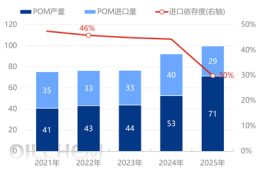
Name change without tax change: POM Anti-Dumping Duty Rate Inheritance Implemented
-
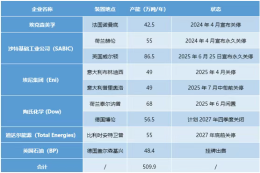
Ethylene: Production Capacity Accelerates Expansion, Global Industry Landscape Is Being Reshaped


