Thermoplastic Composites, Future of Aviation
With the rapid development of the aviation industry, how to efficiently complete aircraft manufacturing in the short term has become one of the focal points of the industry. At the same time, to reduce the weight of aircraft and decrease the use of assembly materials such as rivets and fasteners in large structures, it has also become an important research direction for aerospace companies. With its advantages of fast production speed, good recyclability, and weldability, TPC is gradually becoming a new research direction to replace traditional material components. Therefore, many airlines and research institutions have established numerous projects, including TPC, as research topics. Since the 1980s, the application of TPC in the aerospace field has continued to expand, with its scope continuously broadening. Figure 1 shows several key application examples of TPC in the aerospace and defense industries. For example, the J-nose component based on CF-PPS developed for Airbus has laid the groundwork for the application of TPC in commercial aviation.
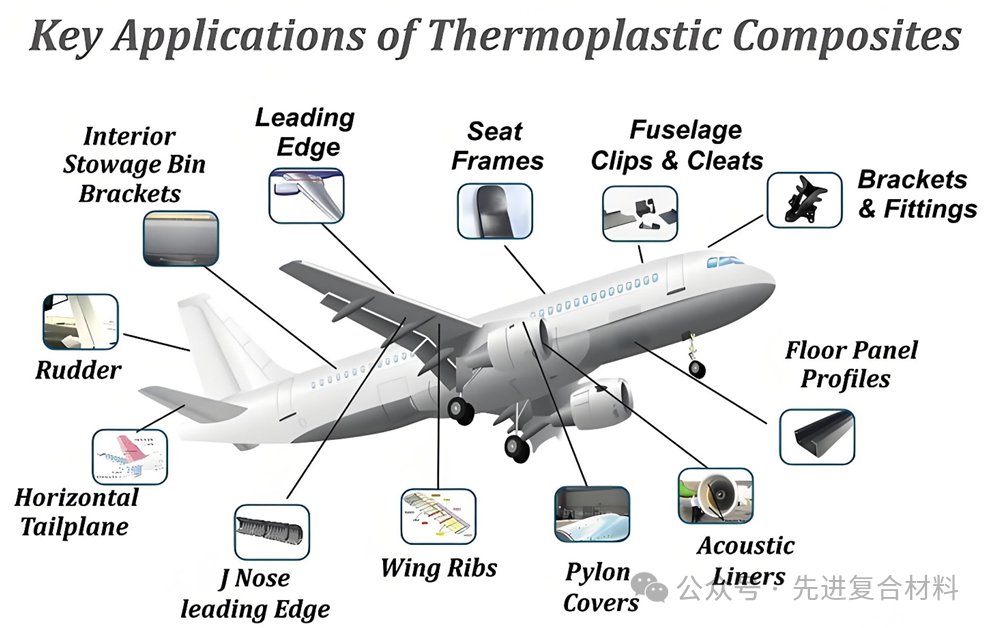
Figure 1: Key Applications of Thermoplastic Composites in the Aerospace Industry
Thermoplastic composites (TPCs) are widely used in both structural and non-structural components of aircraft. Since the 1990s, TPCs have been employed in critical parts such as ribs and spars for landing gear doors. As a major user, Airbus has adopted thermoplastic skins, panels, and leading-edge components in the A340-600 and A380 aircraft models. Additionally, small components like clips, brackets, supports, and floor panels in commercial aircraft, business jets, and military helicopters also extensively utilize TPCs. A typical example is the Gulfstream G650, which uses TPCs to manufacture rudders and tailplanes. Common thermoplastic interior parts include seat bases, backrests, trays, and seat frames. In the Airbus A330 and A340, the production of sidewall-to-ceiling connection rails represents a classic cabin application [1]. Figure 2 illustrates typical TPC components, such as ribs, brackets, and stiffeners.
With the rapid development of the civil aviation industry—especially driven by novel manufacturing methods—the application of thermoplastic materials has achieved significant progress. Additive manufacturing (AM), commonly known as 3D printing technology, has opened up new application possibilities in the aerospace sector. Currently, multiple aerospace enterprises are testing and deploying 3D-printed thermoplastic components, fully leveraging the technology’s advantages of speed and precision. For example, Boeing has incorporated 3D-printed parts into its 737, 747, 777, and 787 Dreamliner aircraft series; specifically, the 787 program alone has generated $3 million in cost savings [2]. This technology is particularly suited to rapidly and accurately manufacturing parts with complex geometries. The Airbus A350 XWB aircraft utilizes over one thousand PEI-based 3D-printed components [3], paving the way for broader adoption of 3D printing in large commercial aircraft and future aviation programs—thanks to its speed, lightweight nature, durability, and high precision—gradually replacing conventional materials and manufacturing processes.
Moreover, several ongoing projects are dedicated to extending TPC technology to space applications. Multiple aerospace companies employ various thermoplastic processing techniques to manufacture both large and small rocket components. For instance, the German Aerospace Center (DLR), under the ATEK project [4], replaced aluminum-based primary structures with in-situ manufactured carbon-fiber-reinforced polyetheretherketone (CF-PEEK) composite materials for sounding rocket test components. This project aims to develop reusable and recyclable spacecraft components to reduce manufacturing costs. Relevant research is illustrated in the figure.
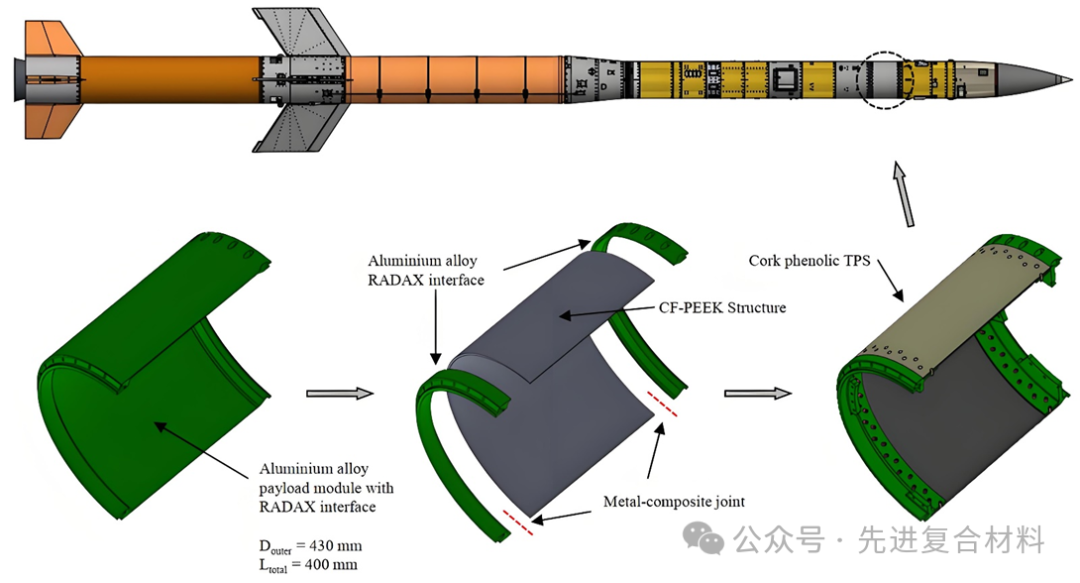
Figure: Rockets used in the ATEK program and original aluminum components replaced by CF-PEEK thermoplastic composites
Weldability is a significant advantage of thermoplastic composites and one of the main reasons for their increasing share in aerospace applications. By welding multiple individually manufactured components into a single integrated structure, the need for additional fastening materials is eliminated, thereby reducing weight and minimizing damage caused by assembly. In one study, an induction welding process was used to fabricate a CF-PPS thermoplastic composite demonstrator for the leading edge of the Airbus A330-200.
Airbus launched the "Wing of Tomorrow" (WOT) project in 2015, collaborating with multiple aerospace companies to develop new manufacturing processes to produce cost-effective aircraft wings using new materials. Under the WOT framework, GKN Aerospace developed thermoplastic composite wing spars, which perform comparably to aluminum or thermoset composites, while also reducing weight and increasing corrosion resistance.
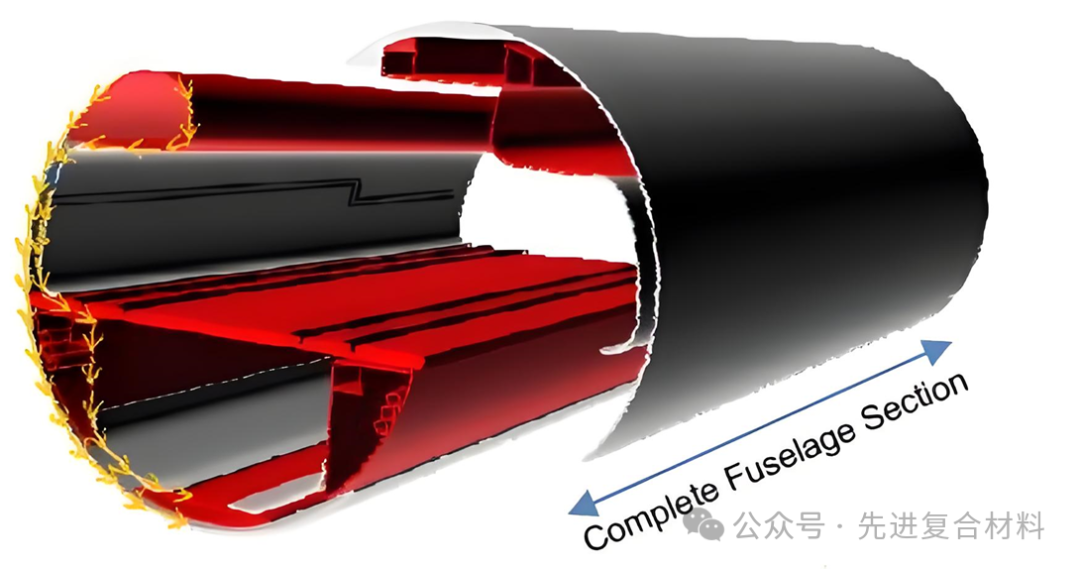
Figure: Thermoplastic Composite Fuselage Section
In the field of aviation, the polyaryletherketone (PAEK) family materials, including PEEK, PEKK, and LMPAEK, are the most widely used and versatile. For example, in the TAPAS2 project, GKN Fokker introduced the "Orthogonal Grid Joining Technology," achieving economically efficient manufacturing of thermoplastic composite fuselages.
Another key application involves using online ultrasonic spot welding to join CF/PEEK hinges, CF/PEKK clips, and CF/PEEK C-shaped frames into a demonstrator component, which is part of the “Clean Sky” eco-design project [9]. Research shows that different materials can be selected according to actual requirements and integrated into the same product.
PEKK is not only suitable for aerospace applications but also holds broad prospects for space structures. Lockheed Martin Space is developing next-generation 3D-printed thermoplastic components for NASA’s Orion spacecraft and conducting related R&D projects.
To improve production efficiency and aircraft manufacturing speed, the aerospace industry is continuously innovating aircraft structural design and manufacturing processes. Among these innovations, PEEK overmolding is a representative technology. For example, the PEEK lattice-reinforced demonstration panel shown in the figure combines compression molding with injection molding, integrating the high performance of continuous-fiber composites with the geometric stiffness of injection-molded lattices; the entire molding cycle takes less than two minutes, significantly reducing production time.
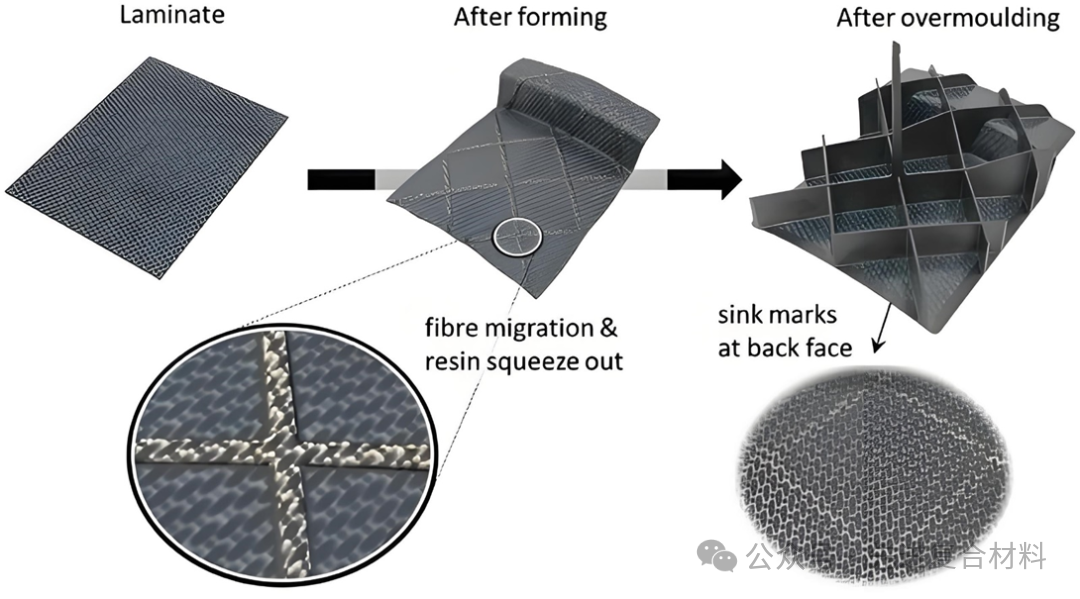
Figure: CF/PEEK grid reinforced demonstrator manufactured by encapsulation molding technology
LMPAEK was used as a uni-directional (UD) prepreg tape in the Clean Sky 2 large passenger aircraft demonstration project and was one of the first laminates manufactured in this 30-month project. LMPAEK was first introduced in the TAPAS1 project, and at the 2013 Paris Air Show, Airbus Nantes presented a fuselage panel with integrated stringers, which was made using CF/LMPAEK tape supplied by TenCate and had Omega and T-stringers welded to the skin using the Automated Fiber Placement (AFP) process. AFP, stamping, and welding processes are particularly suitable for processing LMPAEK, which performs excellently in automated production, such as Automated Tape Laying (ATL). Figure 11 shows a laminate manufactured using ATL and compression molding processes.
Polyphenylene sulfide (PPS) composites are widely used in the aerospace and defense industries, and are approved for use in circuit boards, sockets, connectors, electronic components, and anti-aircraft aircraft [15].
ABS is typically used as a lightweight alternative to traditional aerospace materials in applications where strength and high-temperature resistance are not critical. By modification or blending with other materials, ABS can also be used to manufacture critical components to achieve the desired performance. Due to their good chemical resistance and flame retardancy, ABS and its hybrid materials are often used in the interior of commercial aircraft cabins. In components where extremely high structural strength is not required but lightness, economy, durability, and ease of maintenance are desired, ABS is an ideal choice. For example, CF/ABS thermoplastic composite sandwich structures have been used to manufacture dual-tilt clamps for quadcopters, and tests have shown that their performance is superior to that of traditional monolithic structures [19].
【Copyright and Disclaimer】The above information is collected and organized by PlastMatch. The copyright belongs to the original author. This article is reprinted for the purpose of providing more information, and it does not imply that PlastMatch endorses the views expressed in the article or guarantees its accuracy. If there are any errors in the source attribution or if your legitimate rights have been infringed, please contact us, and we will promptly correct or remove the content. If other media, websites, or individuals use the aforementioned content, they must clearly indicate the original source and origin of the work and assume legal responsibility on their own.
Most Popular
-

Continental Plans to Begin Sale of ContiTech in Early 2026
-

$4 Billion! Medtronic Makes Another Acquisition
-

BASF Delivers First Batch of Innovative Cathode Materials for Semi-Solid-State Batteries to Weilan New Energy
-
Profit and Revenue Growth Struggle to Conceal Debt Repayment Pressure; Success of Kingfa Sci & Tech's High-End Strategy Yet to Be Seen
-

Why did a century-old european dental instrument giant relocate its manufacturing hub to china?