“square boxes” come in all shapes and sizes, but few sell well
Over the past decade, as the Chinese automotive market has continuously evolved, a number of vehicle categories have emerged only to fade quickly.
As far as I recall, inspired by the BMW X6, Chinese automakers once treated coupe SUVs as a key strategy to expand the boundaries of the SUV market. For a time, a wave of new models—including the Dongfeng Fengguang iX5 and the Changan CS85—quickly rose to the forefront in terms of sales. Later, the Mazda CX-8 and the Jeep Grand Commander ignited a new wave of enthusiasm for midsize family SUVs.
Furthermore, fueled by the continued implementation of the two-child policy, the 150,000-yuan segment of the family MPV market has become exceptionally active, with models including the Trumpchi GM6, Geely Jiaji, Maxus G50, and BYD Song MAX successively launched.
But the transformation of China's car market has never really changed; after two years of washing out, even the hottest niche markets seem to gradually cool down. In recent years, under the guidance of the Tesla Model Y, the electric vehicle market has revived the coupe SUV. However, can the Chinese market really nurture an evergreen niche model?
As household demand intensifies, SUVs have replaced sedans and become the focal point of innovation for every automaker—a fact best evidenced by the current market saturation with midsize and large SUVs. Following this trend, after the Tank 300 became an instant hit, rugged off-road SUVs have likewise become beneficiaries of this SUV wave.
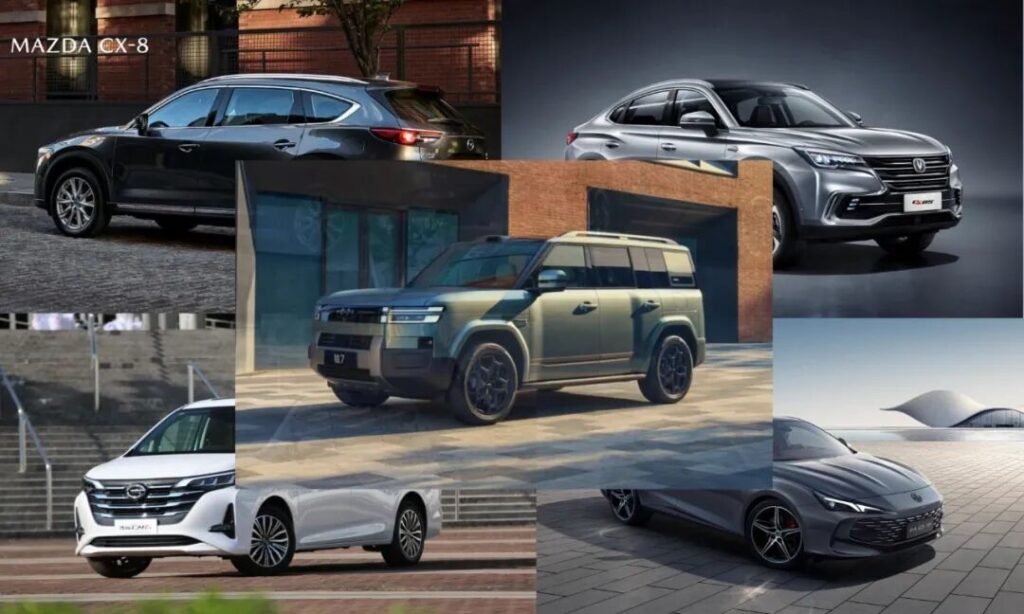
In just two years, various new boxy vehicles, including the Jetour Traveler and Fangchengbao 5, have almost filled this niche market. After experiencing the emotional value brought by the boxy design, consumers willing to pay for it have been emerging one after another.
Now, as the market grows increasingly saturated this year and automakers rack their brains over how to innovate, is the "boxy SUV" segment cooling down—or can it truly emerge as an independent and vibrant new segment within China's SUV market? Everyone is waiting for a new answer.
Previously, the Fangqiao Titanium 7 cleverly brought the "boxy" style back to the city from outdoor use, and it was a great success, clearly indicating the direction for other companies. However, entering 2026, when Geely's Warship and Haval H10 are both eager to join, it remains unknown how much resonance this approach will generate.
A market long coveted by rivals
As the Beijing Auto Show approaches, the hype around new car launches is bound to intensify once again. Automakers are actively expanding their product lines, and based on recent information, boxy SUVs will undoubtedly be the star attraction at the show and the dominant force in this segment.
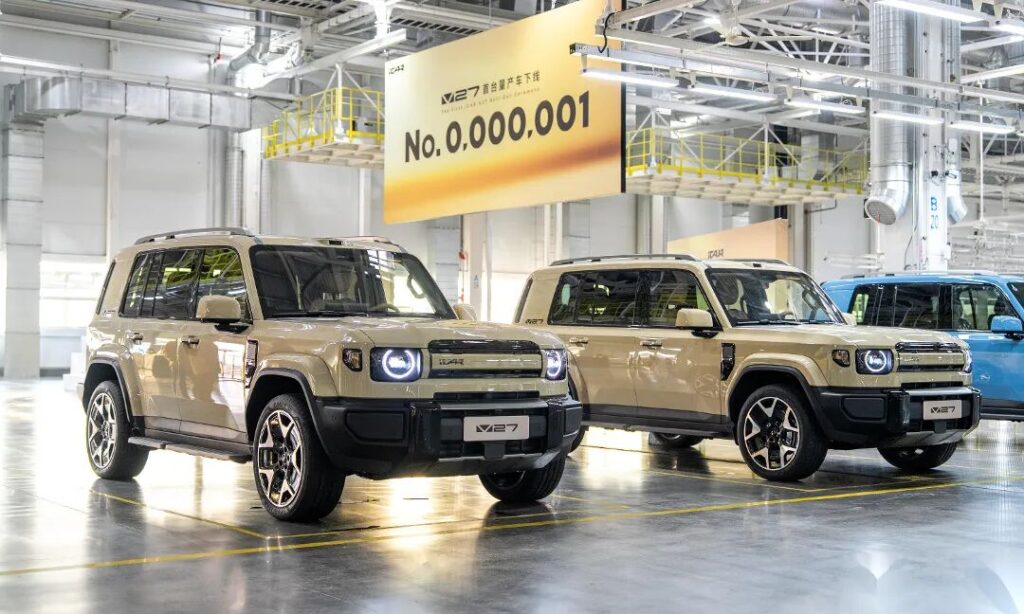
In the first quarter of this year, the long-anticipated iCAR V27 officially entered the market. It is clear that the main competitor of this car is the Fangchengbao Titanium 7. As more and more consumers are pushing the Titanium 7 to a high status simply for its design and energy-saving purposes, with monthly sales of tens of thousands becoming almost a norm, Chery is hoping to replicate such success.
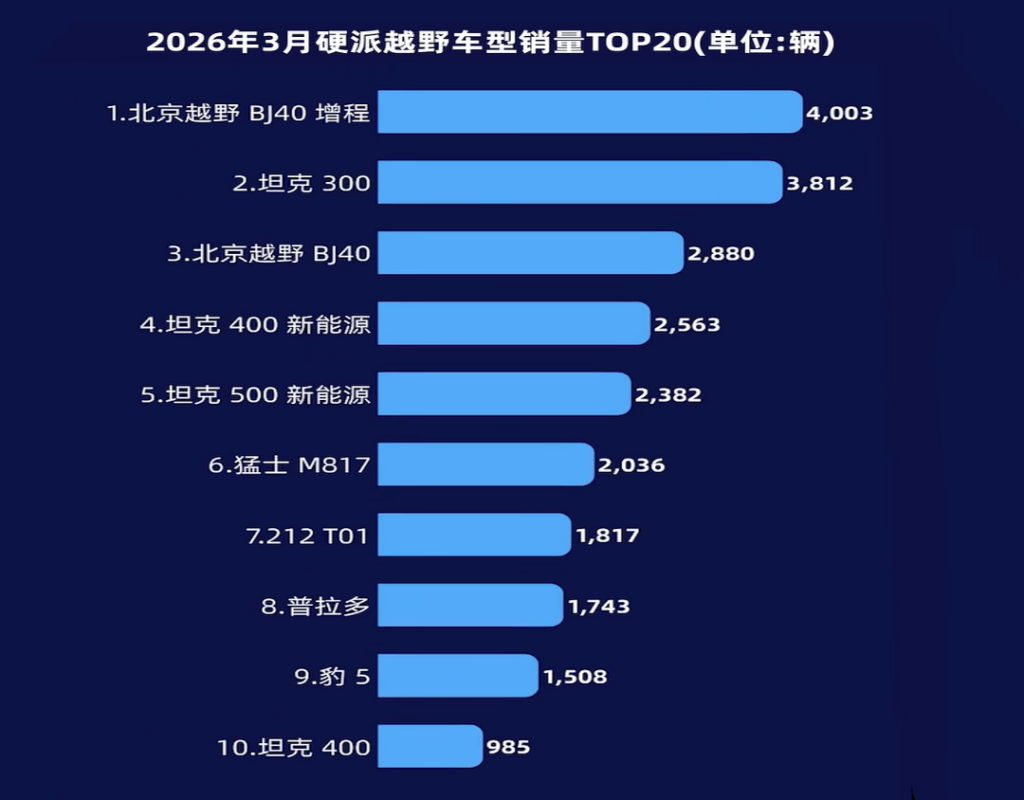
Within the Chery ecosystem, while the Tank 300 dominated the market, Jetour had already explored the RMB 150,000-level boxy SUV segment with its Traveler model and won broad market recognition. However, by 2026, as the Shanhai-series boxy SUVs failed to further expand the market—and even saw the Ti7 snatch the spotlight—it would be implausible to claim the iCAR V27 harbors no intent of retribution.
Subsequently, when the Freelander brand—spun off from Land Rover's product lineup—officially unveiled its first model as a new energy "boxy" SUV, it became clear that this market is not cooling down despite the abundance of products; instead, it is attracting even more newcomers as its boundaries expand.
In early April, even Guangzhou Guizhi, which had never manufactured a rugged SUV before, started to feel envious and came up with its new plan, even launching a smaller version called "Guizhi New Off-road" to target this sector. If we also take into account the Geely Warship, a new model that even the Ti7 would feel nervous about, the boxy SUV market is even more lively than in previous years.
At the Beijing Auto Show, the production version of the Hongqi rugged off-roader, the Jetta X concept car, the Haval H10, and other new models targeting the same segment made their debut, clearly signaling just how much anticipation there is for this market.
This year’s automobile market competition will undoubtedly be more intense than in previous years. This is not a subjective assumption; rather, against the backdrop of a deteriorating macroeconomic environment, numerous international uncertainties have also inadvertently intensified this trend. Even a single factor—the continuous rise in oil prices—has triggered significant turbulence across the entire fuel-powered vehicle market. Many industry insiders have even predicted that automobile sales this year will decline by 15% to 20%.
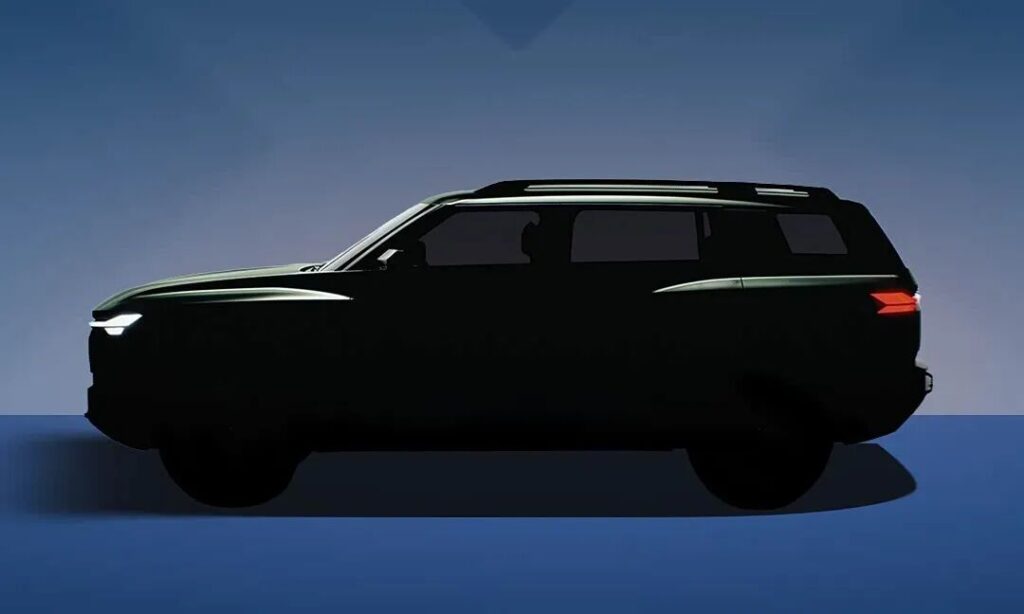
Being right in the middle of it, car manufacturers clearly understand how severe their living environment is. Since the Spring Festival, only two months have passed, but the frequency at which car manufacturers introduce new products has reached an extreme, with an intense schedule of press conferences that even the media can't keep up with. Price wars and public opinion battles are only increasing, with their attack intensity making consumers exclaim "taste of sourness." Whether it's price backstabbing or great sincerity, consumers are directly and openly lured in.
So, in terms of products, everyone says this year is the one where 9-series mid-to-large SUVs are competing intensively. However, in fact, almost every5SUVMPV20/ segment of the market has a new lineup of vehicles unlike before. From large 5-seater SUVs to MPVs, from sedans in the 200,000 RMB range to niche wagons/shooting brakes, the ideas of car manufacturers are everywhere.
Even so, although the box-shaped SUV market has been developing for many years and there are already many outstanding products in the market. Faced with such a perilous situation, driven by the desire for sales, they can't resist their enthusiasm even though the market's prosperity has faded.
Sometimes, we feel that in the mid-to-large SUV segment, 80% of newly launched models end up as flops. But today, can you truly believe this phenomenon is unique to this specific segment? Ultimately, no matter how hot a market becomes, it will inevitably be dominated by only a few players.
After all, product quality is just a prerequisite. Just like when we communicated with the marketing team of Fangchengbao's Ti 7, they were more concerned about the coming Jiangxi Warship, rather than the iCAR V27, which had been widely discussed. A strong channel and system are more critical for a new car to achieve success.
New energy enhances the value of the "square box".
Today's Chinese auto market has long become the most dynamic market in the world. It is not only because of the huge demand that brings a massive supply of new vehicles, or the power transition between traditional and new automotive forces due to the electric vehicle transformation, but also because of the overall rise of China's automobile industry. When Chinese automakers begin to come up with all sorts of new ideas, the market naturally sees more non-traditional vehicle models.
Before the Tank 300 was born, everyone would think that "hardcore" meant only tough off-roaders like the Jeep Wrangler, or at the very least, something as bland as the Toyota LC series. Fashion and individuality were naturally separated from such vehicles.
Precisely for this reason, when the Tank 300 deliberately integrates multiple product attributes, it is clearly not a stroke of accidental luck by Great Wall, but rather a reflection of genuine demand in the new era. Thus, Chinese consumers have finally realized that “a rugged SUV can actually be comfortable and luxurious as well.”
Later developments are not elaborated here; the “square box” swiftly evolved into a highly distinctive new product category.
Today, if we must pinpoint why boxy-shaped vehicles have once again become a new breakout product strategy for many automakers in 2026, the primary reason is that, with the rapid advancement of new energy vehicles, more and more carmakers have realized that—beyond just looking cool and stylish—boxy designs actually offer a practical solution to consumers' increasingly tight vehicle operating costs.
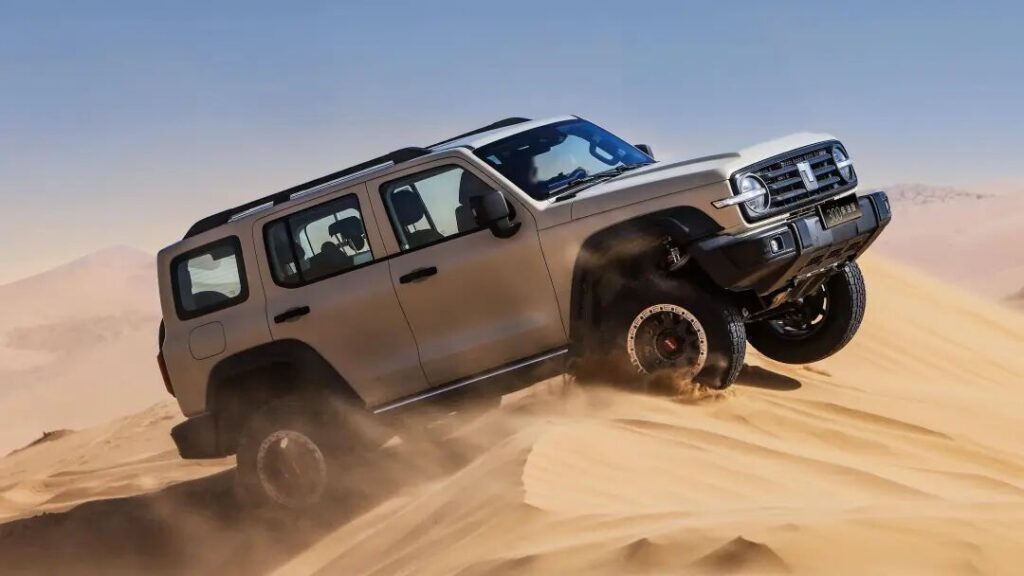
Last year, following the launch of the Fangchengbao Titanium 7, the vehicle achieved unprecedented sales success within the Leopard series. While its consistently rugged design serves as only the most fundamental prerequisite, the key to its broad-spectrum adaptability across all scenarios lies in its substantial size. Who would have imagined that ruggedness could be associated with energy efficiency and cost savings, while simultaneously delivering the full functionality of a family-oriented SUV within its boxy body?
That is, product features that satisfy the "want this, want that, and also want this other thing" demands—seemingly unconventional yet hitting the sweet spot for potential consumers.
This year, as fuel prices have become the top concern for everyone buying a car, the Tank 7's "unconventional" approach has increasingly become a key attraction for users. In fact, during the early days when boxy SUVs transitioned from off-road adventures into urban lifestyles, the Tank 300 City Edition and later the Jetour Traveller already identified some user demands. The iCAR 03/V23, leveraging its all-electric platform, has forcefully carved out an entirely new segment: the electric boxy SUV.
However, after years of market accumulation, the box-shaped vehicle is different from those fleeting unique models. It has undergone self-transformation with the ever-changing environment. Perhaps this is also due to the keen insight that Chinese automakers have developed in recent years.
In short, when everyone binds their personality and home use, shifting from spending money purely for emotional value to expecting 100% satisfaction of multiple needs with a single expenditure, whoever can truly let users enjoy the most comprehensive car usage experience in the most cost-effective way is the winner.
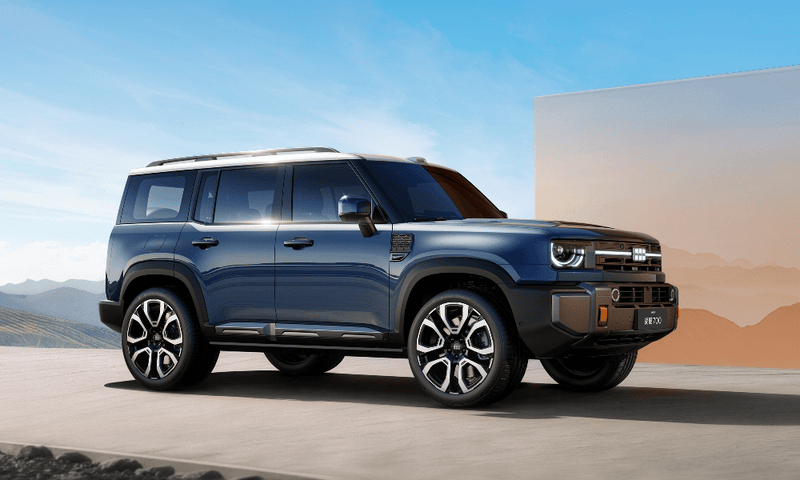
It is reported that models such as the Geely Zhanjian and Haval H10 will make their official debut at the Beijing Auto Show, signaling the start of the second round of intense competition in the "boxy SUV" segment. With too many players already crowding the mid-to-large SUV market and competition reaching a fever pitch, this represents automakers' continued efforts to tap into new market potential.
【Copyright and Disclaimer】The above information is collected and organized by PlastMatch. The copyright belongs to the original author. This article is reprinted for the purpose of providing more information, and it does not imply that PlastMatch endorses the views expressed in the article or guarantees its accuracy. If there are any errors in the source attribution or if your legitimate rights have been infringed, please contact us, and we will promptly correct or remove the content. If other media, websites, or individuals use the aforementioned content, they must clearly indicate the original source and origin of the work and assume legal responsibility on their own.
Most Popular
-
Continental Plans to Begin Sale of ContiTech in Early 2026
-

$4 Billion! Medtronic Makes Another Acquisition
-

BASF Delivers First Batch of Innovative Cathode Materials for Semi-Solid-State Batteries to Weilan New Energy
-
Profit and Revenue Growth Struggle to Conceal Debt Repayment Pressure; Success of Kingfa Sci & Tech's High-End Strategy Yet to Be Seen
-
Why did a century-old european dental instrument giant relocate its manufacturing hub to china?