



South Korea Expresses Concerns Over Hyundai's US Investment Plan
According to foreign media reports, on October 13, Kim Jung-kwan, the Minister of Trade, Industry and Energy of South Korea, expressed concerns regarding Hyundai Motor Company's announcement of a multi-billion dollar investment plan in the United States at a sensitive time when the South Korean government is in trade negotiations with the U.S.
During a response to inquiries in the South Korean National Assembly, Kim Jong-gwan stated: "We have informed Hyundai Motor Company that their actions are deeply regrettable, especially considering that the South Korean government has been making efforts for the automotive industry where Hyundai and Kia are located."
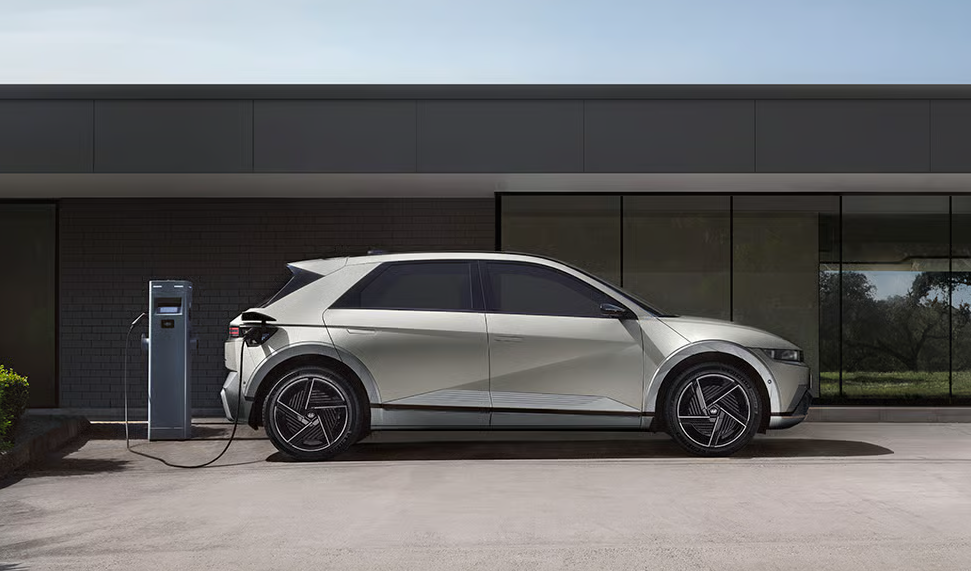
Image source: Hyundai Motor.
He also stated, "I believe that Hyundai Motor Company fully understands the feelings of the Korean people now," but refused to disclose Hyundai's response to its concerns.
As of now, Hyundai has not yet responded to requests for comment.
Independent South Korean lawmaker Kim Jong-min previously criticized Hyundai Motor Company, stating that it was trying to appease the Trump administration, which would undermine South Korea's bargaining power in trade negotiations with the United States.
Hyundai Motor Company announced in September that it will increase its planned investment in the United States by 32%, to $11.6 billion. Just recently, the company's new electric vehicle battery plant in Georgia was raided by U.S. immigration authorities.
The recent crackdown has led to the arrest of hundreds of South Korean workers, causing a strong shock in South Korea. South Korea is an important ally of the United States and also one of the major investors in the U.S. Additionally, the two countries are engaged in a game over $350 billion in U.S. investments, which is part of the tariff negotiations between them. The core objective of the negotiations is to reduce the tariffs on South Korea's key export products—automobiles—to the U.S.
Member Kim Jong-min questioned, "Isn't the essence of the Korea-U.S. tariff negotiations essentially centered around Hyundai Motor?" He also added, "As a key party involved, Hyundai's performance in this matter has been unsatisfactory and has not contributed positively to the negotiations."
In March this year, Hyundai Motor Group, together with U.S. President Trump at the White House, announced an investment of $21 billion in the United States. However, later that month, Trump announced a 25% tariff on imported cars.
In August, following a summit between Trump and South Korean President Lee Jae-myung, Hyundai Motor announced that it would further increase its investment in the United States to $26 billion.
Two weeks after a surprise inspection at Hyundai's plant in Georgia, USA, Hyundai's Co-CEO Jose Munoz announced that in response to U.S. tariffs, the company plans to increase the proportion of locally produced vehicles sold in the U.S. market to over 80% by 2030, while also expanding the capacity of the Georgia plant.
【Copyright and Disclaimer】The above information is collected and organized by PlastMatch. The copyright belongs to the original author. This article is reprinted for the purpose of providing more information, and it does not imply that PlastMatch endorses the views expressed in the article or guarantees its accuracy. If there are any errors in the source attribution or if your legitimate rights have been infringed, please contact us, and we will promptly correct or remove the content. If other media, websites, or individuals use the aforementioned content, they must clearly indicate the original source and origin of the work and assume legal responsibility on their own.
Most Popular
-
Mexico Imposes Tariff Up to 36% on Cross-Border E-Commerce Products, Effective January 1, 2026; Plastic Shows Partial Fluctuation Today
-
Trump Delays Tariff Increase on Furniture, Cabinets, and Vanities
-
4.5 Million Tons! Wanhua Chemical Dominates Globally in MDI, Heavy Investment in Battery Materials Spurs New Storm
-
Wanhua Chemical Invests $27.3 Billion, 2026 Investment Map Revealed, $1.1 Billion Bet on Battery Materials
-
Back-to-back major joker moves! covestro’s 1.32 million ton mdi dual-line expansion and hdi acquisition reshape global polyurethane landscape


