



Shanghai Jinshan District: Seeking Breakthroughs Through Transformation
Forming national-level clusters of fiber materials, the chemical new materials industry has entered the trillion-yuan level.
Located on the shores of Hangzhou Bay, Shanghai's Jinshan District not only serves as the southwestern gateway to Shanghai but is also an important hub for advanced manufacturing. From environmental remediation to industrial upgrading, and from isolated breakthroughs to comprehensive transformation, Jinshan District has begun to see results with its "comeback" centered around industrial transformation. In 2024, the district's full-caliber industrial output above designated size surpassed 300 billion yuan. Industries such as fiber materials, drones, and new optoelectronic transmission materials have been selected as national-level specialized industrial clusters for small and medium-sized enterprises. The chemical new materials industry has been ranked among the city's first batch of "city-district collaborative" trillion-yuan-level industrial clusters.
From "passive transition" to "strategic transition"
"Transformation and development is the 'only way' for the modernization of Jinshan," said Liu Jian, the Secretary of the Jinshan District Committee. The transformation of Jinshan has not happened overnight—it began with comprehensive environmental remediation and partial transformation of the Carbon Valley and Green Bay. In 2021, with the introduction of the 'North-South Transformation' strategic layout in Shanghai's 14th Five-Year Plan, it officially entered an upgrading phase. During this period, Jinshan completed a critical leap from 'passive transformation' to 'active transformation,' from 'partial transformation' to 'comprehensive transformation,' and from 'tactical transformation' to 'strategic transformation,' making solid progress in changing the development model, optimizing the economic structure, and shifting growth momentum.
Despite facing dual pressures from changes in the external economic situation and cyclical fluctuations in the chemical industry, Jinshan District continues to enhance the quality and efficiency of its development and constantly strengthens its momentum for future growth.
On October 16th of this year, Jinshan District celebrated the "highlight moment" of two major projects: the unveiling of the Syngenta Crop Protection Product Technology and Engineering Shanghai Laboratory, an important part of Syngenta Group's Global Crop Protection China Innovation Center project; and the official opening of the Lexus office building, with the first batch of approximately 80 employees moving in. The Lexus new energy vehicle project is expected to be completed in August 2026 and put into production in 2027, marking another key step in Jinshan's layout in the fields of intelligent equipment and green energy.
Break the "chemical industry equals pollution" label.
In the past, the stereotype that "chemical industry equals pollution" made industrial development in Jinshan difficult. Local officials deeply realized that only by adopting green practices could they break through the development bottleneck.
Ten years ago, Jinshan District embarked on three rounds of comprehensive environmental renovation with the determination of cutting off one's own wrist. A total investment of approximately 36 billion yuan was made to advance the renovation of 810 projects, ultimately delivering a "green answer" characterized by thriving industries, beautiful environment, and integrated spaces.
Nowadays, the effectiveness of the green transition has become fully evident: major industrial projects like elastomers have been launched and put into production, and the comprehensive technological transformation and quality upgrade of Shanghai Petrochemical have begun, accelerating the transition of the regional chemical industry towards high-end and green development. The output value of the high-end chemical new materials industry in the Jinshan area has reached nearly 170 billion yuan, successfully making it one of Shanghai's first "district-city collaborative" industrial clusters worth over a hundred billion yuan. From "slimming down by half" to "doubling tax revenue," the Carbon Valley Green Bay Industrial Park not only shed its label as a "pollution hotspot" but also earned the distinction of being the city's first national-level green park. Within the park, Zhongtian Keshen has transformed into an advanced materials manufacturing enterprise, with its high-end automotive paint film capable of directly replacing car surface paints; Shanghai Gantian Optical Materials Co., Ltd. has independently developed photochromic materials and produces photochromic lenses (photochromic resin, coatings), capturing 80% of the domestic market.
At the same time, Jinshan District has integrated the transformation of green energy into the overall development plan. Through comprehensive environmental improvement, industrial structure adjustment, and clean production audits, the district guides enterprises to improve production processes, update equipment, and enhance innovation. It vigorously develops green energy such as wind power and photovoltaics, with the district's renewable energy power generation installed capacity exceeding 1 million kilowatts.
Build a "small, medium, large" energy field.
To continuously consolidate the transformation achievements, Jinshan District has innovatively established a "small-medium-large" three-tier industrial structure energy field, synergistically focusing on stock, increment, and variables to accelerate the cultivation of new quality productivity.
Firstly, focusing on small structures to optimize the stock of the chemical industry. Centered around the chemical industry as a pillar, Jinshan District collaborates with Shanghai Petrochemical and Shanghai Chemical Industry Park, following the strategy of "transforming from refining to chemicals, chemicals to materials, materials to high-end products, and parks to eco-friendly zones," to promote the industry's upgrade towards precision, green technology, high-tech, high-efficiency, and high added value directions. During the "14th Five-Year Plan" period, several fine and high-end chemical projects such as the 48K large tow carbon fiber, Johnson Manufacturing, and elastomers have been launched successively, the comprehensive technological transformation and upgrading project of Shanghai Petrochemical has commenced, and the Shanghai Carbon Fiber Composite Material Innovation Research Institute and Shanghai Petrochemical Advanced Materials Research Institute have been established, injecting strong momentum into the structural adjustment of the chemical industry. Among them, the technical renovation project of Shanghai Petrochemical, through equipment updates, not only enhances the economic efficiency and intrinsic safety level of the enterprise but also drives the entire chain of the regional chemical industry towards high-end and green transformation.
Secondly, focus on the structure and expand the growth of the secondary industry. Based on the positioning as a major area for advanced manufacturing, Jinshan District is focusing on developing four major industrial clusters: new materials, intelligent equipment, life and health, and information technology. It is cultivating a number of specialty industries with advantages, such as biomedicine, new displays, green energy, and low-altitude economy. Currently, the district has established 5 city-level and 8 district-level specialized industrial parks, as well as 3 national-level and 5 city-level specialized industrial clusters. Since the "14th Five-Year Plan," emerging industries have accelerated their aggregation, and the output value of the four major industrial clusters has increased to account for 82.7%, with an average annual growth rate 0.9 percentage points higher than the growth rate of the industrial output value above designated size in the area. The average annual growth rate of output value in city-level specialized industrial parks is 5.3 percentage points higher than the growth rate of output value of the four major industrial clusters.
Thirdly, focus on the overall structure and activate the variables of the tertiary industry. In the coordinated development of the three industries, Jinshan District accelerates the enhancement of the development level of the tertiary industry, promoting the dual-driven integrated development of producer services and consumer services.
【Copyright and Disclaimer】The above information is collected and organized by PlastMatch. The copyright belongs to the original author. This article is reprinted for the purpose of providing more information, and it does not imply that PlastMatch endorses the views expressed in the article or guarantees its accuracy. If there are any errors in the source attribution or if your legitimate rights have been infringed, please contact us, and we will promptly correct or remove the content. If other media, websites, or individuals use the aforementioned content, they must clearly indicate the original source and origin of the work and assume legal responsibility on their own.
Most Popular
-
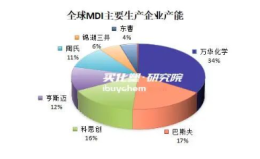
Dow, Wanhua, Huntsman Intensively Raise Prices! Who Controls the Global MDI Prices?
-

List Released! Mexico Announces 50% Tariff On 1,371 China Product Categories
-
Clariant Unveils Cost-Cutting Plan Details, Plans to Shut Down Multiple Plants
-
New Breakthrough in Domestic Adiponitrile! Observing the Rise of China's Nylon Industry Chain from Tianchen Qixiang's Production
-

Nissan Cuts Production of New Leaf EV in Half Due to Battery Shortage

