Researchers Develop Polymer Blend with Four Times the Energy Storage Capacity of Conventional Capacitors
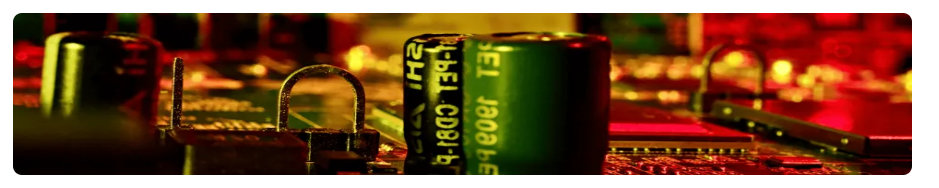
In the race to develop lighter, safer, and more efficient electronic products—from electric vehicles to transcontinental power grids—there is one component.Truly holding the energy core:Polymer CapacitorPolymer capacitors are commonly found in devices such as medical defibrillators, where they provide instantaneous bursts of energy and stable power delivery, rather than storing large amounts of energy like batteries, which supply power more slowly and persistently.
However, the most advanced polymer capacitors currently available cannot operate normally above **212 degrees Fahrenheit (about 100 degrees Celsius)**, while the ambient temperatures around a typical car engine in summer, or in an overloaded data center, may exceed this value.
A research team from Pennsylvania State University published their findings in the journal Nature: They have developed a...Cheap, commercially available plasticThe newly developed material, at temperatures as high asAt 482°F (approximately 250°C), its energy storage capacity remains four times that of conventional capacitors.。
PEI/PBPDA blend can withstand a high temperature of 482 degrees Fahrenheit
The energy stored in a capacitor is less than that in a battery, butThe charging and discharging speed is much faster than that of batteries.。
Take a smartphone as an example: the battery charges from a power source, gradually storing energy through a series of internal chemical and electrochemical reactions to sustain continuous operation; meanwhile, additional features like the camera flash require instantaneous bursts of energy—this partInstantaneous high-energy dischargeIt is completed by the capacitor.
Li Li, a postdoctoral researcher at the Department of Electrical Engineering, Pennsylvania State University, and co-first author, said:
Technological advancements in systems such as electric vehicles, data centers, and space exploration may.Limited by polymer capacitorsTraditional polymer capacitors must be kept at low temperatures to operate. Our solution addresses this issue while achievingQuadruple Energy Storage—— or, in other words, inThe volume is reduced to 1/4 of its original size.provide equivalent energy in the device.
Most polymer capacitors fail at high temperatures because their polymer chains are long.Lower glass transition temperatureAt relatively low temperatures, molecules transition from a rubber-like flexible state to a glass-like state.Brittle and fragile。
Polymers exist both in natural materials and can be synthetically produced into various forms, such as ultra-thin flexible films and rigid hard plastics.
Researchers state that when polymers are mixed with other materials, nanoscale structures form at the atomic level, creating interfaces of varying degrees.Prone to charge leakageand this problem becomes more severe at high temperatures.
"Typically, a dielectric polymer"It is impossible to have both high energy density and high thermal stability."—— We achieved both of these points by blending two commercially available high-temperature polymers."
Co-first author, postdoctoral researcher at the Department of Electrical Engineering and the Materials Research Institute at Penn State, Guanchun Rui, said.
Researchers combined two materials:
PEI: Originally developed by General Electric, commonly used in pharmaceutical production
PBPDAA polymer with high heat resistance and high insulation properties
During blending at an appropriate temperature, the molecular components of the two polymers will…Self-assembly into three-dimensional structures, the researchers used this to prepare a thin film.
Rui Guanchun stated that the key lies in findingAppropriate degree of incompatibility: Just like oil and water, immiscible materials will separate according to their own properties and form a three-dimensional structure.
Performance changes can be observed by adjusting different ratios, which is very similar to the principle of metal alloys.
By precisely controlling incompatibility, to the best of our knowledge, we have obtainedThe first polymer alloy simultaneously possessing these excellent properties。”
Self-assembled interface forms a barrier, inhibiting mobile charge leakage
Corresponding author and Harvey F. Brash Endowed Chair Professor Qiming Zhang stated that the comprehensive performance of a materialFar superior to the individual performance of its componentsThis situation is not common.
"Putting two similar materials together usually only results in materials with similar performance," Li Li said. Previous research in the field mostly achieved only slight performance improvements.
He explained the indicators used to measure the energy storage and power consumption capacity of polymers.Dielectric Constant (K Value)When used individually, the two raw materials polymer.Below 4;
And after forming a polymer alloy, the K value reaches13.5and remains stable within the range of **-148°F to 482°F** ——This performance is exceptionally outstanding.。
The research team confirmed through microscopic observation and computational simulation that this leap originates from the polymer.Nanostructure。
In the absence of the rigidity and brittleness constraints of ceramics or metals, polymer molecules can adapt to bear energy without being destroyed;Self-assembled interfacewill form a barrier,Block leakage of mobile chargesEnhance the capacitor’s energy storage and discharge capabilities.
These dielectric materialsLow cost and readily available commercially", the scaled-up production process is simple," Li Li said,
"This is a kind of"High cost-performance energy solutions, can play a significant role in multiple fields.
We can install it into the device.Four times the energy, orKeep power constantUnder the premise, reduce the device volume to one-fourth of its original size and achieve powerful functionality in an extremely small space using simple and feasible methods.
Next, the research team is pushing for the commercialization of this patented polymer capacitor.Moving towards industrialization。
Other Participating Institutions and Authors
Other Participants from Pennsylvania State University:
Co-first authors, doctoral student Zhu Wenyi from the Department of Electrical Engineering; doctoral student Huang Zitan from the Department of Materials Science and Engineering; doctoral student Guo Yiwen from the Department of Chemical Engineering; Professor Liu Zikui, KLA Lecturer in the Department of Materials Science and Engineering; Professor Ralph H. Colby from the Departments of Materials Science and Engineering and Chemical Engineering; Professor Jin Chenghao, Head of the Department of Chemical Engineering, Rob Family Chair Professor, and Professor in the Departments of Materials Science and Engineering and Chemistry; Professor Wang Qing from the Department of Materials Science and Engineering.
Other co-authors:
Siyu Wu, Brookhaven National Laboratory; Wenchang Lu and J. Bernholz, North Carolina State University.
Funding Agency
This study was supported by the following institutions:
Office of Naval Research, National Science Foundation, Axalta Coating Systems, and the Harvey F. Brush Chair in Materials Science and Engineering at Penn State College of Engineering.
【Copyright and Disclaimer】The above information is collected and organized by PlastMatch. The copyright belongs to the original author. This article is reprinted for the purpose of providing more information, and it does not imply that PlastMatch endorses the views expressed in the article or guarantees its accuracy. If there are any errors in the source attribution or if your legitimate rights have been infringed, please contact us, and we will promptly correct or remove the content. If other media, websites, or individuals use the aforementioned content, they must clearly indicate the original source and origin of the work and assume legal responsibility on their own.
Most Popular
-

Continental Plans to Begin Sale of ContiTech in Early 2026
-

$4 Billion! Medtronic Makes Another Acquisition
-
BASF Delivers First Batch of Innovative Cathode Materials for Semi-Solid-State Batteries to Weilan New Energy
-
Profit and Revenue Growth Struggle to Conceal Debt Repayment Pressure; Success of Kingfa Sci & Tech's High-End Strategy Yet to Be Seen
-

Why did a century-old european dental instrument giant relocate its manufacturing hub to china?