Research on PA66 Modification Technology: Innovative Advances from Reinforcement and Toughening to Functional Applications
PA66, as a crucial engineering plastic, is undergoing a profound transformation in its modification technology research, shifting from traditional mechanical property optimization to multi-functional integration. Early studies focused on reinforcement and toughening, significantly improving its strength and toughness through fiber composites, elastomer blending, and other methods, thereby expanding its application boundaries in fields such as machinery and automotive. In recent years, with the development of high-end manufacturing and emerging industries, the modification goals are advancing towards functionalization, including the introduction of properties such as high-temperature resistance, flame retardancy, electrical conductivity, and antibacterial properties, endowing the material with broader application potential. This article aims to ( - a tricky word, best translated as "trace" or "outline") the evolution path of PA66 modification technology from basic mechanical improvement to functional innovation, with the hope of providing a reference for future research on high-performance and multi-functional integration.
PA66 Overview and the Necessity of Modification
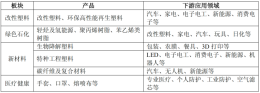
Polyamide 66 (PA66), as an important engineering plastic, has been widely used in automotive, electrical and electronic, machinery manufacturing, and aerospace industries due to its excellent mechanical properties, heat resistance, and chemical corrosion resistance. As the world's first synthe tic fiber material to achieve industrial production, the global market size of PA66 continues to expand, with an estimated value of 5.16 billion RMB by 2024. However, with the continuous improvement of material performance requirements in modern industries, the inherent limitations of PA66 have gradually become apparent. These include insufficient impact toughness, poor flame retardancy (limiting oxygen index of only 21%-24%, UL94 V-2 grade), easy melting and dripping at high temperatures, and significant dimensional instability due to humidity. These shortcomings severely restrict the application expansion of PA66 in high-end fields, especially in high-growth areas such as high-voltage components for new energy vehicles, precision structural parts for electronic products, and special protective equipment.
Based on the aforementioned limitations, PA66 modification technology has emerged. PA66 modification refers to the targeted introduction of functional components through physical blending, chemical grafting, in-situ polymerization, and other process methods, while maintaining the inherent advantages of the PA66 matrix, to address specific performance shortcomings or impart new functionalities to the material. In recent years, with the advancement of materials science and the upgrading of industrial demands, PA66 modification has evolved from traditional single-performance optimization to addressing multi-scenario requirements.Overall Performance Improvement..., giving rise to a series of innovative modification approaches such as enhanced toughening, flame retardant functionalization, wear-resistant self-lubrication, and UV aging resistance. Especially with the rapid development of industries such as new energy vehicles and smart homes, more stringent requirements are being placed on modified PA66. Safety Standards Environmental Requirements, which further promoted the innovation of related modification technologies.
Advances in Toughening and Strengthening Modification Technologies
Enhancement and toughening are key directions in PA66 modification, aiming to improve the material's strength, stiffness, and impact toughness to meet demanding mechanical load requirements. While traditional toughening methods can effectively enhance PA66's toughness, they often come at the expense of the material's strength, stiffness, and heat distortion temperature. Rigid particle toughening, on the other hand, faces compatibility issues and can easily form defects in the matrix, leading to stress concentration. In recent years, significant advancements have been made in reinforcement and toughening modification technologies with the emergence of new fillers and composite technologies.
Fiberglass reinforced modification
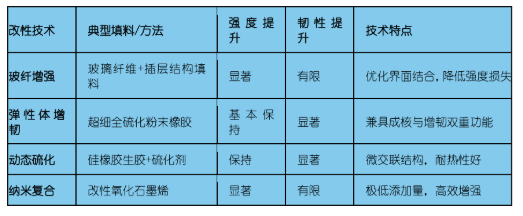
Glass fiber (GF) is one of the most commonly used reinforcing fillers for PA66. While conventional PA66/GF composites significantly enhance strength and stiffness, they often lead to a reduction in toughness and present limitations in terms of fluidity and processability. The latest technological breakthroughs aim to...Optimize the interfacial bonding between fiber and matrix., reducing the negative impact of traditional reinforcement methods on the toughness of composite materials. For example, Zhejiang University of Technology has developed a method for preparing high-strength, high-toughness PA66/GF that utilizes anionic surfactants to modify lamellar inorganic fillers. The large number of anions adsorbed between the layers of the filler undergo ion exchange reactions with grafted elastomer chains, allowing the elastomer to enter between the layers and form an intercalated structure with the inorganic lamellae. This structure not only improves the dispersion of the inorganic filler within the elastomer but also enhances the rigidity of the elastomer, thereby Significantly reduced the negative impact of elastomers on the strength and stiffness of composites.The highlight of this technology is that it solves the problem of decreased strength, stiffness, and hardness when traditional elastomers are used to toughen PA66/GF composites, enabling wider application of PA66 in fields such as transportation.
2. Elastomer Toughening Technology
The introduction of nanotechnology has opened up new avenues for toughening and strengthening PA66. Recent studies have shown that melamine-cyanuric acid co-modified graphene oxide (MGO) as a functional filler can significantly improve the mechanical properties of PA66. When the mass fraction of MGO is 0.3%, the tensile strength of PA66 increases from 49.50 MPa to 92.47 MPa, an increase of 87%. At the same time, the crystallinity increases from 46.3% to 49.1%. This significant enhancement effect stems from the uniform dispersion and good interfacial compatibility of MGO in the PA66 matrix. The modified graphene oxide surface groups form strong interactions with the PA66 molecular chains, effectively transferring loads and promoting crystallization.
Another study demonstrates that the molecular weight and mechanical properties of PA66 can be significantly enhanced through in-situ melt reaction chain extension using a bifunctional epoxide chain extender (EP). When the chain-extended PA66 is blended with ultra-fine fully vulcanized powdered carboxylated nitrile rubber (UFXPR), the addition of EP further improves the dispersion of UFXPR within the matrix. This results in a simultaneous and significant increase in both the impact strength and tensile strength of PA66, leading to the preparation of super-tough and high-strength PA66/UFXPR nanocomposites.
Table: Performance Comparison of Different Reinforcement and Toughening Technologies
Flame Retardant Modification Technology Innovation
PA66's inherent flammability is a major limitation for its applications, especially in safety-critical fields such as electronics, electrical engineering, and transportation. Due to environmental toxicity issues, traditional halogenated flame retardants have been gradually restricted, and research on flame retardant modification technologies has focused on efficient and environmentally friendly new flame retardant systems in recent years. Flame retardants mainly exert their flame retardant effect through mechanisms such as gas phase, condensed phase, synergistic effect, and interruption of heat exchange. Currently, the flame retardant modification methods for PA66 mainly include blending, copolymerization, and post-treatment, among which blending is the most widely used due to its simple process and low cost.
Traditional and Novel Flame Retardants
Early flame-retardant PA66 predominantly utilized halogenated flame retardants; however, these additives generate toxic gases and corrosive smoke during combustion, leading to their restriction under regulations such as the EU's RoHS directive. Current research is concentrated on halogen-free, environmentally friendly alternatives, including phosphorus-nitrogen synergistic systems, metal hydroxides, and nanocomposite flame-retardant systems. The phosphorus-nitrogen synergistic system is considered one of the most promising future directions, achieving high-efficiency flame retardancy through a dual mechanism in both the condensed and gas phases.
2. Compound Synergistic Flame Retardant Mechanism
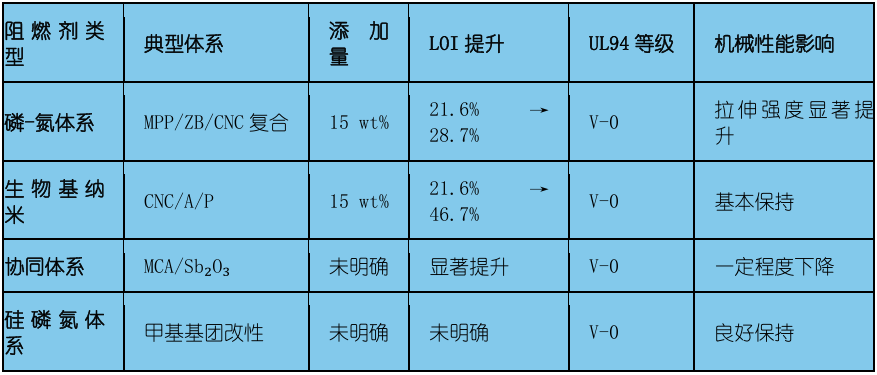
Synergistic flame retardancy refers to the combined action of two or more flame retardants on PA66, enabling it to possess both condensed phase and gas phase flame retardant properties. Currently, synergistic flame retardant systems applied to PA66 mainly include phosphorus-nitrogen flame retardant systems and organic-inorganic flame retardant systems. For example, a synergistic system composed of melamine cyanurate (MCA) and antimony trioxide (Sb₂O₃) effectively inhibits combustion by removing a large amount of heat through melt dripping, reducing the heat transferred to PA66.
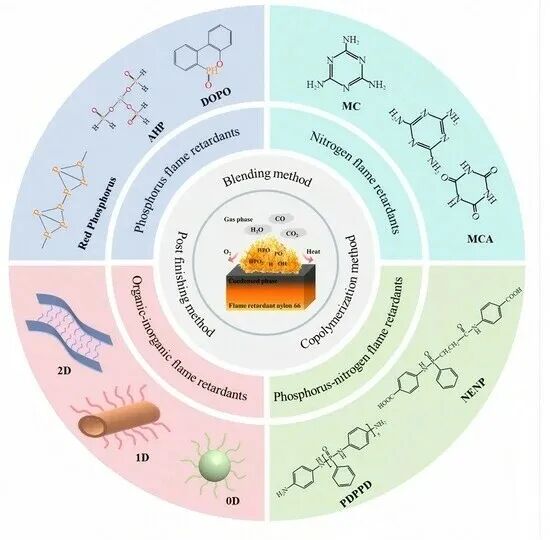
Graphical Abstract
3. Breakthroughs in Bio-based Flame Retardants
Bio-based flame retardants have been a research hotspot in recent years, with cellulose nanocrystals (CNCs) showing great potential. Studies have shown that CNC/A/P composite flame retardants, formed by modifying CNCs with 3-aminopropyltriethoxysilane (APTES) and phosphoric acid (PA), exhibit...Spider-web-like nanostructuresand good expansion properties. When the loading is 15 wt%, the limiting oxygen index (LOI) of the PA66 composite material significantly increases from 21.6% to 46.7%, reaching a UL94 V-0 rating. More noteworthy is that the material also exhibits Excellent self-extinguishing performance(Self-extinguishing in just 4 seconds) and Significant temperature reduction effect. (194.1°C) while maintaining good tensile strength.
Another study developed a flower-like bio-based three-component flame retardant synthesized from CNC, melamine polyphosphate (MPP), and zinc borate (ZB) through sequential grafting and electrostatic adsorption processes. This flame retardant formed a spherical arrangement structure in PA66, producing non-combustible gases and a protective phase during combustion. With the addition of 15 wt% of this flame retardant, the LOI of the PA66 composite increased to 28.7%, and the peak heat release rate decreased to 210.56 kW/m², a 75% reduction compared to pure PA66, while tensile stress and tensile strain increased by 225% and 317%, respectively.
Table: Performance of Different Flame Retardants in PA66
Functionalization modification expands application.
Besides traditional enhancement, toughening, and flame retardant modification, functional modification of PA66 has also made significant progress, enabling it to meet a wider range of application needs, including improving processing fluidity, enhancing wear resistance and self-lubrication, improving UV aging resistance, and imparting special functions such as electrical and thermal conductivity.
Flow modification technology
Highly filled PA66 composites often face the challenge of poor processing fluidity, which limits their application in complex structural components. Recent research has developed linear and hyperbranched amide-based flow modifiers aimed at enhancing the fluidity of PA66 composites without sacrificing mechanical properties. Studies indicate that after adding these flow modifiers, the viscosity of PA66 composites is significantly reduced, while the tensile strength is maintained between 208-212 MPa and the elongation at break remains within the range of 8.94-9.18%.Mechanical properties are largely unaffected. Notably, PA66 composites containing ACDA exhibit excellent viscosity reduction while maintaining mechanical strength, offering a novel solution to balance high mechanical strength and good flowability.
2. Wear-resistant self-lubricating modification
Research on the preparation and performance of PA66/GF/CF ternary composites indicates that incorporating short carbon fibers (CF) and short glass fibers (GF) into a PA66 matrix can significantly enhance the tribological properties of the material. The composite exhibits optimal tribological performance when the GF content is 20% by mass, the CF content is 15% by mass, and the PA66 content is 65% by mass. The skeletal structure formed by the fibers in the system strengthens its load-bearing capacity, and the compressive strength increases correspondingly with the increase in filler content. This ternary composite holds great potential for low-friction and high-wear-resistance applications, particularly in mechanical moving parts such as bearings and guide rails.
UV Resistance and Comprehensive Protection
Modified graphene oxide can not only enhance the mechanical properties of PA66 but also significantly improve its UV resistance. Studies have shown that when 0.3% melamine-cyanuric acid co-modified graphene oxide (MGO) is added, the ultraviolet protection factor (UPF) of the PA66/MGO film reaches 58.15, and the transmittance of UVA and UVB decreases to 4.60% and 0.89%, respectively, which is significantly better than the same amount of unmodified GO system and blank PA66 film. This composite film has broad application prospects in outdoor products, automotive exterior decorations, and other fields requiring UV protection.
PA66 Meanwhile, studies have shown that flower-like cellulose nanocrystal-based flame retardants can not only improve the flame retardancy of PA66 but also enhance its UV resistance, formingAll-in-one integratedComprehensive protective material.
Trends and Prospects of Modification Technologies
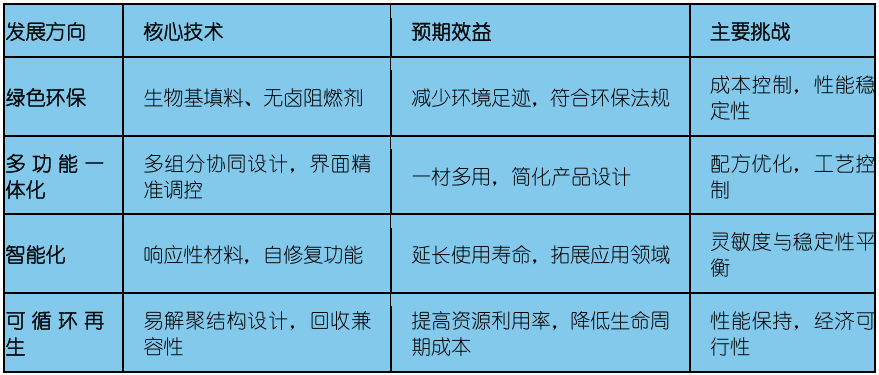
As materials science and engineering applications continue to evolve, PA66 modification technology is moving towardsGreen and environmentally friendly 、High-efficiency and Multi-function Intelligent Design...direction. Future development will primarily focus on the following directions:
Green Environmental Protection and Sustainable Development
Environmentally friendly and sustainable practices are becoming an important development direction for PA66 modification. The research and application of bio-based flame retardants are a typical representation of this trend. Cellulose nanocrystals (CNC), as a renewable and biodegradable natural polymer material, are not only widely available but also possess good biocompatibility and environmental friendliness. In the future, other biomass-based functional fillers and additives will continue to emerge, driving PA66 modification towards a greener and more sustainable direction.
Multifunctional and integrated design
Single performance optimization can no longer meet the comprehensive performance requirements of high-end applications for materials, and multi-functional integration has become a new trend in modification technology. For example, multi-functional composite materials that simultaneously possess reinforcement, toughening, flame retardancy, and UV resistance, as well as processing-optimized materials that combine good flowability with high strength.Precise DesignFiller surface functionalization and matrix interfacial interaction to achieve synergistic enhancement of multiple properties will become the core technology direction of PA66 modification in the future.
3. Intelligence and Circular Regeneration
With the development of intelligent manufacturing and circular economy, smart responsive PA66 composites and recyclable modification technologies will receive increasing attention. For example, the introduction of temperature-sensitive, light-sensitive, or pH-responsive functional fillers can endow PA66 with...Environmental adaptability At the same time, the design of modified PA66 that is easy to depolymerize and recycle will become a research focus to address increasingly stringent environmental regulations and resource recycling needs.
Table: Future Development Directions and Challenges of PA66 Modification Technology
PA66, as a crucial engineering plastic, is constantly breaking through performance limitations and expanding application fields through technological innovations such as reinforced toughening, flame retardant modification, and functional modification. In terms of reinforced toughening, the synergistic improvement of PA66's strength and toughness has been achieved through methods like the composite of glass fiber and intercalated structure fillers, toughening with ultrafine fully vulcanized elastomers, and reinforcement with nano-fillers. Regarding flame retardant modification, the development of halogen-free environmentally friendly flame retardant systems, especially bio-based nano-flame retardants, enables PA66 to obtain excellent flame retardant properties while maintaining mechanical properties. In functional modification, the integrated design of multiple functions such as flow modification, wear-resistant self-lubrication, and UV resistance meets the special needs of different application scenarios.
In the future, driven by innovative material design concepts and advancements in modification technologies, the primary development directions for PA66 modification will focus on eco-friendliness, multi-functional integration, intelligence, and recyclability. Through multidisciplinary cross-innovation and industrial chain synergy, modified PA66 is expected to play a more pivotal role in strategic emerging industries such as new energy vehicles, high-end equipment manufacturing, and electronic information, contributing to industrial upgrading and sustainable development.
【Copyright and Disclaimer】The above information is collected and organized by PlastMatch. The copyright belongs to the original author. This article is reprinted for the purpose of providing more information, and it does not imply that PlastMatch endorses the views expressed in the article or guarantees its accuracy. If there are any errors in the source attribution or if your legitimate rights have been infringed, please contact us, and we will promptly correct or remove the content. If other media, websites, or individuals use the aforementioned content, they must clearly indicate the original source and origin of the work and assume legal responsibility on their own.
Most Popular
-

Continental Plans to Begin Sale of ContiTech in Early 2026
-

$4 Billion! Medtronic Makes Another Acquisition
-

BASF Delivers First Batch of Innovative Cathode Materials for Semi-Solid-State Batteries to Weilan New Energy
-
Profit and Revenue Growth Struggle to Conceal Debt Repayment Pressure; Success of Kingfa Sci & Tech's High-End Strategy Yet to Be Seen
-

Why did a century-old european dental instrument giant relocate its manufacturing hub to china?