PolyKARD Project Launches, Biomimetic Polymer Materials Empower Advanced Medical Care
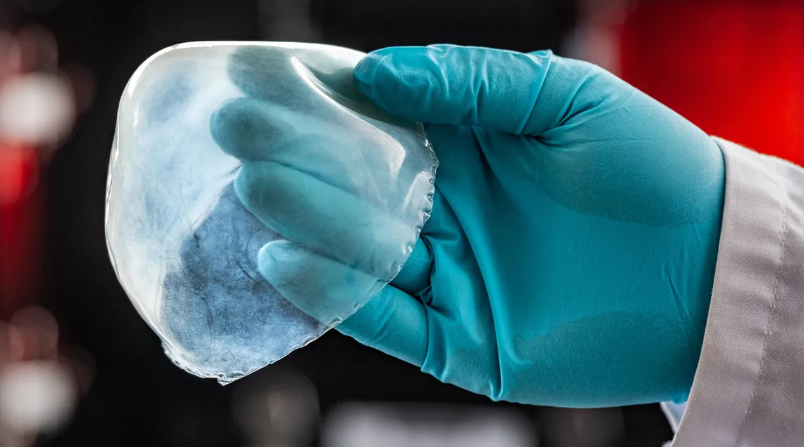
Recently, the PolyKARD project—jointly undertaken by the Fraunhofer Institute for Applied Polymer Research (IAP) and the Natural and Medical Sciences Institute (NMI)—has developed a biomimetic tissue-replacement material based on dense polymer films. This material features precisely tunable mechanical properties and biological functionality, making it suitable for the development of various medical implants. It was officially unveiled this week at the Hannover Messe in Germany, at booth D33 in Hall 11 of the Fraunhofer.
Core Material Requirements for Functional Implantable Devices
Fraunhofer stated in its announcement that the development of functional implantable devices imposes stringent requirements on material performance: materials must simultaneously exhibit excellent mechanical durability and biocompatibility.
The institute pointed out: "Natural biological tissues such as the pericardium possess complex intrinsic properties that traditional polymer materials can only replicate to a limited extent. In particular, the nonlinear stress-strain characteristics—initially flexible, with a significant increase in stiffness as the load increases—remain a key technological bottleneck in the development of biomedical materials."
Fraunhofer-biomimetic.jpg
The material adopts a three-layer composite structure: polyurethane acrylate film, 3D-printed wavy ultrastructure, and electrospun collagen layer, which can accurately simulate the mechanical properties and biological performance of natural tissues.
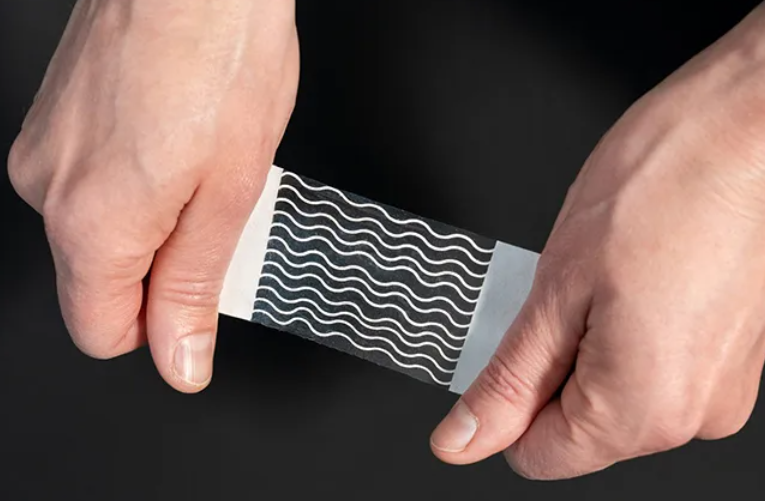
Located in the Potsdam Science Park, Fraunhofer IAP and NMI have jointly developed a multilayered composite structure that achieves synergistic integration of tailored mechanical properties and biological functionality. This structure uses a dense polyurethane acrylate polymer film as the base substrate, onto which a wavy, architectured superstructure is fabricated via 3D printing. This structured layer is the key component determining the overall mechanical behavior of the tissue replacement material. Subsequently, researchers functionalized its surface with an electrospun collagen layer produced using NMI's proprietary process, endowing the material with excellent biological functionality. The team employed specialized enzymatic assays and non-invasive spectroscopic analysis techniques to ensure precise, end-to-end quality control of the collagen fibers.
Mechanical properties highly matched with native tissue
Dr. Hadi Bakhshi of Fraunhofer IAP stated, "Tensile test results show that the material's strain characteristics and strength behavior closely match those of natural pericardial tissue. When stretched, the wavy structure extends, maintaining flexibility; stiffness increases sharply only at higher strain levels." Dr. Bakhshi and Dr. Wolfdietrich Meyer jointly developed the material, its structural design, and the dedicated printing technology.
Dr. Meyer stated: “Through rational combination of structural design and biomaterials, we have achieved mechanical properties highly similar to those of natural tissues.”
Paving a new technical pathway for bio-hybrid implantable devices
Cytotoxicity testing conducted by NMI confirmed that the material has no adverse effects on cells. Furthermore, in vitro studies on human dermal fibroblasts and epithelial cells demonstrated that the three-dimensional microstructure of the fiber network provides an ideal microenvironment for cell adhesion and proliferation.
NMI states that the materials and their biological functions can be rationally designed and modularly integrated to construct high-performance biomimetic materials, thereby opening up a new direction for the development of biohybrid implantable devices.
NMI and Fraunhofer have jointly filed a patent application for this tissue substitute material.
Application scenarios cover areas such as artificial blood vessels and skin grafts.
Two research institutions emphasized that this biomimetic tissue replacement material is not limited to a single application scenario; its design concept can be extended to artificial blood vessels, stent grafts, artificial skin, and other medical implant products. The material’s combination of mechanical compatibility and biological functionality can effectively enhance the durability and clinical performance of implantable devices. Fraunhofer and NMI warmly invite industry partners to collaborate on applying this material to specific product development and achieving market commercialization.
The PolyKARD project is funded by the German Federal Ministry of Research, Technology and Aerospace.
【Copyright and Disclaimer】This article is the property of PlastMatch. For business cooperation, media interviews, article reprints, or suggestions, please call the PlastMatch customer service hotline at +86-18030158354 or via email at service@zhuansushijie.com. The information and data provided by PlastMatch are for reference only and do not constitute direct advice for client decision-making. Any decisions made by clients based on such information and data, and all resulting direct or indirect losses and legal consequences, shall be borne by the clients themselves and are unrelated to PlastMatch. Unauthorized reprinting is strictly prohibited.
Most Popular
-

Continental Plans to Begin Sale of ContiTech in Early 2026
-

$4 Billion! Medtronic Makes Another Acquisition
-
BASF Delivers First Batch of Innovative Cathode Materials for Semi-Solid-State Batteries to Weilan New Energy
-
Profit and Revenue Growth Struggle to Conceal Debt Repayment Pressure; Success of Kingfa Sci & Tech's High-End Strategy Yet to Be Seen
-

Why did a century-old european dental instrument giant relocate its manufacturing hub to china?