



Plastic Components Also Hard to Profit From! Faurecia Divests Interior Business, Strategic "Decluttering" Amid Automotive Market Winter
Specialized VisionOn December 3rd, in response to media speculation regarding the sale of its business, FORVIA issued a formal statement to clarify the current asset divestiture process. The statement clearly indicated that the group has been conducting a comprehensive strategic review of its business portfolio, and based on the review's results, it has officially initiated the process of selling off certain businesses.The automotive interior business segment-related assets have become the focus of divestiture.。
In fact, Faurecia's asset divestiture is not a spur-of-the-moment decision. In the context of increasingly fierce competition in the automotive industry and a complex and ever-changing market environment, companies need to continuously optimize their business structure and concentrate resources on developing core businesses to enhance their competitiveness. Faurecia's move may well be aimed at seizing opportunities amid industry transformation and achieving sustainable development.

Image source: Fureya
Business Divestiture Breakdown: Plastics"Extremely high content"
Faurecia's automotive interior division holds a significant position in the automotive industry, providing interiors for vehicles.Complete dashboard, door panels, and center console system.In modern automobile manufacturing, plastic injection parts are widely and critically used in these areas, becoming the core support for interior and exterior business.
Dashboard casingThe design and manufacturing of the critical area for drivers to obtain vehicle information are crucial.,The dashboard housing is mainly made using injection molding technology, which allows for precise control of dimensions and shapes, while greatly enhancing the overall sense of technology and quality within the car.Common material polycarbonatePC)With its excellent transparency and mechanical properties, it provides outstanding protection and visual effects for the dashboard. It not only ensures that the driver can clearly read the dashboard information but also effectively protects the internal electronic components from damage in the event of collisions or other accidents.
Center console, armrest box, and door interior panel.The same components are largely manufactured using injection molding technology. These injection-molded parts can incorporate various functional modules according to design requirements, such as storage space, cup holders, audio systems, etc., making the interior more user-friendly and practical.Manufacture these components.Commonly used acrylonitrile Acrylonitrile Butadiene Styrene (ABS)It has good toughness and corrosion resistance, providing excellent protection and aesthetics for the components. It can withstand friction and collisions during daily use, keeping the interior clean and attractive.
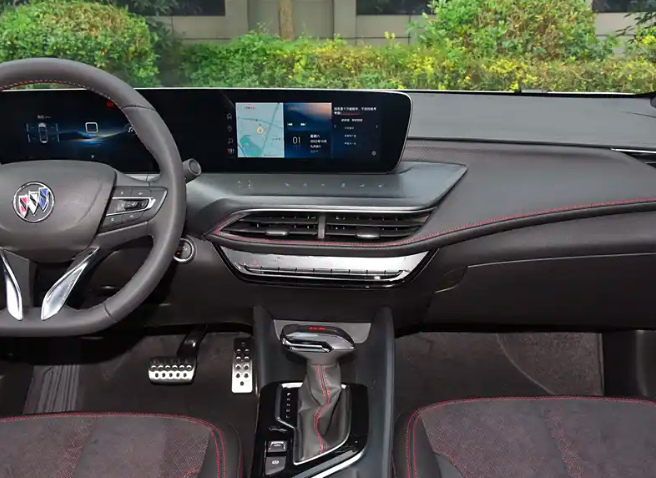
Source of the image: Auto Home
The third quarter of 2025.The sales revenue of the Furia interior division reached.1.09 billion euros, accounting for nearly 18% of the group's revenue.This data fully demonstrates the important position of this business within the group.Julien Thomas, an analyst at TP ICAP Midcap, stated in an interview with Reuters that interior automotive is a quality asset for Faurecia, with a solid market position. This business ranks among the top three globally, demonstrating competitiveness and high credibility, with an overall value potentially reaching €3.5 billion, which could help Faurecia address its debt issues. Thus, it is evident that Faurecia's automotive interior business not only has technical advantages but also holds significant market value and influence.
The automotive market downturn transmissionAutomotive parts giant
Actually, Spectrum Vision's observation found that Forvia's move to divest its interior and exterior business is closely related to the current global automotive market downturn. From the recently released third-quarter report, it is evident that the global automotive industry is facing a difficult situation.Adjustment periodOnce-glorious global automotive giants are generally struggling with weak growth and insufficient momentum.。
In terms of sales, the steady growth advantage of traditional foreign giants is gradually disappearing, except for Toyota, Volkswagen, Hyundai, etc.Apart from the "top students" barely stabilizing, Stellantis (the merged entity of Peugeot Citroën and Fiat Chrysler), Honda, Mercedes-Benz, and others have all experienced varying degrees of sales decline. This phenomenon indicates that the competitive landscape of the global automotive market is undergoing profound changes, with traditional foreign brands facing dual challenges from emerging market brands and local brands.
Looking at overseas giants, revenue growth rates are generally in single digits.Stellantis, Mercedes, BMW, even the previous two yearsTesla, the "popular rising star," has seen its revenue decline.The slowdown or decline in revenue growth reflects the difficulties encountered by overseas giants in market expansion and product sales. On one hand, factors such as the global economic slowdown and decreased consumer purchasing power have led to insufficient demand in the automotive market. On the other hand, the rise of new energy vehicles and the development of intelligent technology have squeezed the market share of traditional fuel vehicles, and overseas giants face pressure in terms of technology, funding, and market while undergoing transformation and upgrading.
Source: Stellantis
Looking at the profit situation, overseas car manufacturers have been affected by the US tariff policies and their performance in the large Chinese market has generally been poor, leading to a widespread decline in net profits."Continuous decline." Mercedes-Benz, Volkswagen, and Honda have seen their profits directly halved, dropping by more than half; even Toyota, the most profitable company in the world, has seen a 16% drop in profits. In stark contrast, domestic companies like BYD and Chirey have easily surpassed the 10 billion yuan mark in net profits for the first three quarters, showcasing strong earning resilience. This comparison fully demonstrates that, in the context of a sluggish global automotive market, domestic car manufacturers have emerged successfully due to their technological advantages, cost control capabilities, and market adaptability. Meanwhile, overseas giants need to reassess their strategic layouts and seek new growth points.
The difficulties of overseas giants inevitably affect the supply of foreign components.Giant, Freya is one of them.Even though its automotive interior business is competitive globally, it is difficult to remain unscathed in the overall unfavorable industry environment. The decline in market demand has led to a decrease in orders, and intensified price competition has compressed profit margins, all of which have brought tremendous pressure to Faurecia's business development.
Business, is plastic not profitable either?
Facing the global automotive market downturn and its own development challenges, Faurecia's divestment of its interior and exterior business is an important step in its strategic transformation.Since the merger of Faurecia and Hella in 2022, making it the seventh-largest automotive parts supplier in the world by revenue, asset divestiture has been one of Faurecia's key tasks. As of now, Faurecia has completed a quarter of its 1 billion euro (approximately 1.2 billion USD) asset divestiture plan announced in October 2023, with individual asset sale amounts ranging between 50 million and 200 million euros.
Freyr plans to reduce its net debt to core earnings by selling assets next year.The EBITDA ratio is below 1.5 times; in contrast, this ratio was 1.8 by the end of June 2025, and it was 3.1 three years ago (when the merger was just completed). Reducing the debt scale helps Aphria alleviate financial burdens, enhance financial flexibility, and provide strong funding support for the company's strategic transformation and future development.
From the perspective of optimizing business structure, divesting the interior and exterior decoration business can enable Faurecia to focus more on its core operations and concentrate resources on developing areas with higher added value and competitiveness.In the context of the global automotive industry's transition towards new energy, intelligence, and connectivity.Freya can invest more funds and energy into the research and innovation of new technologies and new products, enhancing its technical strength and market competitiveness.
However, divesting a business is not without its challenges. On one hand, finding suitable buyers for the business and agreeing on the transaction price and terms requires negotiation, which introduces certain uncertainties. On the other hand, divesting a business may lead to employee turnover and issues with business continuity, impacting the company's short-term operations. However, in the long run, if Forvia can successfully complete its strategic transformation and optimize and upgrade its business structure, it is expected to occupy a more advantageous position in future market competition.
Epilogue:
In the context of a sluggish global automotive market, intensified industry competition, and rapid technological iteration, automotive parts companies need to continuously adapt to market changes and adjust their development strategies to cope with various uncertainties.
In summary, Furia's divestment of its interior and exterior decoration business is a strategic move in response to the winter of the automotive market."Decluttering and letting go." This initiative has its share of helplessness, but it also contains profound considerations for future development. In the wave of transformation sweeping the global automotive industry, whether Faurecia can achieve a remarkable turnaround through strategic transformation remains to be seen. At the same time, this event provides valuable lessons and insights for other automotive component companies, encouraging the entire industry to view market changes more rationally and actively seek paths for transformation and upgrading.
【Copyright and Disclaimer】This article is the property of PlastMatch. For business cooperation, media interviews, article reprints, or suggestions, please call the PlastMatch customer service hotline at +86-18030158354 or via email at service@zhuansushijie.com. The information and data provided by PlastMatch are for reference only and do not constitute direct advice for client decision-making. Any decisions made by clients based on such information and data, and all resulting direct or indirect losses and legal consequences, shall be borne by the clients themselves and are unrelated to PlastMatch. Unauthorized reprinting is strictly prohibited.
Most Popular
-
BASF's $8.7 Billion Zhanjiang Site Fully Operational, Covestro, SABIC, Arkema and Other Plastics Giants Double Down on China
-
Deadly Impact: Hormuz Strait Blockade Sparks Shortage of Plastic Raw Materials, Threatening Shutdowns at Japanese and Korean Chemical Plants
-
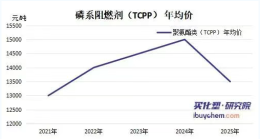
Massive Loss of $960 Million! Wansheng Co., Ltd. Sees Rising Revenue But Declining Profits—Why Did the Phosphorus-Based Flame Retardant Leader Falter?
-
SABIC Declares Force Majeure on Styrene Monomer and Methanol Production; Middle East Chemical Operations Halted
-

BASF Delivers First Batch of Innovative Cathode Materials for Semi-Solid-State Batteries to Weilan New Energy


