Pirelli's Equity Rift: Unmasking the Brutal Truth of Geopolitical Games in Smart Tires
Recently, the shareholder relationship of Italian tire giant Pirelli has once again become a focus of the industry - its core shareholder, Camfin, has officially announced that it will not renew the shareholder agreement with China's Sinochem, which is due to expire in May.
This decision not only marks a critical turning point in the decade-long equity partnership between Sinochem Group and Pirelli, but also reflects the deeper transformative logic of the global tire industry amidst intelligent transformation, geopolitical competition, and the restructuring of international trade rules.
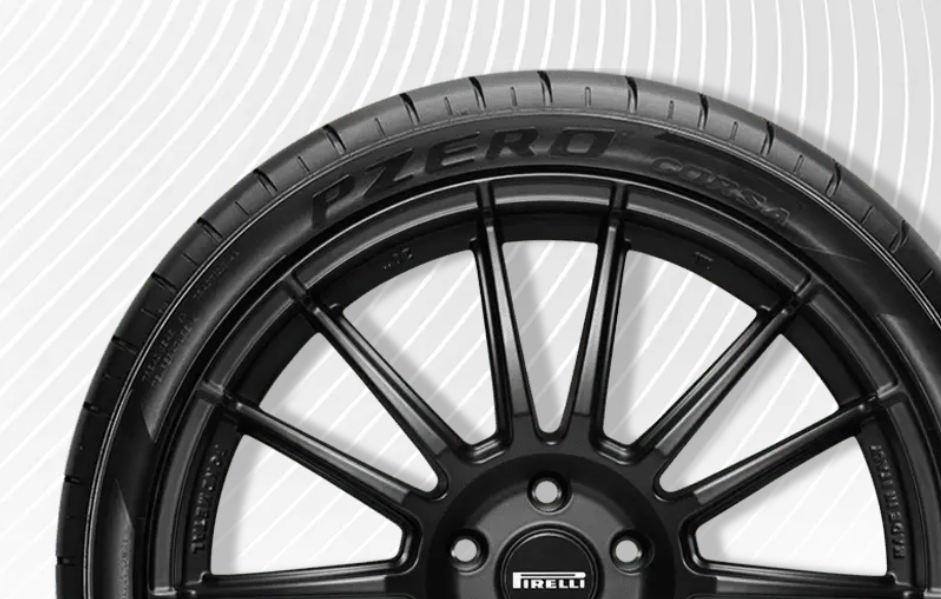
Image source: Pirelli
Ten-year equity marriage changes: An announcement breaks the balance.
From the perspective of shareholding structure, China National Chemical Corporation (ChemChina) became Pirelli's largest shareholder in 2015 with a 37.01% stake, followed closely by the Italian holding company Camfin with 32.4%. This "Sino-Italian" ownership model was once hailed as a paradigm for multinational industrial cooperation. However, the situation underwent a fundamental shift in 2021 when Pirelli introduced its "Cyber Tire" intelligent technology. By utilizing built-in sensors to collect real-time core data such as tire pressure, temperature, and road conditions, this technology not only enhances driving safety but also enables the indirect acquisition of geographic information and infrastructure data. Consequently, it has been designated by the Italian government as a "critical technology of national strategic importance."
The direct trigger for the termination of this shareholders' agreement is the new US trade regulations targeting connected car software and hardware.
According to the regulation, starting in March 2026, the United States will prohibit the sale of automotive products equipped with Chinese-related hardware or software. Pirelli's smart tires, due to their data collection function, have been included in the scope of U.S. regulation. Given that the U.S. market accounts for one-fifth of Pirelli's revenue and is a core market for its high-end tires and F1 race accompanying products, ensuring open export channels to the U.S. has become Pirelli's priority strategic choice.
Against this backdrop, the Italian government and local shareholders view Sinochem's stake as a "compliance obstacle." They are attempting to strip Pirelli of its "Chinese label" by pushing for the termination of the shareholder agreement, and even trying to relegate Sinochem to a passive shareholder (by freezing voting rights).
Smart tires become "Strategic weaponsSensors: The Trigger of a Regulatory Storm
From the perspective of industry fundamental logic, the essence of this incident is the conflict between the strategic attributes of intelligent tire technology and the cross-border equity structure.
In the wave of global automotive industry transformation towards intelligence and connectivity, tires have upgraded from traditional rubber products to "mobile data terminals." According to industry data, the global smart tire penetration rate reached 12% by 2025, with built-in sensors capable of pre-warning 78% of blowout risks and providing crucial road surface data support for autonomous driving systems.
This shift in the nature of technology means that the equity structure of tire companies is no longer merely a commercial issue, but has risen to the level of data security and national strategy. The Italian government's invocation of the "Golden Power Decree" to intervene in shareholder agreements is precisely based on the protection of control over key technologies; while US trade restrictions are a typical example of bundling technological competition with geopolitics.
More than just a battle for equity: The global tire industry's "Technology +
GeopoliticsNew Battlefield
From Pirelli's own operational perspective, it faces the challenge of balancing short-term market access with long-term technological development.
As a representative of the second tier of global tire companies, Pirelli has achieved a profit margin of nearly 16% with its high-end positioning, significantly higher than the industry average. However, the research and development of smart tires requires continuous capital investment and technological accumulation, and Sinochem Group's financial support and industrial chain resources have helped its technology implementation.
Following the termination of the shareholder agreement, Pirelli may temporarily circumvent US trade restrictions, but it also faces risks such as pressure on R&D funding and a contraction of its distribution channels in the Chinese market – after all, China is the world's largest tire consumer market, with its market size projected to reach 870 billion yuan by 2025, and the market for tires specifically for new energy vehicles is expected to exceed 120 billion yuan.
The Pirelli situation has implications for the global tire industry that are... Benchmark significance。
First, it reveals that the competition in the intelligent tire sector has entered a dual game phase of "technology + equity." In the future, mergers and acquisitions and cooperation among multinational tire companies will more heavily consider geopolitical factors, and the "compliance" of equity structures may become a prerequisite for technology commercialization.
Secondly, this event will accelerate the divergence of technological roadmaps within the industry: Companies like Michelin have already begun exploring technical solutions for local data storage to address regulatory requirements by avoiding the risks associated with cross-border data flows; while some emerging market companies may seize this opportunity to break through in the low-to-mid-end smart tire market.
Finally, for Chinese tire companies, the Pirelli incident serves as both a warning and an opportunity – the warning lies in the need for more thorough assessment of geopolitical risks in overseas mergers and acquisitions, while the opportunity is to force domestic companies to accelerate independent research and development of smart tire technology, thereby breaking free from their reliance on overseas technology.
From a broader perspective, the Pirelli shareholder agreement termination crisis is a microcosm of transnational industrial cooperation in the context of deglobalization. It reflects how the traditional "capital + market" cooperation model is struggling to adapt to new international rules amidst rising awareness of technological sovereignty and increasing trade protectionism. For the tire industry and even the entire automotive supply chain, building more resilient transnational cooperation frameworks while safeguarding technological innovation will be a core challenge for future development.
Editor: Lily
Source materials: Chemical New Materials, Reuters, WELINK Chemical, Europe M&A and Investment, Associated Press, Bloomberg News, etc.
【Copyright and Disclaimer】This article is the property of PlastMatch. For business cooperation, media interviews, article reprints, or suggestions, please call the PlastMatch customer service hotline at +86-18030158354 or via email at service@zhuansushijie.com. The information and data provided by PlastMatch are for reference only and do not constitute direct advice for client decision-making. Any decisions made by clients based on such information and data, and all resulting direct or indirect losses and legal consequences, shall be borne by the clients themselves and are unrelated to PlastMatch. Unauthorized reprinting is strictly prohibited.
Most Popular
-
Continental Plans to Begin Sale of ContiTech in Early 2026
-

$4 Billion! Medtronic Makes Another Acquisition
-

BASF Delivers First Batch of Innovative Cathode Materials for Semi-Solid-State Batteries to Weilan New Energy
-
Profit and Revenue Growth Struggle to Conceal Debt Repayment Pressure; Success of Kingfa Sci & Tech's High-End Strategy Yet to Be Seen
-

Why did a century-old european dental instrument giant relocate its manufacturing hub to china?