Performance Requirements of Modified PA6 for Energy Storage Connectors, Example of Modified Formulation, Key Process Points
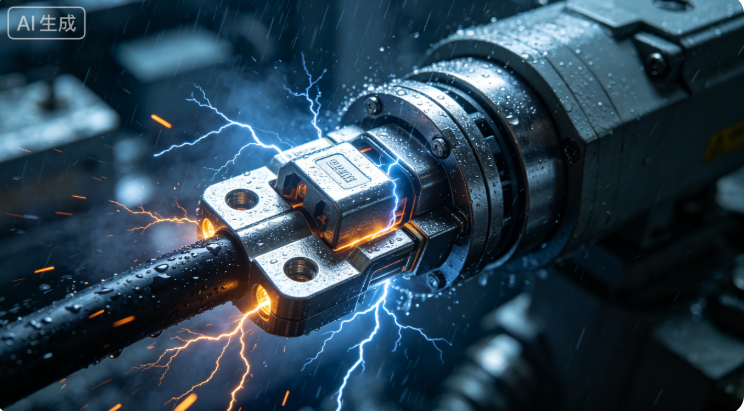
The application of modified PA6 in energy storage connectors lies in enhancing the material through reinforcement, flame retardancy, and other modifications to meet stringent requirements in terms of mechanical, electrical, and safety performance. The following will explain this from three aspects: performance requirements, formulation examples, and key process points.
Performance Requirements of Modified PA6 for Energy Storage Connectors
Energy storage connectors need to reliably transmit electrical energy under high voltage, high current, and various environmental conditions, which imposes very specific requirements on the materials used.
High flame retardancy and safety
One of the core safety requirements for energy storage connectors is to prevent flame propagation.
Flame retardancy rating: Modified PA6 generally needs to achieve UL94 V-0 rating to meet the safety requirement that connectors do not become an ignition source in the event of electrical faults. For high-performance applications, the material is even required to consistently achieve V-0 rating in thin-wall parts with thicknesses ranging from 0.75 mm to 1.5 mm.
Glow-wire test (GWFI/GWIT): The material’s GWFI (Glow-Wire Flammability Index) is typically required to reach 960°C, and its GWIT (Glow-Wire Ignition Temperature) is typically required to reach 775°C or even above 800°C.
Comparative Tracking Index (CTI): Connectors are densely populated with metal contacts, which places high demands on the material’s resistance to tracking. The commonly used CTI standard is ≥600 V, and for higher-voltage automotive platforms, the requirement can even reach above 800 V.
💪 Excellent Mechanical Properties
To ensure the reliability of the connector during assembly and use, the material must offer an excellent balance of stiffness and toughness, as well as dimensional stability.
Rigidity and Strength: Energy storage connectors must withstand plugging and unplugging, vibration, and accidental impacts, and a 30% glass fiber (GF) reinforced solution is commonly used. After reinforcement, modified PA6 can achieve a flexural modulus of over 7,000 MPa and a tensile strength of over 130 MPa.
Toughness (impact resistance): High-rigidity materials are often brittle and require the addition of toughening agents. A well-modified PA6 can maintain high rigidity while offering excellent impact strength, preventing brittle fracture of connectors during assembly.
Dimensional stability: PA6 absorbs water easily, which can cause dimensional changes. Adding 30–35% GF can significantly reduce the shrinkage rate to 0.2%–0.3%, keeping tolerances within ±0.02 mm and ensuring high-precision mating of the connector.
Excellent electrical performance
High insulation performance: Good dielectric strength is essential to prevent high-voltage breakdown and leakage current. The breakdown voltage of modified PA6 is generally required to be higher than 32 kV/mm, and the insulation resistance must reach above 10^11 Ω.
Arc resistance: The material should minimize the formation of carbonized paths, thereby reducing the risk of leakage tracking.
🌡️ Good heat resistance and aging resistance
Heat resistance: It must maintain performance under the heat generated by high-current transmission, with a common specification requirement of a heat deflection temperature above 190°C.
Damp heat aging: In a hot and humid environment, the insulation performance of modified PA6 decreases. In high-demand applications, targeted improvements in damp heat aging resistance are required.
Environmental Compliance
Modified PA6 must comply with directives such as RoHS and REACH to ensure that the product meets environmental and safety standards.
🔧 Modified Formulation Example
The core of PA6 formulation design for energy storage connectors lies in addressing the three major challenges of “balance between rigidity and toughness,” “flame retardancy,” and “dimensional stability.” This is mainly achieved through glass fiber (GF) reinforcement, construction of a flame-retardant system, and auxiliary modification.
Example 1: 30% GF-Reinforced Halogen-Free Flame-Retardant Modified PA6
PA6 resin: 100 parts
Halogen-free flame retardants: such as diethyl phosphinic acid aluminum, melamine cyanurate (MCA), ammonium polyphosphate (APP), and their composite systems, about 15-25 parts.
Flame-retardant synergists: such as microencapsulated ammonium polyphosphate (MAPP), nano antimony trioxide, aluminum phosphite, etc.
Anti-dripping agent: Prevents molten drips from spreading flames at high temperatures, such as polytetrafluoroethylene (PTFE)-based anti-dripping agents, about 0.3–0.5 parts.
Toughening agent: POE-g-MAH, approximately 5–10 parts.
Extender/Coupling Agent: Silane coupling agent, such as KH-550, about 0.5–1.0 parts.
Antioxidants: A blend of hindered phenols and phosphites, approximately 0.5-1.0 parts.
Lubricants/dispersants: such as EBS, calcium stearate, PE wax, etc., approximately 1–2 parts.
This formulation combines halogen-free flame retardants with synergists to meet V-0 flame-retardant rating and environmental requirements; glass fiber significantly enhances mechanical strength and dimensional stability; the toughening and compatibilizing systems ensure material toughness and interfacial adhesion.
Example 2: Copolymer-Modified / Low-Moisture-Absorption PA6
Comonomers: caprolactam, laurolactam
Inorganic fillers: modified talc (about 30 parts), wollastonite, magnesium sulfate whiskers, or hydrotalcite, etc.
Modification additives: compatibilizer, coupling agent (KH-550), dispersant (PE wax), stabilizer, antioxidant, etc.
In the PA6 polymerization process or through physical blending with a second monomer or inorganic filler, the regularity of the molecular chains or the free volume is essentially disrupted, aiming to reduce the saturated water absorption rate and improve the dimensional stability and durability of the material's electrical performance in humid environments.
⚙️ Process Key Points
The processing performance of modified PA6 is crucial to the quality of the final part, and the following aspects must be strictly controlled:
🌡️ Material Drying
PA6 is a highly polar polymer and is extremely hygroscopic. To ensure stability, it is recommended to dry the resin in a dehumidifying dryer at 100–120°C for 4–8 hours, keeping the moisture content below 0.2%.
Injection Molding
Front section (nozzle): 250–260°C
Middle section (compression): 240–250°C
Back section (feeding): 230-240℃
Mold temperature: 80-110℃ (High mold temperature is beneficial for improving crystallinity and surface quality)
Extrusion pelletizing
Key parameters: L/D ≥ 40:1 to ensure uniform plasticization; low screw speed combined with gentle shear to protect glass fiber length.
Other key points: Maintain the melt temperature at 250–280°C, and keep a high vacuum at the vacuum vent to remove low-molecular-weight volatiles.
🚫 Floating Fiber Suppression and Mold Flow Analysis
By increasing the mold temperature and using an extruder with gentle screw shear, the defect of exposed fiberglass, known as "fuzz," can be reduced. It is recommended to use CAE software such as Moldflow in the early design phase to simulate filling, holding pressure, and warpage, in order to determine the optimal gate location and process parameters.
【Copyright and Disclaimer】The above information is collected and organized by PlastMatch. The copyright belongs to the original author. This article is reprinted for the purpose of providing more information, and it does not imply that PlastMatch endorses the views expressed in the article or guarantees its accuracy. If there are any errors in the source attribution or if your legitimate rights have been infringed, please contact us, and we will promptly correct or remove the content. If other media, websites, or individuals use the aforementioned content, they must clearly indicate the original source and origin of the work and assume legal responsibility on their own.
Most Popular
-

Layoffs, Divestments, Plant Closures While Pouring Billions: BASF Undergoes Major Transformation!
-

Ascend Adipic Acid Hit By Force Majeure, Market Expects Supply Resumption In Mid-September
-

Raw Material Supply Shortage! INEOS Phenol Declares Force Majeure on Phenol and Acetone Businesses
-
South Korea initiates anti-dumping investigation against Chinese PVC suspension resin! The target is Tianjin Bohua and Wanhua Chemical. How to break through?
-

Sixth national procurement set to be implemented: A “Reshuffling” Moment for the $10-Billion Medical Device Market