



Over 500,000 Units Delivered! The Integrated Breakthrough Journey of Jingwei Hengrun XCU
With the rolling off of the 500,000th unit of Jingwei Hengrun's XCU, its integrated solution has been fully equipped in the Geely Xingyuan, helping the model maintain its position as the sales champion across all categories.
In today's rapidly developing electric vehicle market, the integration of electric drive systems and the domain control of electronic and electrical architectures have become two clear trends. Against this backdrop, the XCU (X-in-One Control Unit) solution launched by JINGWEI Hengrui is not simply a "packaging" or "unified installation," but rather a significant step in marking the transition of the vehicle's electronic and electrical architecture from decentralization to centralization, and from hardware integration to a deep fusion of control logic. As the industry's demand for higher-level control integration becomes increasingly urgent, the emergence of functional domain controllers like XCU not only responds to technological trends but also lays a solid architectural foundation for the future of "software-defined vehicles."
Three Major Pain Points of Traditional Architecture
In the traditional distributed electronic architecture, an intelligent electric vehicle is equipped with over 100 electronic control units (ECUs) on average. Each ECU is independently developed and distributed, which not only increases system complexity but also brings about three increasingly prominent challenges.
● High harness complexity:In traditional architectures, the wiring harness of a car can be up to about 5 kilometers long and accounts for nearly 5% of the vehicle's weight, making it one of the heaviest components in the low-voltage electrical system. This not only takes up space but also increases cost and assembly difficulty.
- High cost pressure:Each function requires a separate controller, which means duplicated chips, enclosures, and development investment, making it difficult to reuse across different vehicle models, leading to increasingly higher costs in vehicle development and manufacturing.
Cooling system is complicated.The layout of heat-generating components is dispersed, requiring individual cooling water paths for each module and the configuration of different pumps or valves for control. This results in numerous pipelines and complex control logic, further increasing costs and energy consumption.

Jingwei Hengrun XCU: Centralized Integrated Architecture Industry Solution
Facing industry pain points, Jingwei Hengrun has leveraged years of technical accumulation in automotive electronic systems to launch the highly integrated XCU all-in-one main control board. This solution systematically addresses the challenges of traditional architectures and has been applied in Geely's Xingyuan model. With a cumulative shipment of over 500,000 units and a stable reputation for quality, the maturity and high reliability of the XCU have been fully validated.

Architecture Innovation: From "Functional Islands" to "Central Brain"
XCU integrates multiple independent units such as traditional distributed vehicle controllers, thermal management controllers, gateways, and motor controllers onto a single hardware platform. It can also provide guidance circuits for onboard chargers (OBC) and DC/DC converters. In the future, it may further integrate core algorithms of battery management systems to reduce the computational burden on the microcontroller within the battery pack. Compared to traditional methods relying on CAN bus communication, XCU uses high-speed on-chip communication, resulting in faster response times, higher reliability, and significantly simplifying wiring layouts and vehicle assembly processes.
Cost reduction and efficiency enhancement while prioritizing safety.
XCU replaces multiple independent controllers with a single Infineon AURIX™ TC3x series master control chip, significantly reducing the number of chips and controller housings, lowering hardware costs and failure rates, and making thermal management simpler and more efficient. While optimizing costs, safety has not been compromised—the master control chip supports a maximum ASIL D functional safety level, with hardware redundancy designed into critical areas such as the accelerator pedal and motor control, and it can monitor core parameters in real-time with graded warnings to ensure that driving safety remains under control.
The successful implementation of XCU is not only a breakthrough for a single product but also an important practice in the evolution of automotive electronic architecture towards domain control. As it is promoted and applied in more vehicle platforms, Jingwei Hirain is committed to making XCU an industry benchmark for multi-functional integrated units in the power domain.
In the future, Hirain Technologies will continue to focus on deepening technology, promoting the iterative upgrade of XCU and expanding to multiple vehicle models. With high-quality, cost-effective technical solutions, the company aims to support the advancement of Chinese smart electric vehicles to higher levels, providing global users with a more reliable, efficient, and intelligent travel experience.
【Copyright and Disclaimer】The above information is collected and organized by PlastMatch. The copyright belongs to the original author. This article is reprinted for the purpose of providing more information, and it does not imply that PlastMatch endorses the views expressed in the article or guarantees its accuracy. If there are any errors in the source attribution or if your legitimate rights have been infringed, please contact us, and we will promptly correct or remove the content. If other media, websites, or individuals use the aforementioned content, they must clearly indicate the original source and origin of the work and assume legal responsibility on their own.
Most Popular
-

List Released! Mexico Announces 50% Tariff On 1,371 China Product Categories
-
Nissan Cuts Production of New Leaf EV in Half Due to Battery Shortage
-

New Breakthrough in Domestic Adiponitrile! Observing the Rise of China's Nylon Industry Chain from Tianchen Qixiang's Production
-

Mexico officially imposes tariffs on 1,400 chinese products, with rates up to 50%
-
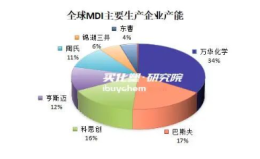
Dow, Wanhua, Huntsman Intensively Raise Prices! Who Controls the Global MDI Prices?

