ORNL Scientists Transform Old Car Aluminum Into High-Performance Metal for New Vehicle Manufacturing
Over the next decade, a large volume of aluminum from automotive body panels is expected to enter recycling and reuse systems. Currently, due to contamination leading to insufficient purity, most of this material cannot be used for critical automotive components, which reduces its value.
According to foreign media reports, researchers at the U.S. Department of Energy’s Oak Ridge National Laboratory (ORNL) are working to change this situation. The team has developed a new aluminum alloy named RidgeAlloy, which can transform low-value recycled aluminum into a reliable material for manufacturing automotive structural components in the United States.
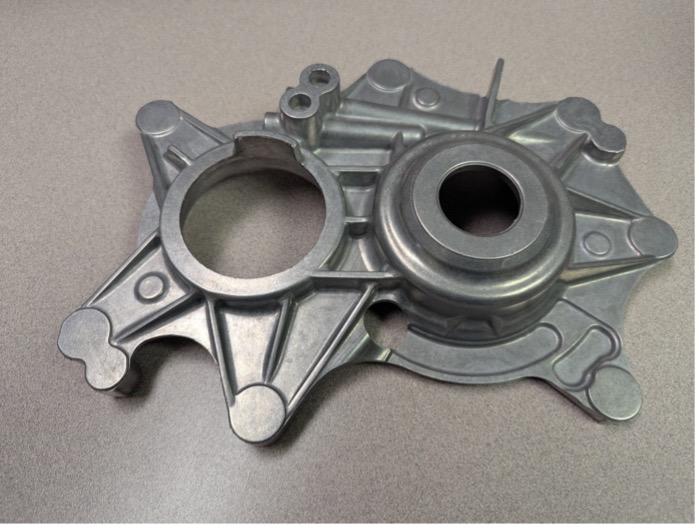
Image source: ORNL
Aluminum is included on the U.S. Department of Energy’s Critical Materials List because it plays a vital role in numerous energy technologies, including those used for power generation, transmission, energy storage, and energy efficiency.
The manufacturing process of RidgeAlloy involves remelting recycled aluminum from end-of-life products and casting it into a new alloy designed to meet the strength, ductility, and crash safety requirements of vehicle structural components. ORNL researchers have developed a targeted alloy design approach that can accelerate the development of new materials.
“The team went from concept on paper to successfully manufacturing full-scale components of the new alloy in just 15 months,” said Allen Haynes, Director of the Light Metals Core Project at ORNL. “This pace of innovation in developing complex-structured alloys is unprecedented.”
The increasingly severe challenges facing the recycling and reuse of automotive aluminum materials
Aluminum-intensive vehicles began appearing in the U.S. market around 2015, including the Ford F-150 pickup truck series, one of the first mass-produced models with extensive aluminum use. Many of these vehicles are expected to reach the end of their service lives by the early 2030s, at which point North American recycling systems could receive up to 350,000 metric tons annually of aluminum body scrap.
A large portion of these scrap materials is ultimately used to produce low-value cast products or exported, meaning a missed opportunity to reuse this metal as a domestic source of high-quality aluminum.
“You can reuse post-consumer aluminum to manufacture non-structural components, such as engine blocks,” said Alex Plotkowski, leader of ORNL’s Computational Multiphysics Group, “but it doesn’t have the properties required for high-value, structurally robust vehicle bodies.”
The main challenge stems from contamination introduced during vehicle dismantling. Small amounts of iron from components such as rivets and other fasteners mix into the recycled metal. These impurities make the chemical composition difficult to predict and degrade performance, rendering the material unable to meet the stringent standards required for automotive structural alloys.
Therefore, most lightweight automotive parts are still made from primary aluminum extracted from ores, and this process requires a large amount of energy.
Converting scrap aluminum into domestic resources
Although the United States relies mostly on imported primary aluminum, the country has a well-established vehicle dismantling and scrap aluminum recycling network. "It is estimated that using remelted scrap aluminum instead of primary aluminum can reduce the energy required for part processing by up to 95%," said Amit Shyam, leader of the ORNL Alloy Behavior and Design group.
To develop RidgeAlloy, researchers employed advanced scientific tools to design the alloy’s composition. They conducted over two million high-throughput calculations to predict which elemental combinations would deliver the desired mechanical properties. The research team also performed detailed materials analysis and neutron diffraction experiments at the Spallation Neutron Source (SNS) at Oak Ridge National Laboratory (ORNL), a user facility of the U.S. Department of Energy Office of Science.
These experiments help scientists understand how different impurities affect the properties of alloys. Neutrons are particularly suitable for studying metals because they can penetrate dense materials without causing damage, allowing researchers to observe their internal structure and changes at the atomic scale.
From computer model to actual automotive parts
Researchers evaluated RidgeAlloy under actual production conditions after determining the optimal alloy formulation through simulation and laboratory testing.
Trialco Aluminum, a PSW Group company based in Chicago, produced recycled aluminum ingots using mixed automotive body sheet scrap matching RidgeAlloy’s design. These ingots were then sent to Falcon Lakeside Manufacturing in Michigan, where they were melted and cast into automotive components using high-pressure die casting technology.
"The parts we chose are of moderate size and have a relatively complex structure," said Plotkowski. "The ultimate goal is to cast larger parts, and even possibly huge automotive castings, but this is just the first step."
Testing has confirmed that RidgeAlloy contains aluminum, magnesium, silicon, iron, and manganese; this elemental composition meets the requirements for automotive structural castings, even when the recycled metal has relatively high iron and silicon content. This material possesses the strength, corrosion resistance, and ductility required for high-demand applications such as automotive chassis, frame components, and other critical structural parts.
This technology has the potential to significantly change the sorting, valuation, and reuse of aluminum scrap in North America.
Expanding Impact Beyond the Laboratory
“This team has found a way to fully leverage the world-class capabilities of the national laboratory, rapidly filling a significant gap in our understanding of lightweight automotive materials,” said Haynes.
By the early 2030s, RidgeAlloy is expected to achieve a production volume of recycled structural aluminum castings equivalent to at least half of the current annual primary aluminum production in the United States.
"The technology provided by RidgeAlloy is the first to be able to reuse the value of the upcoming, unprecedented scale of high-quality recycled automotive aluminum sheet in the country," Haynes said. "This is exactly the profound impact on the entire supply chain that our team aims to achieve."
The application of this technology may not be limited to passenger vehicles. Potential application areas include industrial equipment, agricultural machinery, aerospace systems, mobile power generation equipment, off-road vehicles such as snowmobiles and motorcycles, and watercraft such as jet skis.
【Copyright and Disclaimer】The above information is collected and organized by PlastMatch. The copyright belongs to the original author. This article is reprinted for the purpose of providing more information, and it does not imply that PlastMatch endorses the views expressed in the article or guarantees its accuracy. If there are any errors in the source attribution or if your legitimate rights have been infringed, please contact us, and we will promptly correct or remove the content. If other media, websites, or individuals use the aforementioned content, they must clearly indicate the original source and origin of the work and assume legal responsibility on their own.
Most Popular
-

Continental Plans to Begin Sale of ContiTech in Early 2026
-

$4 Billion! Medtronic Makes Another Acquisition
-

BASF Delivers First Batch of Innovative Cathode Materials for Semi-Solid-State Batteries to Weilan New Energy
-
Profit and Revenue Growth Struggle to Conceal Debt Repayment Pressure; Success of Kingfa Sci & Tech's High-End Strategy Yet to Be Seen
-

Why did a century-old european dental instrument giant relocate its manufacturing hub to china?