MIT Breakthrough: 3D-Printed Recycled Plastic Floor Trusses Support Over 4,000 Pounds
A team of innovative engineers at MIT has announced a major breakthrough in sustainable construction: the successful development of a floor truss system 3D-printed from recycled plastic, boasting a load-bearing capacity exceeding U.S. Department of Housing and Urban Development (HUD) standards by over 40%, marking a crucial step towards low-cost, environmentally friendly housing solutions.
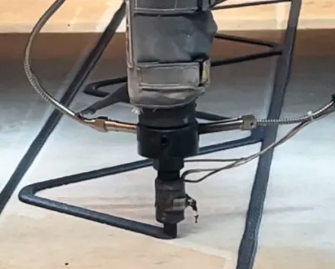
According to research published earlier this month in an academic journal by MIT's "Housing for All Universal Sustainability" (HAUS) team, they designed and tested a novel 3D-printed floor truss system made entirely from "dirty" recycled plastic, without prior washing or pretreatment, combined with fiberglass reinforcement. This system was integrally printed using industrial-scale additive manufacturing (LSAM) equipment, achieving high-strength structural fusion without the need for additional connectors.
In testing, the flooring system consisted of four plastic trusses, each approximately 8 feet long and 1 foot high, with a total weight of only about 52 pounds—significantly lighter than wooden trusses of the same specifications. Remarkably, the system successfully withstood a concentrated load of up to 4,480 pounds before structural failure occurred, far exceeding the HUD standard of 300 pounds per truss and demonstrating exceptional structural performance.
"We're trying to reinvent the way we build at a scale that's never been done before," says AJ Perez, a lecturer at the MIT School of Engineering and co-author of the paper. "If we plan to build roughly a billion new homes by 2050, relying on traditional timber would mean deforesting an area equivalent to three Amazon rainforests. Using recycled plastic not only reduces the environmental burden, but also effectively alleviates the global housing crisis."
According to UN data, the world produces over 400 million tons of plastic annually, with only 10% being recycled and approximately 11 million tons ending up in bodies of water. Meanwhile, the World Green Building Council predicts that to meet the demands of urban population growth, the world will need to build approximately 96,000 new housing units per day for the next 75 years. An MIT team points out that if plastic from urban solid waste could be transformed into structural building materials, it would greatly promote the development of a circular economy and alleviate housing pressure.
Another highlight of this project is its manufacturing efficiency. A single truss takes only about 13 minutes to print, and the complete floor system can be assembled in less than 1 hour, making it suitable for rapid deployment in remote areas or post-disaster emergency housing. Furthermore, due to the use of mixed recycled plastic and glass fiber, it possesses good weather resistance and structural stability, and is expected to be extended to the application of other load-bearing components such as beams and columns in the future.
However, the researchers admitted that the technology still faces challenges at this stage. Currently, the high cost of materials and limited throughput of production equipment lead to a high per-unit cost. They suggest optimizing raw material costs through customized recycling paths and leveraging larger LSAM equipment to improve mass production capabilities, thereby advancing the practical application process.
Currently, companies in North America are already experimenting with similar eco-friendly building models. For example, Los Angeles-based startup Azure Printed Homes has launched several micro-homes and Accessory Dwelling Units (ADUs) made from recycled plastic. One of their 120-square-foot model homes utilized recycled material equivalent to 100,000 plastic bottles. The shell, treated for fire resistance and UV protection, is commercially viable.
While 3D-printed recycled plastic buildings are not yet mainstream, MIT's latest research results undoubtedly inject strong momentum into the field. Industry experts generally believe that if this technology can continue to break through in cost control and large-scale manufacturing, it will open up a new path for global housing equity and environmental protection.
【Copyright and Disclaimer】The above information is collected and organized by PlastMatch. The copyright belongs to the original author. This article is reprinted for the purpose of providing more information, and it does not imply that PlastMatch endorses the views expressed in the article or guarantees its accuracy. If there are any errors in the source attribution or if your legitimate rights have been infringed, please contact us, and we will promptly correct or remove the content. If other media, websites, or individuals use the aforementioned content, they must clearly indicate the original source and origin of the work and assume legal responsibility on their own.
Most Popular
-

Continental Plans to Begin Sale of ContiTech in Early 2026
-

$4 Billion! Medtronic Makes Another Acquisition
-

BASF Delivers First Batch of Innovative Cathode Materials for Semi-Solid-State Batteries to Weilan New Energy
-
Profit and Revenue Growth Struggle to Conceal Debt Repayment Pressure; Success of Kingfa Sci & Tech's High-End Strategy Yet to Be Seen
-

Why did a century-old european dental instrument giant relocate its manufacturing hub to china?