



Mexico Imposes Tariff Up to 36% on Cross-Border E-Commerce Products, Effective January 1, 2026; Plastic Shows Partial Fluctuation Today
Mexico imposes up to 36% tariffs on cross-border e-commerce products, effective January 1, 2026.

In November 2025, the Mexican government passed the 2026 Federal Revenue Law (Ley de Ingresos de la Federación, LIF) and related tax regulations such as the Income Tax Law (LISR) and the Value Added Tax Law (LIVA). Among these, the most noteworthy "e-commerce platform withholding tax mechanism" will officially come into effect on January 1, 2026.
This new regulation will significantly impact cross-border e-commerce, especially Chinese sellers, as China is Mexico's second-largest source of imports.
Core content of the new regulations:
⚠️ E-commerce Platform Tax Withholding Mechanism: This mechanism requires e-commerce platforms (such as Amazon, Mercado Libre, TikTok Shop, etc.) to act as "digital intermediaries" by directly withholding income tax (ISR, Impuesto Sobre la Renta) and value-added tax (IVA, Impuesto al Valor Agregado) from sellers' sales revenue and remitting it to the Mexican Tax Administration Service (SAT). This aims to enhance tax compliance and combat tax evasion. Platforms will also gain access to real-time transaction data and are required to issue electronic invoices (CFDI) reporting all seller information, including cross-border sellers without local bank accounts.
⚠️ Scope: This mechanism applies to all transactions involving the sale of goods, services, or temporary usage rights through the platform, including domestic and cross-border sellers (especially those warehousing within Mexico, such as the FBA model). Self-shipping (direct mail) is not directly affected for now, but if the platform intervenes with fees, it must be implemented.
⚠️ Tax Rate Details: The tax rate depends on whether the seller provides a valid Federal Taxpayer Registration (RFC) and the type of bank account for receiving payments. ISR is calculated based on the total income (without deducting IVA); IVA is based on either 50% or 100% of the standard 16% tax rate. Without an RFC, it is considered high risk, with a maximum tax burden of up to 36% (20% ISR + 16% IVA).
Here is the detailed description:
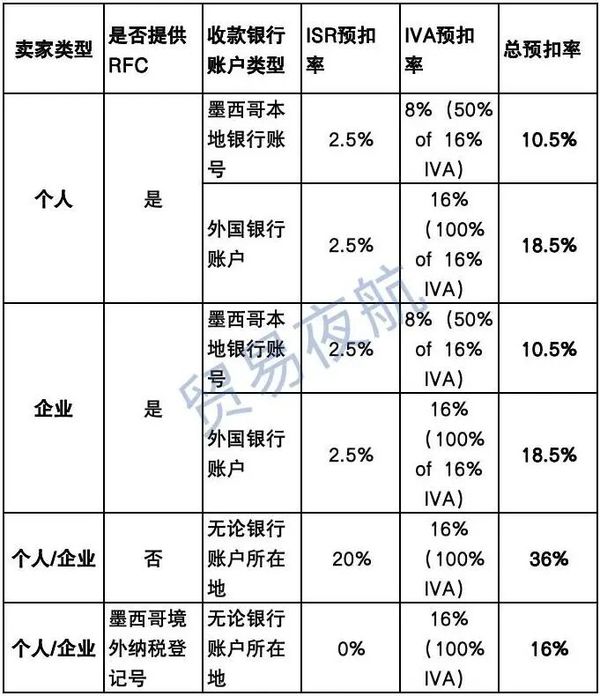
Calculation example: Assume a sales amount of 100,000 Mexican pesos (approximately 5,000 US dollars).
● With RFC: 10,500 pesos withheld (10.5%), the seller actually receives 89,500 pesos.
● Without RFC: Withhold 36,000 pesos (36%), the seller actually receives 64,000 pesos.
Other Requirements: Sellers are still required to file annual declarations (even if withholding has been done), otherwise they face fines (up to 20% of the highest sales amount). The platform must declare the withheld tax before the 17th of each month.
A Chinese seller without an RFC loses 36% of their funds per transaction, equivalent to halving their profit margin. For example, a Chinese FBA seller with annual sales of $1 million would incur an additional tax burden of approximately $240,000 (36%), which is much higher than the compliant tax rate (10.5%). This will compress the pricing space and reduce the competitiveness of the products on the platform.
Compliance thresholds are rising: sellers without an RFC will be cleared from the "gray market," and platforms may restrict their listings. Compliant sellers (with RFC) will benefit, potentially increasing their market share. However, registering for an RFC requires a local address/agent, with costs approximately $5,000-$10,000 per year.
Mexico has a high e-commerce penetration rate (over 70%), but consumers are price-sensitive. The competitive advantage of low-cost Chinese products will be diluted by tariffs, with categories such as textiles and toys being most affected (China accounts for 30% of the Mexican market).
Section 2: Latest Plastic Prices as of December 19th
As of 11:00 AM on December 19, according to the statistics from Zhuan Su Shijie, the plastics market experienced localized fluctuations. The ABS market saw mixed increases and decreases, with the highest rise/drop being 150. The PS market experienced localized shocks, with the highest increase being 480 and the largest decrease being 300 yuan. The PVC market remained stable with slight decreases, with the largest drop being 20 yuan. The PC market remained stable with increases, with the highest rise being 300 yuan. The PA market remained stable with increases, with the highest rise being 200 yuan.

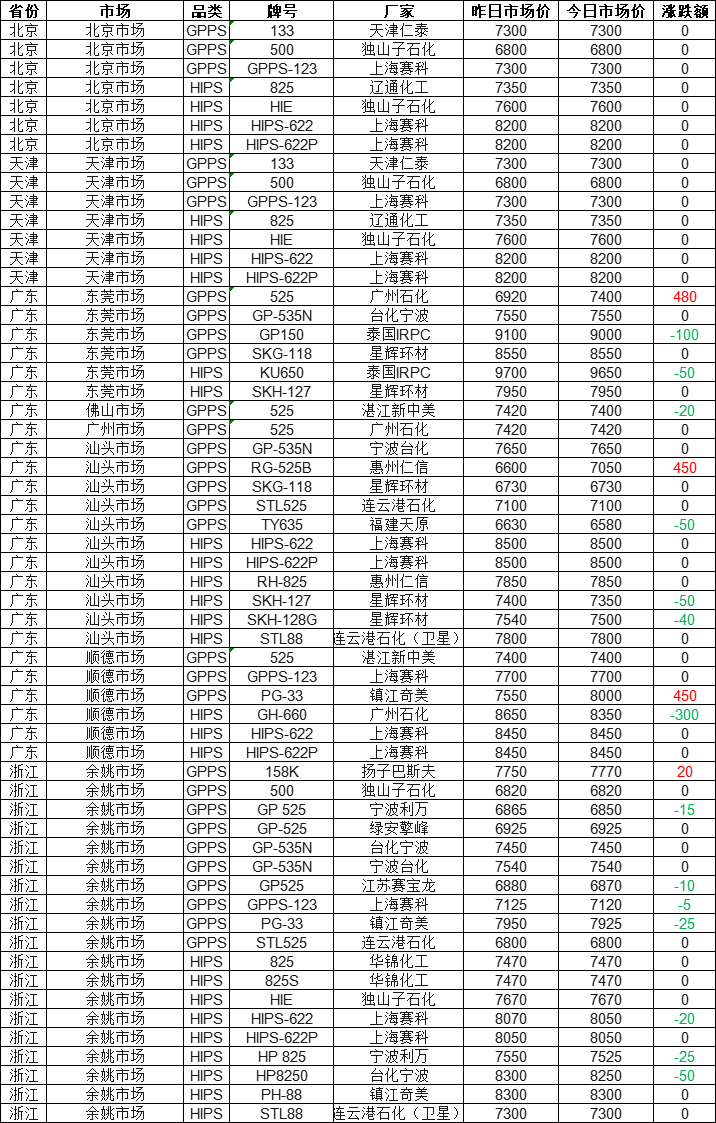
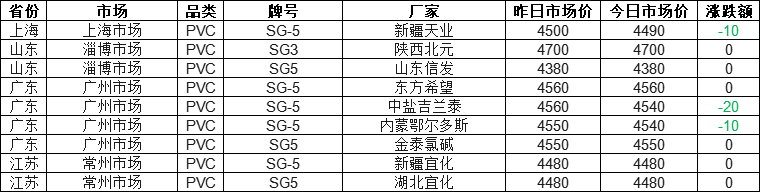
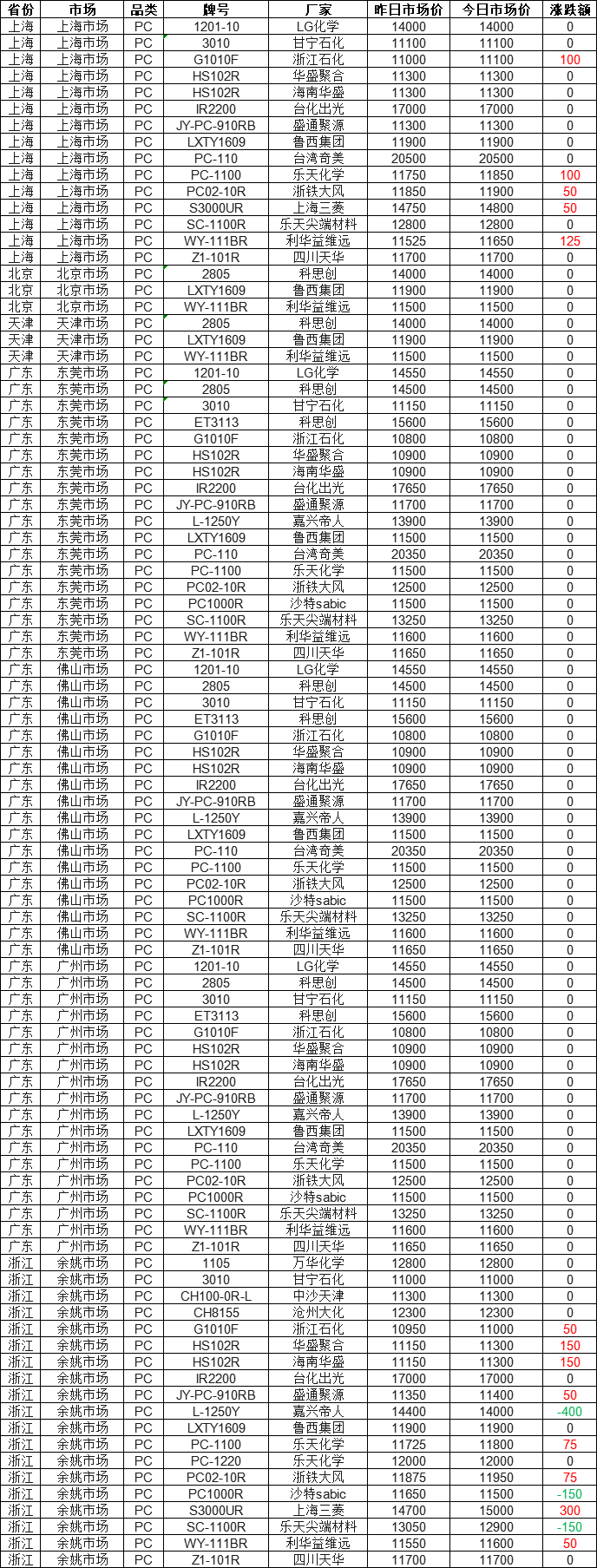
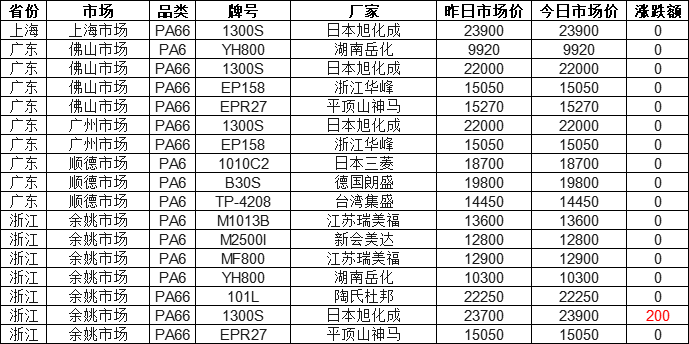
(Partially sourced from Trade Night Navigation)
【Copyright and Disclaimer】This article is the property of PlastMatch. For business cooperation, media interviews, article reprints, or suggestions, please call the PlastMatch customer service hotline at +86-18030158354 or via email at service@zhuansushijie.com. The information and data provided by PlastMatch are for reference only and do not constitute direct advice for client decision-making. Any decisions made by clients based on such information and data, and all resulting direct or indirect losses and legal consequences, shall be borne by the clients themselves and are unrelated to PlastMatch. Unauthorized reprinting is strictly prohibited.
Most Popular
-
Mexico Imposes Tariff Up to 36% on Cross-Border E-Commerce Products, Effective January 1, 2026; Plastic Shows Partial Fluctuation Today
-
4.5 Million Tons! Wanhua Chemical Dominates Globally in MDI, Heavy Investment in Battery Materials Spurs New Storm
-
Trump Delays Tariff Increase on Furniture, Cabinets, and Vanities
-
Back-to-back major joker moves! covestro’s 1.32 million ton mdi dual-line expansion and hdi acquisition reshape global polyurethane landscape
-
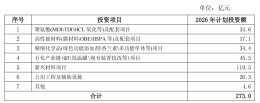
Wanhua Chemical Invests $27.3 Billion, 2026 Investment Map Revealed, $1.1 Billion Bet on Battery Materials


