List of countries granted travel access released! iran implements five-tier fee system based on friendship levels—who pays the least? who pays the most?
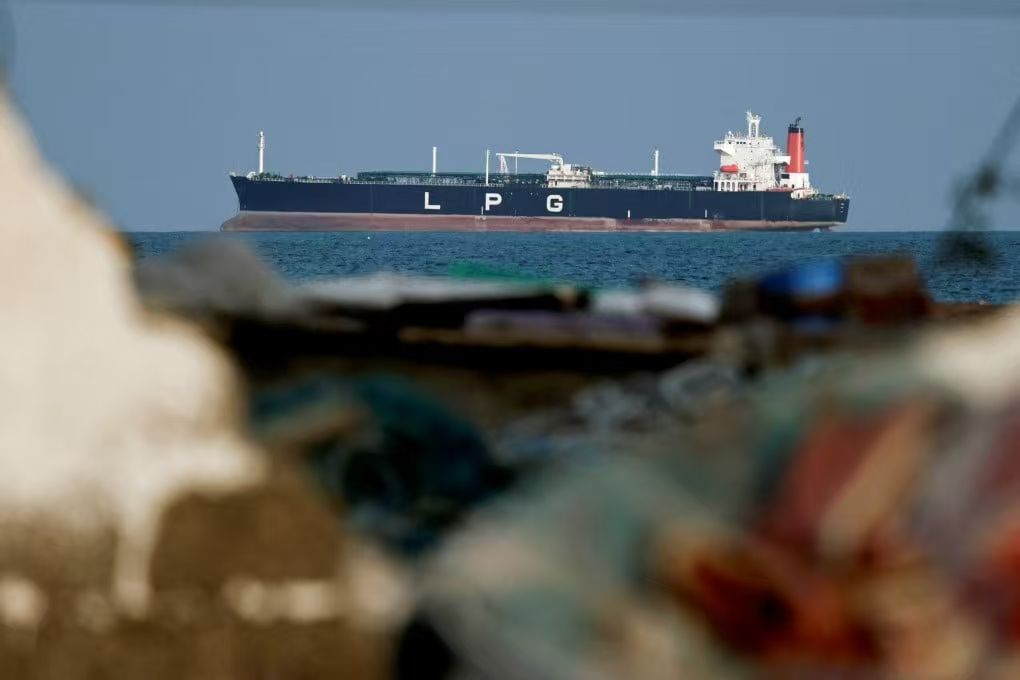
Iran has effectively begun implementing a “fee-based escort” system for merchant ships transiting the Strait of Hormuz, establishing a five-tier classification mechanism based on the “friendliness” of the ships’ countries of origin.
The shipowner/operator needs to submit detailed information about the vessel in advance, including the ship's name, flag state, cargo, and route.
The Islamic Revolutionary Guard Corps (IRGC) conducts background checks to confirm that vessels have no ties to the United States or Israel, or are considered adversarial/sanctioned countries, otherwise they are strictly prohibited from passing, regardless of payment.
Five-tier graded fee system:
Iran classifies countries into levels 1 to 5 based on the "degree of friendliness toward Iran" of the flag state or shipowner's country, considering factors such as geopolitical relations, participation in sanctions, and trade ties.
The higher the level (or more friendly) → faster review, lower cost, priority escort, and possibly discounts, symbolic fees, or free of charge.
The lower the level, the higher the cost, the stricter the review, and the greater the possibility of being prohibited from passage.
📌 Tier 1 (Most Friendly): Translate the above content into English, output the translation directly, without any explanation.
●Treatment: The most favorable conditions, possibly very low fees, nominal fees, or free/exempt, with priority clearance.
● Example countries: China, Russia, India, Iraq, and Pakistan. The Iranian Foreign Minister has explicitly designated these countries as “friendly nations,” and vessels from these countries have already safely passed through. China’s COSCO Shipping and other vessels have successfully transited, and India has also had multiple oil tankers safely pass through.
📌 Tier 2 (relatively friendly):
● Benefits: Relatively discounted, low-cost, or free fees, with priority processing.
For example: some Asian countries, such as Malaysia, Bangladesh, etc. Malaysia has 7 tankers approved, due to friendly relations, some may be free or at a low cost.
📌 Level 3 (Moderately Friendly): Translate the above content into English, output the translation directly, without any explanation.
● Compensation: Standard or slightly favorable rates, negotiable upon approval.
● Example: Some non-sanctioned countries in Asia, Africa, or the Middle East, such as Egypt, Thailand, and other "generally friendly" countries.
📌 Tier 4 (More Distant):
● Compensation: High fees, strict review, but approval is still possible if the payment is made.
Generally refers to other "non-hostile" countries.
📌 Tier 5 (U.S. allies but not directly hostile)
●Treatment: Highest cost, strictest review.
● Example: Certain vessels from some traditional NATO or U.S. allies, such as Japan, South Korea, and France, have already been granted passage.
Explicitly prohibited: Any vessels directly associated with the United States, Israel, or considered "hostile/supporting aggression against Iran" are not allowed to pass, regardless of payment. Vessels from countries participating in unilateral sanctions against Iran also face strict restrictions or prohibition.
Payment methods only accept RMB, Iranian Rial, etc., U.S. Dollar is strictly prohibited.
After payment, the shipowner receives a passcode and navigates along the designated safe route of the northern corridor near the Iranian coast, with the vessel flying the flag of a friendly country agreed upon in the agreement.
Countries explicitly permitted or successfully entered:
● China: Several vessels, including China Shipping/China Hong Kong container ships, have safely passed through.
● India: Multiple LPG and crude oil ships successfully pass through, with Iran explicitly considering it a friendly country.
● Iraq: Included on the friendly list due to geographical proximity and political relations.
●Pakistan: Iran has agreed to let 20 ships pass, some of which have already done so.
●Malaysia: Tanker approved to pass, with some reports stating exemption from passage fees due to friendly diplomatic relations.
● Thailand: The oil tanker has reached an agreement and successfully passed, with some being free.
● Bangladesh: Mentioned by Iranian officials as a friendly or coordinated transit country.
● Egypt, South Korea: some ships are allowed.
●Philippines: A recent agreement was reached, with Iran guaranteeing "safe and unimpeded passage."
● Japan, France: Recently, a French container ship and a Japanese-affiliated LPG ship successfully passed through for the first time, becoming one of the few cases of vessels associated with "traditional U.S. allies" passing through post-war, possibly after paying fees and undergoing strict review.
● Other Asian or neutral countries: For example, a few vessels owned by Greece but destined for friendly countries also pass through occasionally.
The list is not fixed and depends on real-time diplomatic negotiations and Iran's assessment.
It is estimated that the potential annual revenue could reach $60–80 billion if fully implemented.
In late March, Iran's Parliament National Security Committee approved a draft bill to formalize this mechanism, including banning vessels from the U.S. and Israel and mandating settlement in rials, though it has not yet undergone full parliamentary review, and final details, such as exact tiered rates, may still be adjusted.
This system is viewed as Iran’s attempt to shift from temporary control to a long-term “sovereignty fee” model, similar to the management approaches adopted for Turkey’s Bosphorus Strait or Egypt’s Suez Canal. However, it has sparked international controversy and may violate the United Nations Convention on the Law of the Sea (UNCLOS) principle of innocent passage, which generally prohibits levying fees solely for passage.
【Copyright and Disclaimer】The above information is collected and organized by PlastMatch. The copyright belongs to the original author. This article is reprinted for the purpose of providing more information, and it does not imply that PlastMatch endorses the views expressed in the article or guarantees its accuracy. If there are any errors in the source attribution or if your legitimate rights have been infringed, please contact us, and we will promptly correct or remove the content. If other media, websites, or individuals use the aforementioned content, they must clearly indicate the original source and origin of the work and assume legal responsibility on their own.
Most Popular
-
Raw Material Supply Shortage! INEOS Phenol Declares Force Majeure on Phenol and Acetone Businesses
-
Lantiche Group To Shut Down Italian Adipic Acid Production Plant
-

Resin Market Trends Diverge: Buyers' Bargaining Advantage Hit by Geopolitical Uncertainty
-
AI Computing Power Demand Ignites Electronic Fabrics! China Jushi Hits Limit Up! Domestic Substitution Welcomes Golden Window
-
Strait of Hormuz Blocked Again, Supply-Demand Mismatch in Polyolefin Market Set to Intensify!