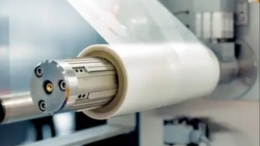



The new film is developed for high-performance flexible mono-material packaging, such as food packaging, stand-up pouches, and flat bags. According to the company, Propafilm CHBM offers “excellent” oxygen barrier properties, as well as “outstanding” metal adhesion and thermal stability, helping to maintain freshness, aroma, flavor, and product quality throughout the supply chain.
Innovia Films added that the film, with a gauge of 18 microns (0.72 mil), features enhanced metal adhesion and robust converting performance; high optical density; and a backside treatment suitable for lamination or surface printing, designed to support recyclable mono-material PP packaging structures.
Alasdair McEwen, Director of the Europe, Middle East and Africa Packaging Business Unit at Innovia Films, commented:
“As brands continue to seek packaging solutions that combine high performance with improved recyclability, Propafilm CHBM represents another significant advancement. [...] By delivering barrier properties traditionally associated with aluminum foil within a polypropylene structure, Propafilm CHBM enables our customers to simplify packaging designs without compromising product protection.”
As early as June, Innovia Films used PureCycle’s recycled polypropylene resin to produce white cavitated BOPP film, incorporating over 40% post-consumer recycled content for food-contact applications. The film is said to offer mechanical properties and moisture barrier performance, in addition to opacity, printability, and a “paper-like” texture.
Several months later, researchers at Kyushu University claimed to have developed a “self-healing” flexible film embedded with a natural plant-based pigment that changes color as food spoils, providing consumers with a visible signal without the need to open the packaging. Evidently, when cut and pressed back together, damage to the film becomes “nearly invisible” within minutes, and its tensile strength recovers to 99% within two hours.