



Honda Enters Commercial Vehicle Market, Partners With Dongfeng for Weighty Hydrogen Initiative
Auto-FirstLi Dezhe
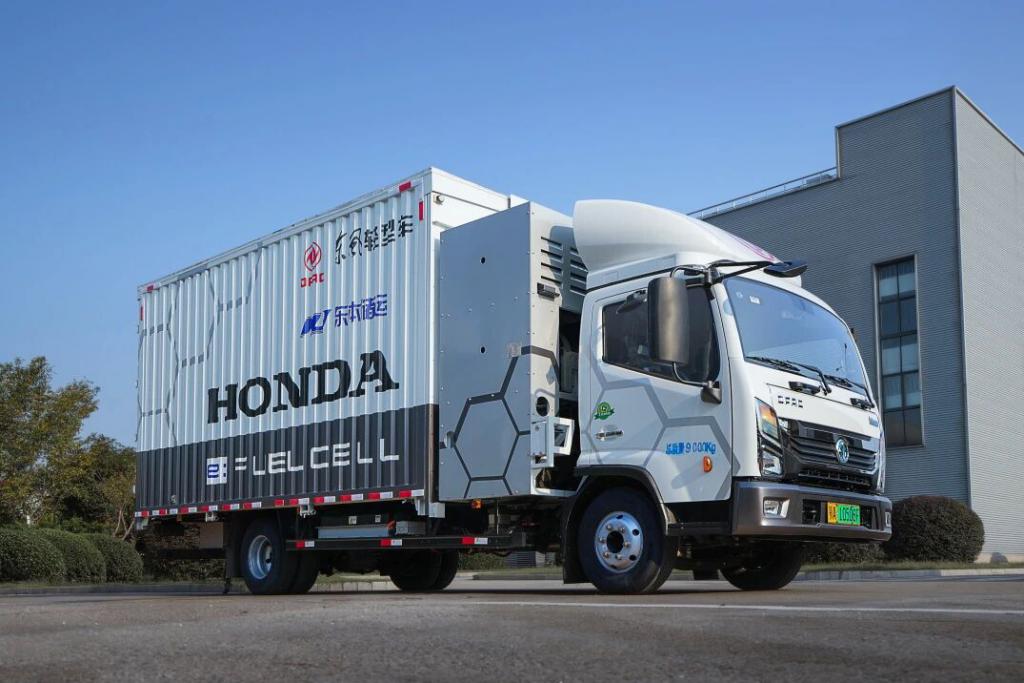
Previously, Toyota invested in a hydrogen energy heavy truck project in China, and later, Honda teamed up with Dongfeng to launch hydrogen fuel cell commercial vehicle operations. Japanese car manufacturers are quietly targeting the trillion-yuan new track in the commercial vehicle market.
On October 22, Honda China officially announced that Honda Motor (China) Investment Co., Ltd. and Dongfeng Motor Group Co., Ltd. have jointly launched a social demonstration operation of hydrogen fuel cell commercial vehicles, marking Honda's official entry into the Chinese commercial vehicle market.
The collaborative project is based on Dongfeng Motor Corporation's extensive experience in the commercial vehicle sector, Honda's high-performance fuel cell technology, and the actual transportation needs of Dongfeng Honda Logistics. It is a new area of cooperation that will first be demonstrated on existing logistics distribution routes in Wuhan, with plans to further expand to regions such as Guangzhou and Shanghai in the future.
Currently, under the guidance of policies, China's new energy commercial vehicle market is experiencing rapid growth. Data shows that in the first half of this year, the demand for new energy commercial vehicles increased significantly by 136% year-on-year, indicating huge market potential. Honda's decision to enter the Chinese commercial vehicle market at this critical juncture is not only a proactive response to the trends in the new energy industry but also an effective way to offset the performance gap caused by its declining market share in the passenger car segment.
Since 2023, Honda China has been collaborating with Dongfeng Motor Corporation to conduct technical validation work on integrating Honda fuel cell systems with Dongfeng's light commercial vehicles. Through testing in various real-world driving scenarios, the two parties are comprehensively verifying the vehicles' environmental adaptability, power economy, and durability.
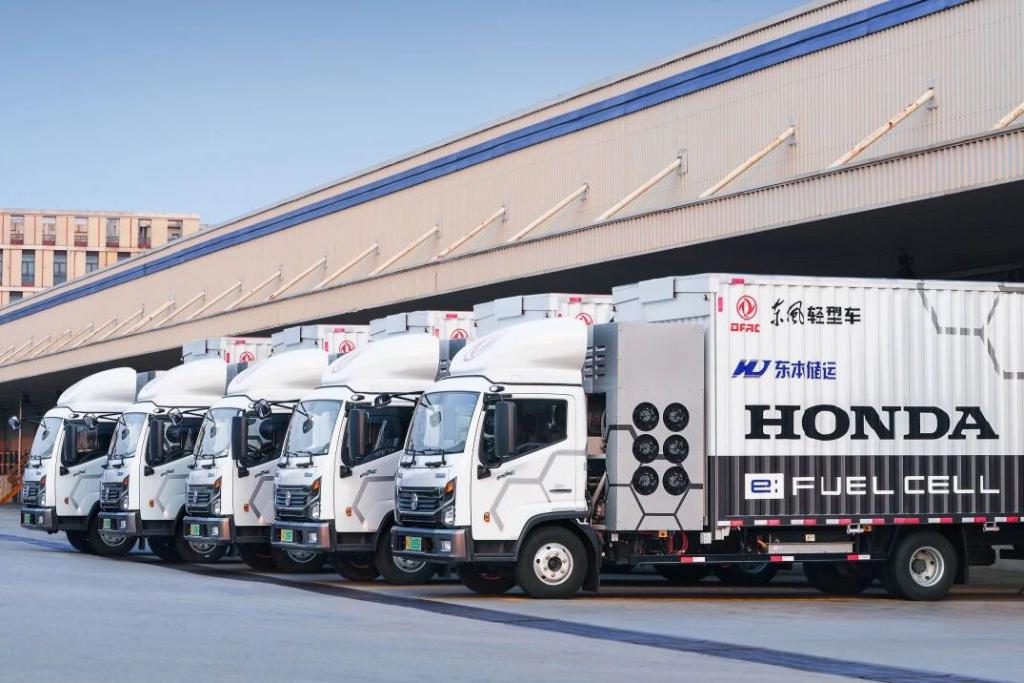
The core objective of the hydrogen fuel cell commercial vehicle social demonstration operation project launched this time is to verify the applicability of fuel cell technology in China's actual transportation environment, understand the actual usage status of the vehicles and calculate operating costs, evaluate the market competitiveness and acceptance of fuel cell commercial vehicles, and conduct a comprehensive assessment of operational efficiency and added value from the perspective of end users.
In fact, it's not just Honda; many Japanese and South Korean automakers have been gradually entering the new energy commercial vehicle sector in China in recent years, focusing on hydrogen fuel cell technology as a core entry point, attempting to seize the initiative in the trillion-yuan new market.
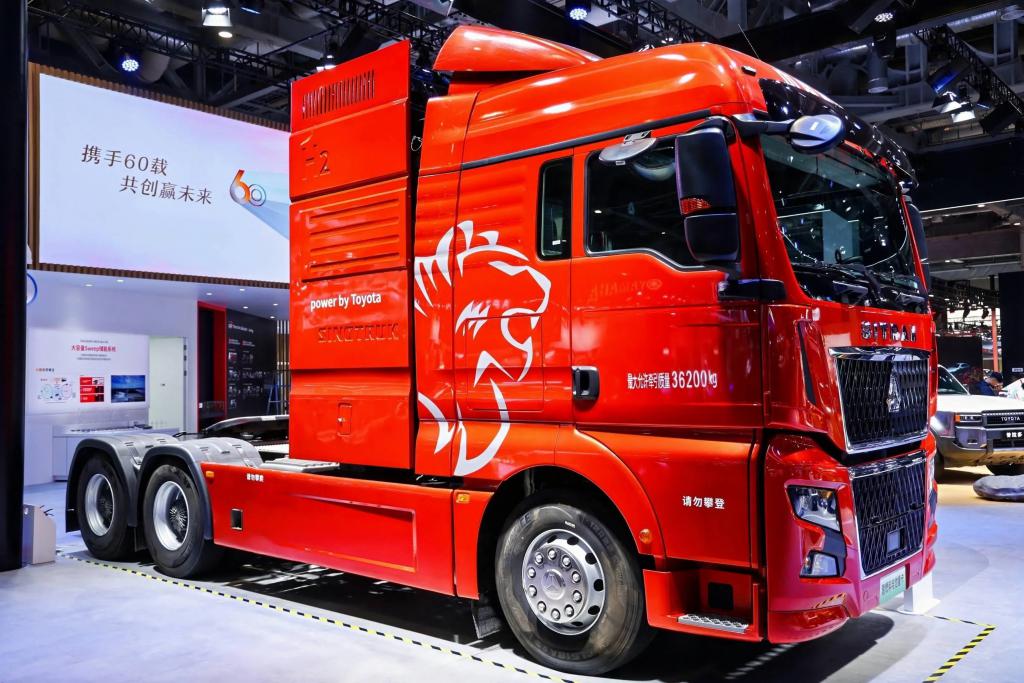
In 2023, Toyota collaborated with local enterprises such as China National Heavy Duty Truck Group and Dongfeng to jointly invest in the construction of hydrogen fuel cell heavy truck-related projects, focusing on high-frequency commercial vehicle scenarios such as logistics and ports. Currently, heavy truck models equipped with Toyota's self-developed fuel cell system have begun regular trial operations in areas such as Tianjin Port and Shanghai Port, validating the technological stability and operational economics through real-world scenarios.
Hyundai Motor is also leveraging its technological accumulation in the hydrogen fuel cell sector to introduce its globally best-selling hydrogen fuel cell heavy-duty truck models to the Chinese market. At the same time, it has reached agreements with local governments and enterprises to plan the construction of demonstration operation routes in logistics-intensive areas such as the Yangtze River Delta and the Pearl River Delta. Additionally, Hyundai is setting up production bases for core fuel cell components in China, aiming to reduce costs through localized production and enhance market competitiveness.
It can be observed that multinational automotive companies are collectively increasing their investments in the Chinese new energy commercial vehicle market. This is not only a reflection of their optimism and recognition of the prospects and policy support in the Chinese market, but also possibly a new path sought to counteract the downturn in the passenger vehicle market. With the "15th Five-Year Plan" goal of accelerating the construction of a new energy system, actively and steadily advancing and achieving carbon peaking, and accelerating the formation of green production and lifestyle, it is believed that the competition in the new energy commercial vehicle market will become increasingly fierce. Technology, ecosystem, and localization capabilities will become key factors for many automotive companies to gain a competitive edge.
【Copyright and Disclaimer】The above information is collected and organized by PlastMatch. The copyright belongs to the original author. This article is reprinted for the purpose of providing more information, and it does not imply that PlastMatch endorses the views expressed in the article or guarantees its accuracy. If there are any errors in the source attribution or if your legitimate rights have been infringed, please contact us, and we will promptly correct or remove the content. If other media, websites, or individuals use the aforementioned content, they must clearly indicate the original source and origin of the work and assume legal responsibility on their own.
Most Popular
-

Mexico Imposes Tariff Up to 36% on Cross-Border E-Commerce Products, Effective January 1, 2026; Plastic Shows Partial Fluctuation Today
-
4.5 Million Tons! Wanhua Chemical Dominates Globally in MDI, Heavy Investment in Battery Materials Spurs New Storm
-

Trump Delays Tariff Increase on Furniture, Cabinets, and Vanities
-
Wanhua Chemical Invests $27.3 Billion, 2026 Investment Map Revealed, $1.1 Billion Bet on Battery Materials
-
Back-to-back major joker moves! covestro’s 1.32 million ton mdi dual-line expansion and hdi acquisition reshape global polyurethane landscape


