



Hanhe Biotech Launches Cellulose-PLA Biodegradable Mulch Film, Hunan 50,000-Ton Project Expected to Begin Mass Production in July
Recently, Shanghai Hanhe Biomaterials Technology Co., Ltd. launched a straw-based fully biodegradable mulch film, the first PLA agricultural mulch film in China made entirely from non-food cellulose sources such as agricultural and forestry straw and reeds.
The mulch film strictly complies with the GB/T 35795-2017 standard, featuring Class A water vapor transmission performance and Class III artificial aging resistance. After 70 days of laying, its key performance retention rate remains above 80%. Its degradation cycle of 3 to 6 months precisely matches crop growth requirements, achieving “customizable on-demand” degradation timing for mulch film.
In addition, for arid and high-radiation regions such as Xinjiang, the company has developed a unique "fast growth, slow degradation" model by synergistically combining light stabilizers with nano-screening fillers. This approach not only ensures the mechanical integrity of the mulch film under 70 days of intense ultraviolet radiation and high-temperature conditions, but also enables rapid degradation to be triggered at the harvest stage through timely irrigation.
For the high-humidity regions of southern China, uniform degradation is achieved by regulating the hydrophilic–hydrophobic balance of the material and its microbial availability. This differentiated solution can provide customized mulch film products tailored to different ecological zones and crops, truly realizing “site-specific strategies” and promoting precision and sustainable development in agricultural production.
In terms of cost, the integrated production cost of this straw-based PLA mulch film is more than 20% lower than that of similar fully degradable mulch films on the market, offering a significant cost-performance advantage. It has now been promoted and applied in Shanxi, Inner Mongolia, Hebei, Beijing, and other regions.
The core production capacity supporting this nationally innovative large-scale production and comprehensive promotion of plastic film comes from Hanhua Biological's wholly-owned subsidiary, Hunan An Carbon Biological Technology Co., Ltd. The company is located in the Huan Dongting Lake Industrial Park in Hunan Province, relying on the locally abundant resources of discarded reeds. It has laid out an initial project with an annual production capacity of 50,000 tons of cellulose polylactic acid new materials. Currently, the main construction of the project plant and the installation of production equipment are in the final stages, and mass production is expected to commence in July 2026.
Once implemented, the project can resourcefully utilize 125,000 tons of waste wetland reeds annually and produce 50,000 tons of non-grain cellulosic PLA resin per year. In addition to supplying biodegradable mulch film production, it can also co-produce high-purity lignin and porous carbon materials for new energy applications, establishing a closed-loop carbon-negative industrial chain of “agricultural and forestry waste—bio-based resin—agricultural end products” that delivers both ecological and industrial benefits.
Hunan Antan Bio is simultaneously supporting the construction of a comprehensive straw utilization project with an annual capacity of 20,000 tons. Phase I, with a capacity of 10,000 tons, is expected to be put into operation in August, further expanding production capacity for raw materials dedicated to agricultural mulch film, thoroughly addressing the current market pain points of insufficient supply and high prices of degradable mulch film raw materials, and enabling the affordable, widespread adoption of environmentally friendly biodegradable mulch film.
The core underlying technology of the product is empowered by a team led by Professor Sang Tao from the Chinese Academy of Sciences' Institute of Botany, which is part of a major national talent engineering program. Relying on CRISPR-Cas9 gene editing and AI strain design technology, Hanhe has achieved self-production of cellulase, with a sugar yield from enzymatic hydrolysis that is 10-15 percentage points higher than that of imported products, and its price is only one-fifth that of imported enzymes.
In traditional processes, cellulase accounts for as much as 30%–40% of costs. This breakthrough directly reduces enzyme consumption costs by 80%. Combined with innovations such as steam explosion pretreatment, co-fermentation of C5 and C6 sugars, and the localization of equipment across the entire process, it ultimately gives reed-based polylactic acid a significant price advantage. Hanhe has already built a cellulase production base in Changping, Beijing, and its 100-ton-level production line is expected to be completed and put into operation in 2026. In the future, it will be able to supply enzyme preparations externally and even provide customized enzyme formulations.
To accelerate the demonstration and promotion of straw-based biodegradable PLA mulch films and adapt them to localized farming practices, Hanhe Bio has partnered with provincial and ministerial departments to establish a key laboratory for organic dryland agriculture. They have jointly developed a specialized biodegradable mulch film suitable for northern dryland farmland, which has been freely distributed in the National Agricultural High-Tech Zone in Jinzhong, Shanxi, covering an area of 1,500 acres. Field demonstration tests are being conducted to accelerate product iteration and implementation across the region.
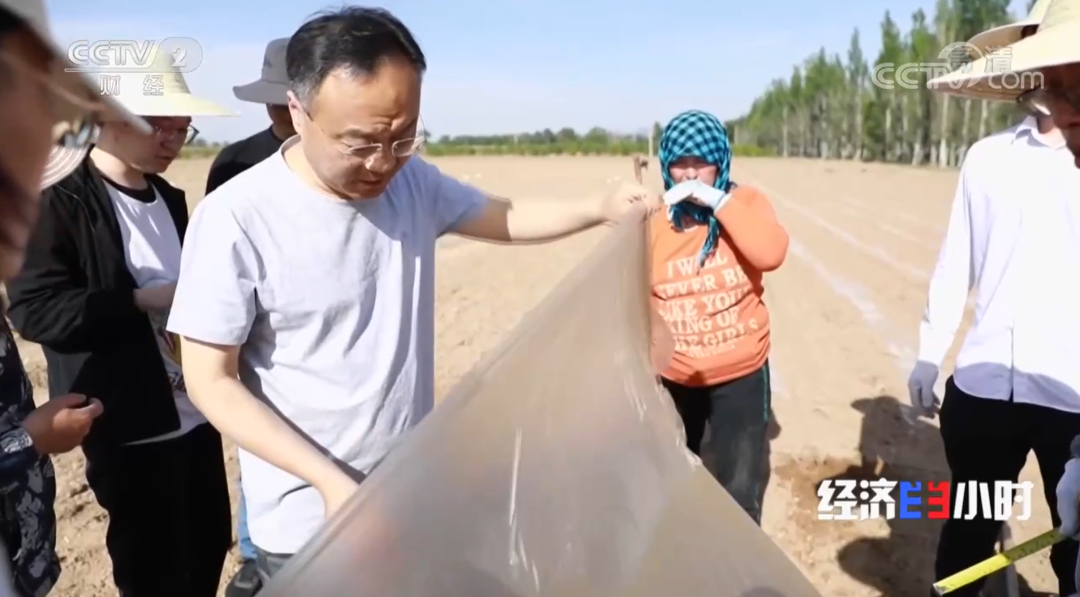
Image source: CCTV-2 Finance Channel "Economic Half Hour" June 14, 2022
【Copyright and Disclaimer】The above information is collected and organized by PlastMatch. The copyright belongs to the original author. This article is reprinted for the purpose of providing more information, and it does not imply that PlastMatch endorses the views expressed in the article or guarantees its accuracy. If there are any errors in the source attribution or if your legitimate rights have been infringed, please contact us, and we will promptly correct or remove the content. If other media, websites, or individuals use the aforementioned content, they must clearly indicate the original source and origin of the work and assume legal responsibility on their own.
Most Popular
-
Layoffs, Divestments, Plant Closures While Pouring Billions: BASF Undergoes Major Transformation!
-
Ascend Adipic Acid Hit By Force Majeure, Market Expects Supply Resumption In Mid-September
-

Raw Material Supply Shortage! INEOS Phenol Declares Force Majeure on Phenol and Acetone Businesses
-
South Korea initiates anti-dumping investigation against Chinese PVC suspension resin! The target is Tianjin Bohua and Wanhua Chemical. How to break through?
-

Sixth national procurement set to be implemented: A “Reshuffling” Moment for the $10-Billion Medical Device Market


