From passive response to proactive service: IFLYTEK Redefines the Intelligent Cockpit Paradigm
The evolution of the smart cockpit is essentially a reconfiguration of the relationship between humans and vehicles.
In recent years, with the rapid popularization of intelligence, the Chinese smart car market has evolved from a hardware competition focused on "large screens and powerful chips" to the popularization of voice technology characterized by "speak and it works, continuous conversation." However, a practical pain point has always existed: users still need to adapt to machines—remembering fixed wake-up words, memorizing standard commands, and issuing tasks in steps.
The cockpit is more like a compliant tool than a thoughtful partner. At the same time, the industry penetration rate is rising, but user engagement and satisfaction are not increasing in parallel. The fundamental reason is that most so-called intelligent cockpits remain at the level of passive response, lacking the ability to understand complex intentions, the capacity for cross-scenario planning, and the proactive service capabilities based on perception.
Deeper challenges come from two directions. First, the technical implementation gap: although the slogan of "large models in cars" is loud, the latency and privacy risks brought by cloud dependence, the balance between edge-side computing power and model size, and the integration of multi-modal perception and execution loops are all critical hurdles to overcome. Second, new global challenges: China's automotive exports have climbed to the top of the world, but the "export" of intelligent cockpits goes far beyond language translation. Differences in cultural backgrounds, variations in interaction habits, semantic understanding discrepancies, and the lack of local ecosystem services will make "speaking correctly, listening accurately, and integrating smoothly" become new competitive barriers.
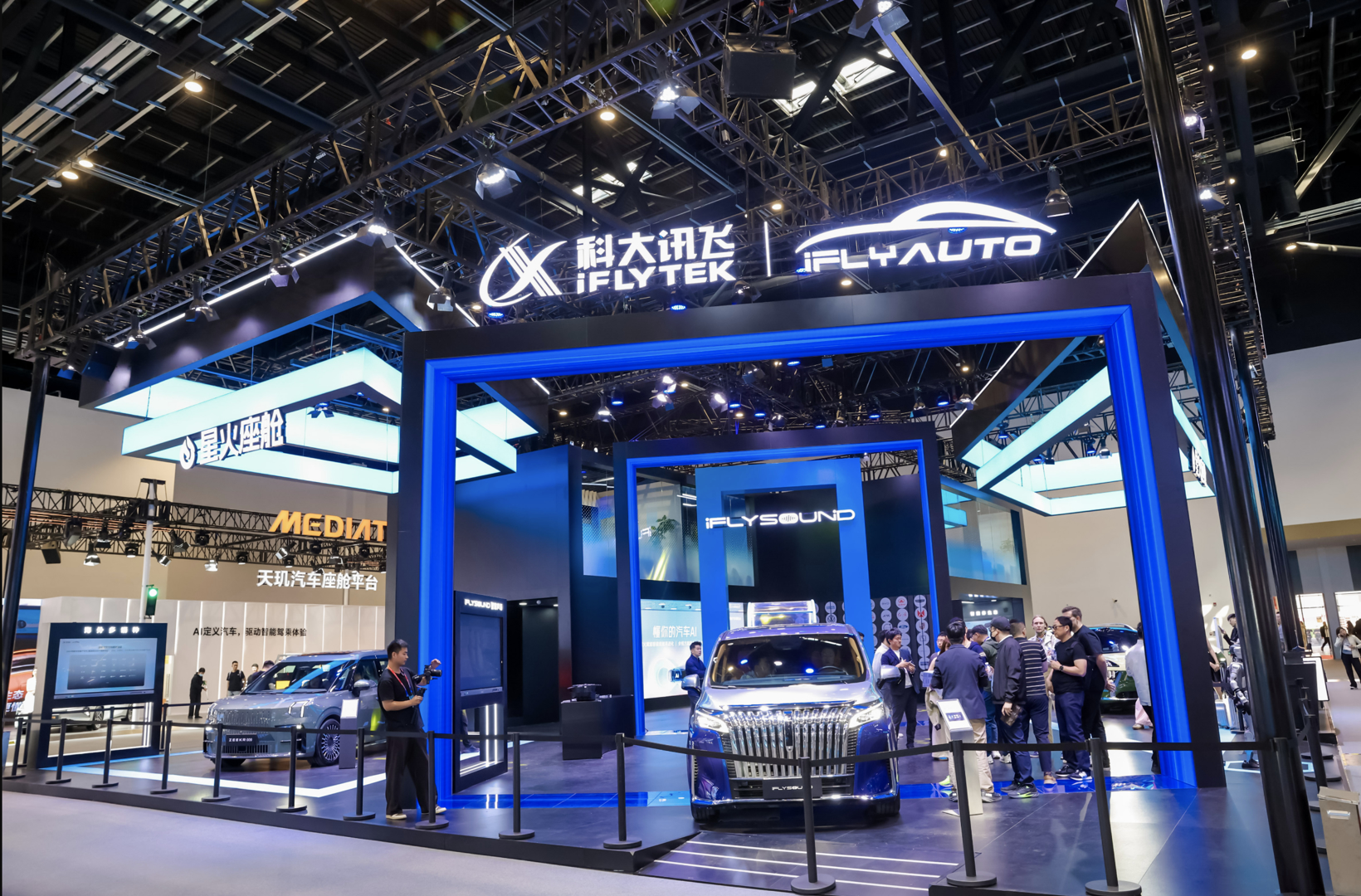
Source: iFlytek (same below)
In such a deep industrial sector, simple function stacking can no longer build differentiation. The industry requires systemic intelligent agent capabilities — a complete closed loop from perception, understanding, decision-making, execution, to proactive service. Building this closed loop precisely requires the deep empowerment of underlying large models, the mass production of multi-modal perception, integrated acoustic innovations in software and hardware, and local adaptation of global interaction.
At the Beijing Auto Show, iFLYTEK provided an answer that simultaneously addresses all these dimensions: the Spark Next-Gen Multimodal Intelligent Cockpit delivers an on-device multimodal large model and an intelligent agent ecosystem, transforming the cockpit from a mere obedient tool into a “capable personal assistant”; the iFLYSOUND Gallium Nitride Master-grade Acoustic System, along with over 30 fully in-house developed in-vehicle audio algorithms across the entire chain, redefines the in-car auditory experience through a tightly integrated hardware-software solution, elevating sound from mere audibility to a dynamic, immersive soundscape; and the overseas Spark large model breaks down language and cultural barriers, clearing interaction obstacles for Chinese intelligent vehicles going global.
The newly released products by iFLYTEK collectively provide a systematic response to industry challenges — making intelligent cockpits truly return to the essence of "serving people." Behind this is the migration of the Spark large model from general capabilities to deep customization for vehicles, the breakthrough of multi-modal technology on the edge side from the laboratory to mass production platforms, and also a reflection of the domestic acoustic supply chain moving from replacement to leadership.
Starlight Large Model's Dual Strategy — Domestic Cockpit "Handles Affairs Well", Overseas Interaction "Integrates Well"
To understand the upgrade of the Xinghuo New Generation Multimodal Intelligent Cockpit, it is first necessary to clarify a common misconception in the industry: the level of intelligence in voice interaction does not depend on the fluency of the conversation, but on the system's depth of understanding of the user's true intention. In recent years, many companies have claimed to achieve "visual speech" and "continuous dialogue" capabilities. However, these capabilities are essentially based on a large number of pre-set instruction templates and limited state machines. Users still need to speak in ways that the machine can understand, with only the number of templates increasing and the number of dialogue turns growing. This approach has reached a point where the marginal benefits are diminishing — no matter how much the instruction set is expanded, there will always be cases where the user's spoken expressions fall outside the coverage.
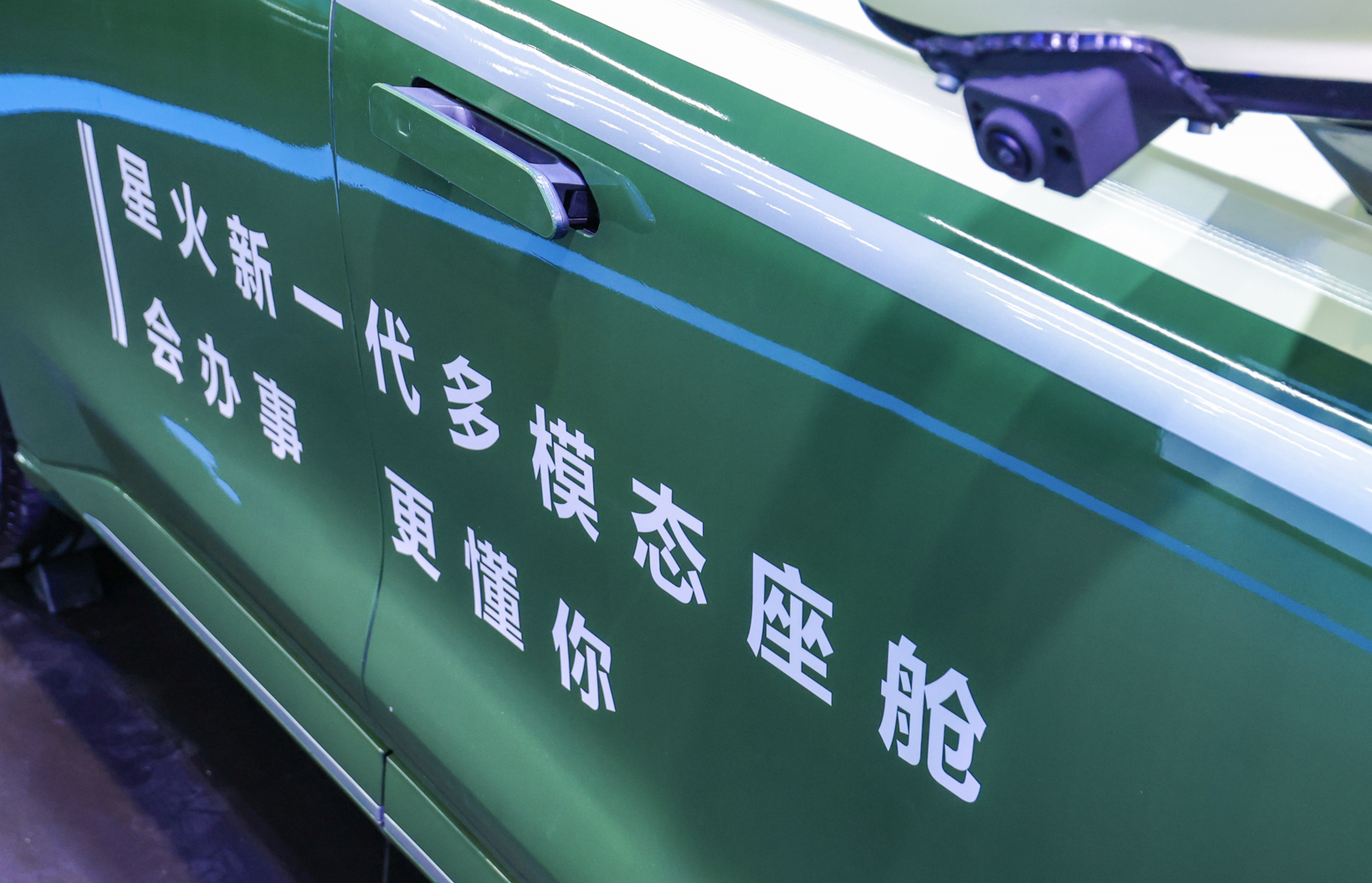
SparkAuto-EMM, the multi-modal large model introduced in the next-generation intelligent cockpit, fundamentally changes this logic from the bottom up. Instead of expanding templates to remember more expressions, it leverages the semantic representation capabilities of the large model to understand the true needs behind a user's statement. For example, in the "Free Control by Voice" feature: when a user says "a bit stuffy," the system will determine whether to open the window or turn on the air conditioning by considering factors such as indoor and outdoor temperature, window status, weather conditions, and the user's historical preferences. This involves a series of comprehensive capabilities, including fuzzy semantic disambiguation, context awareness, and multi-modal information fusion.
More importantly, the industrial significance of edge deployment.
There are two approaches to deploying large models in vehicles: cloud-based and on-device. Cloud-based solutions offer high capability ceilings, but at the cost of network dependency and privacy risks; moreover, they may fail at any time in scenarios with unstable connectivity—such as underground garages, tunnels, and highways. In contrast, on-device solutions perform all computation locally within the vehicle’s infotainment system, ensuring functionality even without network connectivity and guaranteeing that data never leaves the vehicle—thereby architecturally resolving the core challenges associated with cloud deployment.
Of course, on-device deployment faces a trade-off between computing power and model size. An economy car's cockpit chip may only offer a few TOPS of computing power, while flagship models could have dozens or even hundreds of TOPS. In response, iFLYTEK provides a tiered model portfolio ranging from 0.5B to 7B parameters, allowing different computing platforms to deploy the most suitable model variant.
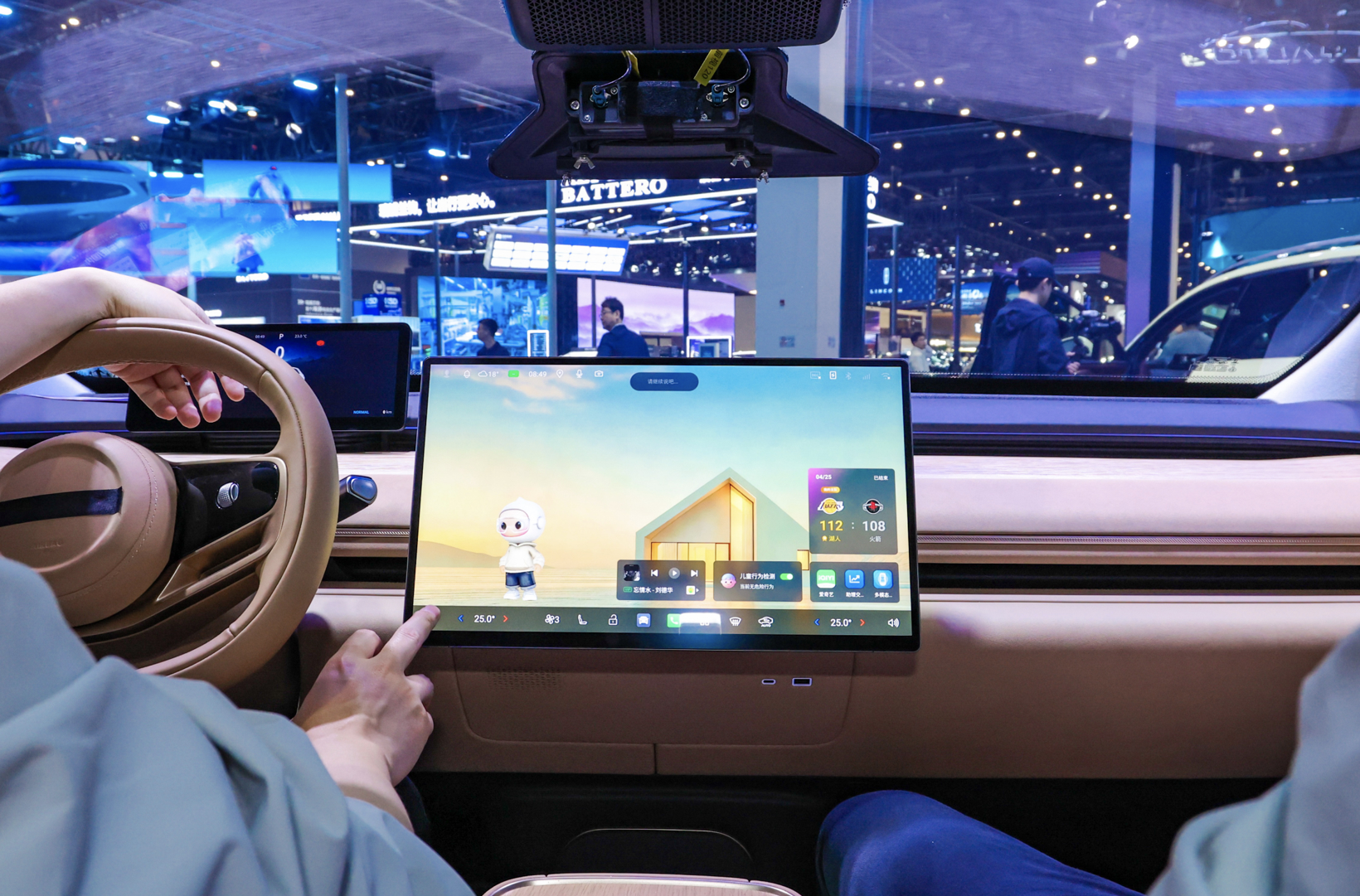
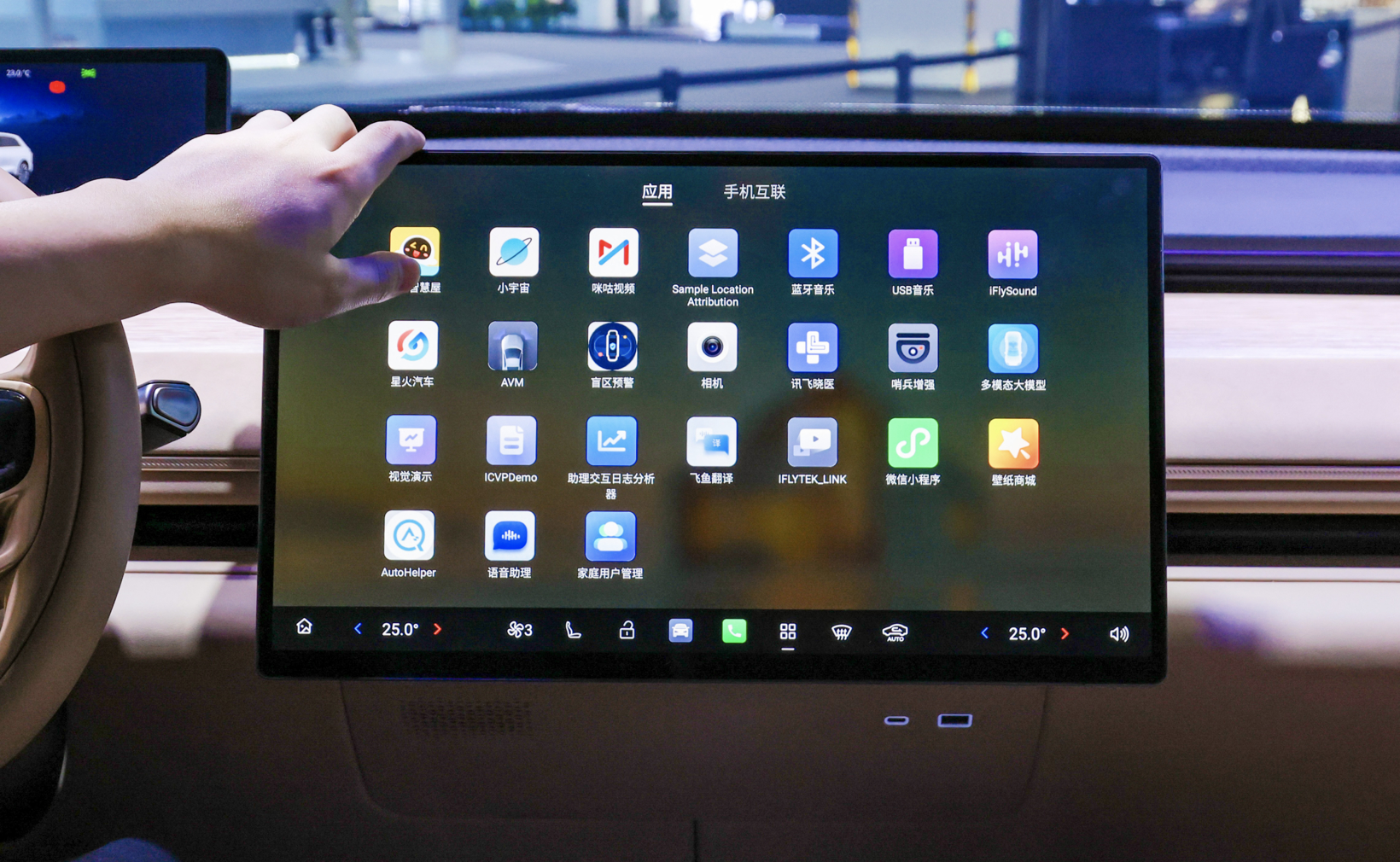
The intelligent agent ecosystem is the key to extending the "handling affairs" capabilities of the Xinghuo Cockpit to services outside the vehicle. Through cooperation with over 50 leading ecosystem partners, iFlytek has built a three-layer intelligent agent architecture: The first layer focuses on high-frequency essential scenarios, developing or deeply customizing premium intelligent agents to comprehensively address entertainment and information needs for the entire family during travel. The second layer deeply integrates multi-terminal general intelligent agents optimized by ecosystem partners for the vehicle, with typical examples being the three high-frequency scenarios from the Meituan ecosystem — food recommendations, smart queueing, and online reservations. Users can complete the entire process from discovering a restaurant to making a reservation entirely within the cockpit without switching to their phones. The third layer focuses on long-tail scenarios, integrating high-quality ecosystem intelligent agents in the form of solutions, ensuring the scalability of capabilities.
The core value of the intelligent agent ecosystem is not simply an application store or voice-activated third-party apps, but rather using a large model as a scheduling hub to combine different agents' capabilities as needed, responding to users' complex intentions. Unlike the general capabilities of consumer-level AI products, the intelligent agent ecosystem of iFLYTEK is fully designed around the in-vehicle scenario: in driving scenarios, the interaction time is extremely short, requiring high first-round accuracy and short task paths; safety requirements are higher, and driving attention must not be distracted by handling long-tail requests; the network environment is complex, requiring solutions that support offline or weak network conditions. These constraints determine that the in-vehicle intelligent agent ecosystem cannot simply transplant the logic of internet products, but must be customized based on long-term understanding of real driving behaviors.
Turning attention to overseas markets, China's automotive export volume has risen to the top globally, but the export of smart cockpits is still far from mature. In this regard, many companies simply translate their domestic voice solutions into the target language and deploy them directly, resulting in user feedback that "the system speaks very accurately, but it just doesn't sound like a real person" — because language is not just vocabulary and grammar, but also cultural context, usage habits, and even levels of politeness.
The differentiation of Spark Assistant for overseas markets lies in its fundamental construction of a native-level interaction system. With support for 32 languages, coverage across 60 countries and regions, and the mass delivery of over 100 popular vehicle models, these figures demonstrate not just the scope of coverage, but also the reliability verified through large-scale implementation. 52 high-quality TTS voice actors, a corpus of materials entirely built by native speakers, and multi-round expert cross-verification ensure a natural and authentic experience, rather than just grammatical correctness. Going deeper, Spark Assistant for overseas markets also integrates global mainstream in-car ecosystems, from navigation to music, sports to news, delivering a familiar local digital lifestyle experience for users, rather than a stiff "foreign car" interface.
The Xinghuo large model’s mission in China is to enable the vehicle cockpit to “get things done,” while its mission overseas is to help Chinese automobiles gain acceptance in global markets. Although both fronts share the same foundational model, they are deeply customized for entirely different scenarios. This capability cannot be achieved by a generic large model alone; it demands a team that possesses expertise in AI, automotive engineering, and the nuanced differences among users across global regions—this is the core capability that distinguishes iFLYTEK from consumer-grade AI products that merely wrap generic large models into automotive applications.
A New Species of AI Audio Effects: Bringing a Million-Dollar Listening Experience to Ordinary Vehicles
If intelligent cockpit interaction embodies the concept of “software-defined,” then the transformation of in-vehicle audio systems demands an integrated software-hardware mindset.
The car audio industry has long had an unspoken rule: good sound is strongly tied to high prices. Previously, the industry generally believed that only high-end models of luxury brands, or vehicles with optional high-quality brand audio systems, could offer a "good" listening experience. This perception is based on both the commercial logic of brand premium pricing and the practical constraints of hardware costs and technical barriers. The core value of iFLYSOUND launched by iFlytek lies in not developing another so-called high-end audio system, but rather introducing a technical solution that breaks the relationship between price and experience.

Traditional vehicle amplifiers mostly use silicon-based MOSFET devices. Due to material limitations, the power density is relatively low. To achieve high-fidelity high-power output, the size and cooling structures often need to be increased, leading to a rise in weight and cost. Gallium nitride (GaN), as a new generation of semiconductor material, offers higher operating frequency and conversion efficiency. It has been verified in the consumer electronics field. However, its large-scale application in the automotive field faces multiple challenges, including automotive-grade reliability, cost control, and system integration.
Kedacom's approach did not stop at component replacement, but instead re-designed the system architecture from scratch—deeply matching the advantages of gallium nitride with the specific requirements of automotive applications. Through chip collaboration, algorithm optimization, and thermal innovation, it systematically addressed the bottlenecks from components to the system.
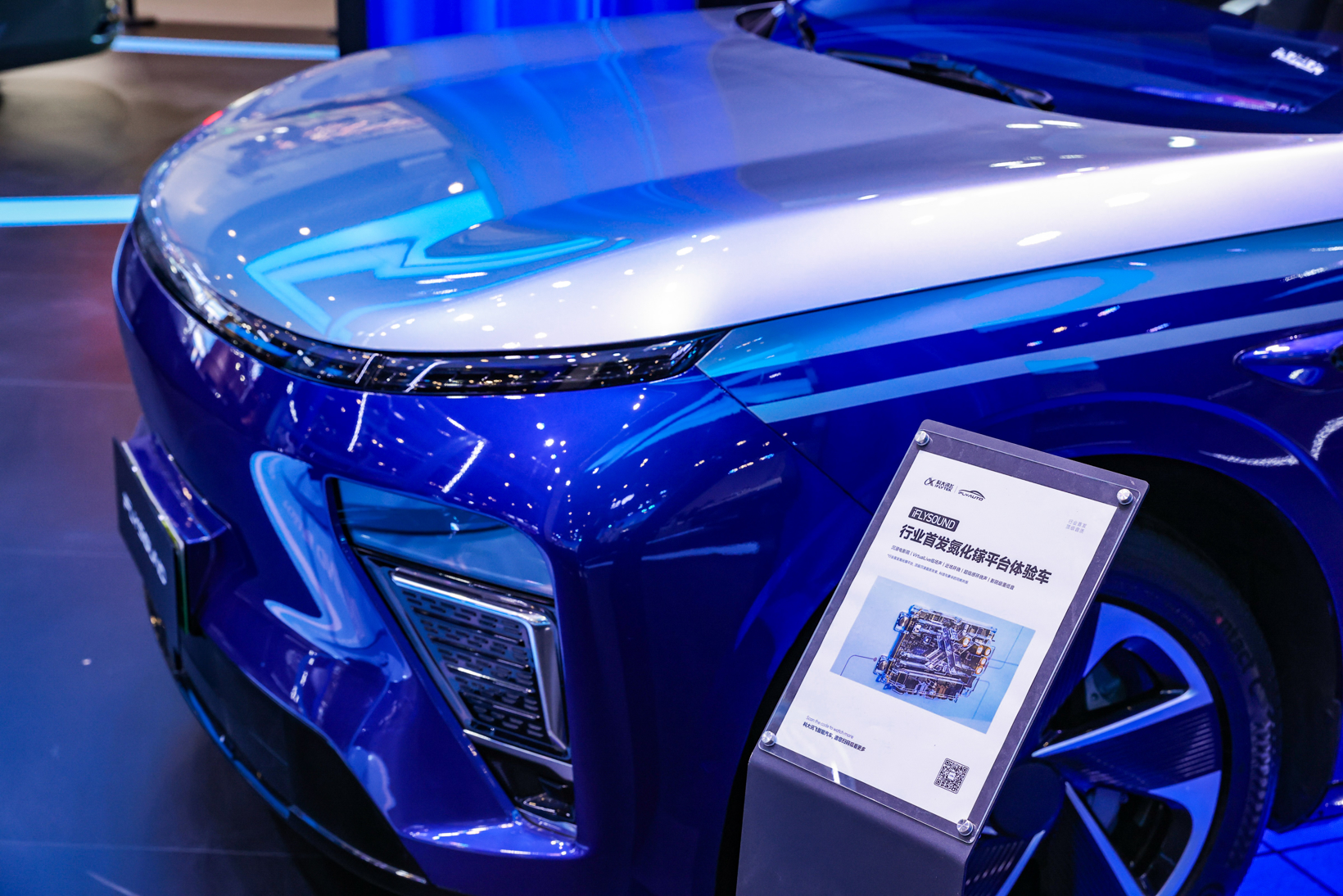
Hardware provides the performance foundation, while algorithms transform this hardware capability into user-perceivable experience value.
iFLYSOUND has independently developed over 30 in-vehicle audio algorithms, covering the entire audio chain—from microphone pickup and active noise cancellation to soundfield reconstruction and speaker driving. The three-layer framework of “sounding great, easy to use, and fun to interact with” further expands the intelligent boundaries of in-vehicle audio systems.
Traditional audio systems merely play sound, whereas iFLYSOUND treats sound as a variable for regulating the in-cabin experience: the Concert Hall mode pursues authentic sound-field reproduction, while the Cinema mode enhances bass and vocal clarity to create immersion—each mode tailored to a specific content type.
In terms of usability, sound zoning solves the conflicting needs of multiple users in a car—the driver needs navigation voice, while the passenger wants to listen to music, and these can coexist without interference through independent sound zones. Sound field guidance, on the other hand, is an innovation strongly related to driving safety: it gives navigation and warning sounds a sense of direction, allowing users to determine the turning direction or the source of a risk through their hearing, thereby reducing reliance on visual cues.
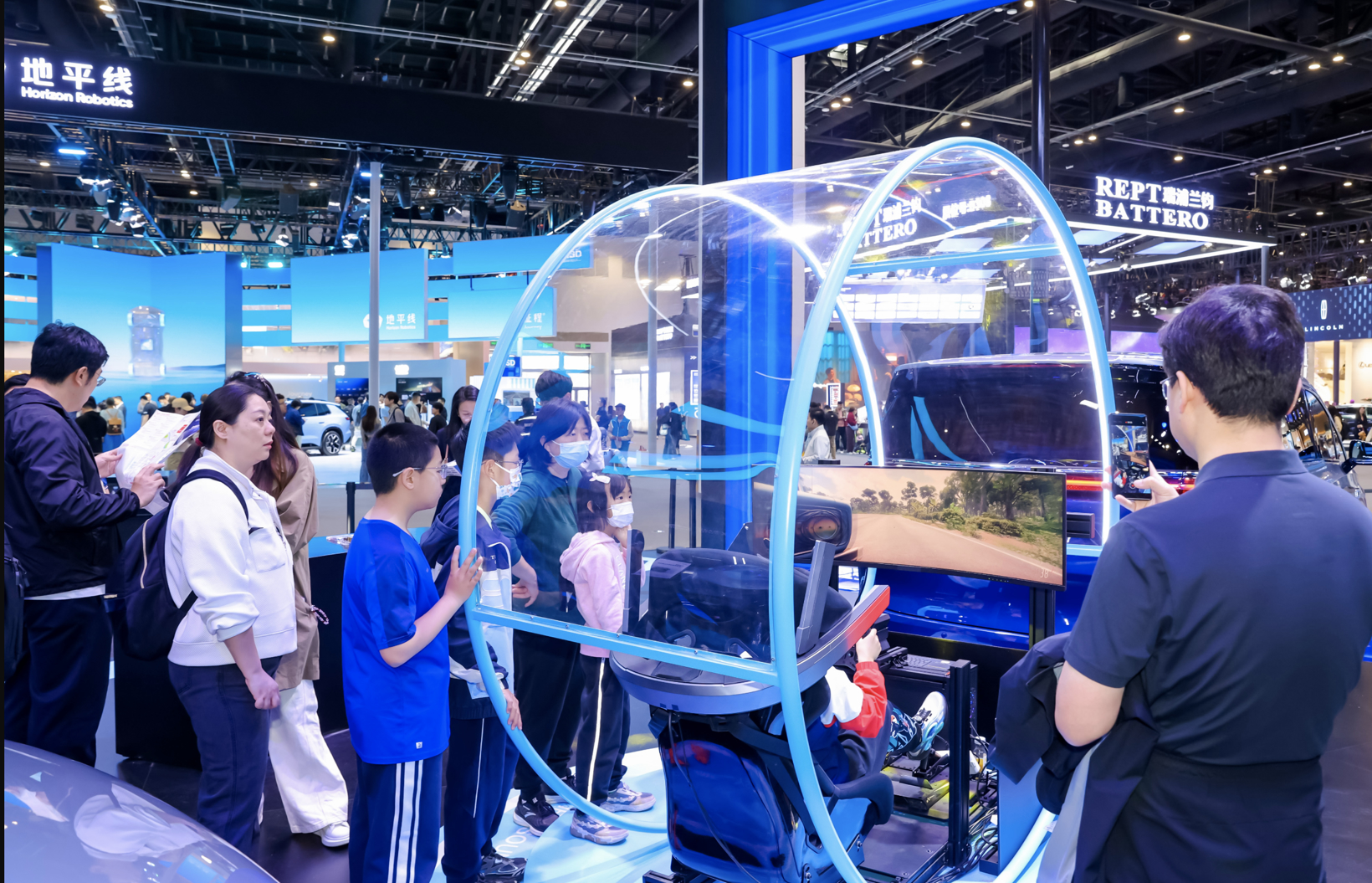
On the fun side, features like mic-free karaoke, camping mode, and On-the-Go DJ enrich the social and entertainment aspects of the cabin. Take On-the-Go DJ as an example: AI can automatically mix music in real time based on driving dynamics such as speed, throttle depth, and driving rhythm, creating a dynamic interplay between music and driving behavior and transforming users from passive listeners into active creators.
Market data provides verification: iFLYSOUND has been deployed in over 1.2 million vehicles. New models unveiled at the Beijing Auto Show—including the Wey V9X, Dongfeng Nissan NX8, 2026 Geely ZEEKR 007 GT, Chery EX7, Chery Forthing T9L, and Hyper S600—also feature this technology.
Summary:
Unlike many Internet companies or AI startups, iFLYTEK's understanding of the automotive industry is built upon the delivery of millions of mass-produced vehicles, feedback from billions of real interaction data, and countless engineering challenges tackled in collaboration with automakers, and these insights are the barriers formed by the joint accumulation of time and scenarios.
iFLYTEK’s accumulated advantage is not merely a first-mover edge in a single technology, but rather a systematic understanding of the automotive industry’s rules, automotive-grade engineering requirements, and real-world driving scenarios. Unlike consumer-grade AI products that simply package general-purpose large models for the automotive market, iFLYTEK deeply understands how short the interaction path must be for drivers on highways, how the volume and screen brightness of voice feedback should be adjusted during nighttime driving, and how users in different global regions hold vastly different expectations regarding “politeness” and “speaking speed.” iFLYTEK’s core value lies in meticulously refining the general-purpose capabilities of large models into a truly automotive-grade intelligent agent—one that understands vehicles, drivers, and global users.
iFLYTEK’s products unveiled at the Beijing Auto Show send a clear signal: the competition in intelligent cockpits has entered an era dominated by system-level AI agent capabilities. Piling up isolated features can no longer build core competitiveness; only by deeply integrating capabilities such as understanding, planning, execution, perception, and emotion can the cockpit evolve from cold hardware into a warm, digital companion.
【Copyright and Disclaimer】The above information is collected and organized by PlastMatch. The copyright belongs to the original author. This article is reprinted for the purpose of providing more information, and it does not imply that PlastMatch endorses the views expressed in the article or guarantees its accuracy. If there are any errors in the source attribution or if your legitimate rights have been infringed, please contact us, and we will promptly correct or remove the content. If other media, websites, or individuals use the aforementioned content, they must clearly indicate the original source and origin of the work and assume legal responsibility on their own.
Most Popular
-

Layoffs, Divestments, Plant Closures While Pouring Billions: BASF Undergoes Major Transformation!
-

Ascend Adipic Acid Hit By Force Majeure, Market Expects Supply Resumption In Mid-September
-

Raw Material Supply Shortage! INEOS Phenol Declares Force Majeure on Phenol and Acetone Businesses
-
South Korea initiates anti-dumping investigation against Chinese PVC suspension resin! The target is Tianjin Bohua and Wanhua Chemical. How to break through?
-

Sixth national procurement set to be implemented: A “Reshuffling” Moment for the $10-Billion Medical Device Market