



FibreCoat and Lofith to Test Superelastic Materials in Space
FibreCoat, a global leader in the field of coated fiber technology, and Lofith Composites, a Spanish advanced materials company, have announced a strategic partnership to develop the next generation of thermoplastic composites for space applications. The first orbital demonstration of this joint material is planned for 2026, during which a satellite will send test panels into orbit for 12 months.

The collaboration combines FibreCoat's expertise in fiber coatings with Lofhis's manufacturing of thermoplastic tapes and composites. The two companies will work together to integrate FibreCoat's coated fibers into Lofhis's recyclable high-performance composites to produce lightweight structural materials designed to meet the extreme demands of space.
"Space-ready" materials
During the orbital demonstration, detectors connected to the test panel will track hazardous ionizing radiation, with or without shielding, temperature changes, and other environmental impacts. These results will be key to understanding whether these materials are "space-ready" and meet the aerospace industry's demand for resilient, lightweight, and cost-effective materials. The test is expected to take place between the first and second quarters of 2026.
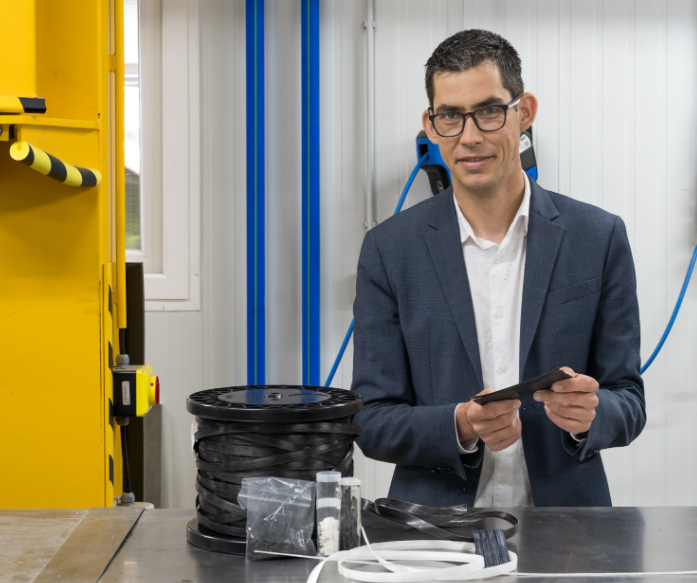
Amador García Sancho, CEO of Lofith Composites, stated: "Partnering with FibreCoat allows us to combine our expertise and identify materials suitable for satellite panels and various other applications. This is a true milestone in building sustainable space infrastructure, which is becoming increasingly important for modern life."
A new method for coating metals and plastics onto fibers
FibreCoat recently won the industry category championship at the DLR INNOspace Master Competition and was recognized as the overall champion of INNOspace pioneering technology. They have secured €500,000 in funding to develop a new method for coating metals and plastics onto fibers during the fiber spinning process, thereby combining the properties of fibers and coating materials. The strength and conductivity of their products are only a fraction of those of competing products; their latest bismuth-based coating adds additional functionality. By combining these innovations, the two companies aim to provide materials that are not only stronger and lighter but also more sustainable.
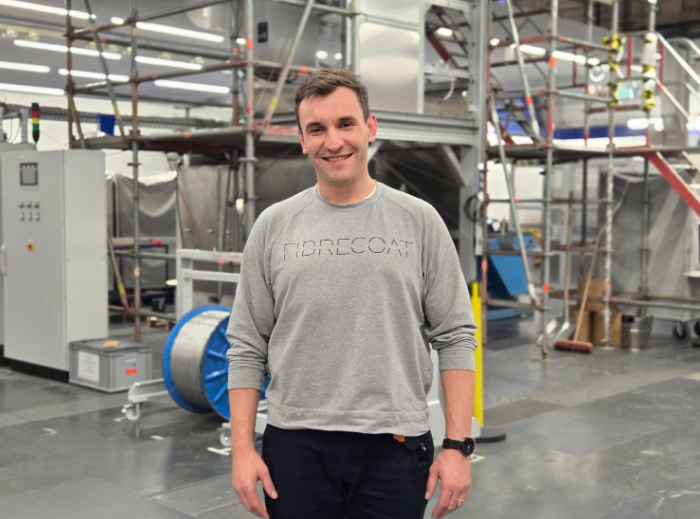
Dr. Robert Brüll, founder and CEO of FibreCoat, stated, "Space pushes materials to the limits. By combining FibreCoat's coated fibers with Lofhis's advanced composite materials, we demonstrate that strength, survivability, and cost-effectiveness can go hand in hand while also protecting the environment."
At the time this news was released, the global aerospace sector is experiencing rapid growth, with the World Economic Forum predicting it will reach $1.8 trillion by 2035. As the demand for sustainable, high-performance materials continues to rise, the collaboration between FibreCoat and Lofith will play a crucial role in shaping the future of space.
【Copyright and Disclaimer】This article is the property of PlastMatch. For business cooperation, media interviews, article reprints, or suggestions, please call the PlastMatch customer service hotline at +86-18030158354 or via email at service@zhuansushijie.com. The information and data provided by PlastMatch are for reference only and do not constitute direct advice for client decision-making. Any decisions made by clients based on such information and data, and all resulting direct or indirect losses and legal consequences, shall be borne by the clients themselves and are unrelated to PlastMatch. Unauthorized reprinting is strictly prohibited.
Most Popular
-

List Released! Mexico Announces 50% Tariff On 1,371 China Product Categories
-
Dow, Wanhua, Huntsman Intensively Raise Prices! Who Controls the Global MDI Prices?
-

Clariant Unveils Cost-Cutting Plan Details, Plans to Shut Down Multiple Plants
-

New Breakthrough in Domestic Adiponitrile! Observing the Rise of China's Nylon Industry Chain from Tianchen Qixiang's Production
-

Nissan Cuts Production of New Leaf EV in Half Due to Battery Shortage

