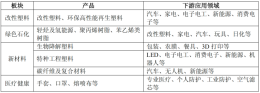
European Union Launches Bioeconomy Investment Group to Boost Bio-Based Industries

Jointly established by the European Commission and the Circular Bio-based Europe Joint Undertaking (CBE JU)Biological Economy Investment Promotion Group (BIDG)to provide financing support for Europe’s bio-based industry. This initiative aims to reduce investment risks, standardize fund allocation criteria, and integrate social capital with public fiscal funds.
The European Commission stated that the European bioeconomy has already created about 17 million jobs, with an economic output of 2.7 trillion euros. However, the Commission also pointed out that a large number of bio-based industry projects face financing challenges at key development stages, especially in the transition from pilot testing to industrial production, where funding gaps are prominent. The European Commission believes that the financing gap may hinder the commercialization of research results in bioengineering and sustainable new materials, restricting the process of industrial application.
To tackle the aforementioned challenges, the European Commission has joined forces with the European Circular Bio-based Industry Joint Undertaking, bringing together banks, national policy-oriented financial institutions, venture capital funds, and various institutional investors. This week, a special launch meeting was held in Brussels, marking the official start of the initiative; the first full meeting of the group is scheduled for June 2026, and it will submit a report to the Council of the European Circular Bio-based Industry Joint Undertaking.2026-2029 Work Plan。
Breaking the "Valley of Death" in Project Financing
The European Investment Bank Group recently released a research report titled "Strengthening the European Bioeconomy," which clearly points out: there is a structural financing gap during the capital-intensive stages of projects, from pilot demonstrations to the first industrial-scale implementation.
The report notes that traditional project financing models often underestimate the potential risks at this stage, while venture capital and government subsidies are limited in scale and insufficient in supply, causing projects in the industrialization phase to commonly fall into the "valley of death."
The Bioeconomy Investment Promotion Group focuses not only on theoretical solution research, but also on the entire financing process, focusing on four core work directions for practical implementation.
Core Demands of Investment Institutions and the Banking Sector
This week's meeting identified three core priorities, which will be incorporated into the subsequent work plan.
Standardized Contracts and Evaluation SystemSimplify collaboration documents and agreement terms to lower the barriers to multi-party joint investment.
Long-term, long-duration patient capital supportFace the characteristics of longer project cycles and more complex risk stratification in biobased industrial projects, and adopt a long-term funding support model that differs from traditional green finance projects.
Strengthen policy transparency and expectation guidanceIntensify communication and interpretation of the EU Bioeconomy Strategy and the forthcoming Bio-based Products Regulation (second edition) to send clear signals supporting industry development.
Participating Entities and Existing Shortcomings
Currently, the group has been joined by the European Investment Bank Group, national policy banks, and specialized venture capital and growth equity funds focusing on industrial decarbonization.
Multi-party collaboration validates industry consensus: no single entity can independently sustain the bio-based industry; coordinated efforts among multiple stakeholders are key to mobilizing the capital needed for industrial implementation.
However, the core participants in the current European financial system still face issues of insufficient coverage: apart from a few leading countries, the participation of policy banks in most countries is uneven; large commercial banks have not yet extensively entered the financing field for the implementation of bio-based industries.
Meanwhile, large-scale, long-term institutional investors—such as pension funds and insurance institutions—have yet to join, although these entities constitute the core providers of long-term, stable funding for the pioneering project.
Attracting more of such institutions is key to mobilizing trillions in private capital and scaling up the bioeconomy in Europe.
Follow-up Work Arrangements
June 2026: Hold the first general assembly to finalize the overall work plan for 2026-2029
2026-2029: Fully implement the established work plan
Policy Background
The EU Bioeconomy Strategy aims to drive the transition toward a circular and climate-neutral economy by scaling up the sustainable use of biological resources, thereby strengthening the foundation of European industrial development.
The core pain point in the current industry is the slow commercialization of innovative bio-based technologies, which is generally constrained by high capital investment requirements, technological iteration risks, and fragmented financing channels.
To this end, the European Commission has taken the lead in establishing a Bioeconomy Investment Acceleration Task Force, linking public and private financial entities such as the European Investment Bank to enhance coordination and mobilize societal investment.
The group will focus on expanding the reserve of high-quality financeable projects, identifying barriers to large-scale industrial development, and promoting the cross-industry application of bio-based innovative technologies.
This initiative complements existing EU support policies—such as Horizon Europe and the Innovation Fund—to help implement the overarching objectives of the European Green Deal.
【Copyright and Disclaimer】The above information is collected and organized by PlastMatch. The copyright belongs to the original author. This article is reprinted for the purpose of providing more information, and it does not imply that PlastMatch endorses the views expressed in the article or guarantees its accuracy. If there are any errors in the source attribution or if your legitimate rights have been infringed, please contact us, and we will promptly correct or remove the content. If other media, websites, or individuals use the aforementioned content, they must clearly indicate the original source and origin of the work and assume legal responsibility on their own.
Most Popular
-
Continental Plans to Begin Sale of ContiTech in Early 2026
-
$4 Billion! Medtronic Makes Another Acquisition
-

BASF Delivers First Batch of Innovative Cathode Materials for Semi-Solid-State Batteries to Weilan New Energy
-

Why did a century-old european dental instrument giant relocate its manufacturing hub to china?
-
Profit and Revenue Growth Struggle to Conceal Debt Repayment Pressure; Success of Kingfa Sci & Tech's High-End Strategy Yet to Be Seen