Chinaplas 2026 Deep Insights: Who Is Defining the Next Five Years of China's Plastics Industry?
The CHINAPLAS 2026 exhibition, held in Shanghai today, has attracted top global material companies, including international giants BASF, Evonik, and Syensqo, as well as leading Chinese domestic enterprises such as Jinfa Technology and Jining Petrochemical, and companies specializing in the bio-based materials sector like CovationBio. News releases and speeches by executives during the first two days of the media days have already conveyed numerous signals worth analyzing.
Considering the statements from all parties, this year's exhibition is not limited to product displays, but also serves as a collective declaration by the entire industry at the critical starting point of the 14th Five-Year Plan, showcasing strategic shifts and seeking certainty amid uncertainty through a high-level exhibition platform. This article summarizes three most valuable trends for industry professionals to refer to.
Trend 1: Circular materials shifting from "storytelling" to "building factories"
In recent years, recycled materials have been a hot topic. At CHINAPLAS 2026, this situation began to shift, and we truly felt the industrial application of bio-based materials.
The most representative case isRecombinant Bio(CovationBio®), established by Huafon Group after acquiring DuPont's Biomaterials division in 2022, announced a significant milestone ahead of CHINAPLAS: its first commercial-scale bioTHF (bio-based tetrahydrofuran) and bioPTMEG (bio-based polytetramethylene ether glycol) plant, located in Qidong, Jiangsu, with a total investment of 10 billion RMB, has completed its mechanical completion in April 2026. The first phase, with a capacity of 50,000 tons, is expected to start production in the second half of the year. At the same time, the company officially launched the new brand Xatryx® - a bioPTMEG made from non-food agricultural by-products such as corn cobs using advanced thermochemical technology (ATC), which can directly replace fossil-based counterparts in spandex, polyurethane, and thermoplastic elastomer applications. Moreover, downstream customers do not need to adjust their main processes to switch, addressing a critical barrier to large-scale adoption, not just a performance issue.
This is not an isolated case.Jinfa TechnologyAt its pre-exhibition press conference, the company systematically disclosed its currently mass-produced biobased material portfolio: 50,000 tons of bio-based succinic acid production capacity, 10,000 tons of bio-based BDO production capacity, and set a new sales record for bioplastics in 2025. More importantly, Jinfa has established a full industrial chain of "biobased monomers — polymerization — modification." The company is set to officially launch the "Biobased & Home Compostable PBS Paper Coating Material Solution" at this exhibition, directly targeting the green transformation needs of the packaging industry. In its 2030 strategy, the company has clearly set three targets of producing 1 million tons of green plastics, recycling 1 million tons of waste plastics, and producing 1 million tons of recycled plastics — the "Three 1 Million Tons" goal.
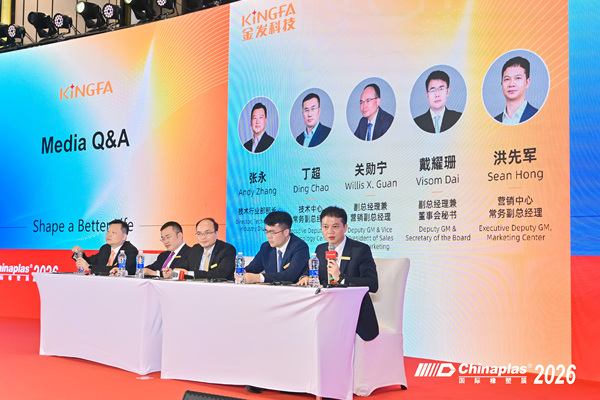
Chart the senior management of Kingfa Technology
In terms of foreign investment,Evonik and Sichuan SokoSustainability is placed in a more systemic position. Evonik's TEGO®CYCLE series removes contaminants through the cleaning and modification stage, converting waste plastics into high-quality recycled materials. Sika has launched the ECHO portfolio of bio-based and recycled polymers, aiming to achieve 18% of sales from circular product solutions by 2030 (currently close to 16%), and has publicly stated its goal to achieve carbon neutrality in its own operations (Scope 1 and Scope 2) by 2040.
This current wave of the circular economy is not driven solely by environmental sentiment, but by clear market logic: on one hand, the European Union and other major export destinations are implementing binding regulations such as the Carbon Border Adjustment Mechanism (CBAM) and the Packaging and Packaging Waste Regulation (PPWR); on the other hand, brand companies—acting as supply-chain leaders—are increasingly incorporating suppliers’ carbon footprints into procurement evaluations under mounting Scope 3 emission pressures. A senior executive from Kingfa Science & Technology stated frankly at the conference that closed-loop recycling and bio-based materials represent the “most effective pathways” for helping customers reduce carbon emissions—not merely value-added enhancements to corporate image.
Trend Two: The "ceiling" for plastics is rising at an accelerating pace
After four years of being mired in a price war among commodity plastics, high performance has shifted from a strategic option to a survival necessity—a trend vividly reflected in the pre-show announcements for this year’s CHINAPLAS.
Golden TechnologyAchieved global market share leadership in Liquid Crystal Polymer (LCP) and is continuously expanding its deep strategic footprint into high-temperature nylon PA10T and semi-aromatic nylons, gradually reducing reliance on imports.
The core highlight of this media day is that VESTAKEEP has opened in Shanghai.®The PEEK Flat Wire Application Development Laboratory has officially commenced operations — a laboratory dedicated to the research and development of high-voltage motor applications in new energy vehicles. With the increase in electric vehicle drive voltages from 400V to 800V and even 1000V, motor insulation materials are facing unprecedented challenges in terms of voltage and temperature resistance, and PEEK can effectively address these challenges. Evonik also announced that the polyamide 12 reactor project will achieve trial production by the end of 2025, doubling the capacity of long-chain polyamide in Asia, supporting its continued expansion in the long-chain polyamide field, especially PA12, which can be used in cooling pipelines for new energy vehicles, hydrogen transmission pipelines, and data center cooling — high-growth applications.
BASFA series of "plastic-for-steel" collaboration cases illustrate the high-performance advancement of its materials. In the railway container flooring sector, the company partnered with Shanghai Jiang Juyuan and Golden Eagle Heavy Industry to launch an EPA (expanded polyamide bead) lightweight flooring solution that significantly reduces weight while meeting structural strength requirements. In the humanoid robotics segment, BASF combines Ultramid® polyamide, Ultrason® polysulfone, and Elastollan® TPU materials to create a system-level materials solution covering load-bearing structures, protective housings, and human-robot interactive skins. Meanwhile, the newly launched Elastollan® GripTec shoe sole material achieves a 41% lower carbon footprint compared to conventional rubber soles while delivering breakthrough performance in grip and abrasion resistance—exemplifying a product that simultaneously addresses performance and sustainability challenges, marking a convergence point of high performance and green innovation.
Jingbo PetrochemicalThe path may vary, but the destination is the same. In the context of severe overcapacity in the polyolefin industry, Jinduo Polyolefin is transitioning from "selling materials" to "selling solutions": energy storage PP materials are being developed in collaboration with clients such as CATL, applied in lightweight and protective cases for energy storage systems; for the logistics transportation of precision instruments, consumer electronics, and high-value home appliances, Jinduo EPP provides a recyclable packaging solution. Its unique microporous structure offers comprehensive shock protection, significantly reducing transportation damage rates; high dielectric PP products target ultra-high voltage power transmission networks... The common logic behind these directions is "deeply exploring scenario value based on general-purpose materials, and capturing premiums through customization."
Shi Suo KeIn the field of high performance, the representative product is Amodel®PPA (polyphthalamide). The newly launched Amodel®PPA HFFR-4130 BK34 is specifically designed for the next generation of integrated electric drive system busbars, featuring excellent thermal shock resistance, ATF corrosion resistance, and compliance with the UL94 V-0 flame retardancy standard. This helps to promote the integration and efficiency transformation of electric vehicle power systems. This "local high-performance material" strategy reflects an increasingly clear understanding by foreign companies in the Chinese market: relying solely on imported grades is no longer sufficient; it is necessary to solve the dual problems of performance and supply chain locally.
Another high-performance sector worth noting is aramid materials. Founded by Zhi Fang New Materials in collaboration with Tsinghua University, the company has launched two new domestically produced aramid products for the first time: para-aramid nanofibers and para-aramid paper. The former uses a unique mass production process, with fiber diameter ranging from 10 to 100 nm and aspect ratio exceeding 3000, offering excellent composite performance and meeting the customized requirements of high-end functional materials. Its melting temperature reaches 400°C, providing a critical solution for thermal runaway in battery separators. The latter is 20% lighter than traditional meta-aramid products, featuring higher specific strength and excellent flame resistance and thermal insulation performance, with broad application prospects in the low-altitude economy, rail transit, and aerospace fields.
Trend 3: Geopolitical competition accelerates supply chain restructuring, with Asia emerging as the new competitive epicenter.
While the first two trends are more about technological changes, the third trend is deeply intertwined with the current geopolitical realities and may have the most far-reaching impact on the global plastic supply chain.
BASFAndy Postlethwaite, Senior Vice President and Head of Performance Materials Asia Pacific, revealed a key figure during a media briefing: by 2025, the Asia-Pacific region will account for 46%–55% of global plastics market revenue and production, representing the largest share worldwide. Behind this figure lies the relative decline of the European and North American markets. BASF reported "nearly double-digit" sales growth in its Performance Materials business in China for 2025, attributing this success to its "long-term commitment to Asia." Concurrently, the company announced the construction of an integrated warehouse center in Shanghai and the localization of flame-retardant TPU production—moves that collectively signal a clear trend: growth is in Asia, and capital is following that growth.
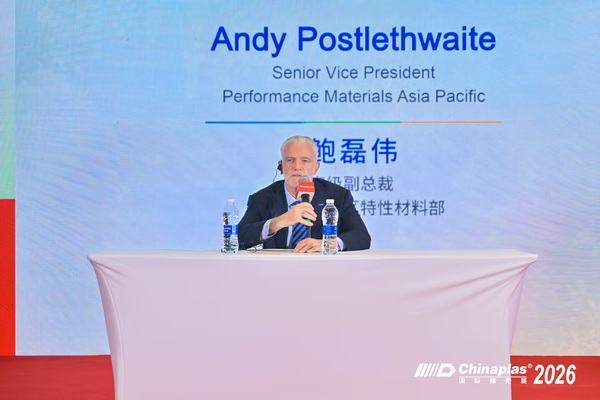
Figure Andy Postlethwaite, Vice President of BASF and Head of Specialty Materials for the Asia-Pacific region
Its moves are becoming more concrete: establishing a dedicated innovation center in Asia for high-end athletic footwear applications using polyamide, and setting up a specialized PEEK flat wire laboratory focused on high-voltage motor windings for new energy vehicles. These two "localized labs" signal a shift in R&D decision-making authority from the European headquarters toward the Asia-Pacific region. Xia Fuliang, President of Evonik Greater China, stated that the company is committed to "cross-sector collaboration and localized R&D investment to continuously push the boundaries of materials science"—implying that the old unidirectional model of "European R&D, global sales" can no longer meet the demands of the Chinese market.
ShisuokeThe production facility in Changshu, Jiangsu has expanded its capacity by 40% cumulatively over the past three years and added rapid formulation development capabilities to swiftly respond to Chinese customers' customized demands. Management has explicitly positioned Asia-Pacific as a core market, accounting for over 35% of its global specialty polymers business, and stated it will increase investments in local innovation and collaboration in China.
Chinese enterprises, meanwhile, are demonstrating a different facet in this round of supply chain restructuring: going global.Goldway TechnologyIt is the company with the most forward-looking global layout. It currently operates production bases in Vietnam, Malaysia, Indonesia, Germany, Spain, the United States, and India; its Poland factory is under construction and is expected to commence operations in the second half of 2026; its Mexico factory is scheduled to begin operations in June 2026 (prior to Q3). Satellite factories are being simultaneously established across multiple global locations. According to the company’s marketing head at a press conference, overseas sales exceeded 300,000 tons in the first three quarters of 2025, representing a 30% year-on-year growth rate. The company’s strategic target for 2030 is for overseas sales to account for 30% of total sales and for total modified plastic sales to reach 1.8 million tons. This is not merely “product export,” but rather comprehensive localization of production capacity, talent, and customer service systems.
Jingbo PolyolefinsManagement, from a macro-industry perspective, offered its own assessment: European enterprises are restructuring their supply chains due to high labor costs and energy prices, while China is playing the role of a “stabilizer.” China’s exports of high-end polyolefins have accelerated from last year to this year, and exclusive or regional agency agreements for high-end grades have already been concluded with overseas customers in regions including Australia and Europe—previously, high-end polyolefins were imported into China from abroad, but this situation is now reversing.
The pressure of trade friction was touched upon, intentionally or unintentionally, in several press conferences. Executives from Kingfa Sci. & Tech. stated bluntly that the pressure on the entire supply chain brought by U.S. policies is "overwhelming," but at the same time, they believe this has instead accelerated the company's global layout — as customers are relocating, Kingfa must follow.
Summary: What does this exhibition reveal?
Standing at the threshold of CHINAPLAS 2026, the industry presents a rare "contrast": while the market for general-purpose materials is still digesting excess capacity, the layout of high-performance materials, bio-based materials, and recycled materials is more intensive than ever; while foreign companies are contracting their global operations, they are increasing their local investments in Asia; while Chinese companies are under pressure in the domestic market, they are accelerating the export of capacity and technology overseas.
Behind these three trends, there is actually a single conclusion: the competitive dimension of the plastics industry is shifting from "quantity" to "quality," and from "scale" to "scene value." Companies that can simultaneously position themselves on the three coordinates of high performance, sustainability, and supply chain resilience will enjoy stronger bargaining power in the future market landscape—whether they are from Germany or China. This is what makes CHINAPLAS 2026 most worth seeing.
Editor: Lily
【Copyright and Disclaimer】This article is the property of PlastMatch. For business cooperation, media interviews, article reprints, or suggestions, please call the PlastMatch customer service hotline at +86-18030158354 or via email at service@zhuansushijie.com. The information and data provided by PlastMatch are for reference only and do not constitute direct advice for client decision-making. Any decisions made by clients based on such information and data, and all resulting direct or indirect losses and legal consequences, shall be borne by the clients themselves and are unrelated to PlastMatch. Unauthorized reprinting is strictly prohibited.
Most Popular
-

Layoffs, Divestments, Plant Closures While Pouring Billions: BASF Undergoes Major Transformation!
-
Ascend Adipic Acid Hit By Force Majeure, Market Expects Supply Resumption In Mid-September
-

Raw Material Supply Shortage! INEOS Phenol Declares Force Majeure on Phenol and Acetone Businesses
-
South Korea initiates anti-dumping investigation against Chinese PVC suspension resin! The target is Tianjin Bohua and Wanhua Chemical. How to break through?
-

Sixth national procurement set to be implemented: A “Reshuffling” Moment for the $10-Billion Medical Device Market