



Celanese Joins Forces With Aisan Industry to Reshape the Low-Carbon POM Competitive Landscape, Changing the Automotive Supply Chain
In June 2026, global specialty materials company Celanese announced a remarkable industrial milestone: the U.S. subsidiary of Japan's ICM, based in Kentucky, successfully utilized Celanese's carbon capture and utilization (CCU) technology to produce polyoxymethylene (POM) materials for mass production of fuel pump modules for a well-known North American automotive manufacturer. Behind this seemingly ordinary supply chain news lies a profound green transformation in the engineering plastics industry—carbon dioxide is shifting from being an "environmental burden" to an "industrial raw material," and polyoxymethylene, hailed as "steel-like," is writing a new narrative for the industry.
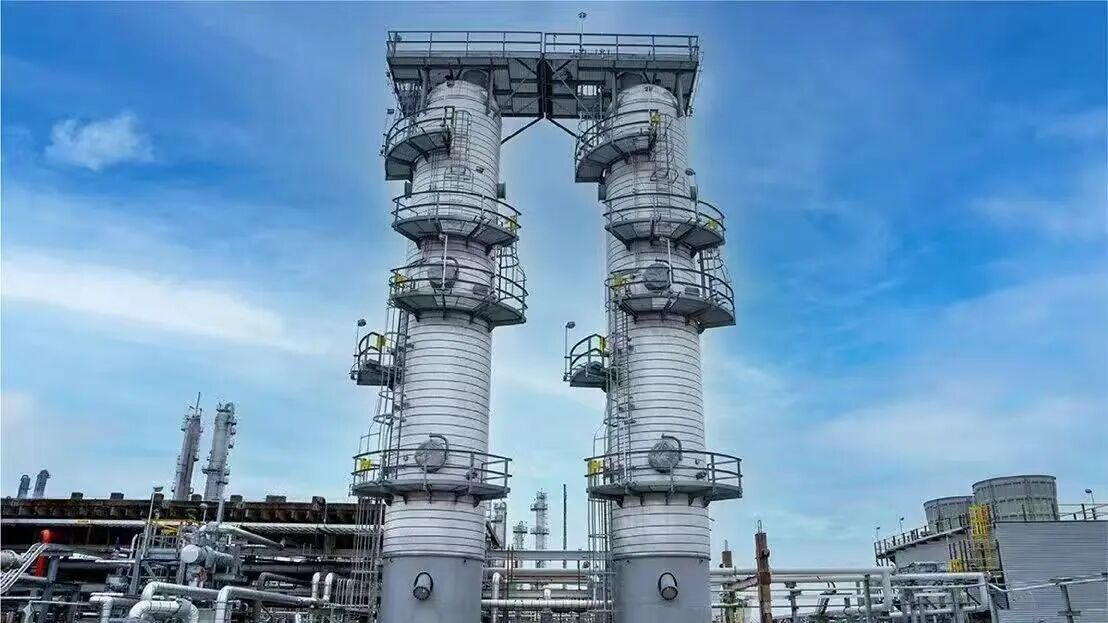
Image source: Celanese
1. From Waste Gas to “Acetal”: The Industrialization Breakthrough of CCU Technology
Polyoxymethylene (POM) is one of the five major general-purpose engineering plastics. With its metal-like hardness and stiffness, as well as excellent wear resistance and self-lubricating properties, it is widely used in precision components such as fasteners, bearings, and gears. However, the production of conventional POM relies heavily on fossil-based raw materials, resulting in a high carbon footprint.
Sierra's breakthrough lies in its CCU plant located in Clear Lake, Texas—one of the largest active CCU facilities in the world, operated in joint venture with Mitsui & Co. This plant captures 180,000 tons of industrial carbon dioxide emissions annually and converts it into 130,000 tons of low-carbon methanol. This methanol is then introduced into the acetyl product chain and engineering materials segments through a mass balance approach, ultimately becoming the raw material for POM ECO-C.
Unlike the more common carbon capture and storage (CCS), carbon capture and utilization (CCU) does not store carbon dioxide underground but instead converts it into products that can reduce the demand for fossil fuels. Todd Elliott, Senior Vice President of Engineered Materials at Celanese, succinctly summarizes this: "Celanese is able to convert waste carbon dioxide into high-performance polymers, helping customers achieve their sustainability goals."
2. “Plug-and-Play” Business Wisdom
The rapid commercialization of POM ECO-C is mainly attributable to its “plug-and-play” product positioning. According to Celanese, the material significantly reduces the product carbon footprint while maintaining exactly the same performance, quality, and processing compatibility as conventional POM, enabling customers to use it without changing existing product designs or production processes.
This design approach precisely addresses the core pain point of the manufacturing industry’s green transformation: companies are willing to reduce carbon emissions, but are reluctant to bear the high costs and quality risks associated with production line modifications. For a fuel pump module manufacturer like Aisan Industry, POM ECO-C means it can deliver more sustainable components to automakers with zero disruption. In September 2022, Aisan Industry acquired Denso’s fuel pump module business, further strengthening its market position in fuel system products. Its adoption of POM ECO-C is not only an extension of its own sustainability strategy, but also a pragmatic move to meet automakers’ increasingly stringent carbon footprint requirements.
In December 2025, Celanese further obtained International Sustainability and Carbon Certification (ISCC) carbon footprint certification for its POM ECO-C series products, with certification coverage completed at its production sites in Frankfurt, Germany, and Bishop, USA. The addition of third-party certification provides this low-carbon material with a trusted “green passport” for market promotion.
III. The Chinese Mirror of the POM Industry: Capacity Ascendancy and Technological Breakthrough
The breakthrough in this industry across the ocean serves as both a mirror and a wake-up call for China's POM industry.
From the perspective of production capacity, China has become a "major power" in the global POM industry. In 2024, the total domestic POM production capacity will soar to 760,000 tons, a year-on-year increase of 38.18%, accounting for about 43% of global capacity. In 2025, capacity will continue to rise to 760,000 tons, accounting for approximately 38% of global total capacity, maintaining the largest scale in the world. However, beneath the halo of production capacity, structural contradictions are equally alarming—many newly added capacities are concentrated in the mid to low-end sectors, intensifying market homogenization competition, while high-end, high-performance POM products remain heavily reliant on imports. In 2024, China's POM import volume will reach 396,600 tons, setting a new historical high; in 2025, the import volume will still reach 288,000 tons, with a net import volume of 250,000 tons, resulting in an annual supply-demand gap of about 290,000 tons.
The supply and demand pattern behind this is a long-standing technological barrier that has yet to be broken. The production process of POM is intricate and complex, with each step from the preparation of formaldehyde to the polymerization process directly determining product quality. Over 80% of POM products globally are copolymerized formaldehyde, while the technology for homopolymer POM is only mastered by DuPont in the United States and Asahi Kasei in Japan. In the field of copolymerized formaldehyde, the wet polymerization process, with its complete formaldehyde removal process, is superior to the dry process in terms of product quality and production stability, but the core technology and key equipment in this field have long been monopolized by overseas companies.
What is more noteworthy is the degree of tightness in the technology blockade. Overseas giants such as DuPont, BASF, Asahi Kasei, and Polyplastics have long implemented a technology blockade against China, refusing to transfer core production processes. Domestic early-stage small and medium-sized POM enterprises have been eliminated from the market due to outdated processes and smaller production capacities. Even the companies willing to transfer technology, such as Hong Kong's Fuhua and South Korea's P&ID, do not provide the latest processes and do not touch on the core of POM technology.
IV. Green Transformation: The Possibility of Overtaking on a Curve?
The commercialization of Celanese POM ECO-C has pointed out a direction worth paying attention to in the global POM industry: can low-carbon technology become a "variable" that breaks the existing technological monopoly?
From a technical logic perspective, CCU technology itself does not alter the molecular structure or material properties of POM; rather, it reconfigures its carbon source—from fossil-based carbon to captured carbon. This means that low-carbon production and high performance are not a trade-off between two mutually exclusive goals, but a dual objective that can be achieved simultaneously. For China’s POM industry, which is striving to break through toward the high end of the market, this may offer a differentiated path distinct from the traditional route of process catch-up.
Of course, it is also necessary to clearly recognize that the commercialization of CCU technology still faces multiple challenges in terms of cost, scale, and policy. The Clear Lake plant of Celanese produces 130,000 tons of low-carbon methanol annually, which represents a limited proportion of its overall acetyl product chain; while the "plug-and-play" attribute of POM ECO-C lowers the switching threshold for customers, its economic viability still needs to be tested in larger-scale applications.
V. Conclusion
From the carbon capture facility in Clear Lake, Texas, to the fuel pump module production line at Aisan Industry in Kentucky, Celanese POM ECO-C has completed an industrial closed loop from “waste gas” to “polyoxymethylene.” The value of this case lies not only in proving the feasibility of carbon-capture-based materials in core automotive components, but also in revealing a replicable pathway for the green transformation of the engineering plastics industry: using technological innovation to redefine carbon sources, lowering the threshold for adoption through “drop-in” compatibility, and building market trust through third-party certification.
For China’s POM industry, which is currently undergoing a threefold transition of capacity expansion, technological breakthrough, and green upgrading, this industrial practice by Celanese offers both a point of reference and a pressing question: when global competitors are already using captured carbon dioxide to produce “Saigang,” are we prepared to embrace the next upgrade in the dimensions of competition?
Editor: Winnie
【Copyright and Disclaimer】This article is the property of PlastMatch. For business cooperation, media interviews, article reprints, or suggestions, please call the PlastMatch customer service hotline at +86-18030158354 or via email at service@zhuansushijie.com. The information and data provided by PlastMatch are for reference only and do not constitute direct advice for client decision-making. Any decisions made by clients based on such information and data, and all resulting direct or indirect losses and legal consequences, shall be borne by the clients themselves and are unrelated to PlastMatch. Unauthorized reprinting is strictly prohibited.
Most Popular
-

A Look at the Material Suppliers Behind SpaceX
-

Government's Triple Action, Enterprises' Three Arrows in Five Days, Semiconductor Reshuffle! What Signal Does Japan's Chemical Industry Release?
-
Next-generation motors of new energy vehicles: Single-Round Thousand Horsepower, Replacing Brakes, How Powerful Are They?
-
Shutdowns And Production Cuts! Widespread Price Quotes Suspended, Chemical Products May Still Be Easier To Rise Than Fall In June-July!
-

Japan Plans To Sell Lithography Giant JSR! Fujifilm And Mitsubishi Chemical Interested In Taking Over, How Much Time Window Is Left For China?


