



Breaking News! Indonesian Textile Giant Sritex Goes Bankrupt! 20,000 People Lose Jobs, $1.6 Billion in Debt!
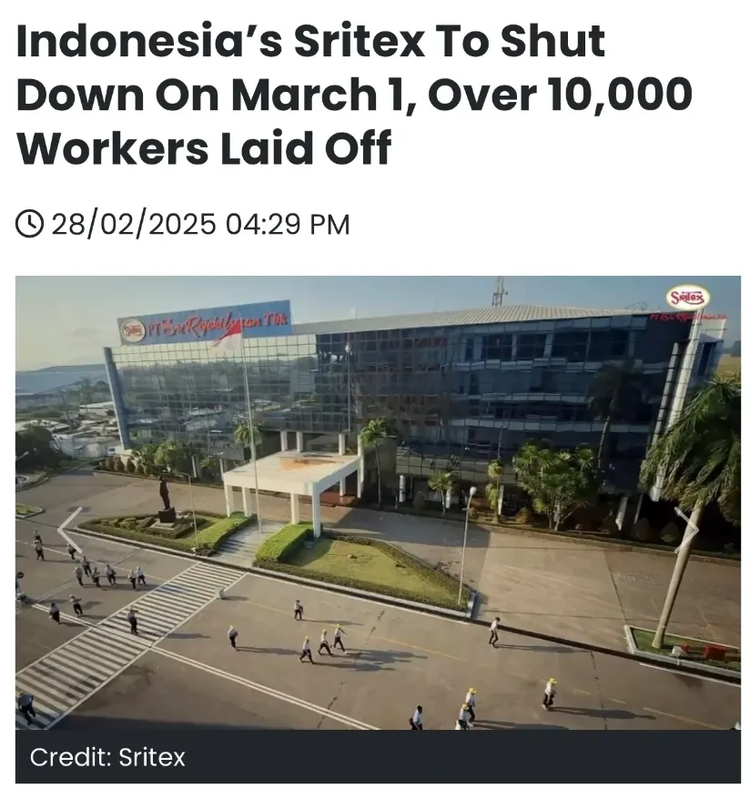
On March 1, 2025, Indonesia's largest textile company, Sritex, officially declared bankruptcy!
PT Sri Rejeki Isman Tbk (Sritex), established in 1966, was once the largest integrated textile manufacturer in Southeast Asia. At its peak, it had a market value of several billion dollars, with customers including international brands such as Uniqlo and H&M, and it also provided uniforms for the Indonesian military. However, it has now collapsed due to a debt crisis and operational difficulties. According to Metro TV News, the Semarang District Court of Central Java Province officially announced its bankruptcy on October 28, 2024, putting about 20,000 employees at risk of unemployment and affecting the upstream and downstream industrial chain, including the survival of raw material suppliers such as yarn and fiber. Although the Indonesian government has intervened urgently, there are still doubts about whether the company can be revived.
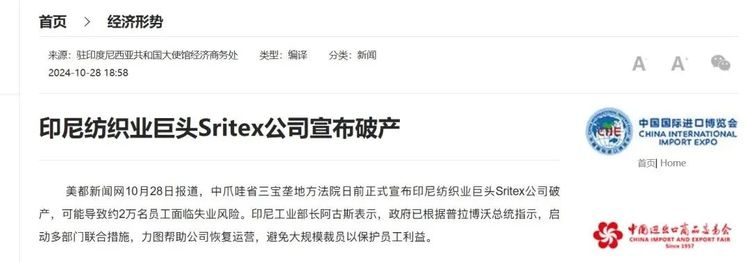
The bankruptcy of Sritex has caused significant changes in the domestic textile market in Indonesia. It once held 56.97% of the domestic market share, and now this share is vacant, providing an opportunity for other local companies to compete for the market share, but they also face the challenge of reintegration. Meanwhile, the large-scale unemployment may lead to a decrease in consumer spending power, further affecting the domestic demand for textile products. In the international market, 65% of Sritex's revenue came from overseas markets, and its bankruptcy has led to the original overseas orders being redirected to other competitors, such as textile companies in China and Vietnam. This may lead to changes in the global textile market competition landscape,
On March 1, 2025, Sritex, Indonesia's largest textile company, officially declared bankruptcy!
PT Sri Rejeki Isman Tbk (Sritex), established in 1966, was once the largest integrated textile producer in Southeast Asia, with a peak market value of several billion dollars. Its clients included international brands such as Uniqlo and H&M, and it also supplied uniforms for the Indonesian military. However, due to a debt crisis and operational difficulties, the company has now collapsed. According to Metro TV News, the Semarang District Court in Central Java Province officially declared its bankruptcy on October 28, 2024, putting around 20,000 employees at risk of unemployment and affecting the survival of upstream and downstream industrial chains, including yarn and fiber raw material suppliers. Although the Indonesian government has intervened urgently, the possibility of the company's revival remains uncertain.
The bankruptcy of Sritex has led to significant changes in the domestic textile market in Indonesia. With a former market share of 56.97%, the gap left by its absence presents an opportunity for other local companies to compete for market share, but also poses challenges in terms of reorganization. Meanwhile, the large-scale unemployment may lead to a decline in purchasing power, further affecting the domestic demand for textile products. In the international market, 65% of Sritex's revenue came from overseas, and its bankruptcy has redirected those orders to other competitors, such as textile companies in China and Vietnam. This could alter the competitive landscape of the global textile market, potentially benefiting the textile exports of countries like China, while also intensifying market competition, prompting enterprises to improve product quality and competitiveness.
Reconfiguration of Production Capacity and Industry
Reconfiguration of Production Capacity and IndustryReconfiguration of Production Capacity and IndustryThe bankruptcy of Sritex has led to a large amount of idle capacity, which has had a significant impact on Indonesia's domestic textile production capacity. At the same time, it also provides an opportunity for textile companies in other countries to expand their capacity, potentially triggering a new round of capacity layout adjustments. In 2024, the capacity utilization rates of China's textile and chemical fiber industries were 78.5% and 85.4%, respectively, up by 2.1 and 1.1 percentage points from the previous year, both higher than the national industrial capacity utilization level of 75%. The bankruptcy of Sritex highlights the disadvantages of the Indonesian textile industry in global competition, which may lead to the transfer of some textile industries from Indonesia to other countries with lower labor costs and more stable policy environments. Some Chinese textile companies may take this opportunity to accelerate industrial relocation and global layout through investment and cooperation.
The bankruptcy of Sritex has left a large amount of its production capacity idle, which has had a significant impact on Indonesia's domestic textile production capacity. At the same time, it also provides an opportunity for textile companies in other countries to expand their capacity, potentially triggering a new round of capacity layout adjustments. In 2024, the capacity utilization rates of China's textile and chemical fiber industries are 78.5% and 85.4% respectively, up by 2.1 and 1.1 percentage points from the previous year, both higher than the national industrial capacity utilization level of 75%. The bankruptcy of Sritex highlights the disadvantage of Indonesia's textile industry in global competition, which may prompt some textile industries to shift from Indonesia to other countries with lower labor costs and more stable policy environments. Some Chinese textile companies may take this opportunity to accelerate industrial relocation and global layout through investment, cooperation, and other means.Industry Chaos and Lessons
Industry Chaos and LessonsIndustry Chaos and LessonsThe bankruptcy of Sritex reflects some chaos in the textile industry, such as over-reliance on a single market, debt crises, and technological lag. These issues may also exist in other textile companies and need to be taken seriously and reflected upon within the industry. For example, Sritex long relied on the advantage of low-cost labor, with outdated production equipment and slow digital transformation, failing to adapt to the changing demands of the global market for sustainability and high-value-added products. Taking Chinese textile enterprises as an example, in recent years, they have improved production efficiency and product quality through automation and digital transformation. After introducing intelligent production equipment, a well-known textile enterprise increased its production efficiency by 30% and reduced the defect rate of products by 20%. Meanwhile, the export value of Chinese textiles has been increasing year by year, reaching $300 billion in 2023, a 10% increase from the previous year. This indicates that Chinese textile companies have advantages in technological innovation and market competitiveness, allowing them to secure a place in the global market.
The bankruptcy of Sritex reflects some chaos in the textile industry, such as over-reliance on a single market, debt crises, and technological lag. These issues may also exist in other textile companies and need to be taken seriously and reflected upon within the industry. For example, Sritex long relied on the advantage of low-cost labor, with outdated production equipment and slow digital transformation, failing to adapt to the changing demands of the global market for sustainability and high-value-added products. Taking Chinese textile enterprises as an example, in recent years, they have improved production efficiency and product quality through automation and digital transformation. After introducing intelligent production equipment, a well-known textile enterprise increased its production efficiency by 30% and reduced the defect rate of products by 20%. Meanwhile, the export value of Chinese textiles has been increasing year by year, reaching $300 billion in 2023, a 10% increase from the previous year. This indicates that Chinese textile companies have advantages in technological innovation and market competitiveness, allowing them to secure a place in the global market.Future Outlook and Recommendations
Future Outlook and RecommendationsFuture Outlook and RecommendationsThe bankruptcy of Sritex serves as a wake-up call for textile companies, which need to address the following aspects:
The bankruptcy of Sritex serves as a wake-up call for textile companies, which need to address the following aspects:l Diversified Market Layout: Enterprises should avoid over-reliance on a single market and actively expand both domestic and international markets, forming a "dual circulation of domestic and international". For example, some textile companies in China, while consolidating their domestic market, are also actively expanding into emerging markets such as Southeast Asia and Africa, thereby reducing market risks.
l Technological Upgrade and Innovation-Driven Development: Increase investment in research and development, promote digital transformation, improve production efficiency and product quality. At the same time, develop high-value-added products to meet the market demand for sustainable and functional textiles.
l Prudent Financial Management and Risk Control: Reasonably control debt levels, avoiding financial risks caused by blind expansion. Establish a risk early warning mechanism to timely respond to market fluctuations, exchange rate changes, and other risks.
l Policy Coordination and Compliance Operations: Enterprises should actively participate in policy-making, promoting the government to improve industrial protection policies. Meanwhile, when investing overseas, it is necessary to thoroughly study local laws and regulations to ensure compliance with operations.
The bankruptcy of Sritex is a profound lesson for the textile industry in global competition. Chemical fiber enterprises should learn from this experience, enhance their competitiveness through technological innovation, market diversification, and policy coordination, and avoid repeating the same mistakes. In the dual waves of globalization and localization, chemical fiber enterprises can only remain invincible by continuously innovating and transforming.
【Copyright and Disclaimer】The above information is collected and organized by PlastMatch. The copyright belongs to the original author. This article is reprinted for the purpose of providing more information, and it does not imply that PlastMatch endorses the views expressed in the article or guarantees its accuracy. If there are any errors in the source attribution or if your legitimate rights have been infringed, please contact us, and we will promptly correct or remove the content. If other media, websites, or individuals use the aforementioned content, they must clearly indicate the original source and origin of the work and assume legal responsibility on their own.
Most Popular
-

Mexico Imposes Tariff Up to 36% on Cross-Border E-Commerce Products, Effective January 1, 2026; Plastic Shows Partial Fluctuation Today
-

[Overseas News] Sumitomo Chemical Acquires Solvay's LCP Business! SK Chemicals Builds Circular Economy Model For Waste Banners!
-

Trump Delays Tariff Increase on Furniture, Cabinets, and Vanities
-
4.5 Million Tons! Wanhua Chemical Dominates Globally in MDI, Heavy Investment in Battery Materials Spurs New Storm
-
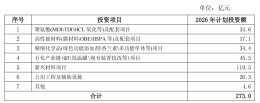
Wanhua Chemical Invests $27.3 Billion, 2026 Investment Map Revealed, $1.1 Billion Bet on Battery Materials


