"Black Gold" Arrives, Developed by China
independently developed in our country
T1200 High-Strength Carbon Fiber
Official Global Launch
The diameter is less than one-tenth the width of a human hair.
This is currently the strongest in the world.
Industrial mass production of carbon fiber
Dubbed the "strongest material on Earth"
China has also become the first country in the world to
Countries that have achieved hundred-ton scale production of this level of carbon fiber
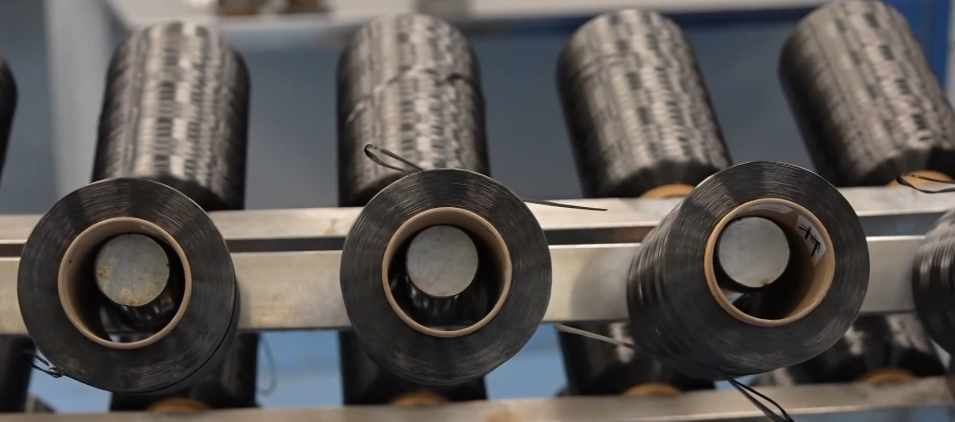
As a preferred material in fields such as aerospace, carbon fiber can be described as "both strong and flexible." It combines the "flexibility" of a fiber, being as fine as a hair yet harder than steel. Additionally, carbon fiber has strong resistance to high temperatures and corrosion, earning it the titles of "black gold," "king of new materials," and "super material on Earth."
This time, the T1200-grade ultra-high-strength carbon fiber—developed independently by China National Building Material Group—has been launched for the first time. Notably, it is not merely a laboratory prototype but an industrialized product already capable of mass production at a scale of over 100 tons. This achievement makes China the world’s first country to achieve mass production of this grade of carbon fiber at the 100-ton level.
It is reported that the diameter of T1200-grade carbon fiber is less than one-tenth that of a human hair, yet its tensile strength is ten times that of conventional steel, while its density is only one-quarter that of steel—highlighting its exceptional combination of light weight and high strength. Leveraging these outstanding properties, it finds broad application in strategic emerging industries such as aerospace, low-altitude economy, and humanoid robotics.
[Related Reading]
How strong is T1200 grade carbon fiber?
Corrosion resistant
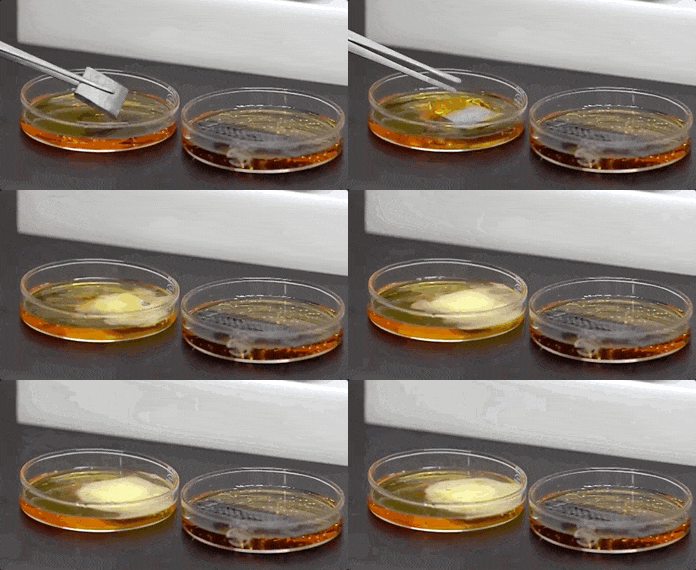
Carbon fiber undergoes carbonization at nearly 2000°C during production, making its chemical properties very stable. When a metal sheet and a carbon fiber fabric are placed in a solution mainly composed of hydrochloric acid and nitric acid (aqua regia), the metal sheet reacts violently immediately, while the carbon fiber fabric shows no change even after being soaked for a while.
Excellent fire resistance and flame retardancy
Using a spray gun for a fire test, the carbon fiber woven fabric in the middle has turned red-hot, but it does not emit smoke or catch fire, showing excellent safety performance.
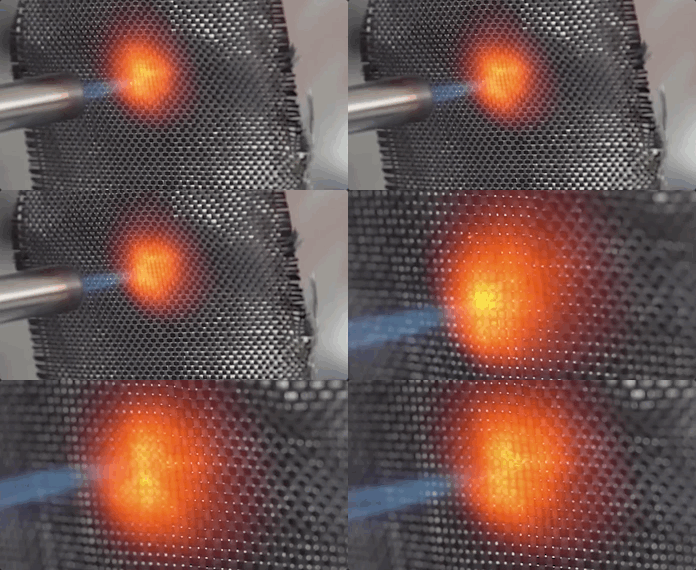
The strongest, finest, and lightest carbon fiber
Under an electron microscope magnified 800 times, human hair exhibits a scaly surface and has a diameter of approximately 67 micrometers, whereas T1200-grade carbon fiber filaments have a diameter of less than 4.5 micrometers.
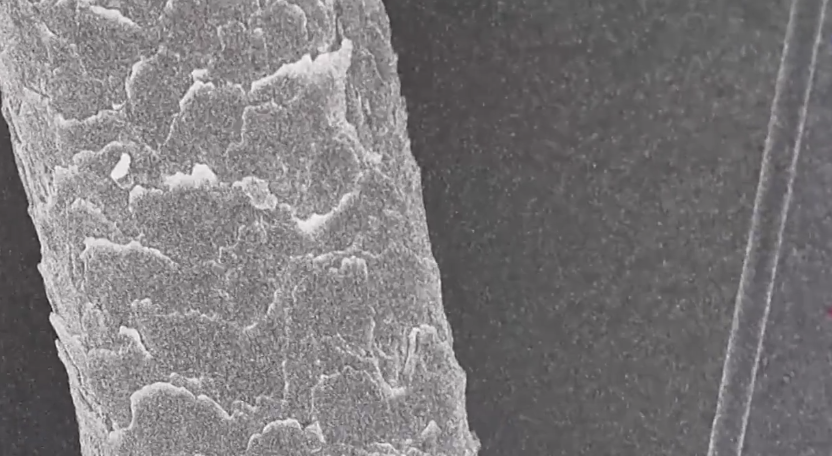
△ Human hair magnified 800x (left) vs. T1200-grade carbon fiber (right).
A carbon fiber rope, made by twisting together 120,000 carbon fiber filaments, with a theoretical diameter of less than 2 millimeters when taut, can pull a large truck loaded with 54 adults.
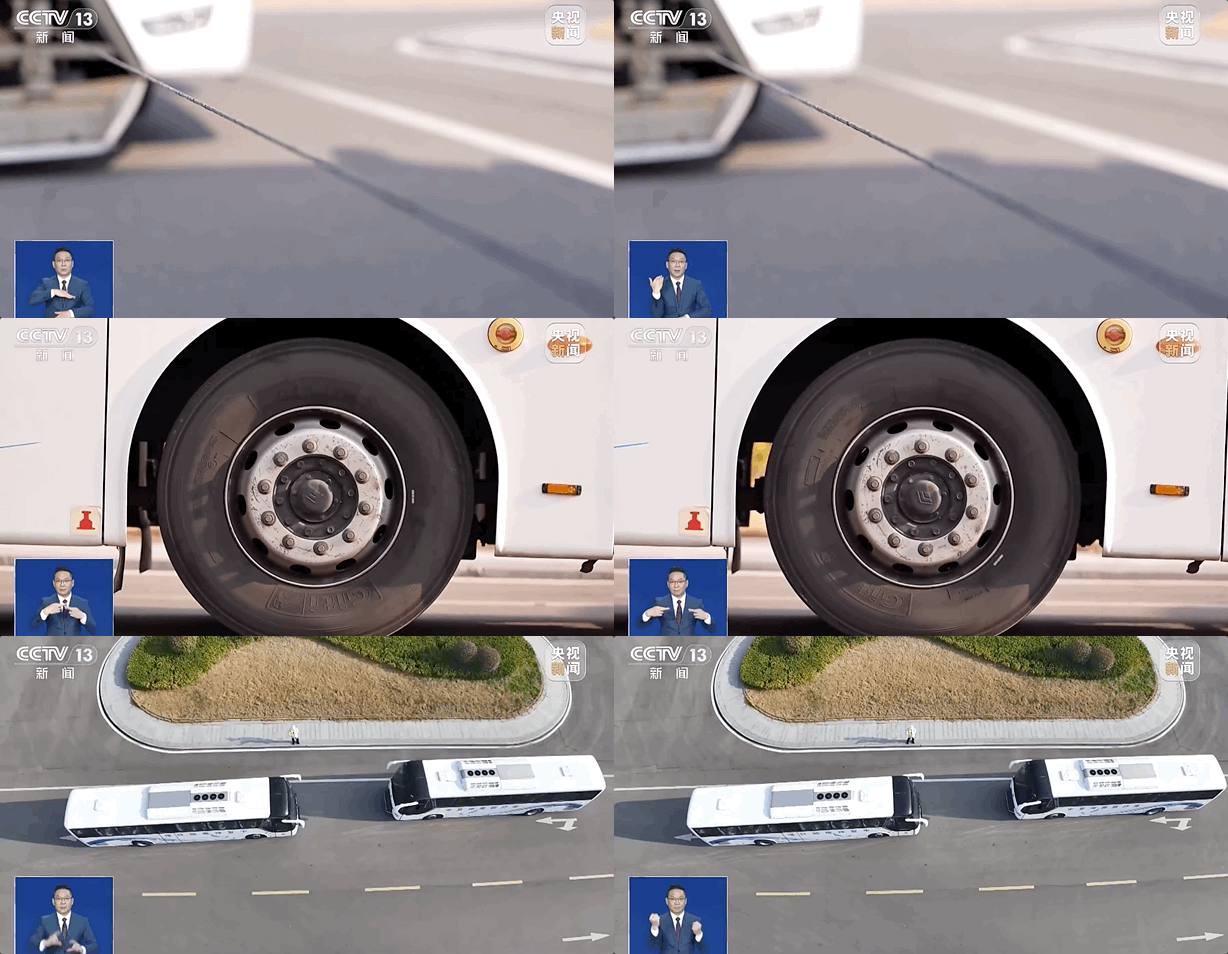
How is T1200-grade carbon fiber produced?
The production process of T1200 ultra-high-strength carbon fiber spans over 1,000 meters of high-temperature production lines and requires precise real-time control of more than 3,000 sophisticated processes.
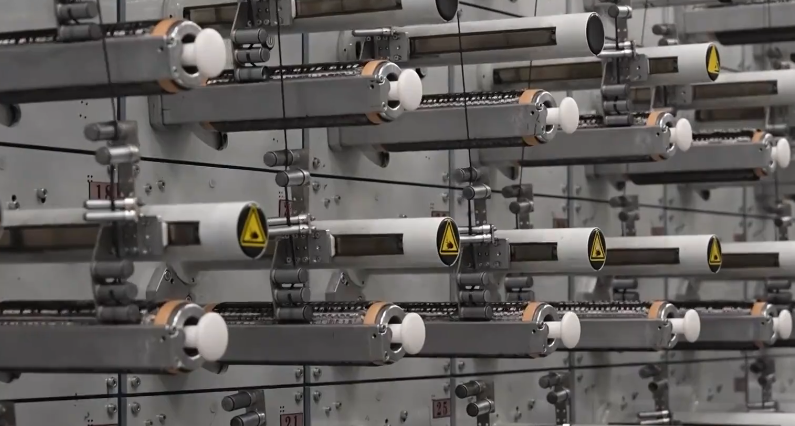
The carbon fiber production line looks like a textile workshop, with a row of white columns being the original carbon fiber yarn.
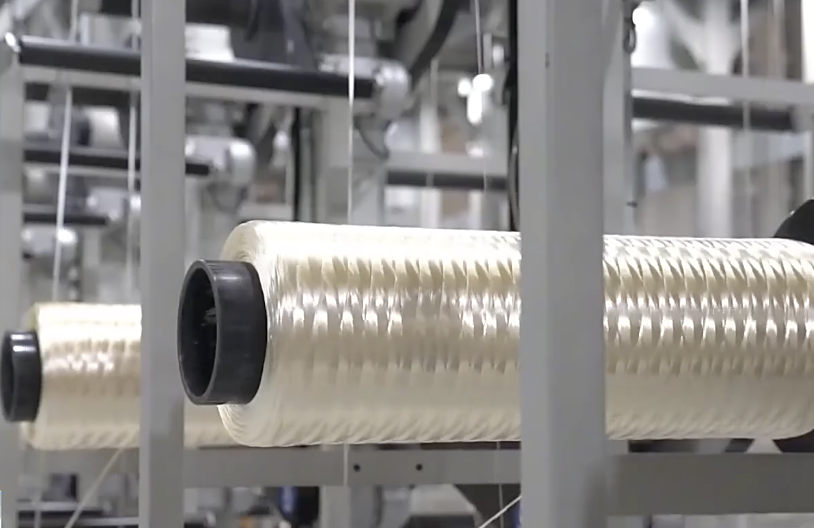
The white precursor fibers pass through the creel into the next step: pre-oxidation.
Pre-oxidation is carried out in an oxidation furnace with an internal temperature ranging from 200°C to 300°C, demanding precise temperature control—much like cooking a medium-rare steak: first gently pan-seared over low heat to ensure the interior is neither undercooked nor the exterior overly charred. Its purpose is to enhance the thermal resistance of the precursor fibers, preventing them from melting or breaking during subsequent high-temperature carbonization.
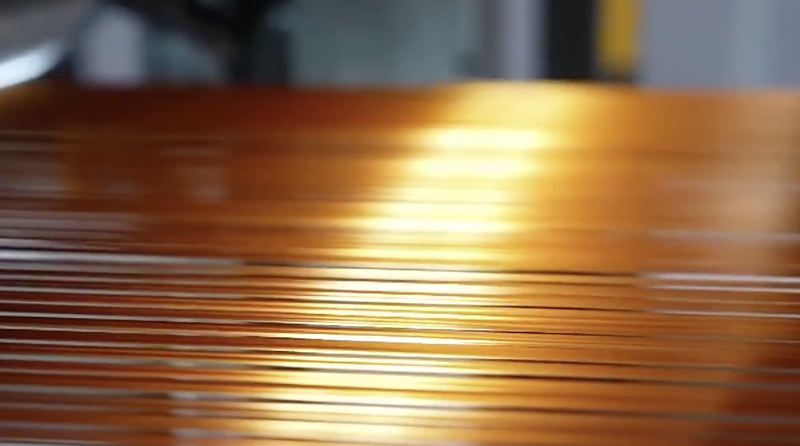
On the S-shaped reciprocating reel with over a dozen layers, the filament first entering the oxidation furnace starts from white and turns golden yellow. As the number of entries and exits from the oxidation furnace increases, the filament, moving from bottom to top, gradually darkens in color, transforming from golden yellow to deep yellow, then to brown, and finally to black.
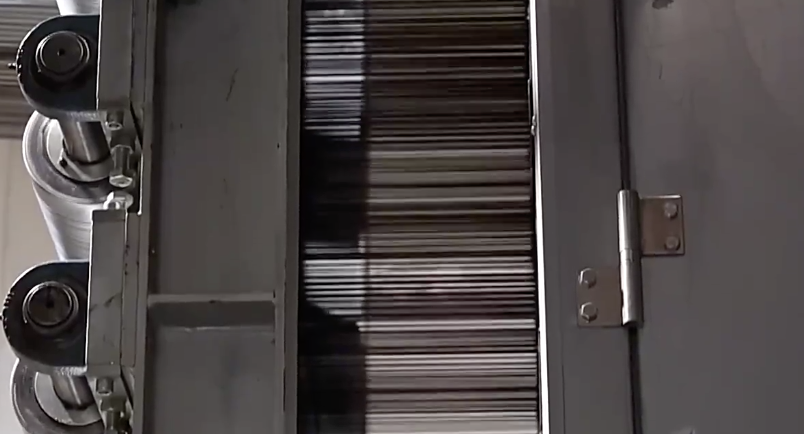
Next is the anaerobic carbonization stage. In the low-temperature furnace, the temperature ranges from 600°C to 1000°C, where most non-carbon components in the precursor fibers are removed; in the high-temperature furnace, the temperature reaches 1000°C to 2000°C, where the material undergoes true carbonization to become carbon fiber.
【Copyright and Disclaimer】The above information is collected and organized by PlastMatch. The copyright belongs to the original author. This article is reprinted for the purpose of providing more information, and it does not imply that PlastMatch endorses the views expressed in the article or guarantees its accuracy. If there are any errors in the source attribution or if your legitimate rights have been infringed, please contact us, and we will promptly correct or remove the content. If other media, websites, or individuals use the aforementioned content, they must clearly indicate the original source and origin of the work and assume legal responsibility on their own.
Most Popular
-

Continental Plans to Begin Sale of ContiTech in Early 2026
-

$4 Billion! Medtronic Makes Another Acquisition
-
BASF Delivers First Batch of Innovative Cathode Materials for Semi-Solid-State Batteries to Weilan New Energy
-
Profit and Revenue Growth Struggle to Conceal Debt Repayment Pressure; Success of Kingfa Sci & Tech's High-End Strategy Yet to Be Seen
-
Why did a century-old european dental instrument giant relocate its manufacturing hub to china?