Big Signing! SABIC Partners With Guoxuan-Affiliated Materials Company
Recently, SABIC (Saudi Basic Industries Corporation) and Anhui Chiyu New Materials Technology Co., Ltd. completed a strategic agreement: the two parties will jointly promote the implementation of battery box solutions based on PP long fiber flame-retardant materials, achieving a weight reduction of over 20% and cost optimization of about 15%.
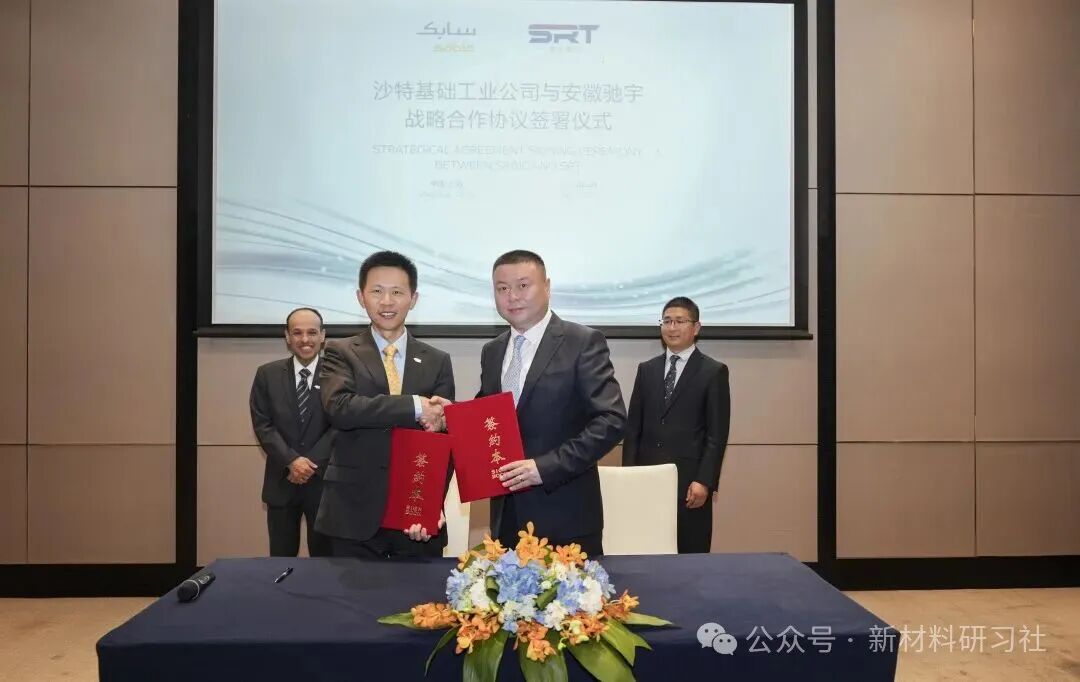
SABIC Global Automotive Business Director Xu Lei stated that this collaboration further validates the application potential of the related material solutions, and both parties will continue to drive innovation into practice in the future.
According to reports, the solution is not limited to energy storage battery systems and has explicitly expanded into the electric vehicle and robotics fields.
SABIC: Transformation of a Global Chemical Giant Accelerates
SABIC was founded in 1976 and is headquartered in Riyadh, Saudi Arabia. Saudi Aramco holds about 70% of its shares. Its business covers four major segments: polymers, specialties, chemicals, and agri-nutrients. It operates in more than 50 countries worldwide and has approximately 30,000 employees. Its brand value surpassed 2025 for the first time.5 billion dollars。
2025 Sales Revenue116.5 billion Saudi riyals(approximately US$31 billion), adjusted net income2.1 billion Saudi riyalsFree cash flow was 7.2 billion riyals (+17%). It should be noted that, due to asset disposals and weaker petrochemical prices, the GAAP net loss reached 25.78 billion riyals — the pains of transformation are still ongoing.
In the first quarter of 2026, revenue26.15 billion riyalsAdjusted EBITDA4.15 billion riyals(Month-over-month +25%), adjusted net profit816 million riyalsSABIC's Fujian petrochemical complex has completed approximately 98%, and the thermoplastic engineering plastics alloy plant has reached a final investment decision, turning a profit month-on-month.
Chiyu New Materials: Main Supplier of Gotion-Backed Battery Enclosures
Anhui Chiyu New Materials Technology Co., Ltd. was established in February 2021, with a registered capital of##200 million yuanLocated in the Hefei Circular Economy Demonstration Park, it is a subsidiary of Guoxuan Group, with Anhui Guoxuan Feidong New Energy Technology holding 95% of the shares.
The company focuses on the research and development and manufacturing of key components for new energy vehicle battery systems. The core products include power battery trays, composite material battery tops, and automotive injection molded parts. It has established a comprehensive capability that covers the entire process of battery box formation technology, surface treatment, and final assembly testing.
Upstream, Chiyu currently directly procures PP long-glass-fiber flame-retardant pellets from companies such as SABIC, while also aligning with Gotion High-Tech’s battery system design standards. Downstream, its battery housings have been supplied to domestic automakers including Chery, Geely, and Changan, and have also indirectly entered the supply chains of automakers such as JAC and Leapmotor through Gotion’s system.
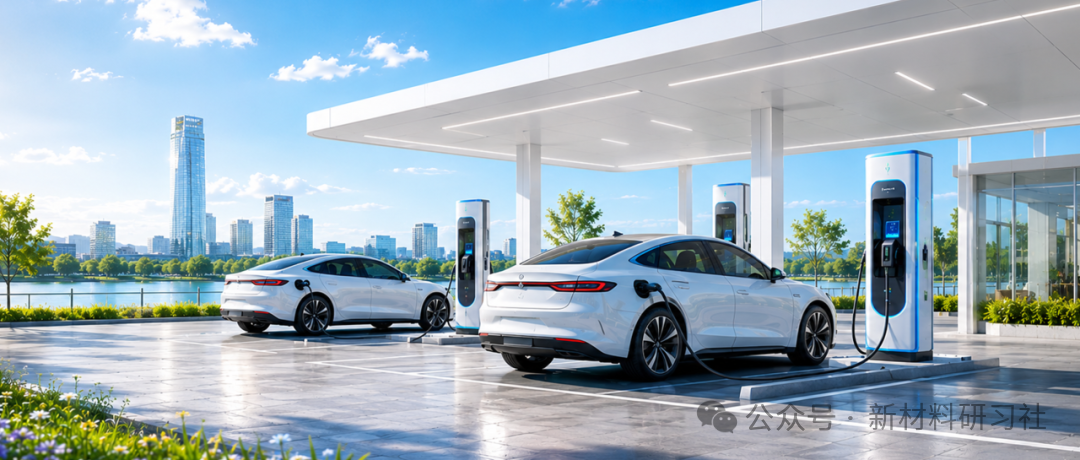
Battery Enclosure: A Leap from Metal to Polymers
The battery enclosure is the load-bearing structure of the power battery system, and it is highly sensitive to lightweight design, flame retardancy, and cost. Traditional solutions mainly use steel enclosures and aluminum alloy trays. The former offers high strength but is heavy, while the latter is lighter than steel but remains expensive and requires additional insulation treatment.
SABIC and Chiyu’s solution targets precisely this replacement window—using flame-retardant long glass fiber-reinforced PP composites to manufacture battery pack upper covers and enclosure structural components. It combines flame retardancy, electrical insulation, and corrosion resistance, eliminates the need for insulating coating processes, offers injection molding efficiency far superior to metal stamping and welding, and allows 100% recyclability of end-of-life materials.
From the perspective of material levels, PP is a general-purpose plastic. After being reinforced with long glass fibers, its strength approaches that of general engineering plastics (such as PA6). Additionally, with the incorporation of flame retardant modifications, its overall performance has entered the intersection of modified plastics and general engineering plastics, making it capable of replacing certain structural components of specialized engineering plastics in specific scenarios.
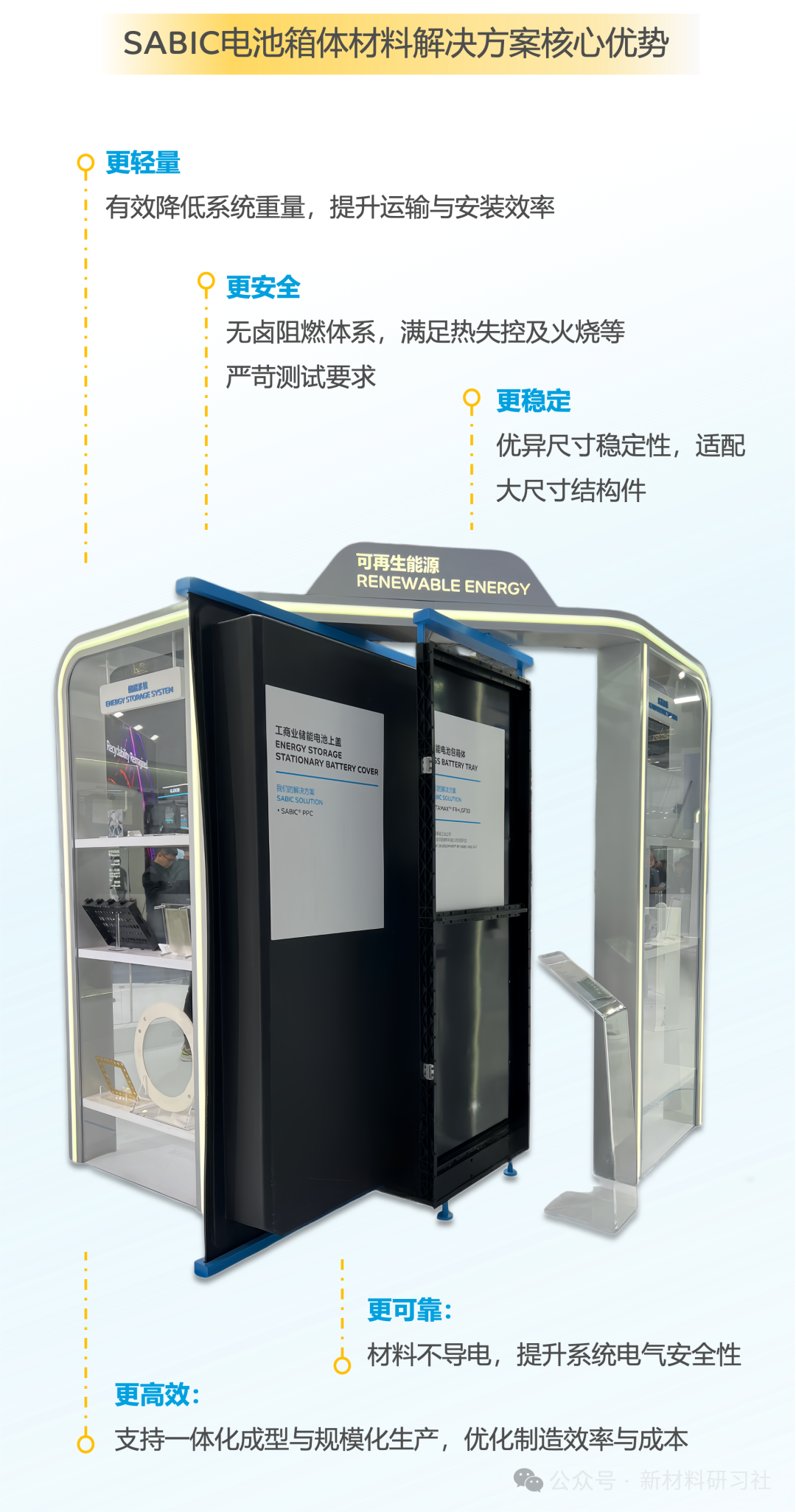
PP long glass fiber flame-retardant material
PP long glass fiber flame-retardant material (LGF-PP FR) is a modified composite material with polypropylene as the matrix, incorporating 10-25mm long glass fibers and adding halogen-free flame retardants. The long glass fibers form a three-dimensional network reinforcement structure within the matrix, providing superior impact resistance and creep resistance compared to short glass fiber reinforced PP, with a bending modulus exceeding 2000 MPa. The flame-retardant modification allows it to pass the UL94 V-0 grade test, meeting the thermal runaway protection requirements for battery enclosures. With a density of approximately 1.2g/cm³, it is only 45% of that of aluminum alloy and 15% of that of steel, making it a key material support for lightweighting in new energy vehicles.
|
|
|
|
|
|---|---|---|---|
|
|
|
|
|
|
|
|
|
|
|
|
|
|
|
|
|
|
|
|
|
|
|
|
|
|
|
|
|
|
In emerging industries, in the drone sector, flame-retardant long glass fiber-reinforced PP materials can be used for fuselage frames and battery compartment structures, meeting the dual requirements of lightweight design and flame retardancy; in the robotics sector, these materials are suitable for semi-structural components such as torso frames and joint housings, balancing load-bearing strength and weight control.
The global market has long been dominated by companies from Europe, the US, and Japan. SABIC of Saudi Arabia is the global leader; Celanese’s Nanjing base has a capacity of 80,000 tons per year; RTP focuses on customization; Japan’s Jabilufu has a capacity of 16,000 tons per year in Changshu; Avient, Mitsubishi Chemical, Mitsui Chemicals, and others have also established a presence in China.
Domestic enterprises are accelerating capacity expansion, with the domestic procurement share ofLFT-PP from first-tier suppliers to automotive manufacturers reaching 76.5% by 2025. Kingfa Technology leads the domestic market with a capacity of 126,000 tons, followed by Plit, Nanjing Julong with capacities of approximately 98,000 tons and 53,000 tons, respectively. Dawang Co., Guoen Co., CGN Juner, Huitong New Materials, and Shanghai Jieshijie also have large-scale production capabilities.
It is worth noting that, according to the "2025 China Engineering Plastics Modification Industry Development White Paper," the domestic LGF-PP capacity gap has reached.300,000 tons/yearImported products generally have a flexural modulus exceeding 2,000 MPa, while mainstream domestic products are only around 1,500 MPa—indicating significant room for import substitution in high-end long-glass-fiber-reinforced flame-retardant PP.
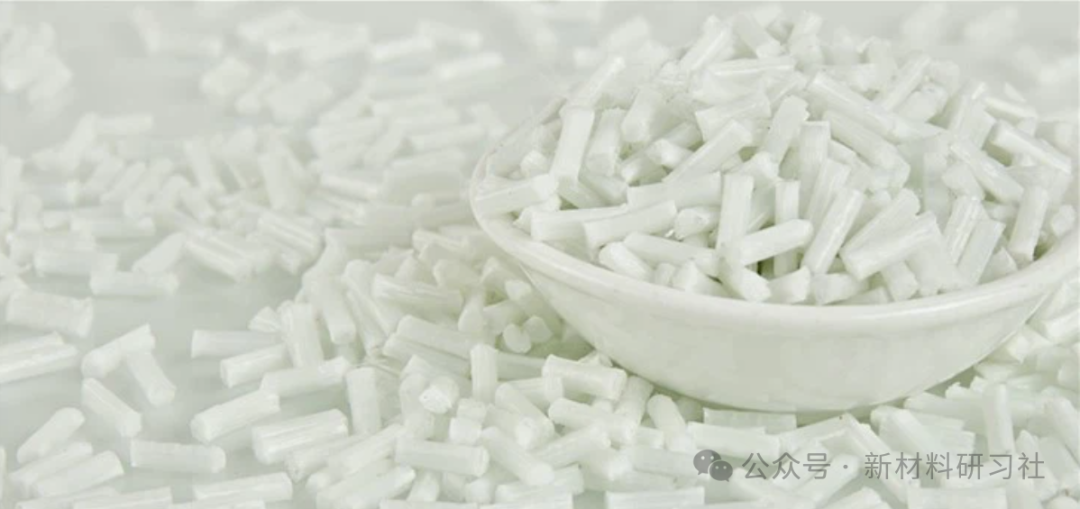
SABIC is using its Stamax brand and battery pack enclosure solutions as an entry point to form deep partnerships with domestic end-application companies such as Chiyu, pursuing a closed-loop pathway that integrates “materials + structural design + manufacturing processes.” The next step will be to see whether the domestic LGF-PP capacity shortfall can be quickly filled by companies such as Kingfa and Pret, and where the optimal balance between flame-retardant performance and cost will ultimately be found.
【Copyright and Disclaimer】The above information is collected and organized by PlastMatch. The copyright belongs to the original author. This article is reprinted for the purpose of providing more information, and it does not imply that PlastMatch endorses the views expressed in the article or guarantees its accuracy. If there are any errors in the source attribution or if your legitimate rights have been infringed, please contact us, and we will promptly correct or remove the content. If other media, websites, or individuals use the aforementioned content, they must clearly indicate the original source and origin of the work and assume legal responsibility on their own.
Most Popular
-
A Look at the Material Suppliers Behind SpaceX
-

Government's Triple Action, Enterprises' Three Arrows in Five Days, Semiconductor Reshuffle! What Signal Does Japan's Chemical Industry Release?
-
Global Chemical Giants Accelerate Production Capacity Restructuring, Dow and Celanese Optimize Global Industry Layout
-
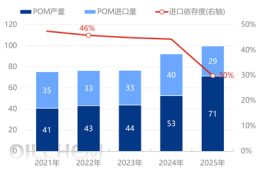
Name change without tax change: POM Anti-Dumping Duty Rate Inheritance Implemented
-
Fire breaks out at jiangsu meiside!