



Beijing Auto Show Watch | Who Is Setting the Course for Car Making in the Next Three Years?
On April 24, 2026, the 19th Beijing International Automotive Exhibition opened, featuring a record-breaking exhibition area of 380,000 square meters and 1,451 vehicles on display, including 181 world premieres and 71 concept cars.
At this Beijing Auto Show, a series of core technologies have undergone concentrated iteration—charging rates have leaped forward, cabin-and-driving fusion chips have entered mass production, the era of steer-by-wire chassis has begun, intelligent driving computing power has surpassed 1,000 TOPS, and hybrid engine thermal efficiency has set a new global record. Competition in the automotive industry is now shifting comprehensively from the vehicle level down to an ecosystem-level battle centered on core components and foundational technologies.
As electrification and intelligence competition enter a deeper phase, the key variable determining the outcome of the competition over the next three years lies hidden within the collective technological breakthroughs showcased at this auto show. The “showcasing” of core technologies by automakers and suppliers fundamentally represents a contest for technological discourse power and industry standard-setting authority for the next generation of intelligent electric vehicles.
Power Battery: From "Sufficient" to "Leap", Solid-State Batteries Begin Mass Production Curtain
In the field of power batteries, multiple fronts are being advanced simultaneously: charging speed, range, high-voltage platforms, and solid-state batteries remain the areas where automakers are competing technologically. At this year's Beijing Auto Show, the charging experience is approaching that of fuel vehicles, and the differentiation in technical approaches is becoming increasingly intense.
On the fast-charging speed front, the head-to-head competition between CATL and BYD has become one of the most closely watched technological rivalries.
A month ago, BYD unveiled the second-generation blade battery and flash charging technology at a technology conference. At the event, Wang Chuanfu, chairman and president of BYD, announced data that was equally impressive: the battery can be charged from 10% to 70% in just 5 minutes, and from 10% to 97% in 9 minutes; it can be charged from 20% to 97% in 12 minutes even at -30 degrees Celsius, and the company claimed it "holds the world's fastest charging speed record for mass-produced vehicles."
Shortly after, on April 21, three days before the auto show opened, CATL held the "Super Tech Day: Beyond the Horizon" in Beijing, launching five battery products and a new charging network in succession. The event was called "the most technologically dense launch in the company's history" by the industry.
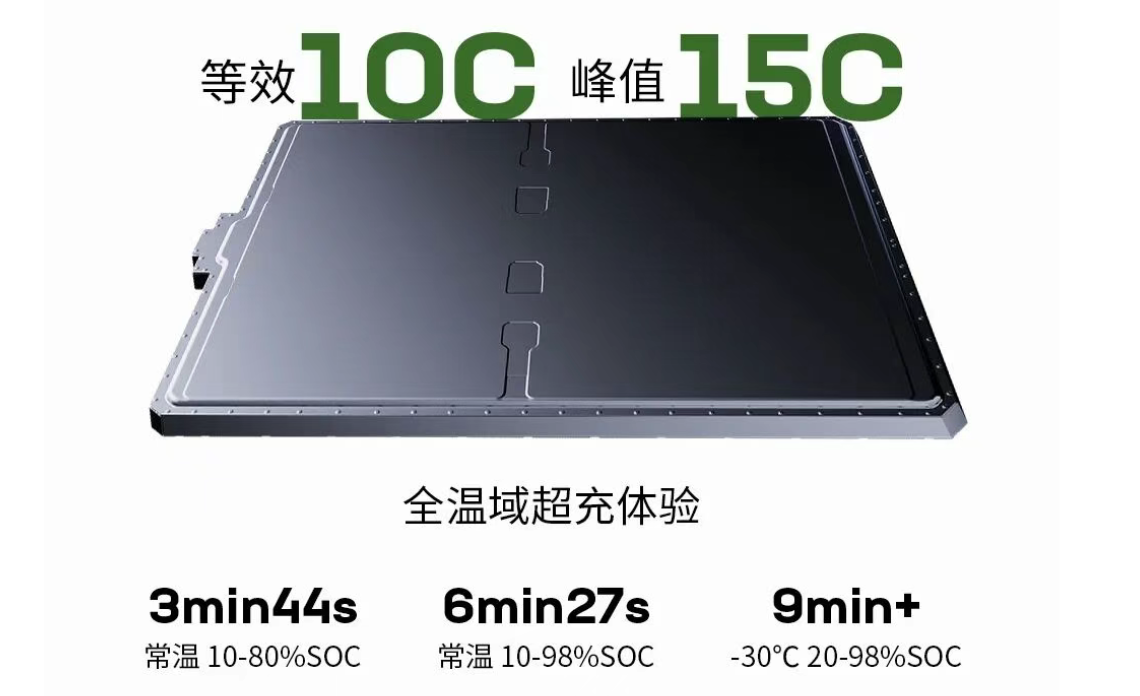
Image source: CATL
The third-generation Shenxing ultra-fast charging battery is particularly impressive in terms of charging speed: it can charge from 10% to 98% in just 6 minutes and 27 seconds at room temperature, with an ultra-fast charging capability equivalent to 10C and a peak of 15C, setting a new industry record. In extremely cold environments at -30°C, it can charge from 20% to 98% in about 9 minutes. Moreover, after 1000 cycles, the capacity retention rate remains over 90%, directly addressing previous industry concerns about ultra-fast charging damaging the battery.
In the field of solid-state batteries, although most companies are still at the semi-solid-state mass production stage, mass production roadmaps for all-solid-state batteries have already been clearly outlined by leading battery manufacturers—including CATL, BYD, and CALB—as well as automakers such as Chery, GAC, and SAIC. CATL’s condensed-phase “Qilin” battery, unveiled at its Technology Day, employs a semi-solid electrolyte, achieves an energy density of 350 Wh/kg, and delivers a range of 1,500 km; it has been confirmed for integration into multiple premium vehicle models and is expected to enter large-scale mass production and delivery in the second half of 2026. According to CATL’s prior roadmap, its all-solid-state battery is slated for small-batch production in 2027, with large-scale mass production and commercialization anticipated around 2030.
CALB unveiled two battery products at the auto show: a 400 Wh/kg solid-liquid hybrid battery and a 450 Wh/kg all-solid-state high-energy-density battery, targeting applications across electric vehicles, low-altitude economy, and humanoid robots. Gotion High-Tech plans to commence small-batch production of its all-solid-state battery production line by the end of 2026; its Jingshi all-solid-state battery achieves an energy density of 350 Wh/kg and has secured letters of intent from Volkswagen and Audi. Meanwhile, SVOLT adopts a “semi-solid-state first, all-solid-state follow” strategy and aims to launch a 500 Wh/kg all-solid-state battery by 2028.
Automakers have also announced dense timelines for the mass production of all-solid-state batteries.
At this Beijing Auto Show, BYD's sulfide-based all-solid-state battery has completed its first global real-car demonstration, with the sample achieving an energy density of up to 480Wh/kg, and a CLTC pure electric range exceeding 1218 kilometers. It is planned for small-scale vehicle installation in 2027.
Chery also plans to launch a pilot production line for all-solid-state batteries in 2026 and achieve mass-market availability in 2027; FAW Group has already completed road testing of prototype vehicles equipped with all-solid-state batteries; GAC Aion and SAIC Motor have also targeted 2026–2027 for the mass production of solid-state batteries.
Although many companies have clear plans and are actively investing in R&D in the field of all-solid-state batteries, there remains considerable industry skepticism regarding the mass production and commercialization of solid-state batteries.
EVE Energy’s battery technology-related person in charge stated to Gasgoo Auto: “Our Chengdu base has already established a solid-state battery production line, but currently it focuses on small-capacity products targeting applications such as robotics. Commercialization of automotive-grade solid-state batteries will be extremely challenging within the next two to three years; large-format cylindrical batteries will remain an optimal choice for premium vehicles over the next five years.” In his view, even if solid-state batteries eventually achieve commercialization, their adoption will depend on cost and specific application requirements—for instance, urban commuters do not require ultra-long driving range and thus will not blindly opt for expensive solid-state batteries. Multiple technological pathways are expected to coexist over the long term.
Alongside improvements in battery energy density and charging efficiency, competition in high-voltage platforms is intensifying. At this year’s auto show, the 800V high-voltage platform has virtually become a “standard feature” for mid-to-high-end battery electric vehicles. While the 800V platform is becoming mainstream, the “rat race” in high-voltage platforms is further escalating—technologies such as 900V and 1000V platforms are making concentrated debuts.
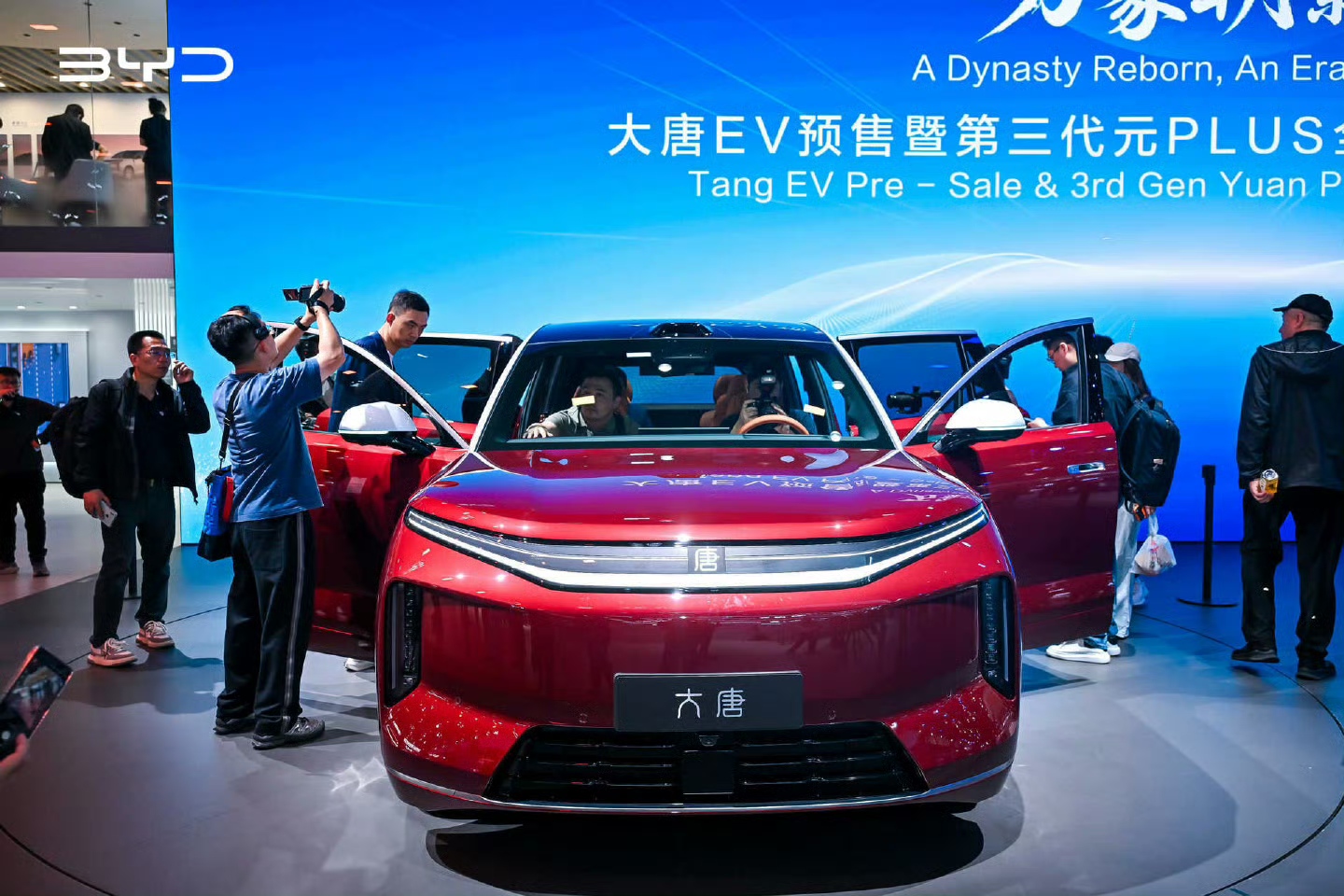
Image source: @BYDAuto
For example, BYD has launched its full-domain 1000V high-voltage platform, and the flagship SUV "Tang" EV equipped with this platform has started pre-sales at this year's Beijing Auto Show; NIO has partnered with onsemi to upgrade to a 900V architecture, and its flagship model ES9 featuring a 900V silicon carbide platform was unveiled at the auto show; Leapmotor showcased its flagship MPV D99 at the Beijing Auto Show, which adopts a 1000V electrical architecture paired with a 115kWh battery pack, enabling a 350-kilometer range boost in just 15 minutes of charging.
At the same time, 800V technology is moving from high-end models to the mainstream market. The Zhijie R7/S7 and Shangjie Z7 series all come standard with 800V high-voltage silicon carbide power, and joint venture brands like the Nissan NX8 also come standard with an 800V ultra-fast charging platform.
The widespread adoption of high-voltage platforms has introduced new technical requirements for silicon carbide power devices, high-voltage insulating materials, and vehicle thermal management.
Automotive Intelligence: AI Redefines the Chassis; Cockpit-Driving Integration Marks the End of the “Feature-Stuffing Era”
As car manufacturers have been intensively competing on large in-cabin screens and intelligent driving features over the past few years, the key message from this Beijing Auto Show is: the focus of intelligent competition is shifting from "impressive features" to "AI-driven overall experience," with technologies such as wire-by-wire chassis and cabin-driving integration becoming new technological high points.
Zhao Lijin, Deputy Secretary-General of the China Society of Automotive Engineers, pointed out: “Through three to five years of technological iteration, intelligent chassis have entered the inaugural year of mass production of steer-by-wire chassis.”
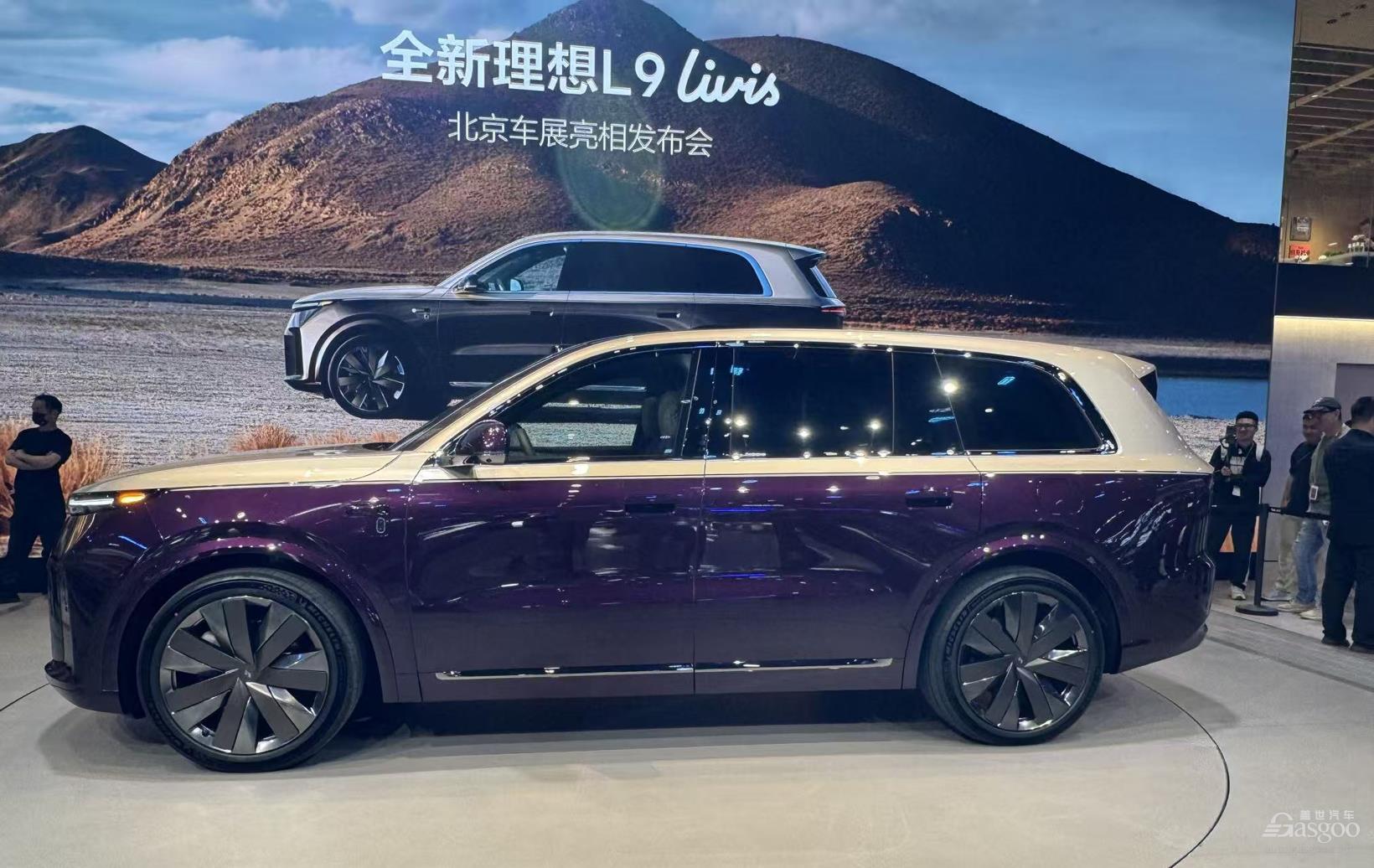
The new Li L9 Livis is a typical example of this trend, featuring an 800V active suspension and a fully electronic controlled chassis system developed over four years. It integrates electronic steering, four-wheel steering, and full electronic mechanical braking. According to Li's official information, the system has eliminated traditional mechanical connections, achieving full electronic control of the chassis, and providing millisecond-level execution response capability for high-level autonomous driving.
Liu Liguo, Senior Vice President of Whole-Vehicle Electric R&D at Li Auto, explained the underlying technical logic in an interview: “Full-drive-by-wire chassis and embodied intelligence share deep technical origins… Chassis electrification and intelligence constitute an indispensable actuation foundation for achieving L4-level autonomous driving.”
It further predicts that the electrification of the chassis is an inevitable trend, stating, "gradually electrifying systems such as the suspension, braking, and steering, and only through electrification can true intelligence be achieved."
NIO and XPeng have also presented their own solutions in the field of intelligent chassis. The NIO ES9 is equipped with the "Tianxing Intelligent Chassis," integrating steer-by-wire, active suspension, and rear-wheel steering technologies. The XPeng GX, meanwhile, is the world’s first mass-produced vehicle to feature Bosch’s next-generation steer-by-wire system and incorporates XPeng’s self-developed X-VMC Intelligent Fusion System, which deeply integrates brake-by-wire, rear-wheel steering, and intelligent all-wheel drive.
In an interview, NIO's Li Bin raised the intelligent chassis to a strategic level, stating that intelligent chips, a comprehensive operating system, and the intelligent chassis are becoming new standards for assessing the technical level of intelligent electric vehicles, and referred to these as NIO's "new three major components."
As Li Bin said, the full-scenario operating system is becoming the new technological standard for intelligent electric vehicles. As one of the key technical paths of the full-scenario operating system, cockpit and driving integration has become a clear industry consensus at this auto show.
At this Beijing Auto Show, the cabin-driving integration solutions have been densely showcased, no longer a solo performance by a single company, but a collective action spanning the entire industry chain.
In terms of vehicle manufacturers, Leapmotor's D19 is the first in the industry to launch with dual Qualcomm 8797 central domain control chips, achieving a super-coordinated cabin and driving architecture; Xpeng has already implemented a unified cabin and driving architecture on its main models, unifying the scheduling of cabin interaction and assisted driving perception and decision-making; Dongfeng, on the other hand, has reached a platform-level cooperation with Black Sesame Intelligence to jointly create the first locally produced unified cabin and driving mass production platform.
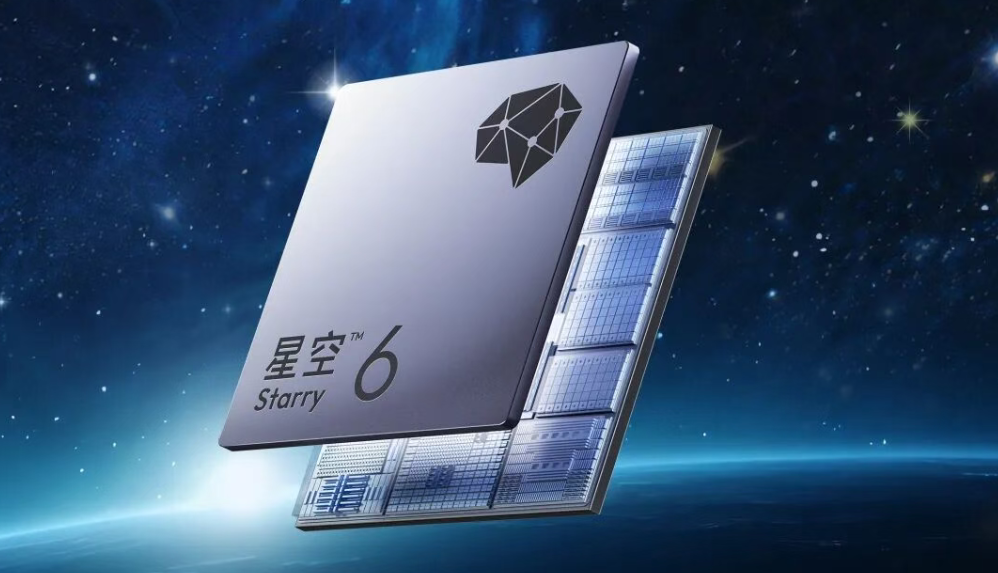
Image source: Horizon
Horizon Robotics provides an integrated hardware-software cabin-to-chassis fusion solution for automakers through its "Stellar" chip and "KaKaClaw" operating system; Chehe Tech's single-chip cabin-to-chassis fusion solution based on the Snapdragon 8775 has already achieved the world’s first mass production in the Arcfox brand under BAIC; and SiEngine has launched its "Dragon Eagle Two" AI cockpit chip, capable of covering full-scenario requirements for both cockpit and cabin-to-chassis fusion. On the overseas Tier 1 front, Bosch has developed a cabin-to-chassis fusion platform based on Qualcomm’s SA8775P chip, which is already ready for mass production.
From the supply chain to the entire vehicle, the integration of cabin and driving is accelerating towards large-scale implementation. Wang Kai, CEO of XinQing Technology, said in an interview with Gasgoo and other media that there are not many companies that have truly achieved the integration of cabin and driving chips. He further stated that true cabin and driving integration chips are suitable for mid-to-low-end models, "because it integrates the cabin and driving into one domain, which can eliminate the need for boxes and many peripheral devices, thus reducing the cost." High-end vehicles, however, still mostly use two independent chips to ensure ultimate performance and safety.
He also emphasized that chip suppliers must provide integrated solutions featuring system-level innovation. “Such chips may be slightly more expensive per unit than other chips, but their cost is still lower than that of purchasing multiple discrete components,” said Wang Kai.
According to Wang Kai, SiEngine Technology's "Dragon Eagle One" chip has already achieved a single-chip solution integrating cockpit, driving assistance, and parking functions. The Geely Galaxy E5 model adopts this solution, using one chip to handle all three functions—cockpit, ADAS, and parking—significantly reducing system costs.
The implementation of the aforementioned intelligent applications heavily relies on underlying chip computing power. At the 2026 Beijing Auto Show, the competitive landscape in the chip sector is exhibiting increasing diversification: international giants continue to hold positions in the high-end market, while domestic chip suppliers are accelerating their catch-up efforts… The core dimensions of competition are shifting from “peak TOPS” to a comprehensive assessment encompassing “effective computing power, cost, and ecosystem.”
International giants still dominate the high-end segment of large-scale computing power. For example, NVIDIA's Thor chip delivers up to 2,000 TOPS per unit and remains the preferred choice for many premium vehicle models, especially those pursuing advanced autonomous driving capabilities. However, domestic Chinese chips are increasingly demonstrating advantages in cost, localized support, and integrated cockpit-and-driving solutions.
Horizon showcased multiple chip products, including "Starry Sky" and the Journey series, at this Beijing Auto Show, covering the full range of needs from low-level ADAS to high-level intelligent driving. Among them, the Starry Sky 6P, as China's first cabin-driving integrated whole-vehicle intelligent chip, is based on a 5nm automotive-grade process, with BPU computing power of 650TOPS.
Black Sesame Technologies' Huashan A2000X, with single-chip computing power exceeding 1,000 TOPS, was also prominently showcased at the auto show. Meanwhile, SiEngine unveiled its 5nm automotive-grade AI cockpit chip "Dragon Hawk II" during the event, offering 200 TOPS of AI computing power and scheduled to begin compatibility integration in Q1 2027, addressing full-scenario requirements for AI cockpits and integrated cockpit-driving systems.
Notably, mass-produced vehicles equipped with in-house developed chips made a concentrated debut at this auto show. XPeng’s Turing AI chip will enter mass production in Q2 2025, making its debut on the G7 model, and will subsequently be rolled out across XPeng’s new vehicle lineup; the GX model, showcased at this auto show, is also equipped with the chip and has already secured an OEM order from Volkswagen. NIO’s Shenji NX9031 chip debuted in March 2025 on the ET9, and the ES9 now features it as standard across its entire lineup. Li Auto’s in-house chip development is comparatively later: the L9 Livis, unveiled at this auto show, is the first model to be equipped with two of Li Auto’s self-developed Mach 100 chips, delivering a combined computing power of 2,560 TOPS.
As new players collectively emerge as forces in chip self-development, automakers are reclaiming partial control over the "most powerful brain" of smart electric vehicles from international suppliers like NVIDIA and Qualcomm. Meanwhile, domestic chip companies such as Horizon Robotics, with their comprehensive product portfolio covering L2 to high-level autonomous driving and significant cost advantages, continue to firmly dominate the mid-to-high volume market and supply numerous small and medium-sized automakers.
Technology: Back to the "table," self-reliance
At the 2026 Beijing Auto Show, hybrid gasoline vehicles made a strong comeback, signaling an industry trend worthy of attention: in the Chinese automotive market, hybrid gasoline vehicles may become a powertrain option on par with battery electric, plug-in hybrid, and extended-range electric vehicles.
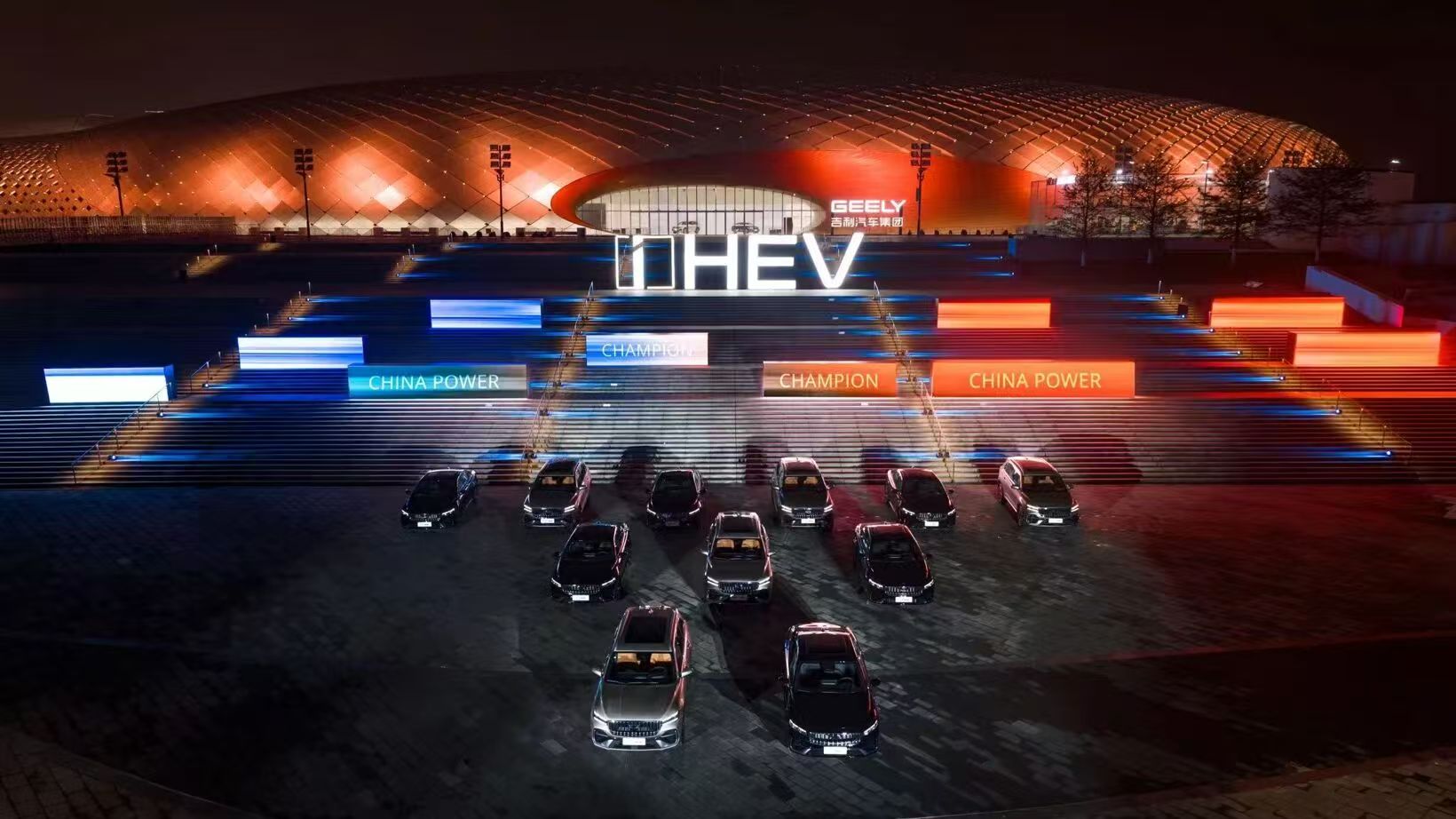
Image source: Geely Automobile
On April 13, Geely Auto officially unveiled its new generation of oil-electric hybrid technology—i-HEV Smart Hybrid. This hybrid technology is regarded as Geely's core technology brand for gaining influence in the hybrid field, achieving technological independence, and competing globally. It is scheduled to be first deployed on key models including the Xingrui, Xingyue L, Boyue L, and Emgrand. At this year's Beijing Auto Show, the 5th-generation Emgrand equipped with this hybrid system made its debut.
The Geely i-HEV smart hybrid system has been certified by the China Automotive Research Center, with a thermal efficiency of 48.41%, which is the highest level of production engine globally. Under WLTC conditions, electric drive dominates more than 80% of the operating conditions, and the engine runs 27% less time compared to traditional hybrids. The vehicle can operate in pure electric mode at speeds below 66 km/h.
In actual testing, the 5th-generation Geely Emgrand i-HEV achieved a remarkably low comprehensive fuel consumption of just 2.22 liters per 100 kilometers, earning it the Guinness World Record for the lowest fuel consumption among mass-produced vehicles—reducing fuel consumption by over 12% compared to global benchmark hybrid vehicles such as the Toyota Prius. This breakthrough shattered the Japanese hybrid industry’s 30-year technological dominance in high-efficiency engine development, signifying that China’s hybrid technology has entered the world-class tier.
Ren Xiangfei, Chief Engineering and Technology Scientist of Geely Group, pointed out that Japanese hybrid technology is essentially an evolution from the fuel technology route, focusing on energy efficiency but with average power performance; while i-HEV Zhiqing hybrid is developed from electric hybrid technology, "in terms of safety standards, design concepts, and intelligence, it is designed following the same logic as that of new energy vehicles and plug-in hybrid vehicles," thus possessing a generational advantage.
Vice President Li Chuanhai of Geely Group stated at a technology launch event that fuel vehicles still have a huge market, especially in the global market. "Different users' understanding of new energy vehicles, driving habits, and the uneven development of charging facilities in different regions all indicate that fuel vehicles still have a significant market," he said.
It is precisely based on this global market situation that Geely's move is not an isolated case, as other domestic automakers such as Changan, Great Wall, and GAC have also launched oil-hybrid solutions this year.
GWM adopts a systematic approach to launch the "Super Intelligent Hybrid HEV." In early 2026, based on the GuiYuan platform, GWM introduced a native AI all-power platform that is compatible with five power forms: PHEV, HEV, BEV, FCEV, and ICE, aiming to innovate the underlying architecture to achieve "one car, multiple power options, one car sold globally." The WEY V9X, built on the GuiYuan S platform, covers three power forms: pure electric BEV, plug-in hybrid PHEV, and hybrid HEV, and is equipped with the Super Hi4 hybrid system.
Changan Automobile showcased its Blue Whale Super Engine hybrid system at this auto show, and launched the fourth-generation CS75PLUS Blue Whale Super Engine and Eado Blue Whale Super Engine models. The system was officially released in March this year, with the engine boasting a maximum thermal efficiency of 44.28%, and real-world urban fuel consumption as low as 3L. The pre-order price for the fourth-generation Eado Blue Whale Super Engine has dropped to 79,900 yuan, directly placing HEV compact cars in a price range below 80,000 yuan.
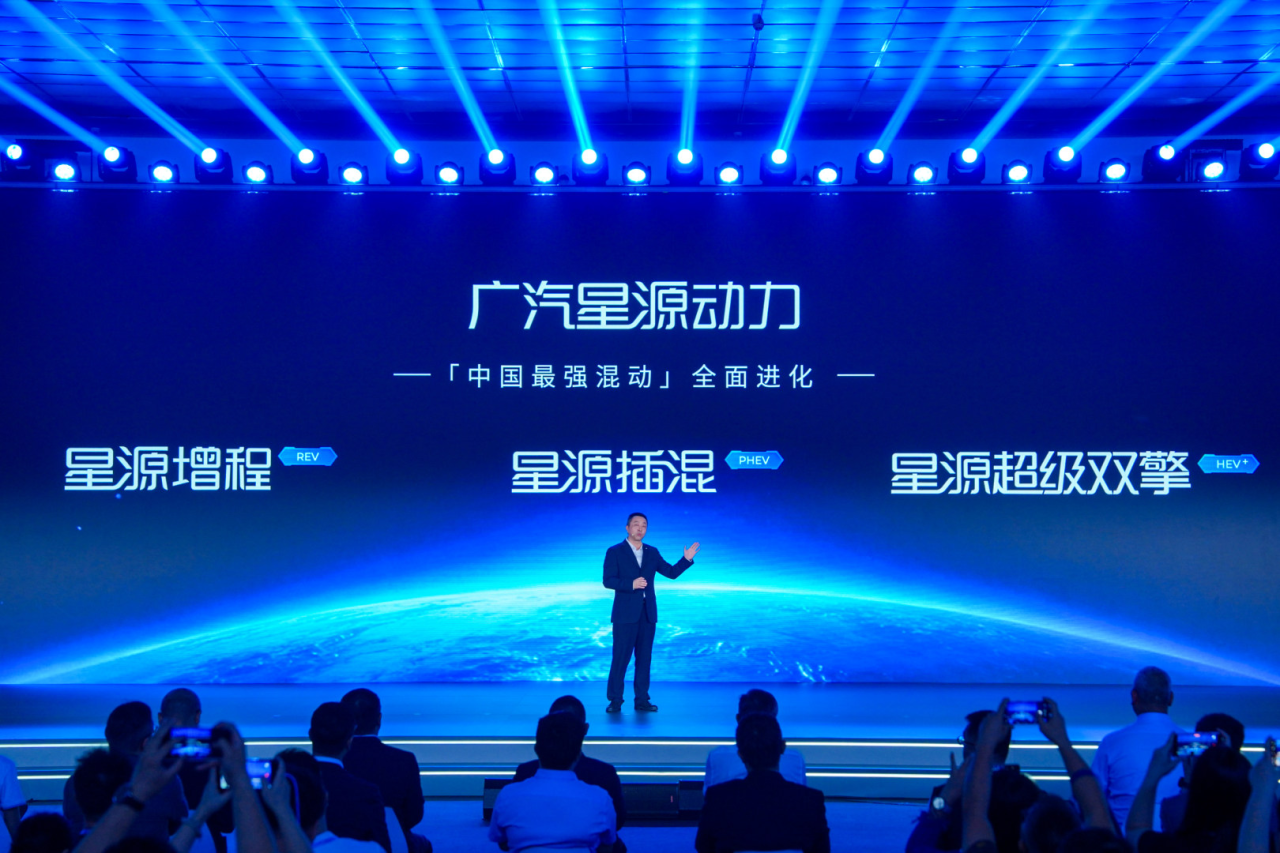
Image source: GAC Group
GAC Group also unveiled the Xingyuan Powertrain Technology System at the GAC Technology Day in April, covering three technical routes: Xingyuan Plug-in Hybrid, Xingyuan Range-Extended Electric, and Xingyuan Super Dual-Engine. Among them, the Xingyuan Super Dual-Engine is a gasoline-electric hybrid (HEV+) system under GAC’s new-generation Xingyuan Powertrain Technology brand, achieving over a 40% reduction in fuel consumption compared to conventional internal combustion engine vehicles.
Since the beginning of this year, especially ahead of the Beijing Auto Show, numerous automakers have placed hybrid electric vehicles (HEVs) at the core of their strategic roadmaps and accelerated their implementation, systematically showcasing related achievements at the Beijing Auto Show. Once marginalized due to policy shifts and long criticized as "popular in concept but lacking in sales," HEVs are now regaining a central strategic position among domestic Chinese brands.
The 2026 Beijing Auto Show sent a clear signal: industry competition is escalating from a contest over complete vehicles to a systemic battle centered on core components and foundational technologies. Suppliers are defining technological roadmaps at the foundational level, OEMs are striving through in-house R&D to claim control over upper-layer definitions, and multinational giants are accelerating localization efforts to adapt to Chinese standards across multiple domains.
As Li Bin pointed out: “The competition in the intelligent electric vehicle sector has entered the final stage of systemic capability,” which is precisely the driving force behind multiple parties vying for technological discourse power.
In the next three years, Chinese solutions are expected to accelerate into industry benchmarks in areas such as intelligent chassis, high-voltage platforms, solid-state batteries, and cabin-driving integration. However, whether these cutting-edge technologies can be transformed into sustainable cost advantages and user experiences remains the key to winning this critical phase of the core technology "arms race."
【Copyright and Disclaimer】The above information is collected and organized by PlastMatch. The copyright belongs to the original author. This article is reprinted for the purpose of providing more information, and it does not imply that PlastMatch endorses the views expressed in the article or guarantees its accuracy. If there are any errors in the source attribution or if your legitimate rights have been infringed, please contact us, and we will promptly correct or remove the content. If other media, websites, or individuals use the aforementioned content, they must clearly indicate the original source and origin of the work and assume legal responsibility on their own.
Most Popular
-

Layoffs, Divestments, Plant Closures While Pouring Billions: BASF Undergoes Major Transformation!
-

Ascend Adipic Acid Hit By Force Majeure, Market Expects Supply Resumption In Mid-September
-

Raw Material Supply Shortage! INEOS Phenol Declares Force Majeure on Phenol and Acetone Businesses
-
South Korea initiates anti-dumping investigation against Chinese PVC suspension resin! The target is Tianjin Bohua and Wanhua Chemical. How to break through?
-

Sixth national procurement set to be implemented: A “Reshuffling” Moment for the $10-Billion Medical Device Market


