Basf tpu innovations in athletic running shoes
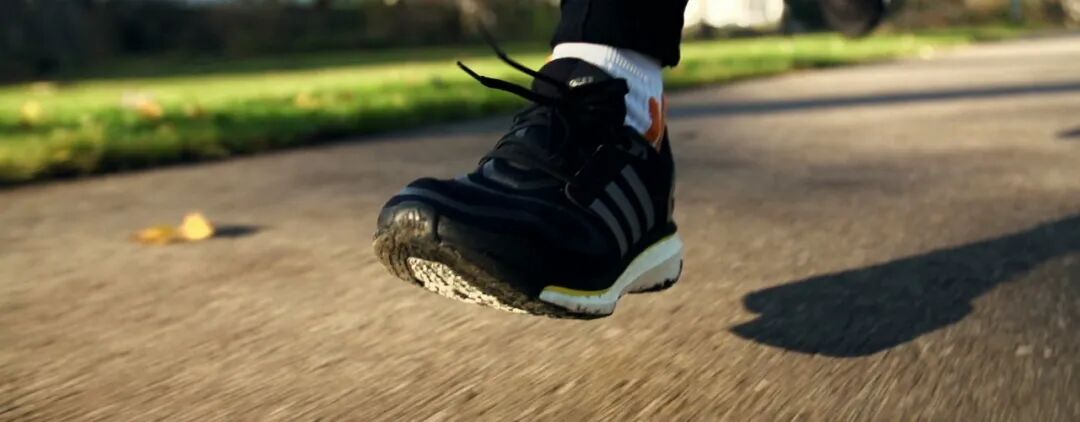
Ten years ago, BASF researchers revolutionized running shoes with Infinergy® foam material: this first expanded thermoplastic polyurethane is embedded in the sole and can return part of the consumed energy to the runner, thereby improving their performance. Today, many companies trust this durable foam material, which will also play a pioneering role in sustainability.
In early November, extreme athlete Jonas Deichmann arrived in New York, greeted not only by enthusiastic fans but also by a journey of approximately 10,500 kilometers, scorching heat, strong winds, torrential rain, and thunderstorms. He crossed the United States twice consecutively, first cycling from the East Coast to the West Coast, and then hiking back. During his "Double Crossing of America" journey, the 36-year-old long-distance world record holder stated that the bicycle seat played a crucial role. "At such a vast distance, the saddle is extremely important: if chosen incorrectly, the ride becomes very painful." The special feature is that the core of his saddle uses Infinergy® foam material, which has transformed the riding experience. This material maximizes pressure relief, absorbs road impacts and vibrations, and is particularly friendly to the back. During extreme trips, the route inevitably passes through gravel roads or uneven terrain, highlighting the advantages of this material. Deichmann appreciates Infinergy for making the saddle "comfortable and lightweight."
Potentially Huge Small Beads
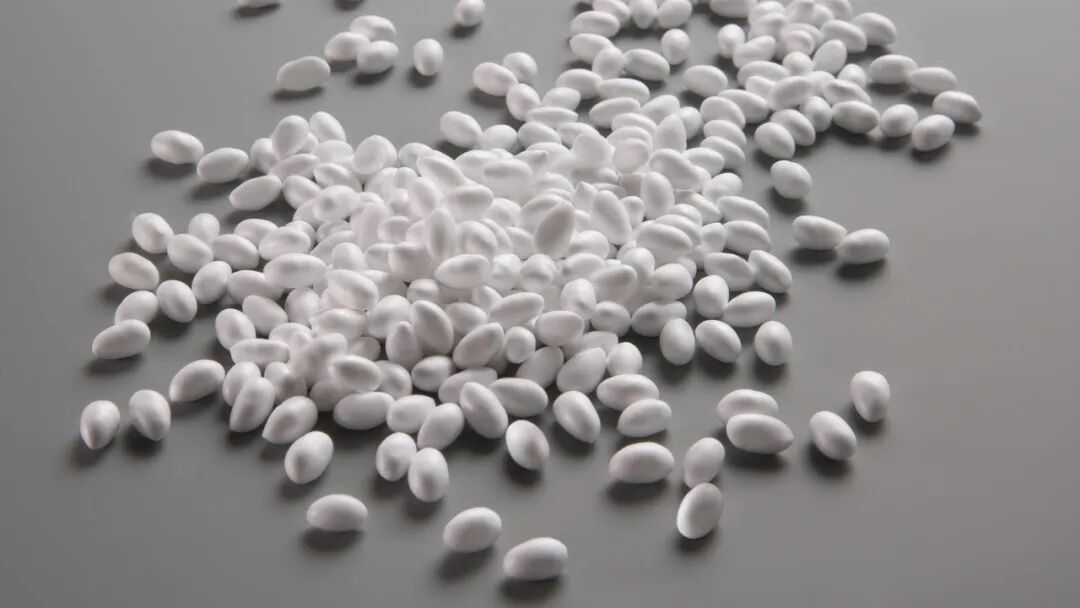
Runners have long discovered the benefits of Infinergy. In the past, they had to choose between hard racing shoes and very soft, highly cushioned training shoes. This changed a decade ago when Adidas and BASF jointly developed the Boost model, with an Infinergy sole that brought a new level of elasticity and cushioning. "This allowed us to find the ideal balance between lightness and stability in shoes," said Martin Vallo, Technical Development Manager for Infinergy at BASF Polyurethanes. Runners experienced energy return that other shoes couldn't provide, thanks to an expanded thermoplastic polyurethane, known as E-TPU. To produce E-TPU, BASF employees foam, heat, and apply pressure to TPU particles, causing them to expand like popcorn. Their volume increases tenfold, forming oval foam beads with tiny closed-cell bubbles inside, providing elasticity and the so-called rebound effect. This enables up to 75% of the energy to be returned to the runner.
In 2023, Adidas launched the Ultraboost Light running shoes, which are the lightest Boost running shoes by Adidas to date. The midsole is 30% lighter than the original Boost, while still providing optimal elasticity and cushioning performance.
This also makes event manager and enthusiastic athlete Teresa Herman firmly believe, as she participated in the Palma Marathon in Mallorca in mid-October wearing Adidas Ultraboost running shoes. "I love running, it makes me feel free," she explained. "Moreover, running clears your mind and can be started almost anytime, anywhere." For this, she said, all you need is the right clothes and the right running shoes. "Everyone's needs are slightly different, but good cushioning is essential," she believes. Besides being lightweight, she particularly appreciates the special sensation brought by Ultraboost running shoes, which is the rebound effect. "The material feels very energetic, and you can feel abundant energy when jogging."
Comfortable? Of course!
This is not only beneficial for athletes. This foam material has also proven its value in work shoes and safety shoes. On the one hand, they must be able to withstand impacts or liquids, but on the other hand, they must also be comfortable. After all, they are often worn for long distances every day. The shoe manufacturer Elten, located in the Lower Rhine region of Uedem, uses Infinergy materials to support its "Wellmaxx" series of shoes. "If employees wear the wrong safety shoes at work, sooner or later it will cause pain," explained Nadine Claassen, Elten's chief orthopedic shoemaker. "That's why we wanted to develop a shoe that could both protect the foot and provide comfort. Infinergy opened up entirely new possibilities for us here. With this special cushioning effect, the pressure on ligaments and joints is much less than with other safety shoes. Additionally, the lightweight materials and springs ensure that the wearer consumes less energy while walking."
For Martin Vallo, a foam materials expert at BASF, this material still has enormous potential: "It can be used in any situation that requires low weight, excellent mechanical properties, and high long-term durability across a wide temperature range." So far, Infinergy has been applied in products such as sports fields, playground surfaces, bicycle inner tubes, and tennis rackets.
The future is cyclical.
BASF researchers have ambitious plans for Infinergy. "The future of footwear is circular," said Lionel Gschwind, Senior Manager of Sustainable Projects at BASF Infinergy. "That's why we have launched a comprehensive circular economy program and are committed to achieving carbon-neutral production by 2050." Today, Infinergy can already recycle, with less waste generated during production and less fossil energy required. Alternative raw materials are also used: for example, natural gas is replaced by biogas to reduce the product's carbon footprint. A biomass balance method, verified by independent reviewers, allocates the share of renewable materials to the corresponding products.
In addition, fossil-based raw materials can be replaced with pyrolysis oil. To achieve this, plastic waste such as used tires, which previously could not be reused, is chemically recycled. In this process, chemical bonds in large molecules break down under high temperatures, forming smaller molecules that can be used to manufacture new products. This raw material is also allocated to materials according to the mass balance method.
Therefore, Infinergy is continuously being improved. “For example, new polymers could be envisioned for use in the production process,” said Martin Walro. “Or more durable coatings could be developed for the foam particles, inspired by automotive paints.” In the future, these particles themselves will be smaller and more compact. “Sometimes, the solution is closer than you think,” Martin Walro said, but if not, researchers need to have persistence and resilience. To motivate themselves, looking at extreme athlete Jonas Dichmann's latest bestseller may be helpful, as he is not easily intimidated by any challenge. He firmly believes, “The limit is myself.” His fans can look forward to seeing how and where he proves this in his next tour.
【Copyright and Disclaimer】The above information is collected and organized by PlastMatch. The copyright belongs to the original author. This article is reprinted for the purpose of providing more information, and it does not imply that PlastMatch endorses the views expressed in the article or guarantees its accuracy. If there are any errors in the source attribution or if your legitimate rights have been infringed, please contact us, and we will promptly correct or remove the content. If other media, websites, or individuals use the aforementioned content, they must clearly indicate the original source and origin of the work and assume legal responsibility on their own.
Most Popular
-

Mexico Imposes Tariff Up to 36% on Cross-Border E-Commerce Products, Effective January 1, 2026; Plastic Shows Partial Fluctuation Today
-
4.5 Million Tons! Wanhua Chemical Dominates Globally in MDI, Heavy Investment in Battery Materials Spurs New Storm
-

Trump Delays Tariff Increase on Furniture, Cabinets, and Vanities
-
Wanhua Chemical Invests $27.3 Billion, 2026 Investment Map Revealed, $1.1 Billion Bet on Battery Materials
-
Back-to-back major joker moves! covestro’s 1.32 million ton mdi dual-line expansion and hdi acquisition reshape global polyurethane landscape