



Appliances and Cars Aiming for Transparent PP! Material Substitution Accelerates, Additives Become Key to PP Industry Upgrading
Polypropylene (PP), a fundamental resin with an annual global production exceeding 80 million tons and widespread application across virtually all end-use sectors, is undergoing a quiet yet far-reaching technological revolution—not driven by breakthroughs in polymerization processes, but by additives.
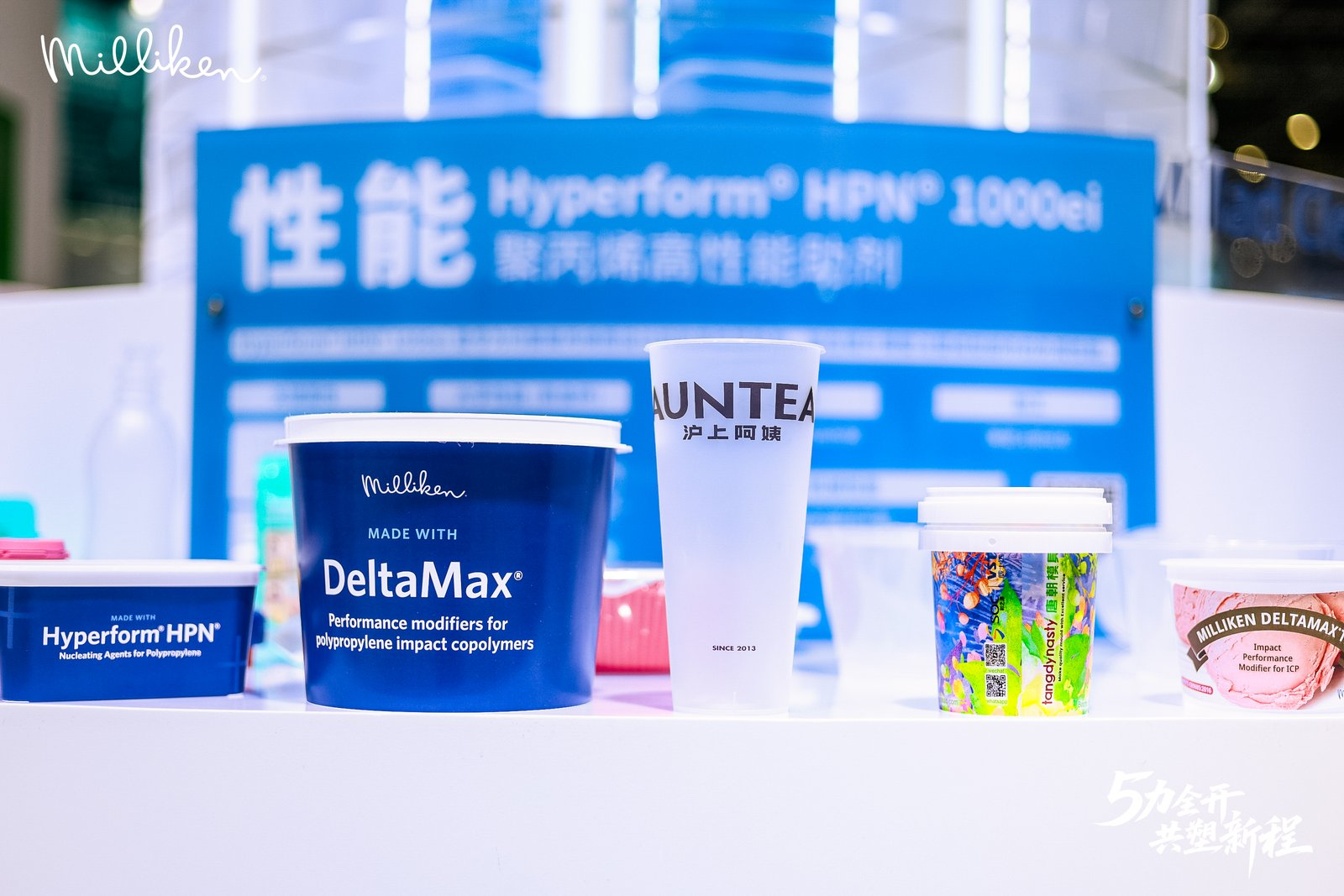
Transparent PP Faces a Critical Challenge: How to Achieve High Compliance, High Recyclability, and High Clarity Simultaneously?
Today, the transparent PP market faces an apparently contradictory proposition: consumers demand products that are increasingly transparent, regulators require fewer additives, and circular economy policies mandate the inclusion of ever more recycled content in products. Each of these three directions, taken alone, poses a challenge to conventional clarifying agents.
With over 160 years of history, Milliken provided the answer at CHINAPLAS 2026: Millad ClearX™ 9000—the fifth-generation clarifier technology.
The core breakthrough of this product lies in achieving extremely high transparency with a very low addition amount. The typical addition amount of mainstream transparency agents is around 2000 ppm; ClearX 9000 can reach the "extreme transparency" level with as low as 400 ppm. From the addition amount vs. transparency curve, ClearX 9000 enters the "excellent transparency" range at 400 ppm, while mainstream transparency agents struggle to achieve the same effect even when added beyond 3000 ppm.
A low addition level means low migration—this directly affects compliance thresholds for food packaging and medical devices. Milliken explicitly states that Millad ClearX 9000 has received U.S. FDA approval, is currently undergoing European regulatory certification, and Chinese regulatory approval is also on the agenda.
More notably, Millad ClearX 9000 exhibits excellent compatibility with PCR (post-consumer recycled material). Publicly available laboratory data from Milliken shows that a 50:50 blend of virgin polypropylene (PP) and recycled PP retains transparency performance meeting application requirements. Historically, incorporating recycled material often led to inconsistent interactions among different clarifiers, significantly compromising both appearance and performance of the final products. In contrast, ClearX 9000 is compatible with previous-generation clarifier technologies, enabling higher incorporation levels of recycled content and thereby supporting downstream sustainability initiatives.
Low addition levels also bring a frequently overlooked green dividend: the transparent dosage required per unit of product is reduced, leading to lower transportation costs and greenhouse gas (GHG) emissions during transportation, as well as a reduced demand for storage space. In supply chain systems where carbon footprint management is increasingly stringent, this is far from a trivial add-on.
Comprehensive Material Substitution Accelerates: PP Replacement Wave Hits Multiple Sectors Including Home Appliances and Automobiles
What can transparent PP replace? This is a question more worthy of discussion than “Is the clarifying agent good or not?”
In the food and consumer goods packaging sector, PS (polystyrene) was once the dominant material for transparent containers. However, PP (polypropylene), when compounded with high-efficiency clarifying agents—used in conjunction with impact modifiers—not only achieves transparency comparable to PS but also offers superior heat resistance and recyclability. Milliken notes that the ongoing market trend toward transparent PP substitution for appliance components—such as refrigerator liners and drawers—is accelerating. This shift is driven by two key factors: first, PP’s sustainability advantages over PS, enabling higher incorporation levels of recycled content; and second, additive technologies centered on clarifying agents, which have enabled PP to achieve unprecedented combinations of transparency and physical performance.
In the home appliance sector, Milliken and Sinopec have jointly developed a high-impact, ultra-transparent polypropylene (PP) material, which has already been applied to refrigerator drawer components, replacing traditional polystyrene (PS) and achieving dual improvements in performance and low carbon footprint. In the future, we will see an increasing number of material substitutions—not limited to refrigerators—but across the entire home appliance industry.
The alternative directions in the automotive field offer even more imaginative space. Traditional automotive taillights and lamp covers commonly use PC (polycarbonate) and ABS, which have inherent high transparency and high gloss characteristics. However, in recent years, both domestic and foreign car manufacturers have begun to experiment with using transparent PP to make automotive taillights and rear spoilers, adopting a diffused lighting solution—maintaining the required transparency while reducing the sharpness of the light, resulting in a more premium visual effect. Milliken is closely tracking this trend and collaborating deeply with OEMs and Tier 1 suppliers, jointly developing solutions based on customized formulation requirements.
A broader substitution trend originates from the low-altitude economy, smart home appliances, and consumer electronics sectors. With its low density and excellent processability, polypropylene (PP) is increasingly replacing ABS in applications such as robotic vacuum cleaner bodies and drone airframes, driven by advances in clarifying agents and nucleating agents. It can be confidently stated that, with performance enhancements achieved through additives, PP offers the industry greater opportunities to replace other materials.
Additive Empowerment for Hardcore Upgrade: Multi-Category Solutions to Compensate for PP Performance Shortcomings
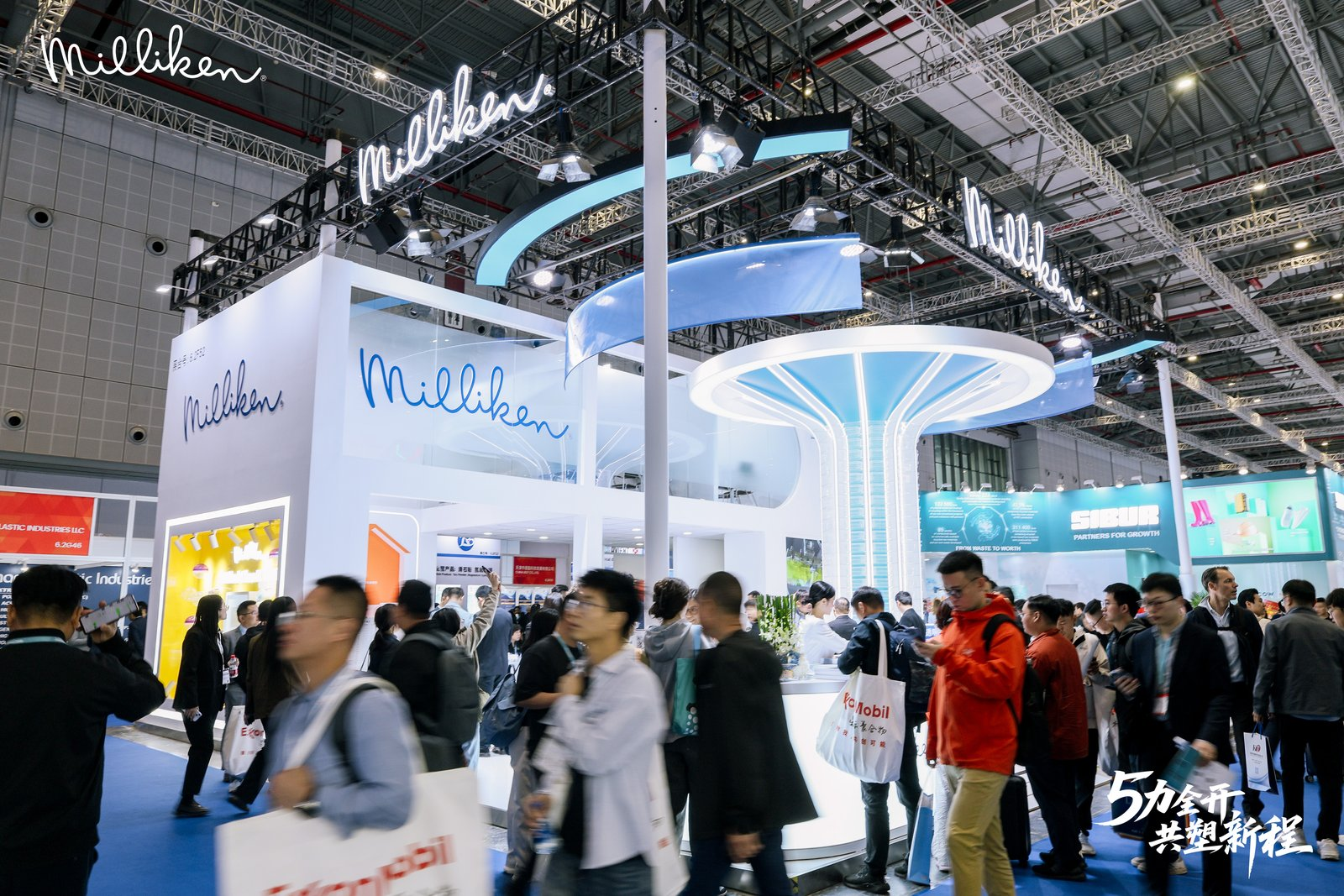
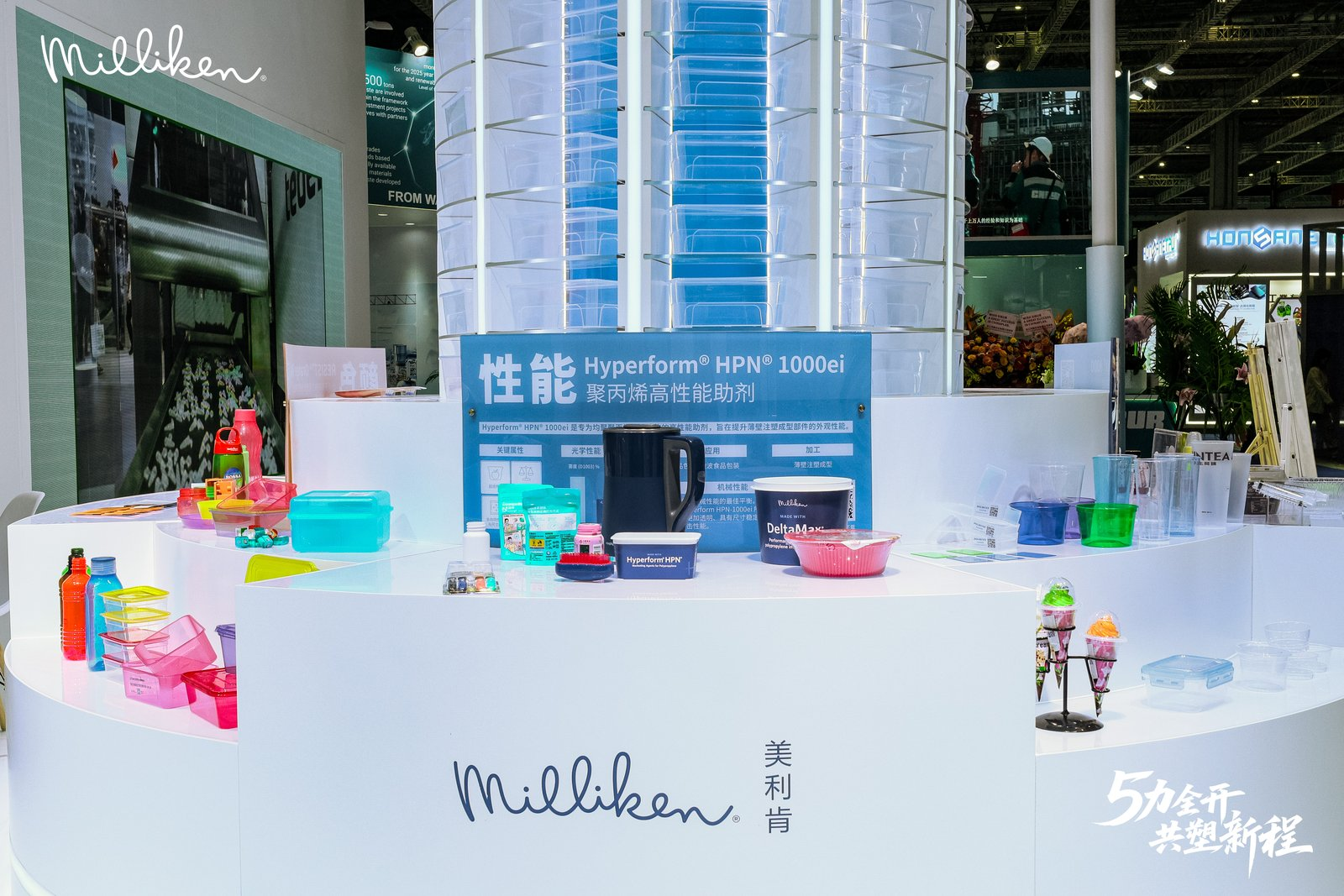
In addition to the Millad ClearX™ 9000 clarifier, Milliken also introduced four other strategic new products at CHINAPLAS, forming a complete solution covering the core needs of polyolefin modification. Here, we focus on introducing three of the new products.
Hyperform® HPN® 1000ei(High-Performance Additives)Specifically designed for thin-wall injection molding, tailored to meet the rapidly growing market demand for thin-wall injection molding products in China. In testing with 0.66 mm-thick ready-meal cups, haze (ASTM D1003) is only 27%, significantly outperforming both the control sample (71.3%) and the previous-generation product HPN 20E (42.4%). Additionally, it delivers isotropic shrinkage and a faster crystallization rate, achieving an optimal balance between aesthetics and mechanical performance.
DeltaMax® T9(ICP Impact Modifier)In order to enhance the impact resistance of impact copolymer polypropylene (ICP), T9 differs from the traditional approach of "adding more rubber". By altering the rheological properties of the polymer and optimizing the dispersion of existing rubber particles, T9 improves impact strength without increasing the rubber content. After adding T9, the notched Izod impact strength (ISO 179, room temperature) can be increased by over 200%, with improvement ranges from +277% to +357% across various resin grades; the ASTM D256 Charpy impact test shows an increase of +240% to +250%. The product also complies with the Chinese national standard GB 9685-2016 and FDA conditions A-H, making it suitable for food contact packaging.
EXPLAZ™ HT-34D(Laser Marking Additive)Laser marking functionality for engineering plastics (e.g., nylon), offering high-temperature resistance to meet the requirements of permanent part identification and traceability in high-end applications such as automotive and electronics.
Notably, T9 and ClearX 9000 form a functional synergy: the former addresses the resilience shortcomings of ICP, while the latter tackles transparency and recycled material compatibility. Both are dedicated to minimizing the performance gap between recycled and virgin materials, embodying Milliken's technological vision of "making consumers unaware of the difference between PCR and virgin materials."
When the topic of polypropylene (PP) overcapacity is repeatedly discussed within the industry, the real solution may not lie in the capacity itself, but in using technological innovation to continuously add value to this basic material—making it more transparent, more durable, more compliant, and more sustainable, and enabling it to enter more high-value applications. Meiliken's appearance at CHINAPLAS 2026 offers exactly this perspective: in the second half of the PP industry, additives will be the key driver for material upgrading, expansion of high-end applications, and resolution of the overcapacity dilemma.
Editor: Lily
【Copyright and Disclaimer】This article is the property of PlastMatch. For business cooperation, media interviews, article reprints, or suggestions, please call the PlastMatch customer service hotline at +86-18030158354 or via email at service@zhuansushijie.com. The information and data provided by PlastMatch are for reference only and do not constitute direct advice for client decision-making. Any decisions made by clients based on such information and data, and all resulting direct or indirect losses and legal consequences, shall be borne by the clients themselves and are unrelated to PlastMatch. Unauthorized reprinting is strictly prohibited.
Most Popular
-

A Look at the Material Suppliers Behind SpaceX
-
Government's Triple Action, Enterprises' Three Arrows in Five Days, Semiconductor Reshuffle! What Signal Does Japan's Chemical Industry Release?
-
Fire breaks out at jiangsu meiside!
-
Name change without tax change: POM Anti-Dumping Duty Rate Inheritance Implemented
-
Ethylene: Production Capacity Accelerates Expansion, Global Industry Landscape Is Being Reshaped


