



2026 Agricultural "Green Card": How Modified PBAT Film Opens Soil Purification Mode?
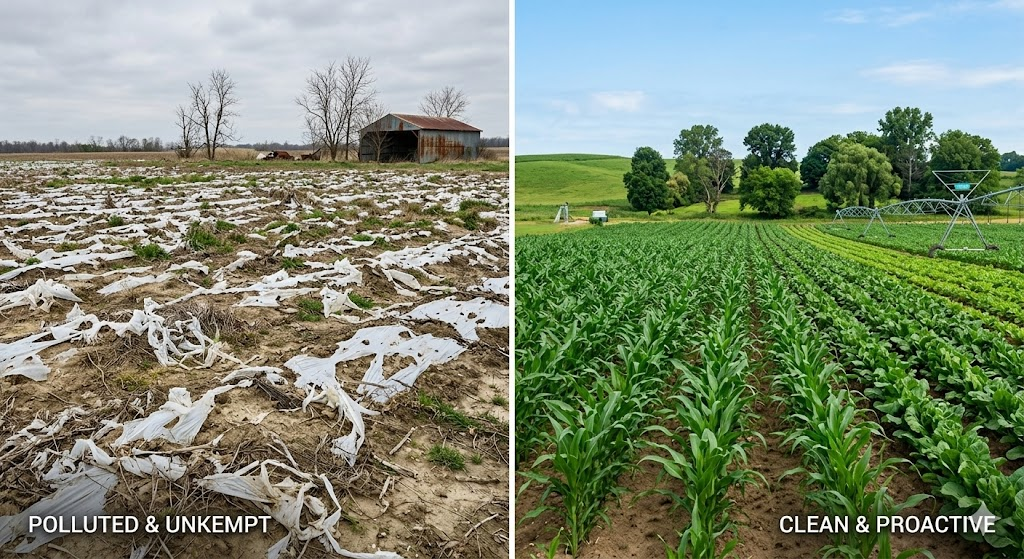
Today, amid the modernization of agriculture, agricultural plastic mulch is known as the “second skin” of crops. By raising soil temperature, retaining soil moisture, and suppressing weed growth, it has made great contributions to stable and increased crop yields.
However, traditional polyethylene (PE) mulch films have extremely high molecular weights and highly stable chemical properties, making them unable to degrade under natural conditions for hundreds or even thousands of years. As the years of use increase, the fragmented film residues left in the soil block capillary water movement, hinder root development, and ultimately lead to reduced crop yields. This “white pollution” has become an undeniable blight on arable land.
To address this pain point, today we will explore, from the perspective of polymer materials science, the “star player” of recent years—fully biodegradable mulch film—and see how it achieves a remarkable transformation from a “farmland killer” to an “ecological guardian” through ingenious polymer modification technologies.
01
A high standard and strict requirements for a plastic film.
For the specific application of agricultural mulch films, polymer materials are by no means simply a matter of “being able to rot away.” According to the latest agricultural application standards and actual farmland conditions, qualified biodegradable mulch films must overcome the following major challenges:
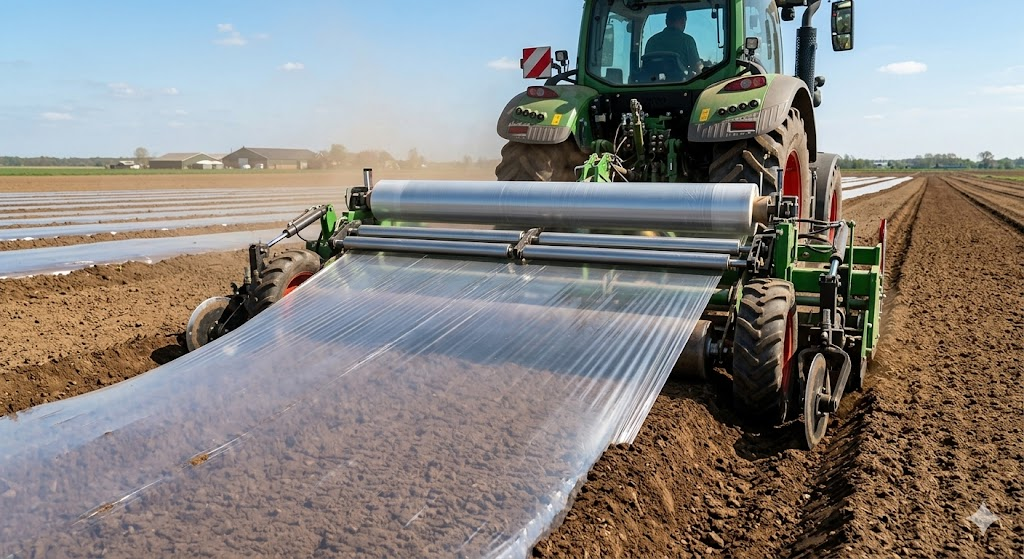
Stringent mechanical properties: Modern agriculture heavily relies on mechanized film laying. The plastic film must possess extremely high tensile strength (both longitudinal and transverse) and elongation at break to withstand the enormous tension during tractor towing without rupture.
Excellent photothermal performance and water vapor barrier properties: The core function of the mulch film is the “greenhouse effect.” The material must have good light transmittance (to allow sunlight to enter) and low water vapor permeability (to prevent the loss of soil moisture through evaporation).
"Precision degradation like a 'time bomb': This is the challenge of polymer design! The material must maintain molecular weight stability during the crop growth period (for example, corn typically requires 90-120 days) to perform its covering function; and after the crop harvest, it must rapidly undergo chain cleavage of macromolecules for complete degradation."
02
Why PBAT?
Among the many biodegradable polymers (such as PLA, PBS, and PHA), why did we specifically choose poly(butylene adipate-co-terephthalate) (PBAT)?
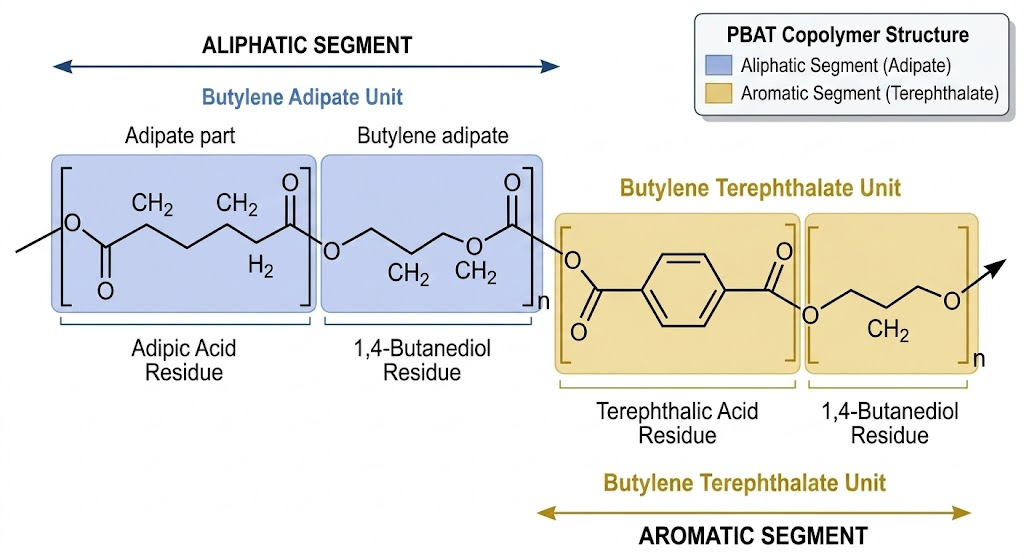
From a molecular structure perspective, PBAT is a highly sophisticated “block copolymer”:
Aliphatic chain segment (butanediol adipate): endows the material with excellent biodegradability and outstanding flexibility.
Aromatic chain segment (butylene terephthalate): provides the material with good thermal stability and mechanical strength.
However, there are no perfect people, and there are no perfect polymers either. The pain point of pure PBAT is that it is too soft!
Its elastic modulus is relatively low, and when processed into an ultrathin film (about 0.01 mm thick), its rigidity is insufficient; moreover, due to the hydrophilicity of its molecular chains, its water vapor barrier performance is significantly inferior to that of conventional PE mulch film.
03
When PBAT Meets Nanocellulose (CNC) and Chain Extender
Since going it alone is difficult, we must introduce the core magic of polymer science—material modification. To balance strength, barrier properties, and degradability, we adopt a dual modification strategy combining reactive extrusion compatibilization with nanofiller composites:
Introduce “bio-rebar”:
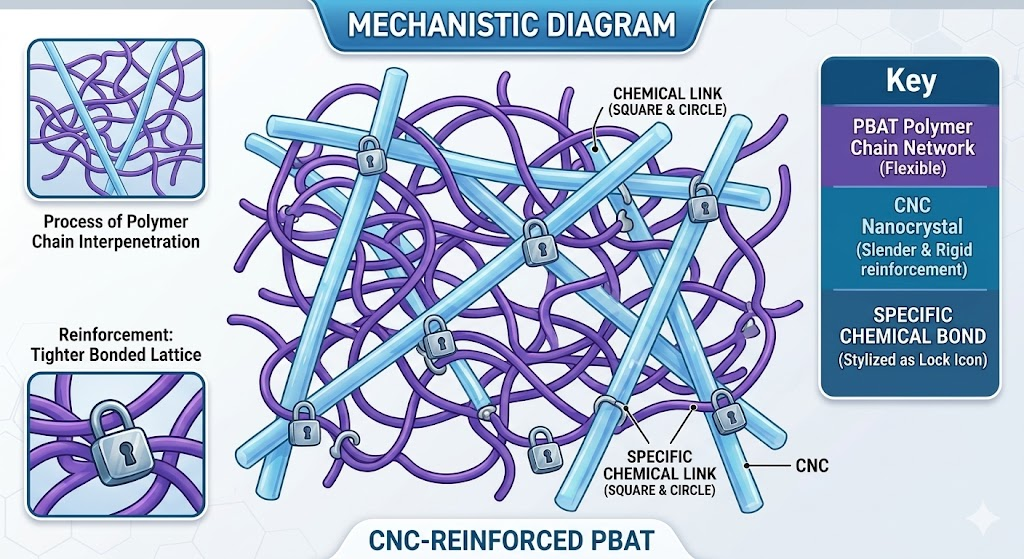
Nanocellulose (CNC): We incorporated plant-derived cellulose nanocrystals (CNC) into the PBAT matrix as a reinforcing filler. CNC exhibits extremely high stiffness, an ultrahigh aspect ratio, and complete biodegradability. They act like microscopic “steel bars” embedded within PBAT, a “flexible concrete,” significantly improving the tensile strength and modulus of the film by restricting the movement of macromolecular chains [2].
Reactive chain extension and capacity enhancement.
PBAT and CNC are inherently somewhat incompatible due to differences in polarity. If they are simply mixed together in an extruder, aggregation will occur. Therefore, we added a multifunctional chain extender containing epoxy groups (such as ADR).
Under the high-temperature shear of a twin-screw extruder, the epoxy groups of the chain extender undergo ring-opening grafting reactions simultaneously with the terminal carboxyl groups of PBAT and the hydroxyl groups on the CNC surface. This is equivalent to building “chemical bridges” between the originally incompatible two phases, greatly enhancing the interfacial adhesion.
Surface hydrophobic treatment: moisture retention and water conservation
To compensate for the poor water vapor barrier property of PBAT, we pretreated CNC with a silane coupling agent to impart hydrophobicity to its surface. The modified filler created a tortuous path effect within the PBAT matrix, lengthening the route for water molecules to penetrate the film and thereby significantly enhancing the mulch film’s moisture barrier performance.
04
Straight to the fields, witness the “green miracle”
Through precise melt blending and blow molding, the modified PBAT/CNC composite film has delivered a satisfying result: the tensile strength in the longitudinal direction has exceeded 20 MPa, fully meeting the requirements for high-speed mechanical film laying; the water vapor permeability has been reduced by more than 30%.
The on-site test of Xinjiang cotton fields:
ENTERPRISE
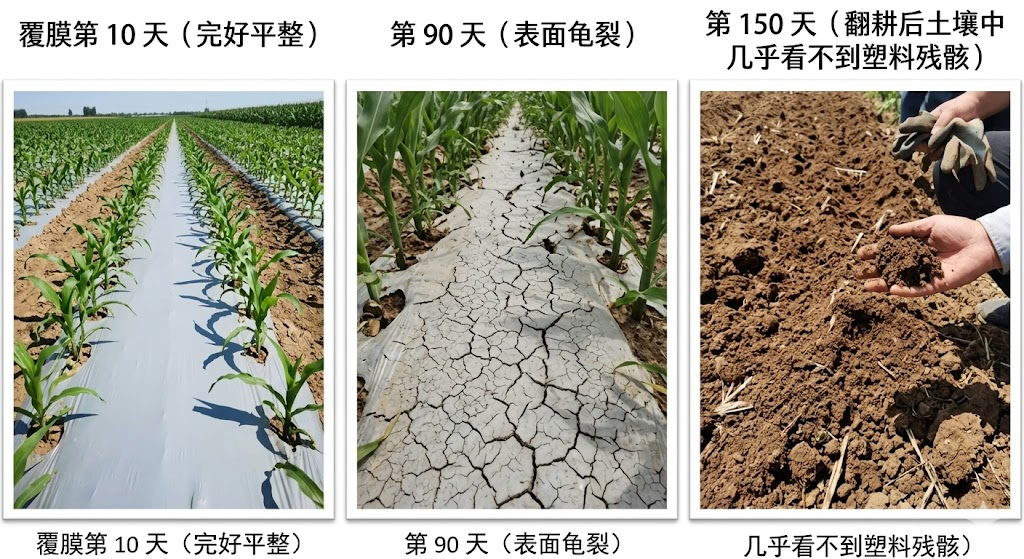
In cotton planting experiments in the arid region of Northwest China, the modified mulch film demonstrated excellent service performance [3]:
Service period (0-90 days): The film is intact without damage, soil moisture content and accumulated temperature show no significant difference compared to the traditional PE film group, and the cotton germination rate reaches over 95%.
Induced rupture stage (90–120 days): As cotton enters the maturity stage, the mulch film begins to undergo molecular chain scission under the action of ultraviolet rays and enzymes secreted by soil microorganisms. Numerous tiny cracks appear on the film surface, and the film gradually fragments into small pieces.
Complete degradation period (after plowing): After cotton harvesting, the fragmented mulch film is directly plowed into the soil. The long polymer chains are completely broken down into oligomers and are ultimately consumed by microorganisms as a carbon source, converting into carbon dioxide and water without leaving any toxic microplastics.
From polyethylene, which brings long-lasting pain, to PBAT composite modified materials that return to natural circulation, every iteration of polymer materials is the best proof of technology serving the good.
A small biodegradable mulch film embodies immense efforts in molecular design, interfacial engineering, and processing technology. It not only carries the hope of agricultural abundance, but also safeguards the precious land beneath our feet on which our survival depends.
References
[1] Jiang Shengqi, Huang Wenjie, Chai Yuxuan, et al. A preliminary study on the current status of agricultural plastic film residues and pollution prevention and control in China [J]. Modern Horticulture, 2025, 48(15): 172–174. DOI: 10.14051/j.cnki.xdyy.2025.15.054. (https://kns.cnki.net/kcms2/article/abstract?v=x5ZT7qxuO_q6VyJwQChkeT8PH1xgr1X4R17H-1nXzEhdXMWpMCRqFsI8UCgKdByt7i3TRsgR0gpNcR6r6hVfnbqRP7oDlckTx_oVP4jdBQ0z1I8TOijNmwrQrTi6YoHj_ZhKEAQVk6OJ2p2_lb0O3KYV-stZlH6_pbtmz_ZQNuQoVS9CsKzRAw==&uniplatform=NZKPT&l)
[2] Guo Bo, Yang Zhenxing, He Wenqing, et al. Preparation of Modified Composite Biodegradable Mulch Film and Evaluation of Its Field Application in Maize [J]. Journal of Shanxi Agricultural University (Natural Science Edition), 2024, 44(04): 60–70. DOI: 10.13842/j.cnki.issn1671-8151.202401052. (https://kns.cnki.net/kcms2/article/abstract?v=x5ZT7qxuO_rpTK2qANsyxBzo-xUUwW02D1brGXD83f2iW9yhLFjdvupJFjE3x530F1QYLdrkT01Gv1shlP7rUK0S16UBYL9LEV2bx_SHF2gQgPXO_sE9tsqs3qbwhDgnhIrP70MjnpEJ5NfPEWneN9q9kfSNtgM-lQ8LAVPwTISV35R_p9Qncg==&uniplatform=NZKPT&l)
[3] Chen Chen, Wang Yang, Wang Xiangjun, et al. Progress in the preparation technology and research applications of PLA/PBAT biodegradable film [J]. Plastic Technology, 2024, 52 (04): 137-142. DOI:10.15925/j.cnki.issn1005-3360.2024.04.027. (https://kns.cnki.net/kcms2/article/abstract?v=x5ZT7qxuO_oxUWFbYr0P7R2q2_SYzg8zeokWzSXM23DTP9pl5gj8fIbH96go02mJdGPEBG5kO1TkKvH2UTIKWRzK0gB2bq2UO1se9eStzoCOdfSKgR5DsvBWGyN9lI_wolhXp74ktF1m0mH6pCDTn_O3pWzJeDOfVnjhjOgm1hbKJkhkEmSp3Q==&uniplatform=NZKPT&l)
[4] Wu Qiang, Zheng Xurong, Wang Zhenhua, et al. Effects of mulching with fully biodegradable plastic film on soil temperature and moisture of cotton under film drip irrigation [J]. China Rural Water and Hydropower, 2016, (08): 133-136+143. (https://kns.cnki.net/kcms2/article/abstract?v=x5ZT7qxuO_rRPlCp3pF-3V2b9ikGPA68g8hvS9rLoc_cJlRoQBSPo-wCmPiXnqfKBw0vCSO-8YIn4lu10XMgDaoy5DmF-u8yd-GSuCjj_D-7R4alOEK5xDemycPMMwxq1BDbWihKUU6ZYZXr0JarCDEGBer2D54zhW_TEwFZ0fiUpSMSySDMQw==&uniplatform=NZKPT&l)
Writer: Zhang Le
Proofread by: Chen Chengjin, Liu Jiahao, Ying Yuanhao
【Copyright and Disclaimer】The above information is collected and organized by PlastMatch. The copyright belongs to the original author. This article is reprinted for the purpose of providing more information, and it does not imply that PlastMatch endorses the views expressed in the article or guarantees its accuracy. If there are any errors in the source attribution or if your legitimate rights have been infringed, please contact us, and we will promptly correct or remove the content. If other media, websites, or individuals use the aforementioned content, they must clearly indicate the original source and origin of the work and assume legal responsibility on their own.
Most Popular
-

Layoffs, Divestments, Plant Closures While Pouring Billions: BASF Undergoes Major Transformation!
-
Ascend Adipic Acid Hit By Force Majeure, Market Expects Supply Resumption In Mid-September
-

Raw Material Supply Shortage! INEOS Phenol Declares Force Majeure on Phenol and Acetone Businesses
-
South Korea initiates anti-dumping investigation against Chinese PVC suspension resin! The target is Tianjin Bohua and Wanhua Chemical. How to break through?
-

Sixth national procurement set to be implemented: A “Reshuffling” Moment for the $10-Billion Medical Device Market


